
THE EUROPEAN GARDEN EDIT
GARDEN DESIGN
How to Create a Beautiful Privacy Garden with Layered Planting
A thoughtful approach to screening and layered planting for a sheltered, beautifully private garden
A private garden begins with understanding the view you want to soften. Perhaps a neighbouring window overlooks your terrace, a fence dominates the end of the garden, or your favourite seat feels a little too exposed. Each situation calls for a different response. Before choosing a hedge or buying the tallest plants you can find, look at where you spend time and what would make that space feel more comfortable.
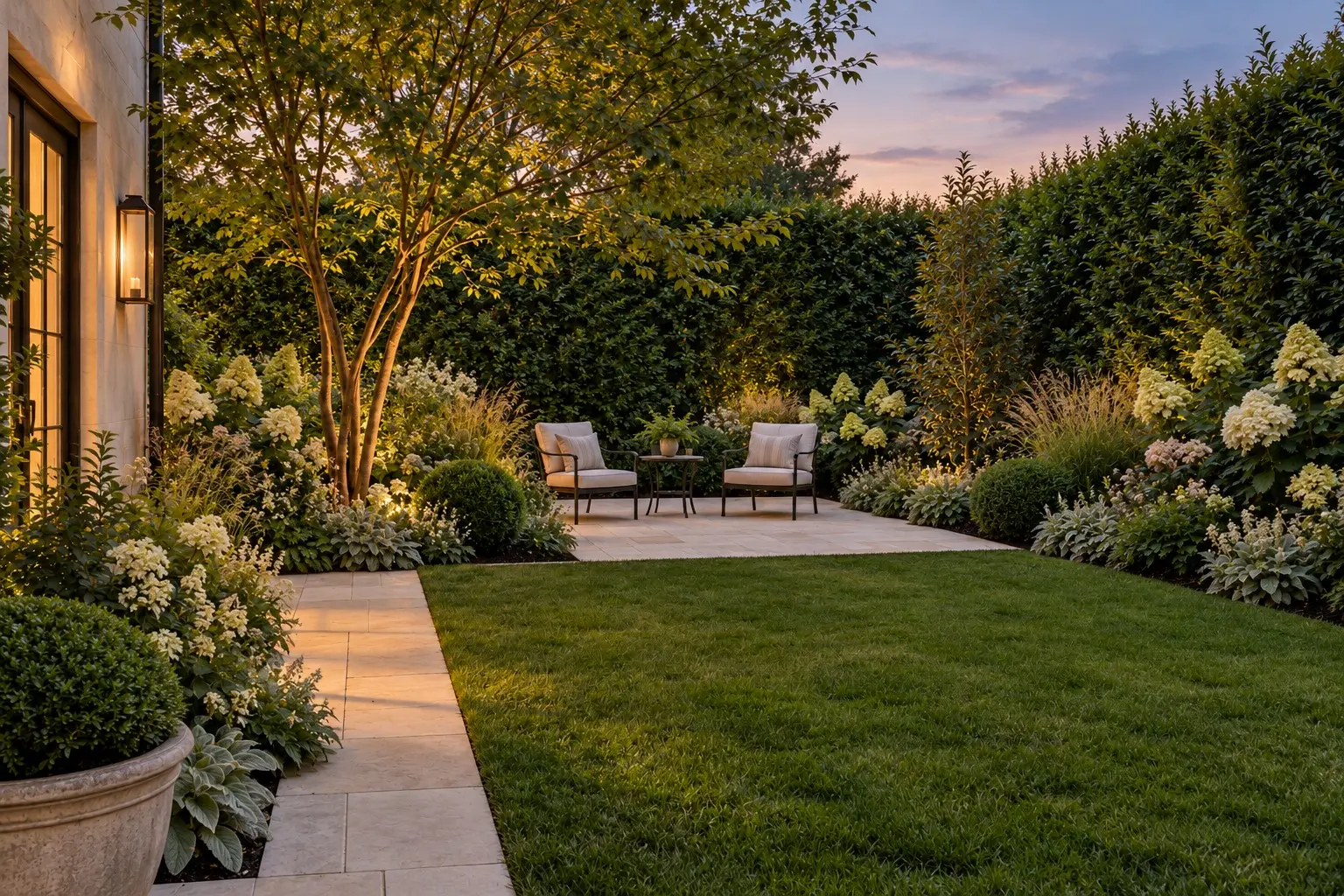
The most beautiful privacy gardens bring screening into the wider design. Trees establish height, shrubs give the border substance, and lower planting introduces softness and movement. Together, they create a garden that feels sheltered, generous and thoughtfully composed.
Here is how to approach privacy planting with the quiet elegance of a European garden.
1. Begin where privacy matters most
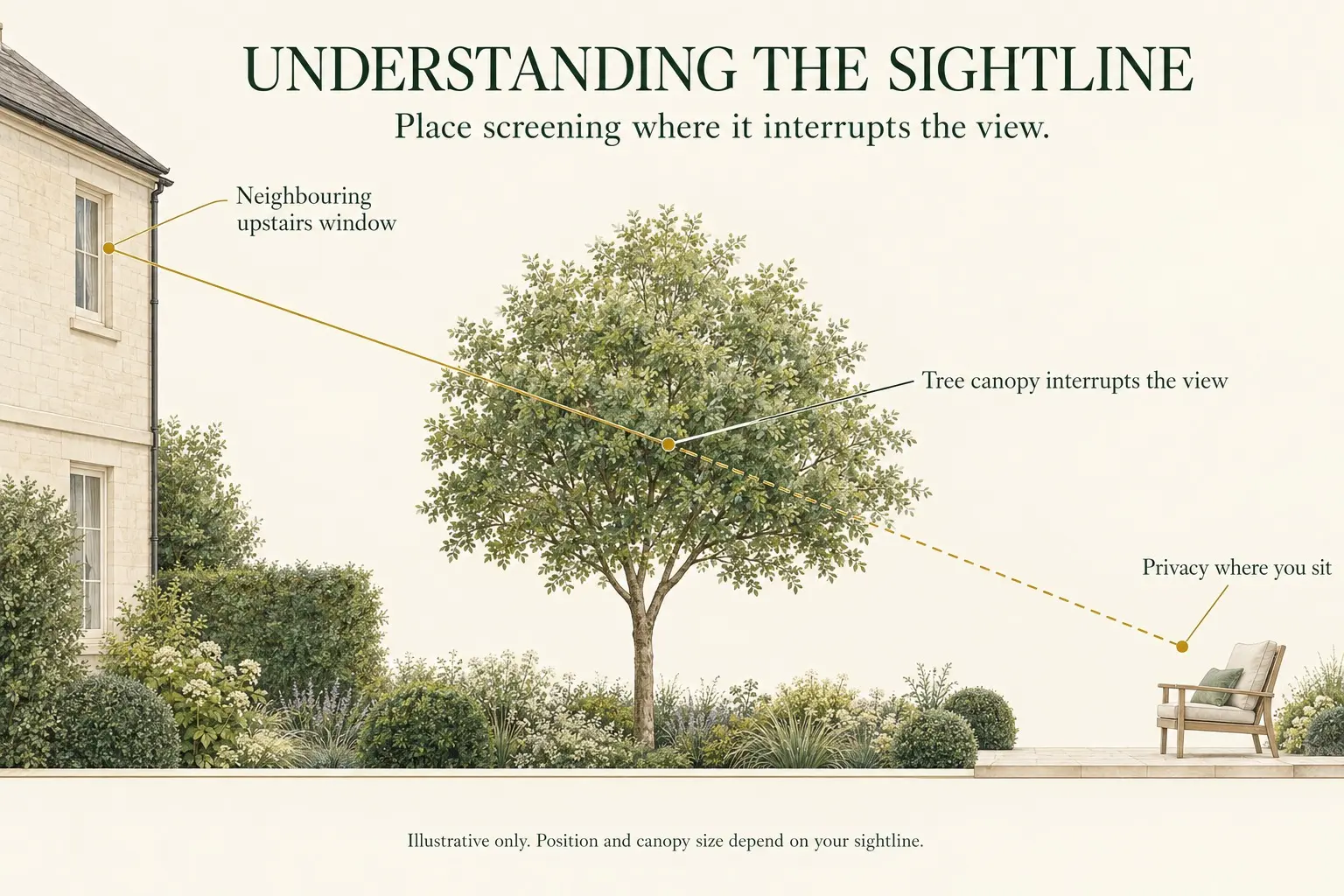
Take a seat on your patio, stand at the kitchen window, or walk to the part of the garden where you feel overlooked. Look towards the view you would like to screen.
This simple exercise helps distinguish a privacy problem from a garden boundary that merely looks unfinished.
An upstairs window may call for a carefully positioned tree canopy. A neighbouring path may need screening closer to eye level. A fence that already conceals the garden may simply benefit from layered planting in front of it.
Focus on the places you use most often. A small, well-considered intervention can make a seating area feel much more settled without enclosing the whole garden.
2. Decide how much screening you need
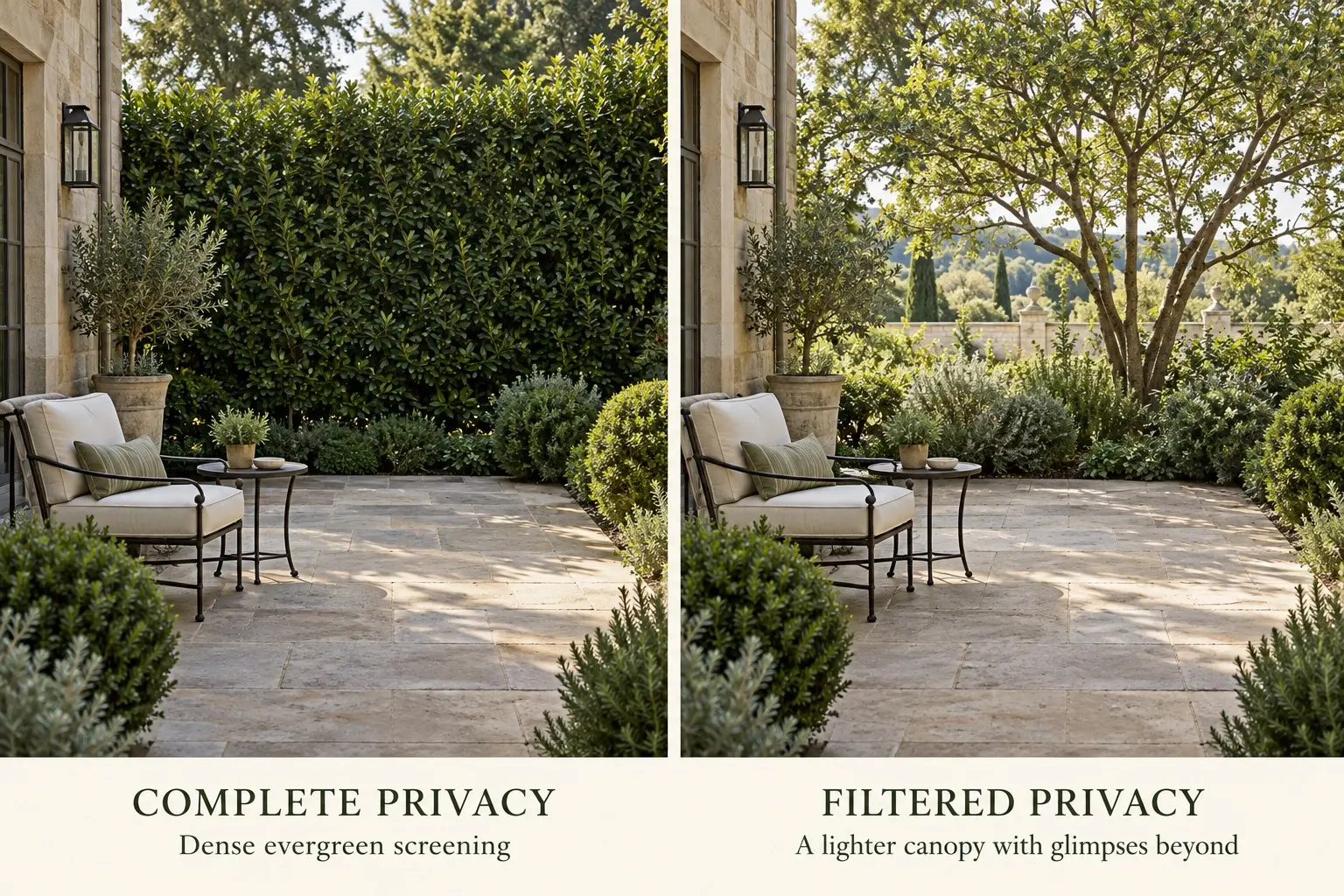
Privacy can be complete or filtered.
Dense planting suits a view you want to conceal consistently. Filtered planting allows glimpses of sky and the garden beyond, while softening the sense of exposure.
Consider how you want the space to feel. A dining terrace may benefit from a stronger screen along one side, while a distant boundary could remain lighter and more open.
Think about the seasons, too. If a neighbouring window overlooks a room or terrace throughout the year, evergreen structure deserves consideration. If privacy matters mainly during summer meals outdoors, deciduous trees and flowering shrubs may contribute much of the enclosure you need.
A combination can offer a pleasing balance: evergreen planting provides the framework, while seasonal plants bring changing foliage, flowers and texture.
3. Build your privacy border in layers
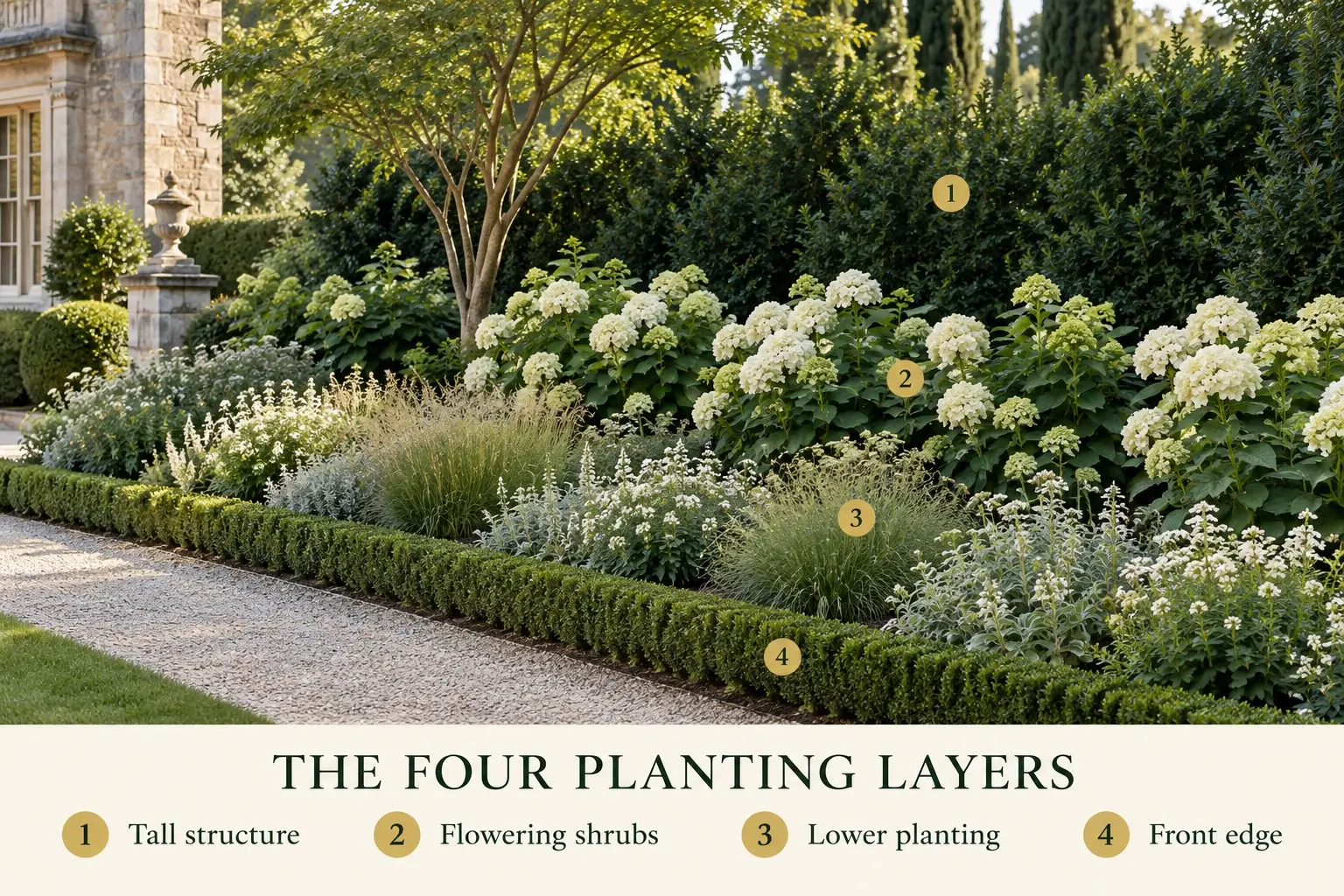
The Elegant Privacy Garden Guide uses a simple four-layer approach: height, body, softness and edge.
Tall structure
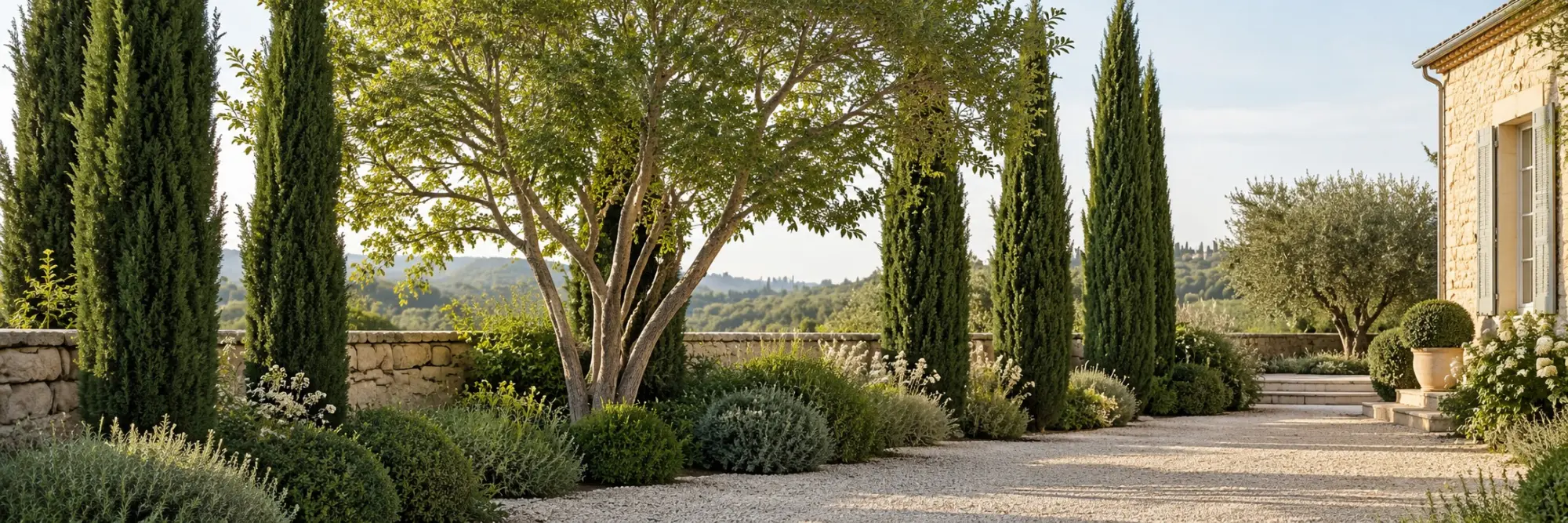
This is the layer that does the principal screening. Depending on the site, it might be an evergreen, a small ornamental tree or a combination of both.
Choose the form as carefully as the height. A narrow upright plant occupies space differently from a tree with a spreading canopy.
Mid-height structure
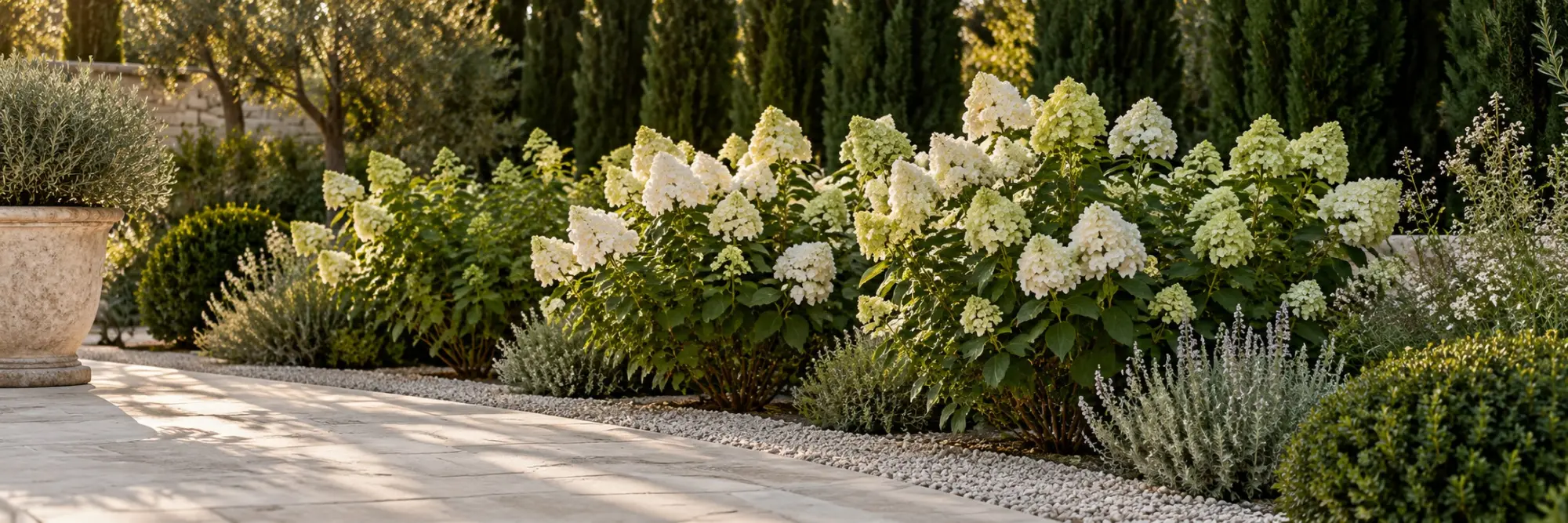
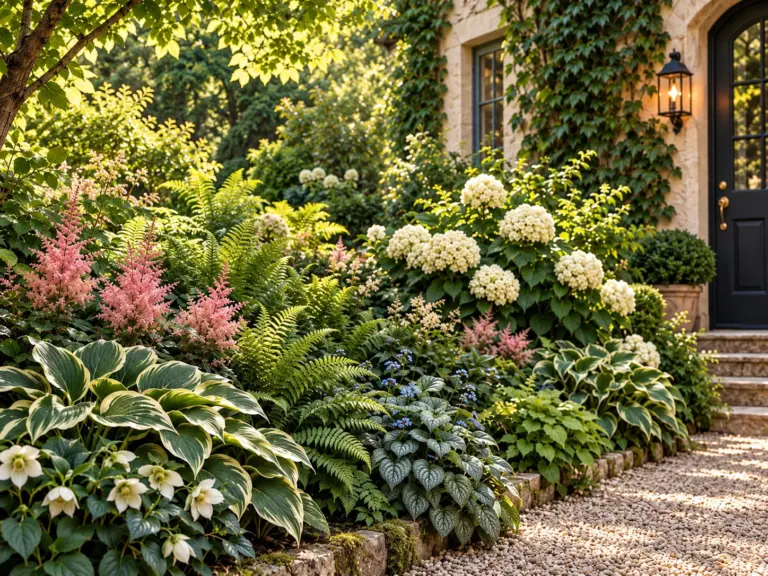
Flowering shrubs give the border body and connect the taller planting to the garden below. White hydrangeas, suitable viburnums or mock orange are among the options explored in the guide.
Select the exact species and cultivar for your light, climate, soil and available space. Their role is to add fullness where it is useful, without crowding the main screen.
Lower planting
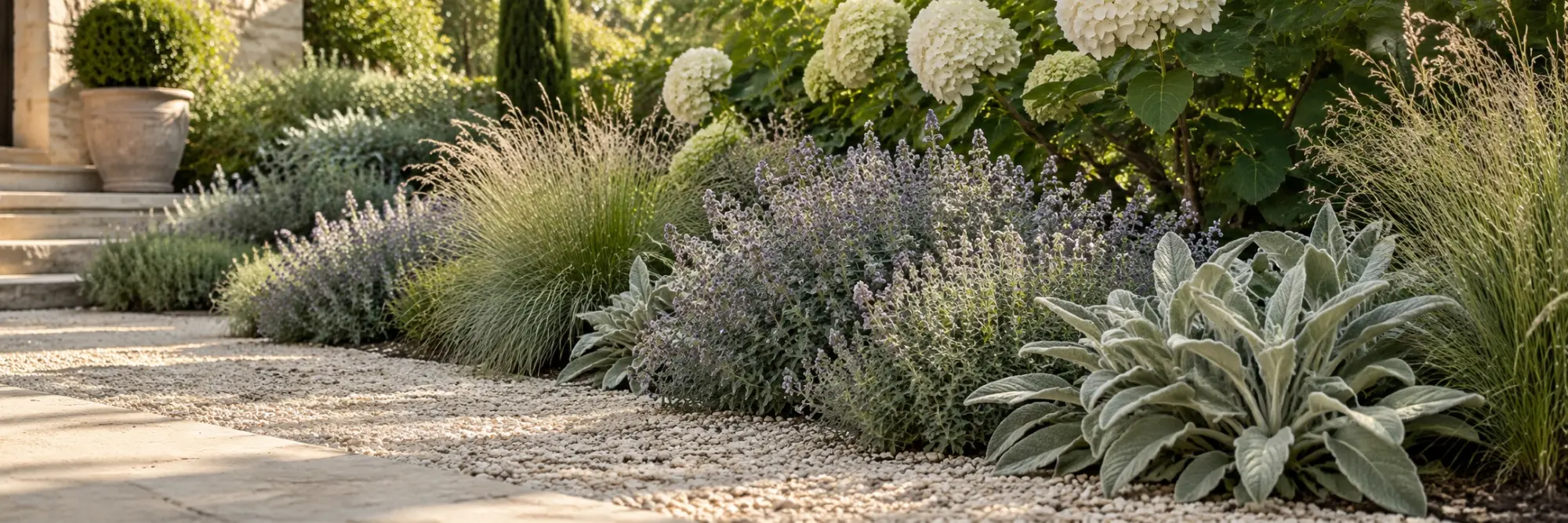
Perennials and ornamental grasses soften the bases of shrubs, introduce movement and carry interest through the foreground.
They support the design rather than providing its principal privacy. Establish the screening layer first, then choose lower plants that complement it.
The front edge
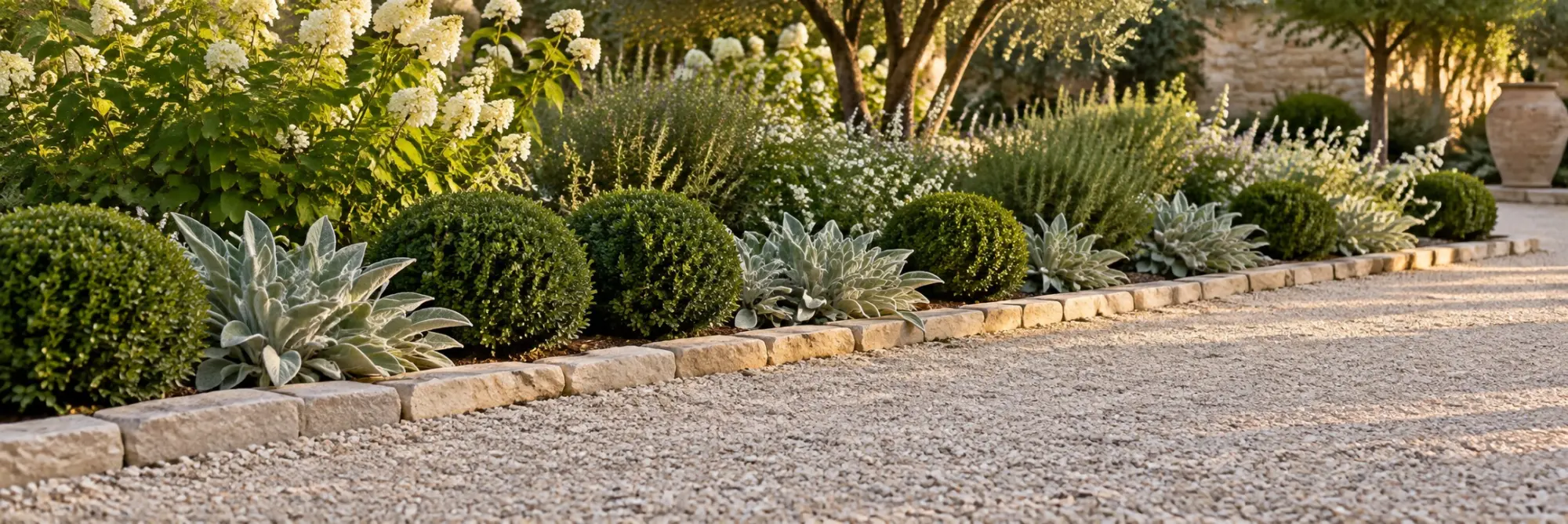
A restrained line or repeated group of low plants gives the border a finished relationship with the lawn, path or terrace.
This need not be a continuous clipped hedge. A simple, repeated planting can create enough definition while keeping the composition relaxed.
In a small garden, these roles can overlap. You do not need four deep rows of plants to create a layered effect.
4. Choose mature shape before planting density
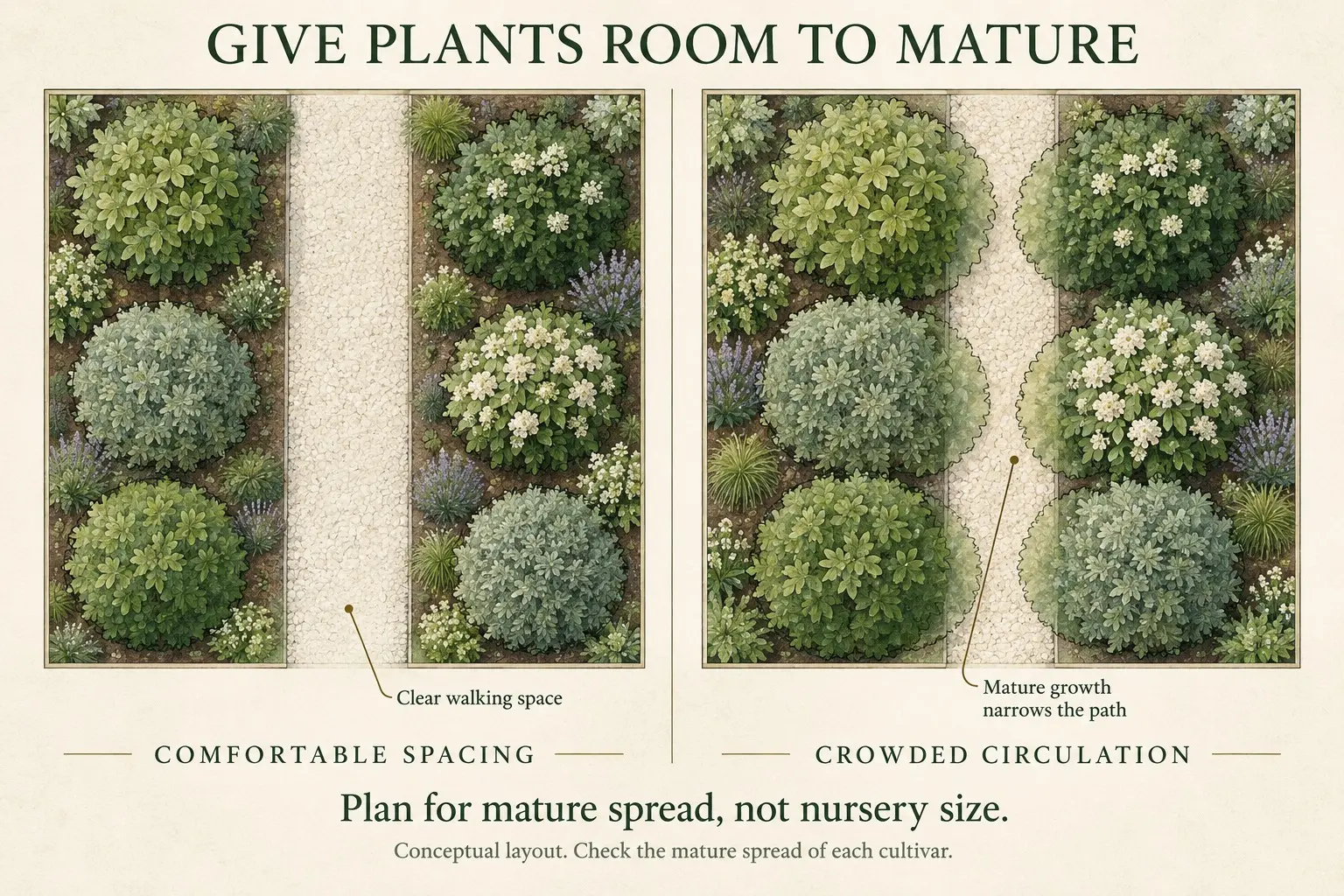
A young plant can look wonderfully manageable in its nursery pot. Its mature width is what determines whether it belongs beside a narrow path or within a compact border.
Before buying, check the expected height and spread of the exact cultivar. Consider its branching habit, the amount of pruning you are willing to do, and the space it needs beside nearby plants.
Allow room for access and maintenance. Avoid filling every gap simply to make a new border look finished on planting day.
Breathing room is part of the design. Visible gravel, a section of weathered fence, or a clear edge beside limestone paving can help the planting feel composed rather than crowded.
5. Match the solution to the setting
An overlooked patio
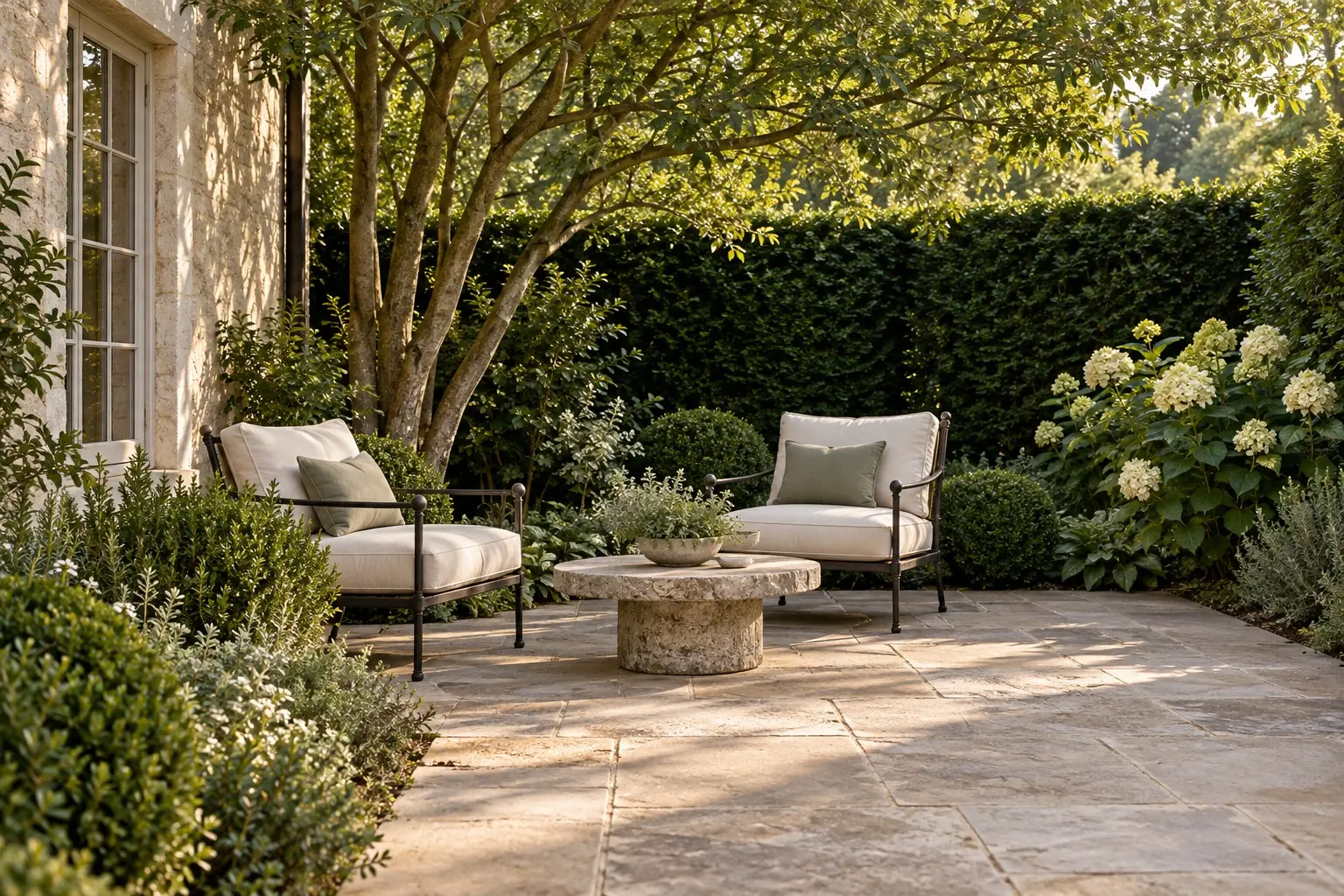
Begin with the view from your chair. Screening beside the seating area may be more useful than a tall hedge at the far end of the garden.
Use a tree, upright evergreen or suitable architectural screen where it interrupts the unwanted view. Add shrubs and lower planting to make the enclosure feel connected to the terrace.
A neighbouring upper-storey window
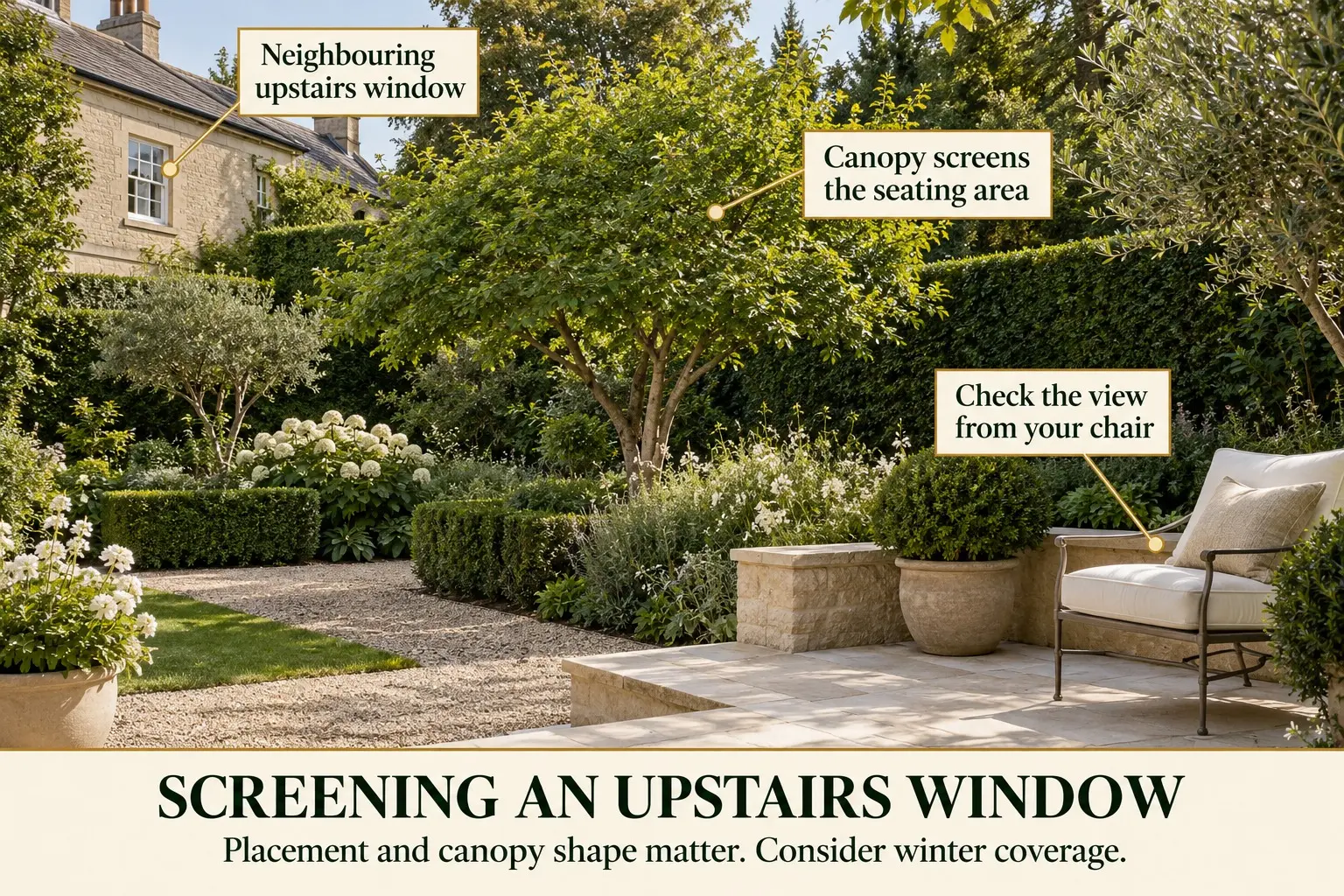
Look at the angle between the window and the space you want to protect. A tree canopy in the right position may interrupt that sightline, but its effectiveness depends on placement, canopy form and eventual growth.
If winter privacy matters, account for what happens when deciduous foliage falls. Evaluate the screen from the actual seating position before settling on a plant.
An unsightly fence
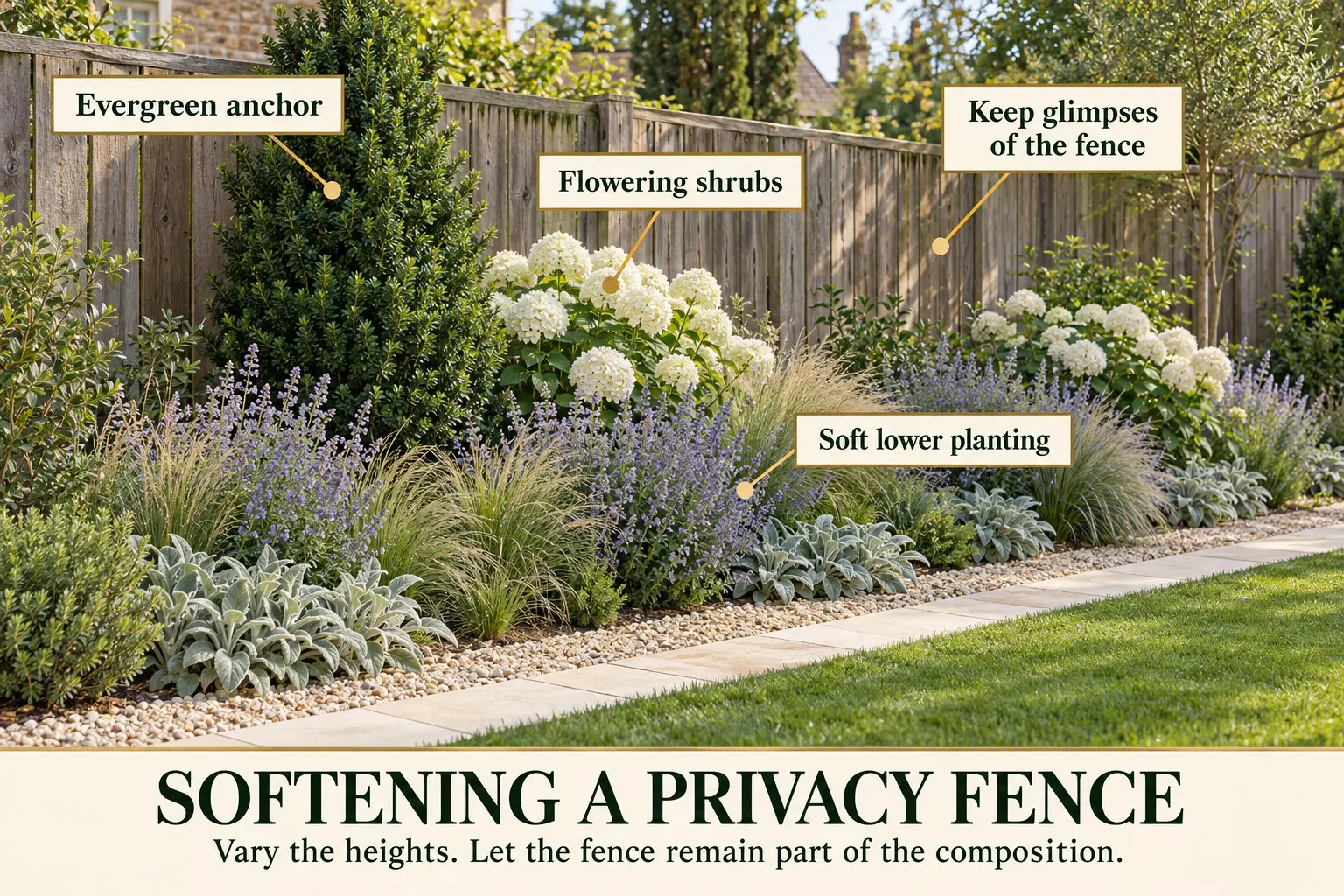
If the fence already provides privacy, concentrate on making the view more attractive.
Combine an evergreen anchor with flowering shrubs, a mass of perennials and a low foreground. Vary the heights and allow occasional glimpses of the fence to give the border depth.
A narrow side garden
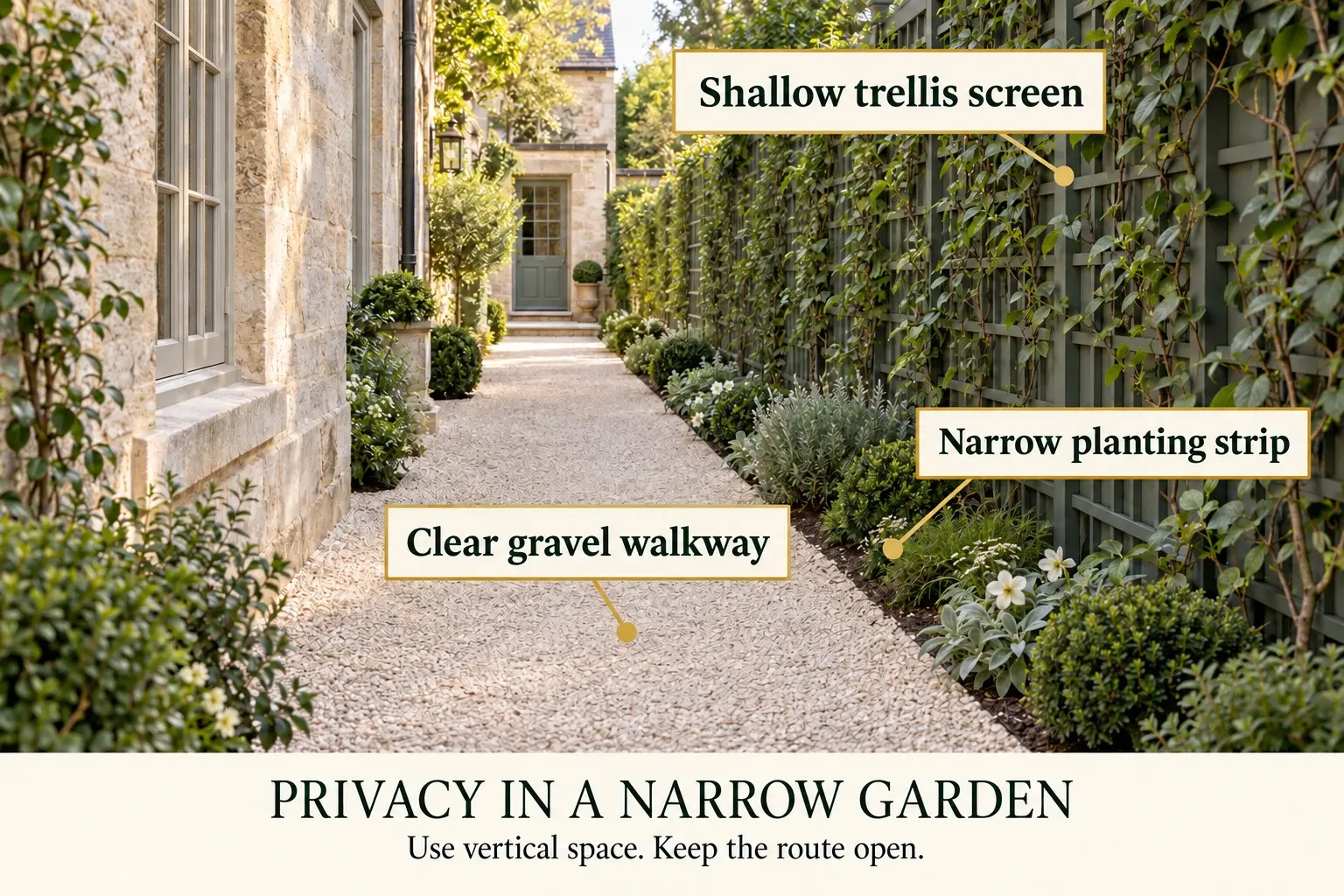
Prioritize plants and structures that use vertical space efficiently. Narrow upright forms, espalier or a trellis with a suitable climber may be worth considering.
Check mature width carefully, preserve a comfortable route through the garden, and use fewer plants with distinct roles.
Bins and utilities
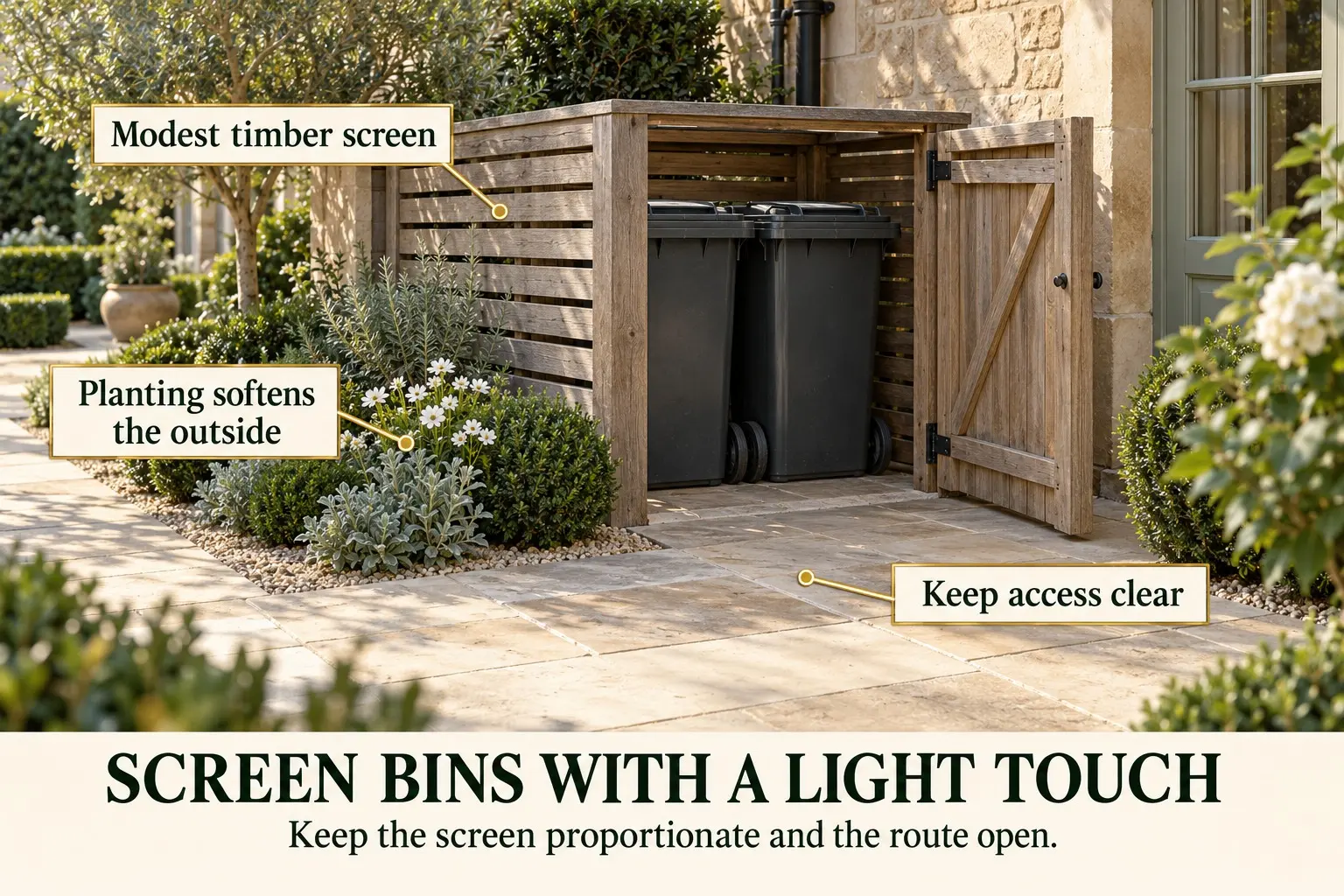
A modest screen close to the object may be sufficient. Keep the planting or structure proportionate, with access for everyday use and servicing.
6. Give the planting a quiet material palette
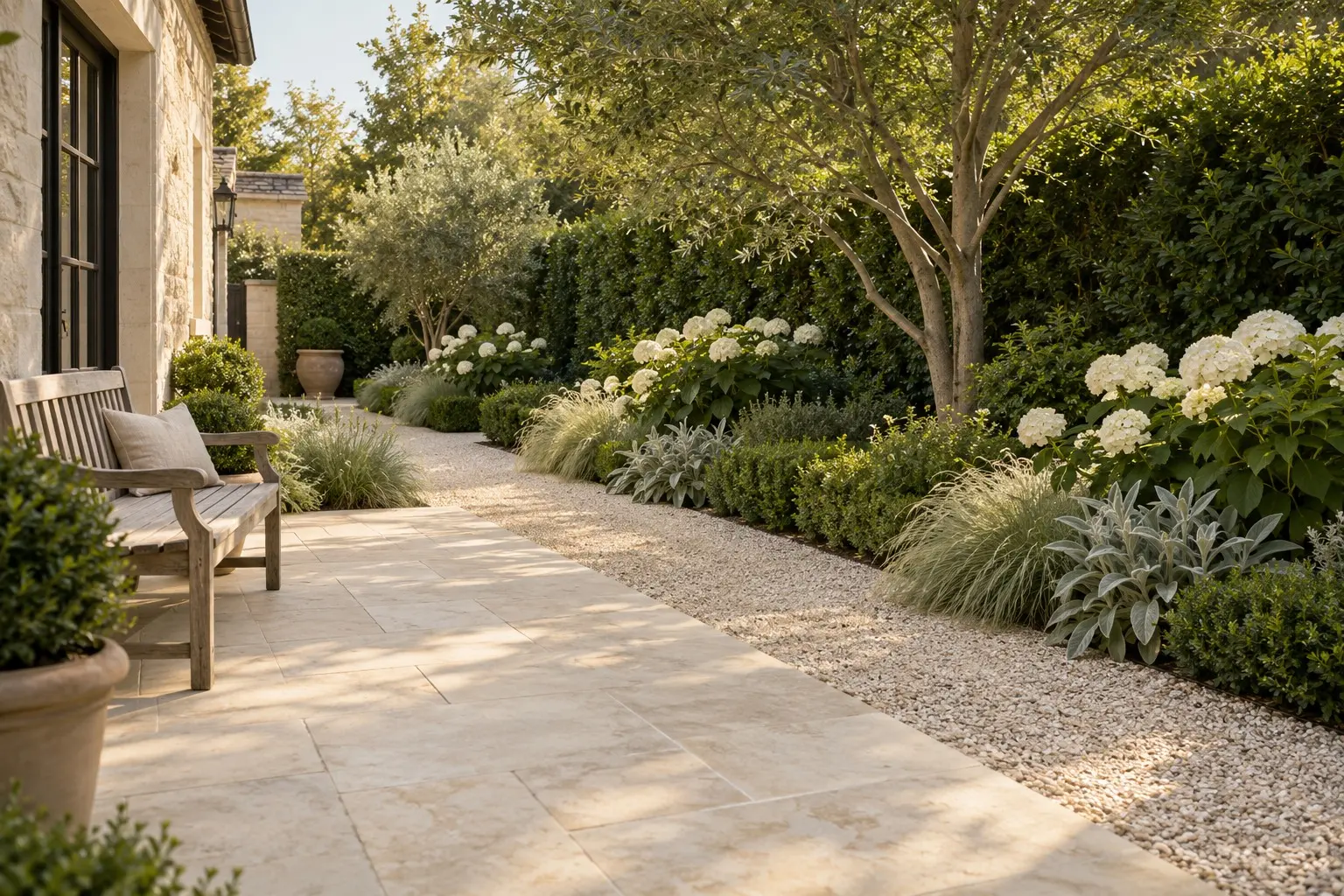
Privacy planting feels more integrated when it shares the materials and colours of the rest of the garden.
Warm limestone, fine gravel and weathered timber offer a restrained setting for foliage and pale flowers. Repeat a small selection of plants and materials so the screen feels connected to the terrace, paths and house.
A border might combine green structural planting, white seasonal flowers and softer foliage at its feet. The appeal comes from the relationship between forms and textures, with enough open space to appreciate them.
7. Plan for the garden you will maintain
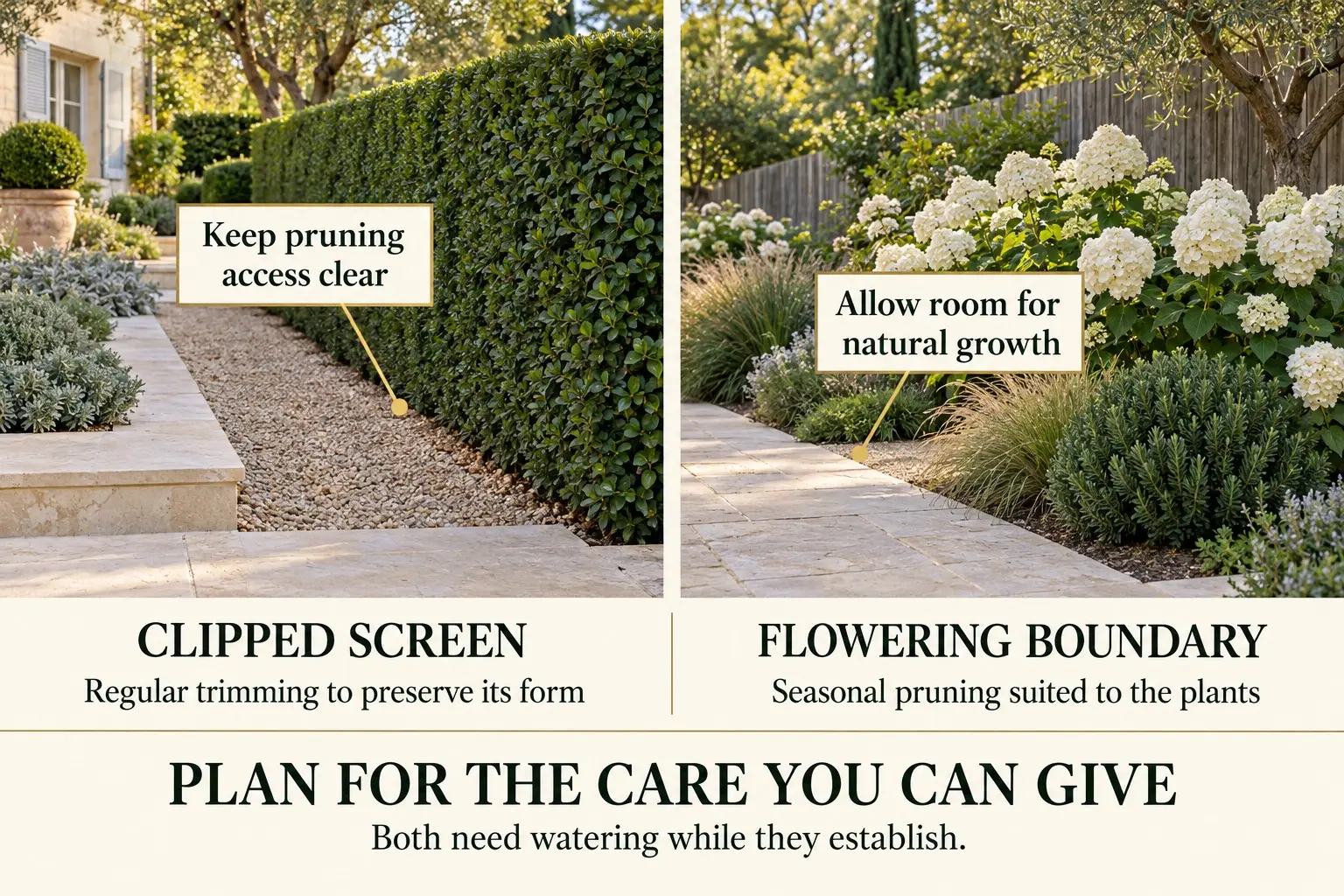
A clipped screen and a loose flowering boundary ask for different kinds of care.
Choose the level of formality you enjoy maintaining. Think about pruning access, watering during establishment and how the screen will look before it reaches its intended size.
If you need privacy immediately, distinguish the role of a suitable existing or new structure from the coverage plants will provide over time. Planting can then soften that structure as the garden develops.
Before buying, bring the decisions together: the view to screen, the height and density required, your growing conditions, mature plant dimensions and the maintenance you can realistically give.
Frequently Asked Questions
How can I make my garden feel more private without screening the entire boundary?
Start with the view from the place you use most. A carefully positioned tree, shrub group or screen may interrupt that view while allowing other parts of the garden to remain open.
Do I need evergreen plants for a privacy garden?
Evergreens are useful when dependable foliage coverage matters throughout the year. If privacy is mainly needed in summer, deciduous trees and shrubs may have a larger role. Choose according to the view and the seasons in which you need screening.
Can white hydrangeas provide privacy?
They can contribute body and seasonal screening in a layered border. The amount of coverage depends on the species, cultivar, mature size and growing conditions. Deciduous hydrangeas should not be relied on for dense winter screening.
What should I consider in a small privacy garden?
Mature width, clear access and the precise sightline matter especially in limited space. Give each plant a purpose and consider suitable vertical screening where a broad shrub border would take up too much room.
How far apart should privacy plants be planted?
Spacing depends on the exact species and cultivar, its mature spread and whether the aim is a clipped hedge or a looser border. Use plant-specific guidance rather than applying one distance to every screen.
A garden that feels like your own
The most inviting privacy gardens have a clear purpose and a light touch. They shelter the places where you sit, soften the views you would rather not see, and leave room for the garden itself to be enjoyed.
Begin with one sightline. Choose the structure that serves it. Then add the planting that makes the space feel like somewhere you want to stay.
Thank you for being here and spending a little time in the garden with me. I hope these ideas help you create a corner of your own where you can settle in, breathe a little more slowly and enjoy what you have planted. It is a pleasure to share these garden notes with you.
MORE IN GARDENS
Recent Reads
October 13, 2026
How to Create a Beautiful Low-Maintenance Garden: 7 Simple Design Ideas
October 11, 2026
How to Create a Beautiful Front Porch Garden
October 7, 2026
How to Choose a Garden Colour Palette: 7 Beautiful Plant Combinations
October 6, 2026