

THE EUROPEAN GARDEN EDIT
GARDEN DESIGN
How to Create a Beautiful Front Porch Garden
Thoughtful planters, layered greenery and a welcoming connection between your front door and the garden
A beautiful entrance begins before the front door. It starts with the path you follow, the planting beside the steps and the small details that make a house feel welcoming. A thoughtfully placed pot or a repeated ribbon of greenery can bring these elements together, giving the porch a sense of belonging within the garden.
The most inviting front porches have a clear relationship with the house. Their planters echo its materials, their plants suit the available light, and their arrangement leaves room for the architecture to be appreciated. There is no need to fill every corner. A few well-chosen elements can give the entrance all the presence it needs.
Here is how to approach front porch planting with the quiet elegance of a European garden.
1. Let the house set the direction
Before choosing plants, stand back and look at the entrance as a whole. Notice the width of the door, the depth of the steps, the porch columns and the direction of the walkway. These proportions will help you decide where planting belongs and how much the space can comfortably hold.
Formal European
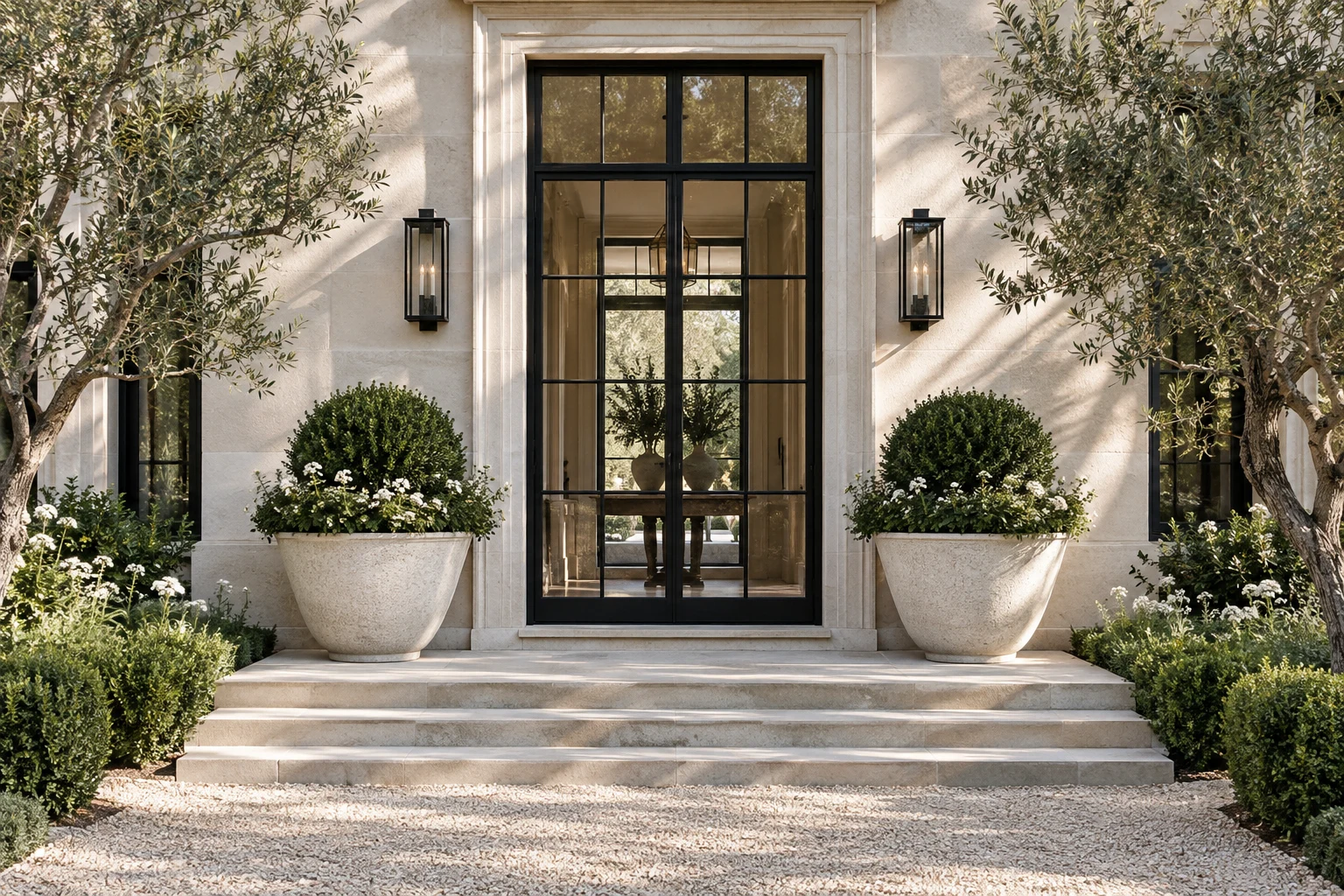
A substantial limestone doorway lends itself to generous stone vessels, restrained white flowers and clearly shaped evergreen planting. Echo the proportions of the entrance and keep the composition balanced, with enough open space to appreciate the architecture.
Relaxed cottage
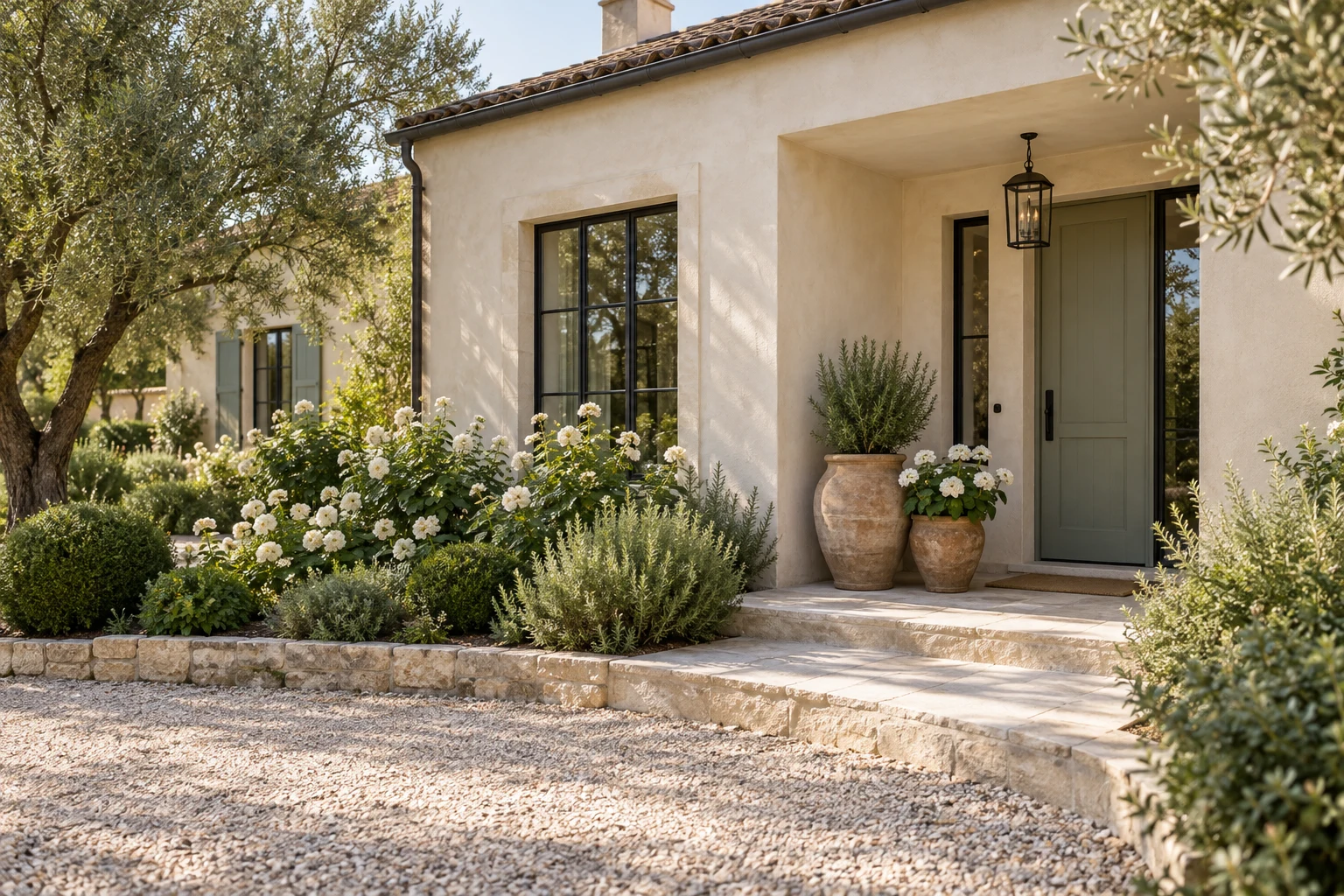
A cottage entrance often feels natural with aged terracotta, herbs and soft white flowers. Choose a small related group of vessels with gentle variation in height, allowing the weathered materials and planting to give the porch its relaxed character.
Coastal garden
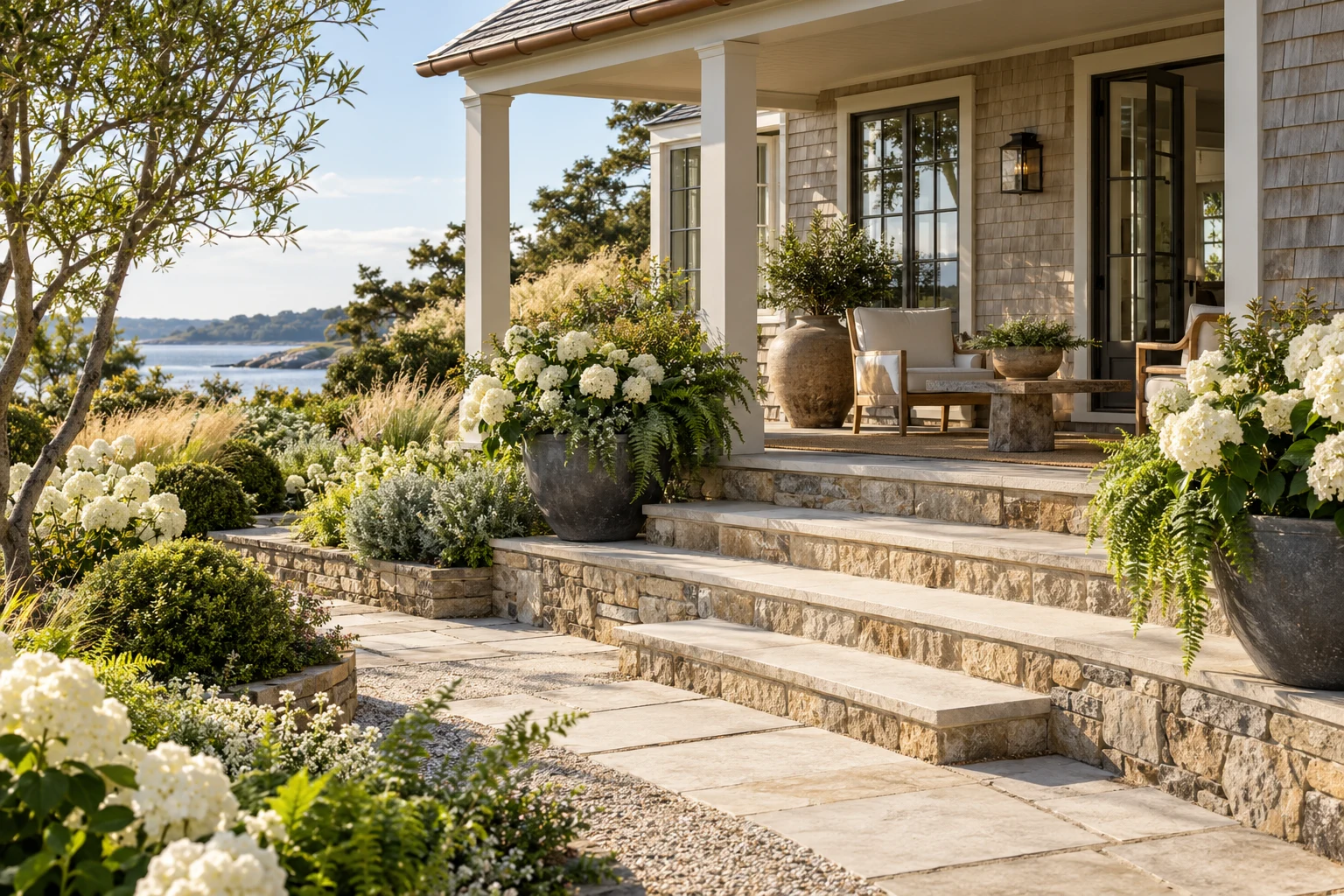
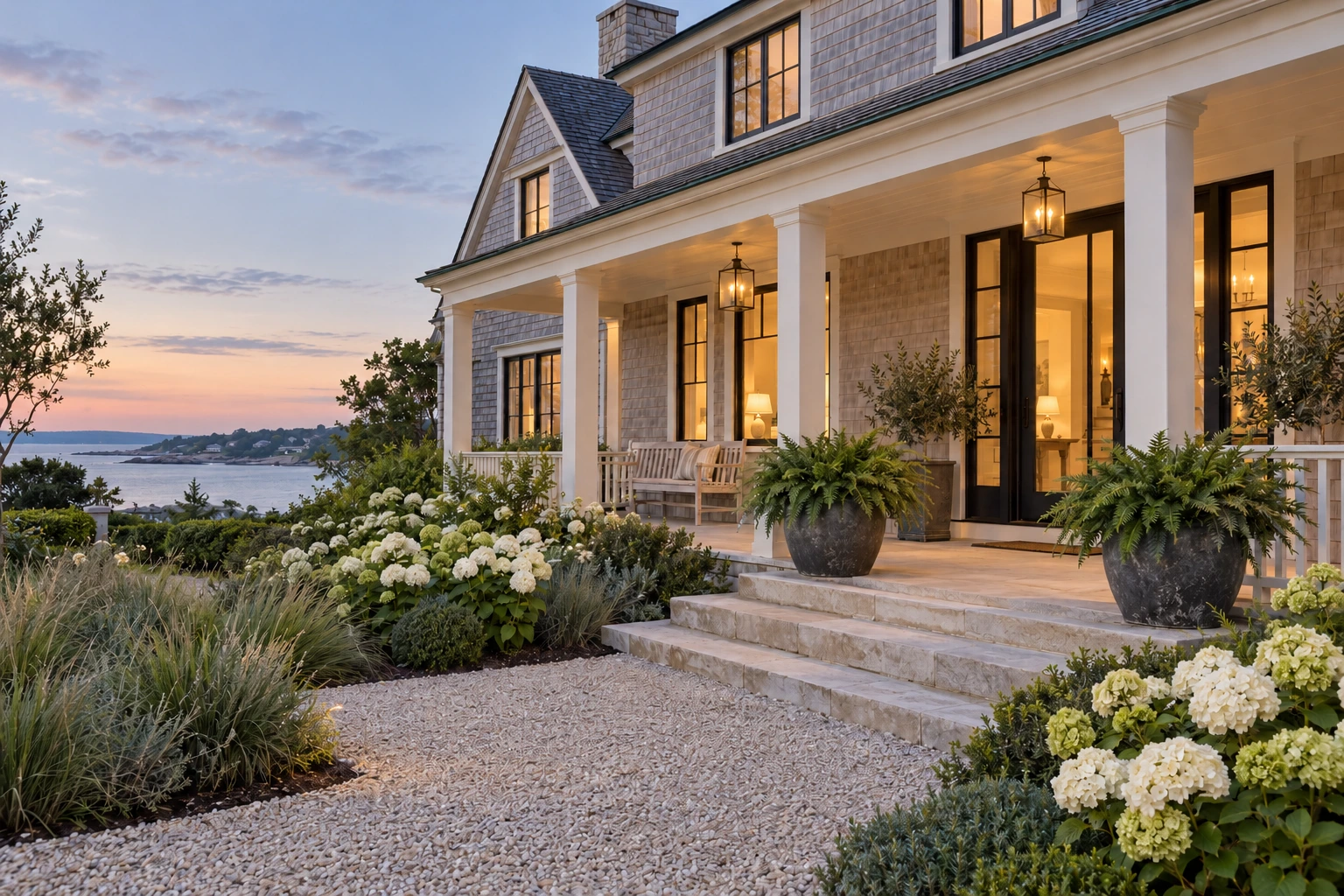
Weathered shingles and a sheltered veranda offer a quiet setting for pale hydrangeas, soft grasses and ferns. Matte charcoal or aged-stone vessels can provide contrast while keeping the composition simple and breezy.
Refined Mediterranean
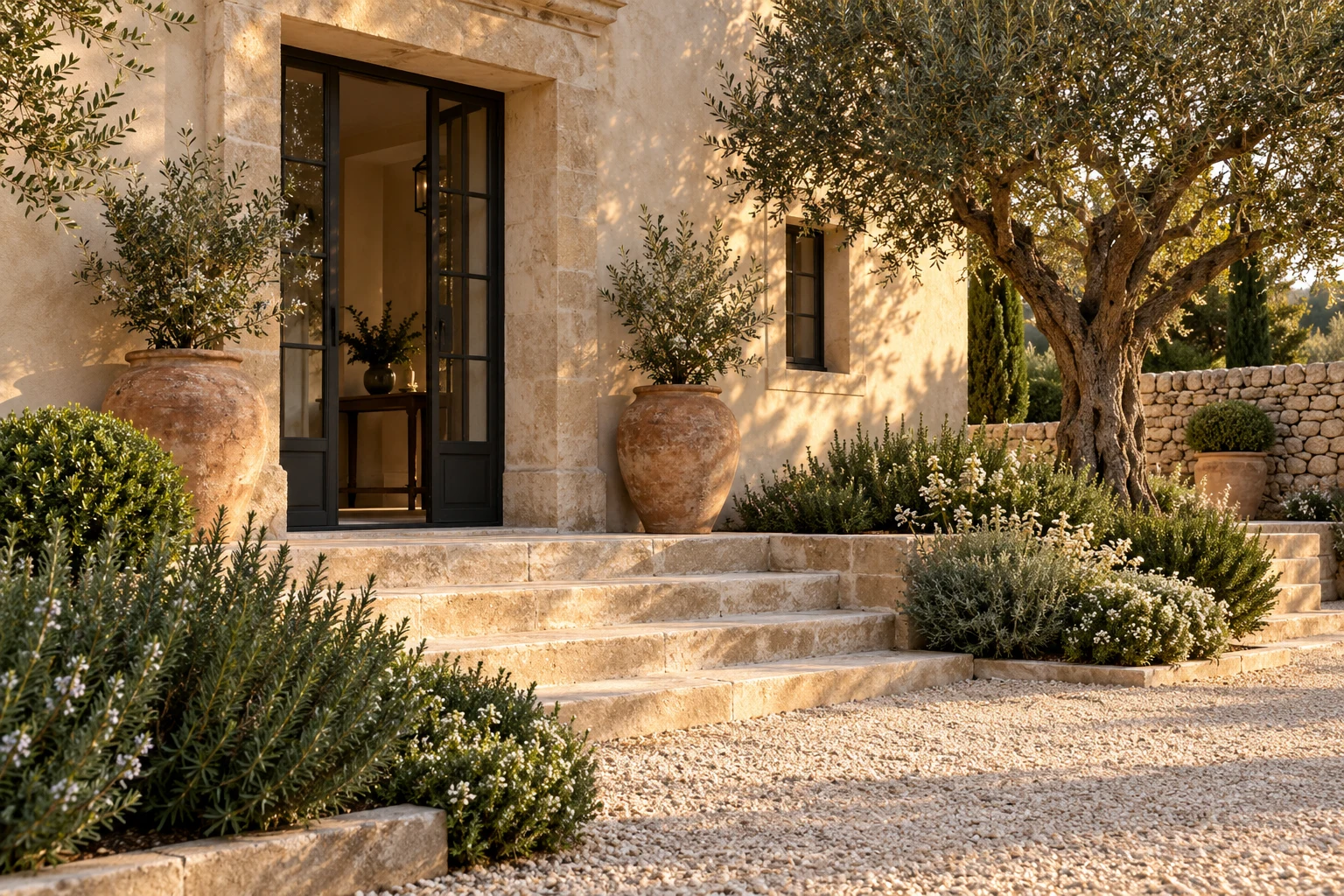
Cream stucco, dark metal detailing and warm paving suit an understated Mediterranean palette. Where conditions allow, olive or bay can establish height, with rosemary, lavender or thyme bringing smaller forms and aromatic foliage.
Take a photograph from the street and another from the approach to the door. Look for the place where a planter would frame the entrance, rather than interrupt the route to it. Keep steps, handrails and the door swing clear.
2. Choose a planter that belongs beside the house
The planter is part of the architecture before it holds a single plant. Its scale, finish and shape influence how the entrance feels, so choose the vessel with the same care you give the planting.
Limestone or cast stone
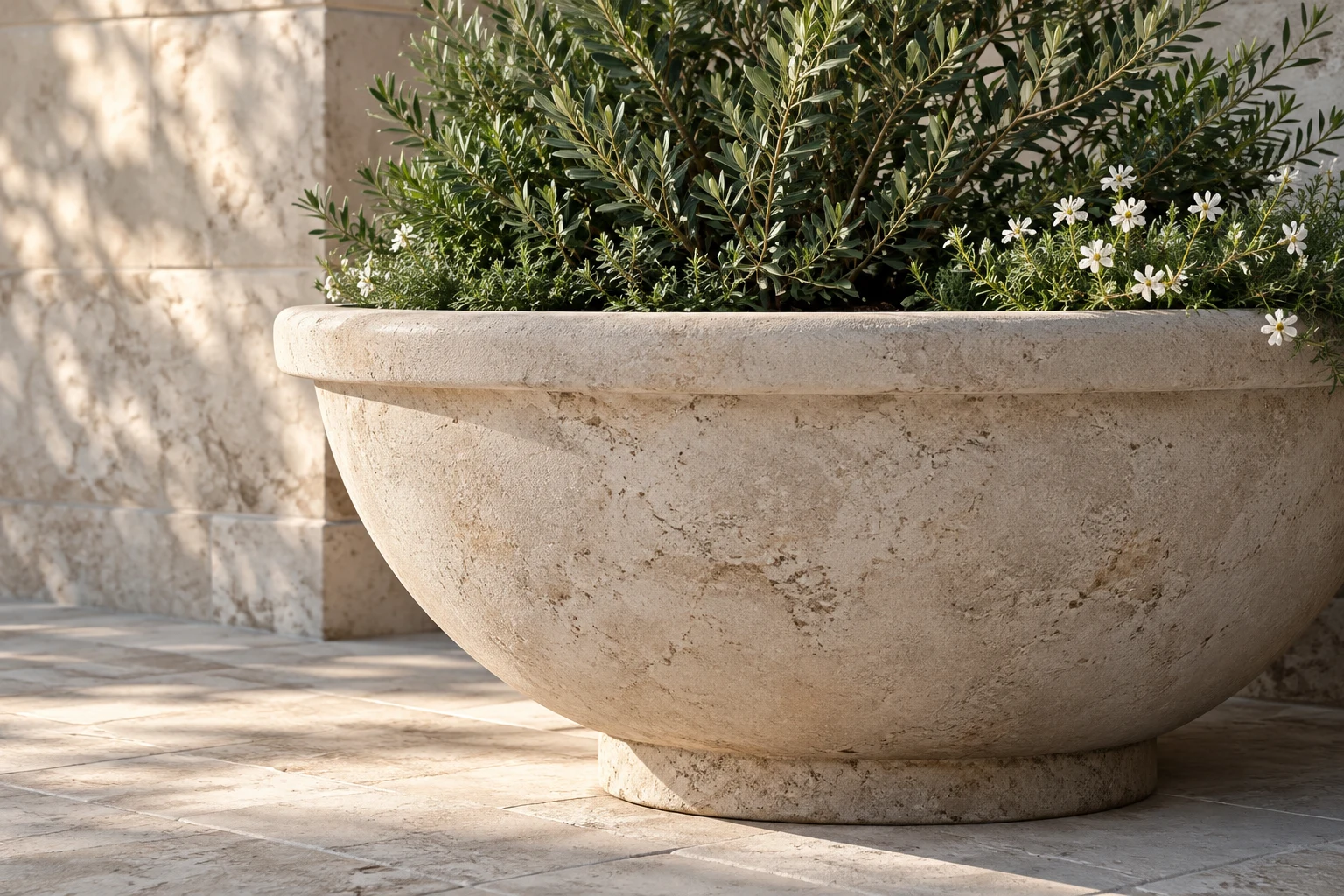
A substantial stone vessel feels connected to pale paving and stone architecture. Choose a simple bowl or restrained sculptural form for a more modern entrance; its weight, texture and patina can provide presence without elaborate ornament.
Aged terracotta
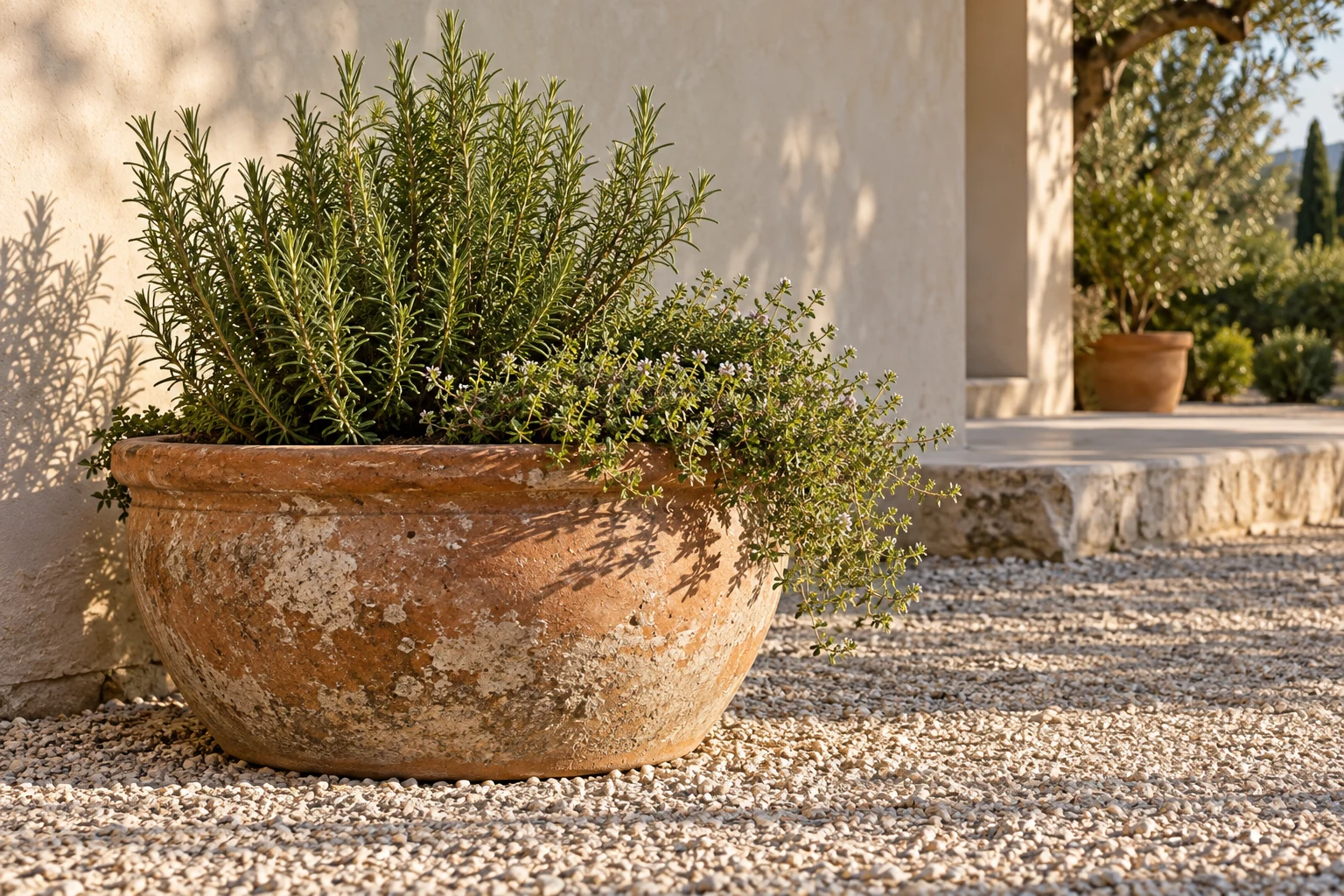
Terracotta brings warmth to cream walls and weathered paving. A generous low pot planted with rosemary and thyme can feel particularly settled on a Mediterranean porch, where the clay and green foliage have room to be appreciated.
Zinc or lead-effect finishes
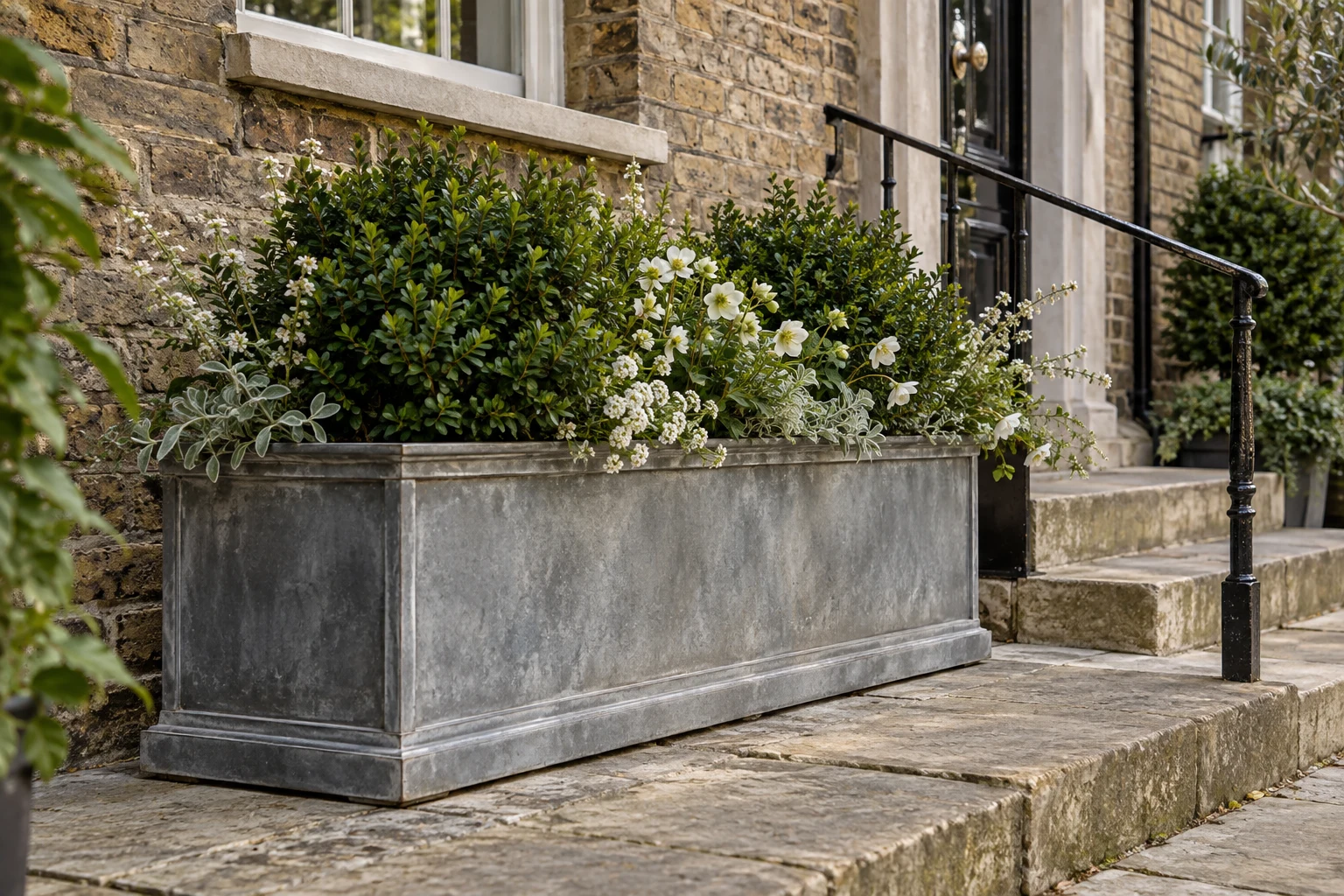
Muted grey metal sits comfortably beside aged brick, stone steps and slender ironwork. A rectangular vessel offers a useful architectural shape on a townhouse stoop, with compact greenery and restrained flowers softening its edges.
Matte ceramic
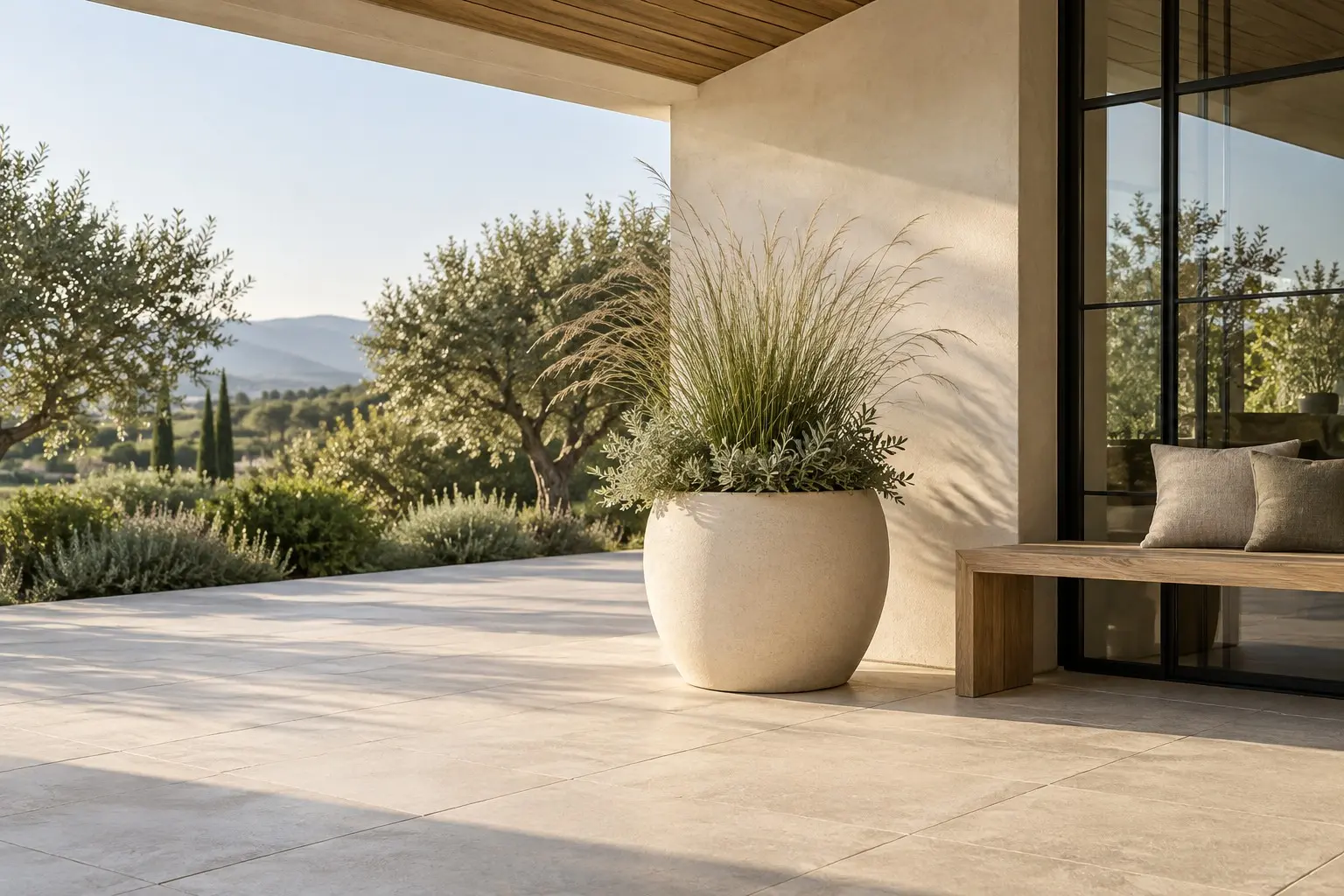
A ceramic vessel can suit a contemporary entrance when its finish and shape are quiet. Warm ivory, charcoal or muted grey allows a clean silhouette to remain visible, especially with fine grasses or a restrained foliage planting.
Measure the available floor area before shopping. Check the container’s drainage, practical weight and suitability for your climate as well as its appearance.
3. Choose fewer, more generous planters
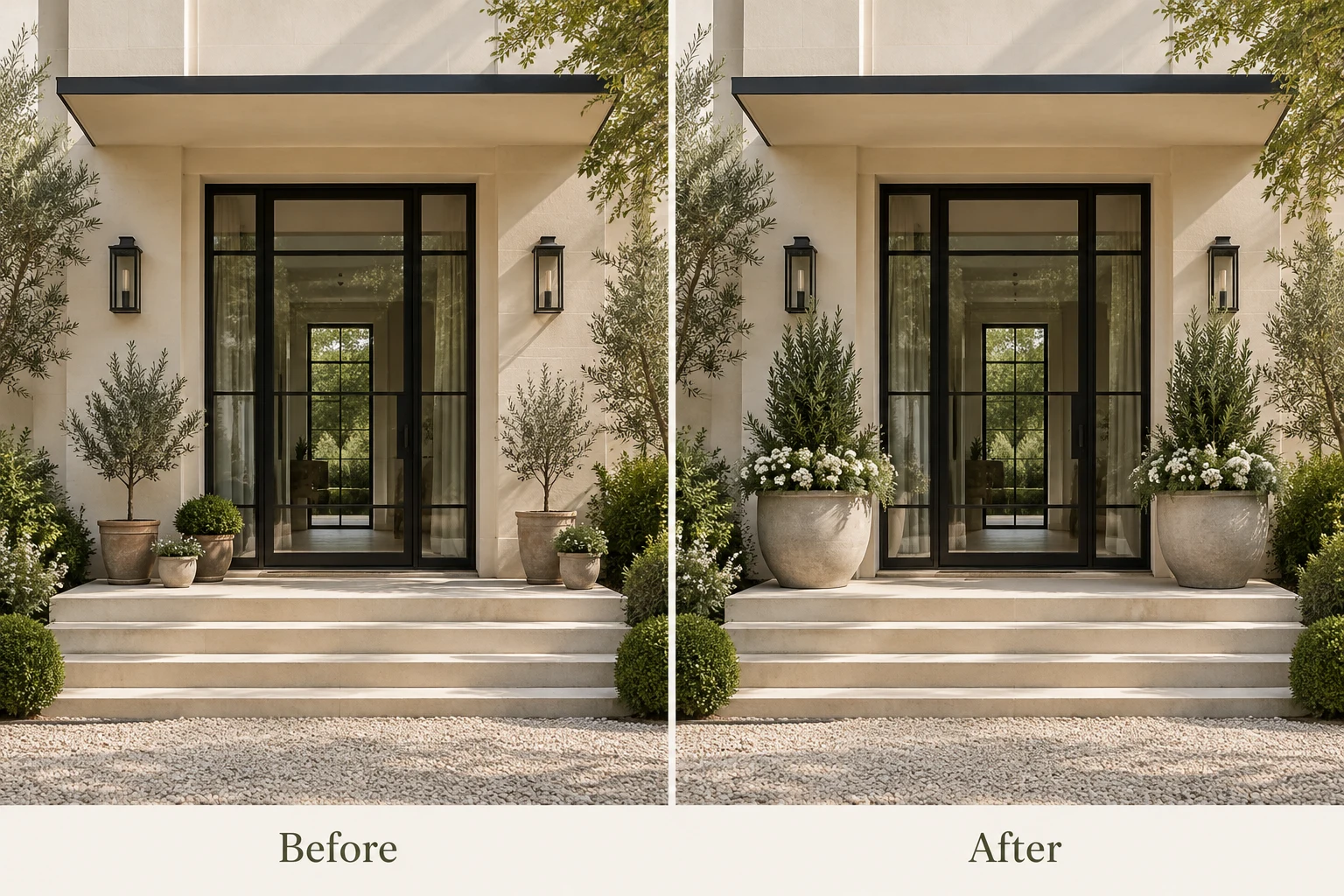
Several small pots can feel disconnected beside a substantial front door. Before adding another vessel, consider increasing the size of the principal planter. One generous pot or a carefully grouped pair often gives the entrance a clearer sense of intention.
Choose a small family of materials that relates to the house. One well-proportioned planter can feel more resolved than several tiny pots scattered across a stoop. A second vessel should strengthen the arrangement, with enough space around both to make the entrance easy to use.
Allow enough room to open the door fully, use the handrail, walk comfortably, receive deliveries and maintain the planting. Measure the usable space before choosing the vessel.
4. Find balance without making everything identical
A balanced pair
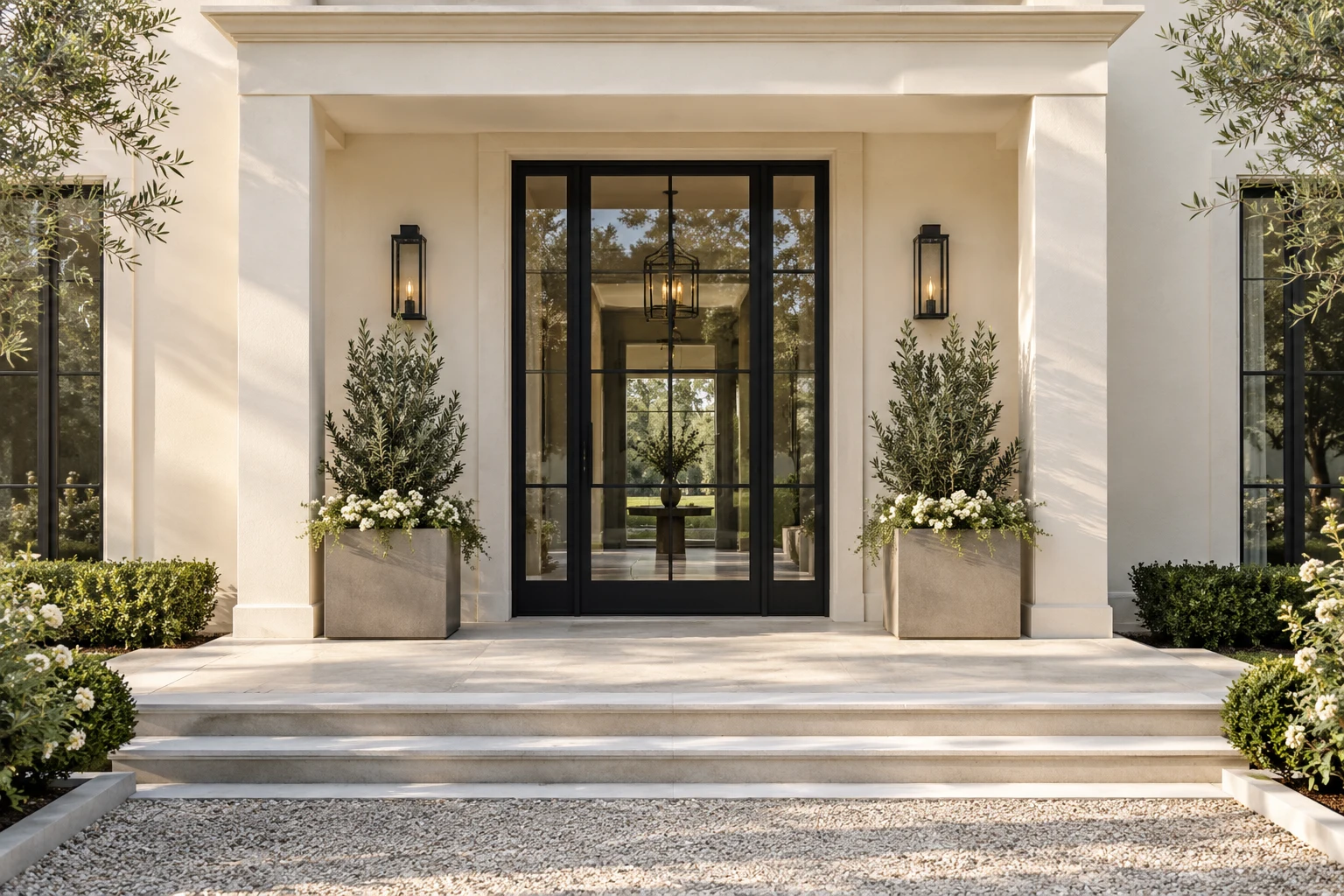
Matching vessels create a calm, formal entrance when the doorway and surrounding architecture are symmetrical. Simple modern forms can give this familiar arrangement a fresh expression. Let subtle natural differences between the plants remain.
An asymmetrical grouping
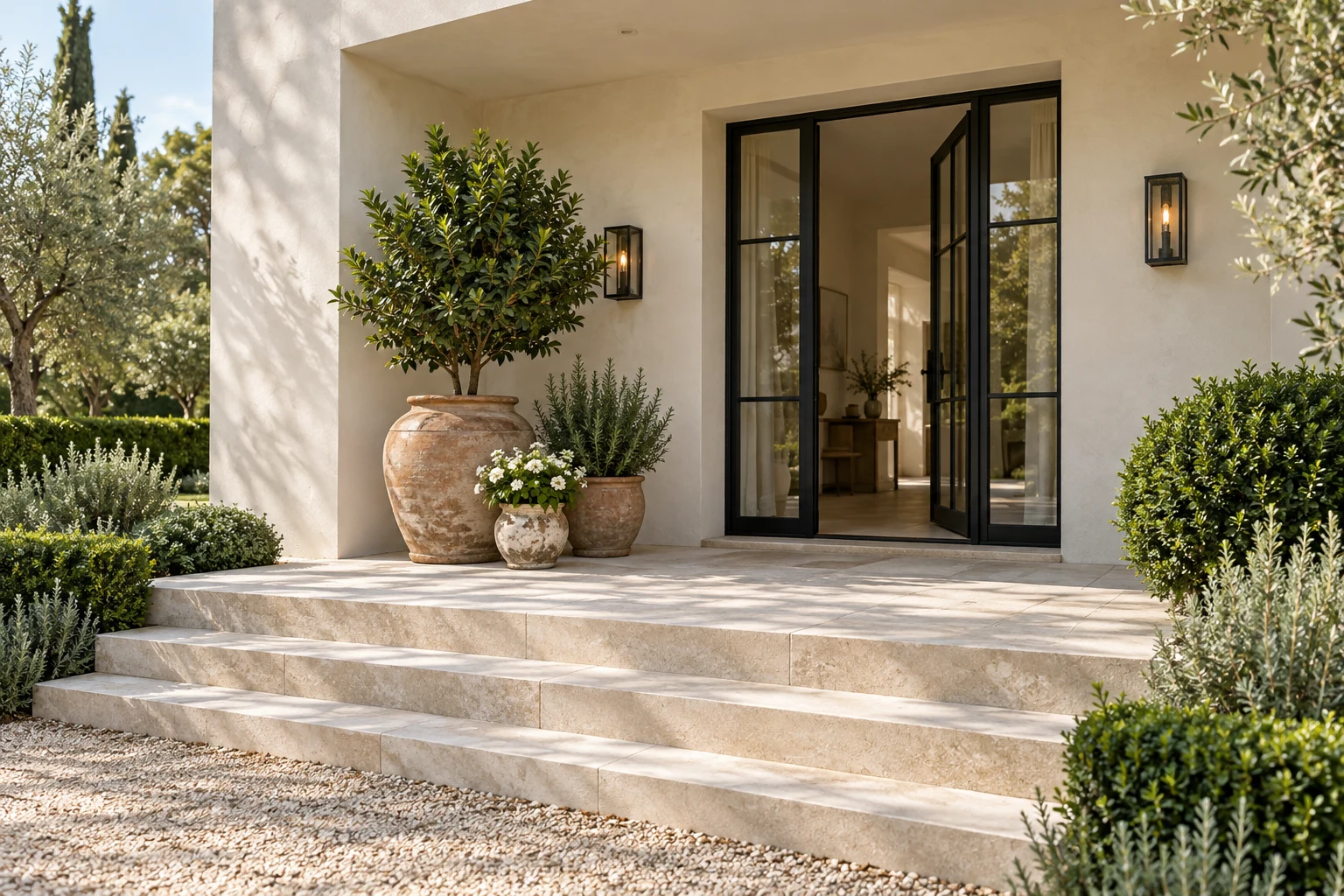
An offset doorway may suit a looser arrangement. One generous vessel can anchor the wider side of the entrance, with a medium pot and a smaller supporting pot completing the group. Repeat a material or foliage tone, and keep the walking route comfortably clear.
Repeat something that ties the composition together: a material, a green foliage tone or a rounded plant shape. Then leave a little open space. Balance comes from the relationship between the elements, rather than from matching every object.
5. Give container planting a clear role
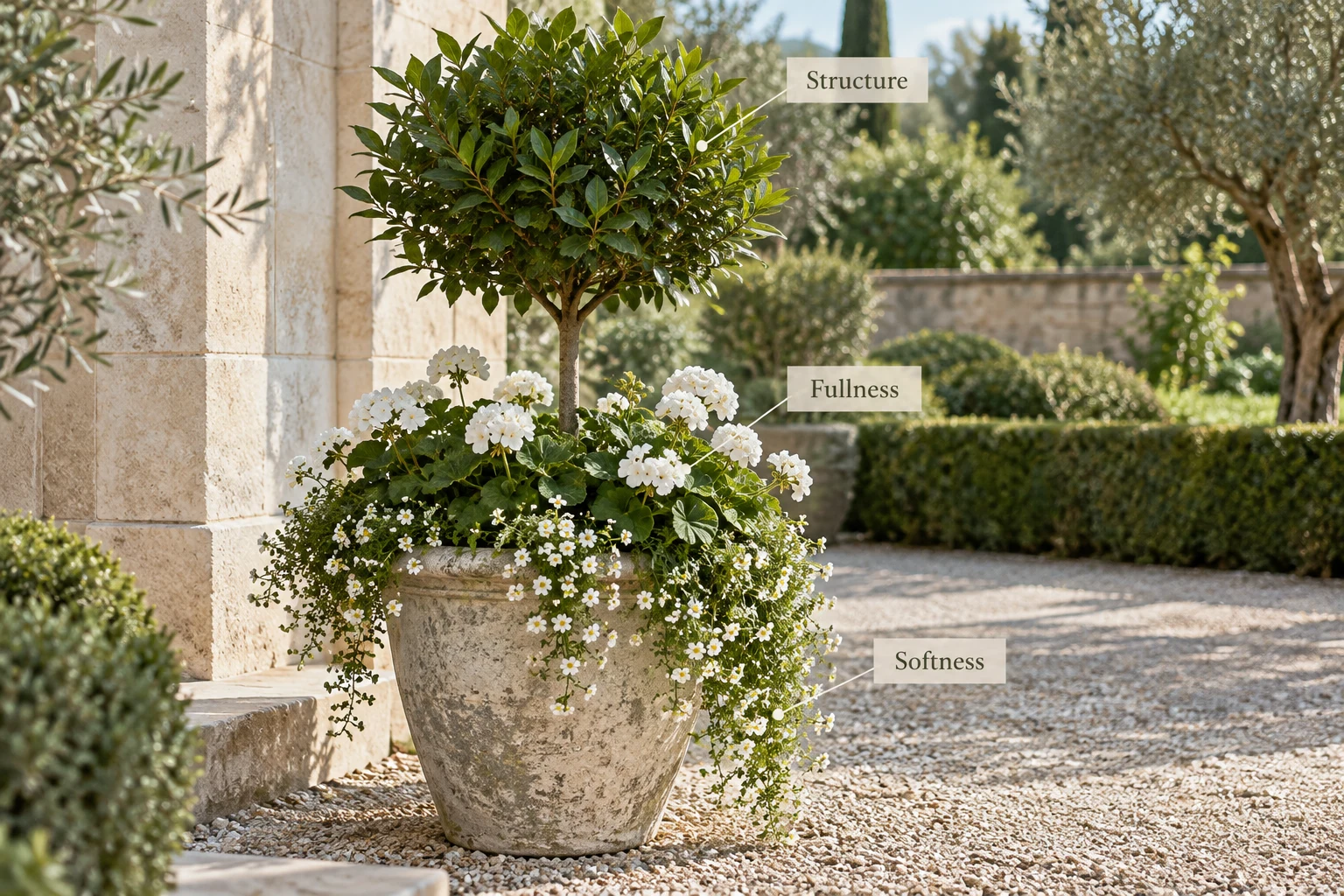
The Front Porch Garden Guide uses a simple framework: structure, fullness and softness. An upright bay standard establishes height, modest white pelargoniums provide body and delicate trailing bacopa softens the rim. Each element has a clear role, while the vessel remains part of the composition.
Treat this as a design framework rather than a requirement to combine three plants in every vessel. A single beautifully shaped evergreen may be all the container needs. When mixing plants, choose companions with compatible light, moisture and growing-medium needs, and give them room to develop.
6. Plant for the light your porch actually receives
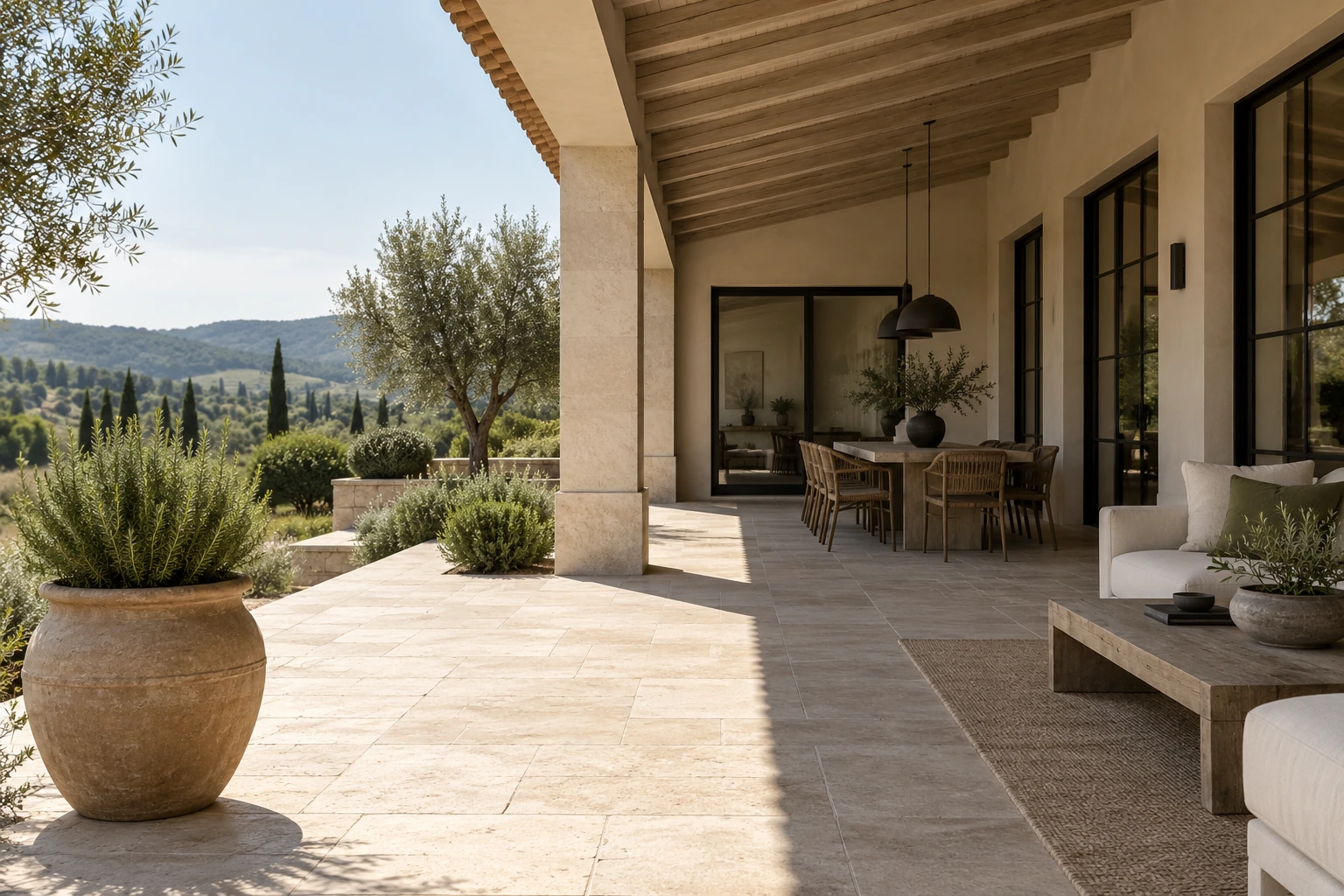
A sunny entrance and a sheltered porch can call for very different plants. Watch the light across the day, including the heat reflected from paving, glass or dark siding. A porch roof may keep containers dry even when rain reaches the surrounding garden.
Cream and lavender
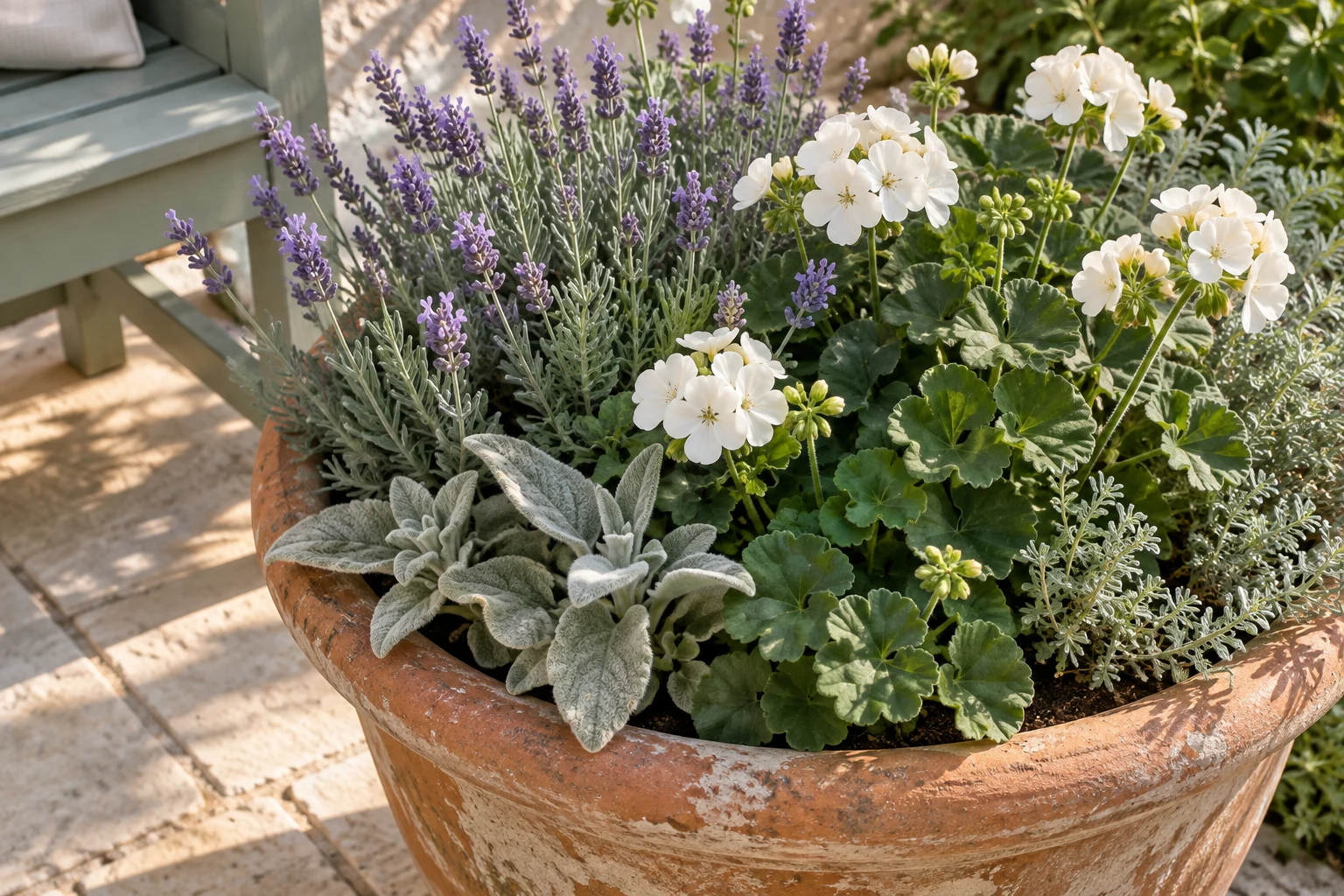
Lavender, white pelargoniums and suitable silver foliage offer a restrained palette for an entrance with ample light. Slender flower spikes contrast with rounded green leaves and cream-white blooms. Select companions with compatible growing needs and avoid filling the pot so densely that the individual textures disappear.
Mediterranean green
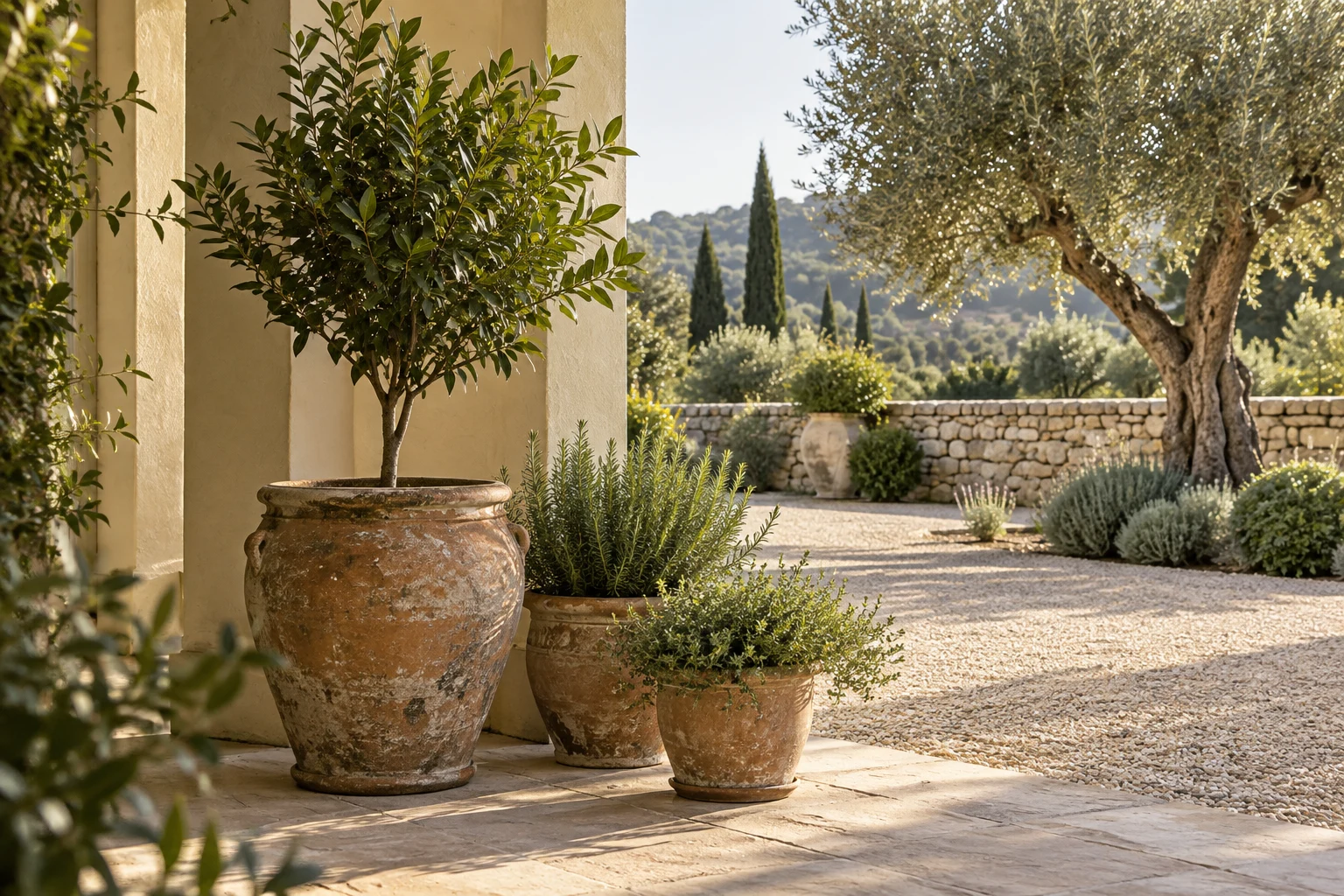
A bay or olive tree can establish height where the climate and container conditions suit it. Rosemary and thyme in supporting vessels keep the grouping predominantly green, with varied leaf shapes and comfortable spacing. Separate pots make it easier to give each plant appropriate care.
Structured evergreen
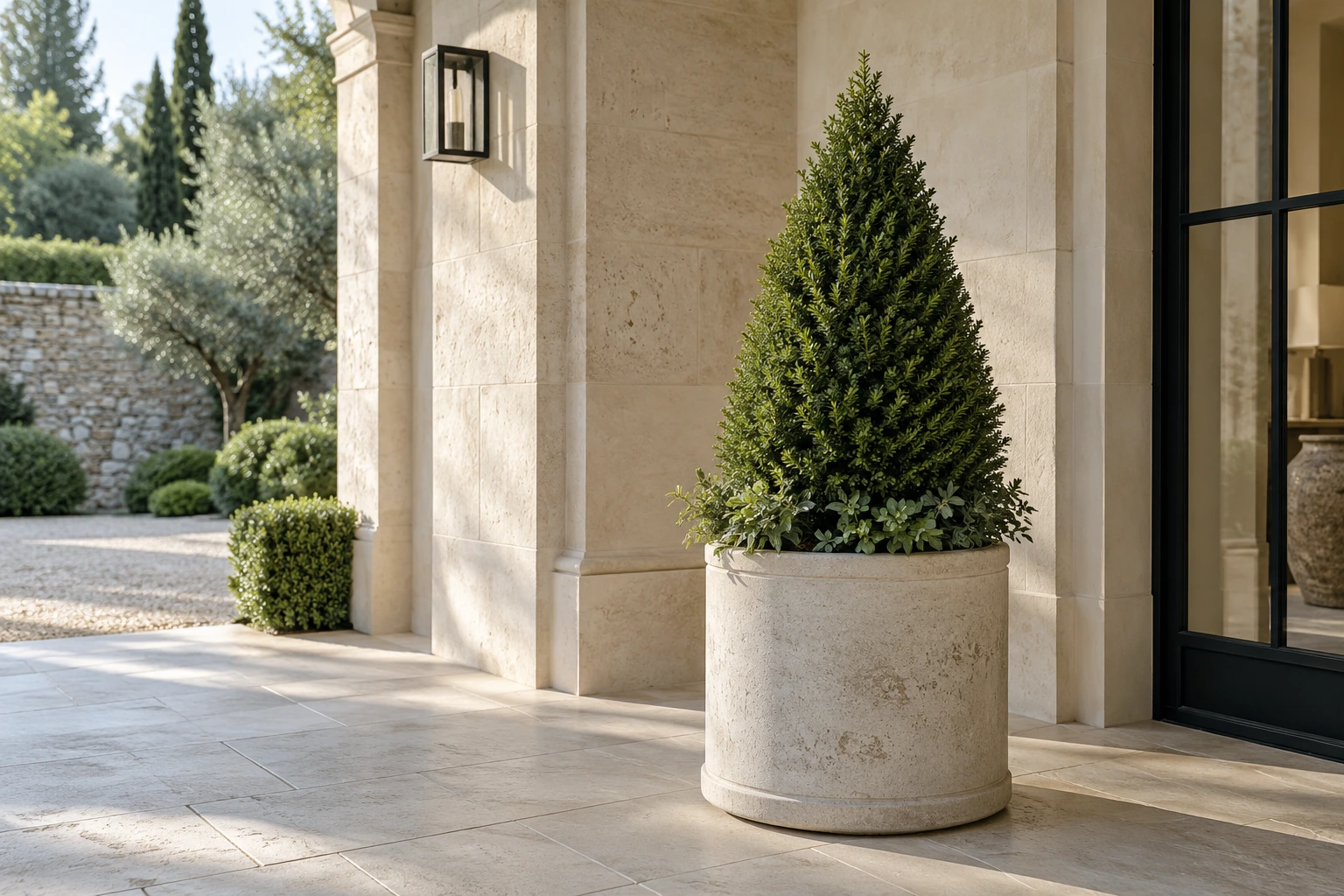
A clipped evergreen offers a clear shape that can carry the entrance through changing seasons. Keep any supporting flowers or foliage restrained, and choose the exact plant for the light, available root space and winter exposure.
Choose the exact plants for your region and the space available. Olive and bay can bring beautiful structure to an appropriate entrance, but their container care and winter requirements need to fit your climate. A sheltered position does not automatically make a plant winter-hardy.
7. Let foliage lead in a sheltered entrance
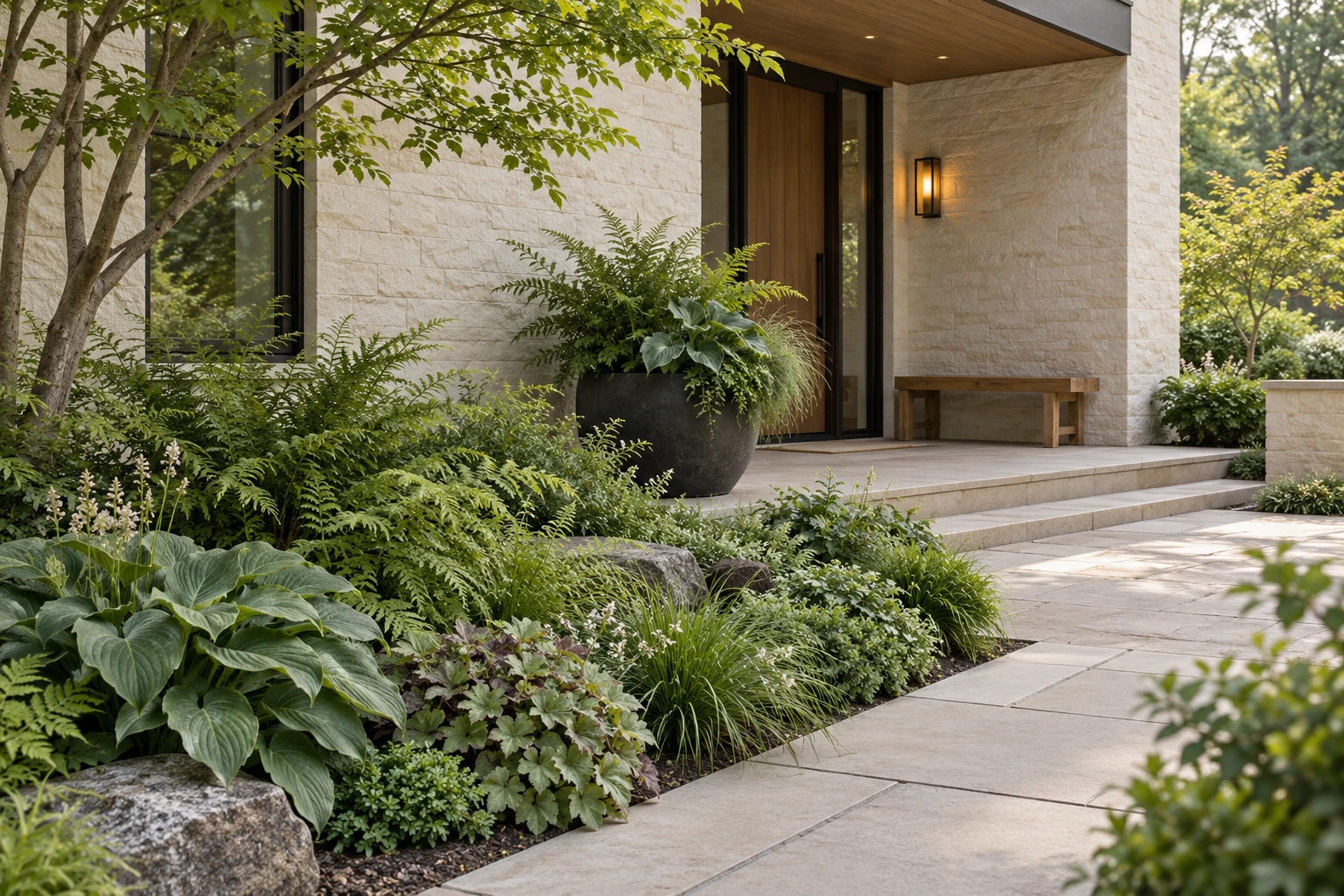
In a shaded or partly shaded entrance, layers of foliage can be especially inviting. The guide’s sheltered palettes include ferns, hostas, heucheras, sedges and suitable white seasonal flowers. Their different leaf shapes bring interest without requiring a large display of blooms.
Fern and ivory
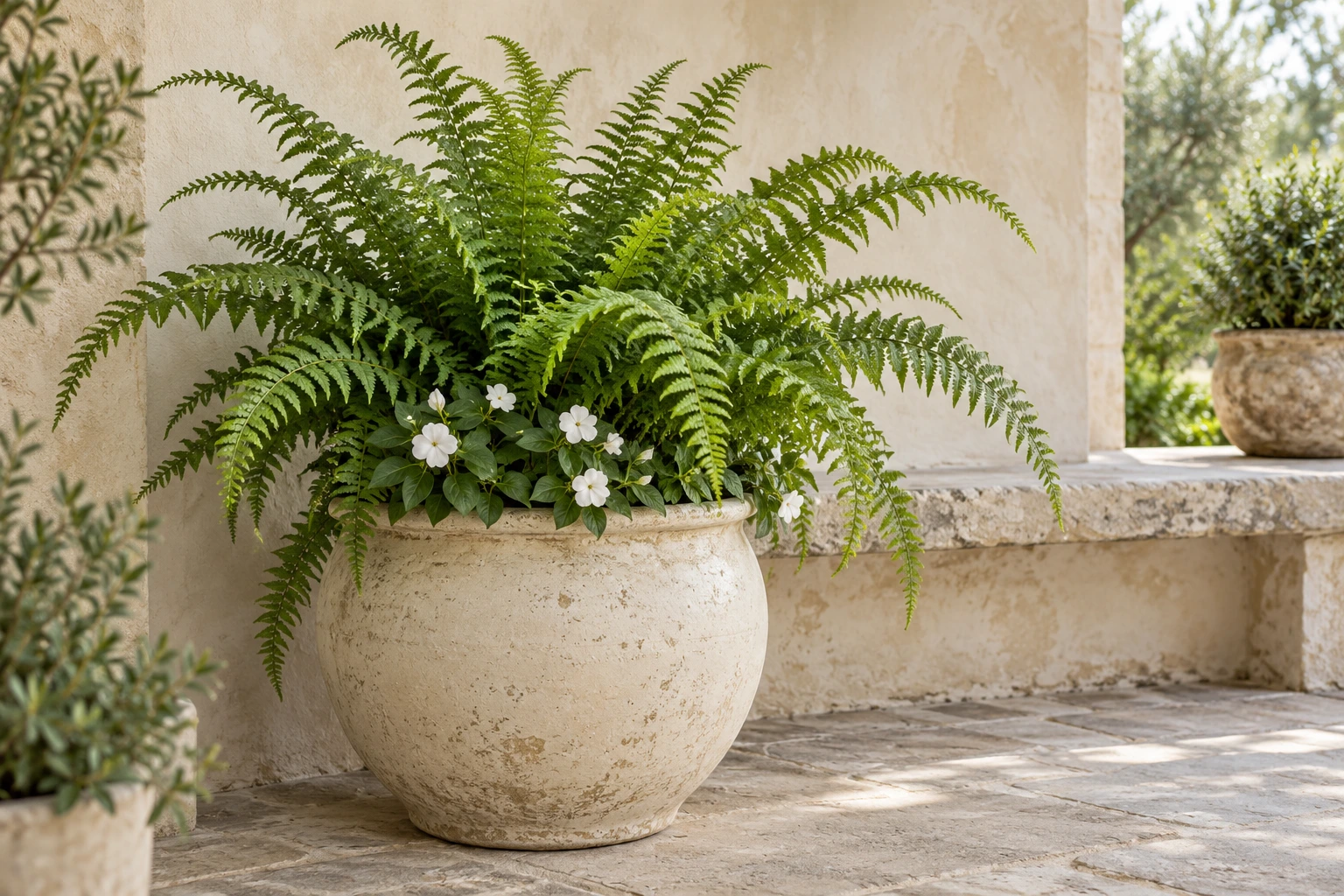
An upright fern gives the container an arching silhouette, while suitable white seasonal flowers introduce small points of light. Keep the grouping soft and restrained, selecting plants for the actual degree of shade and the moisture you can provide.
Woodland structure
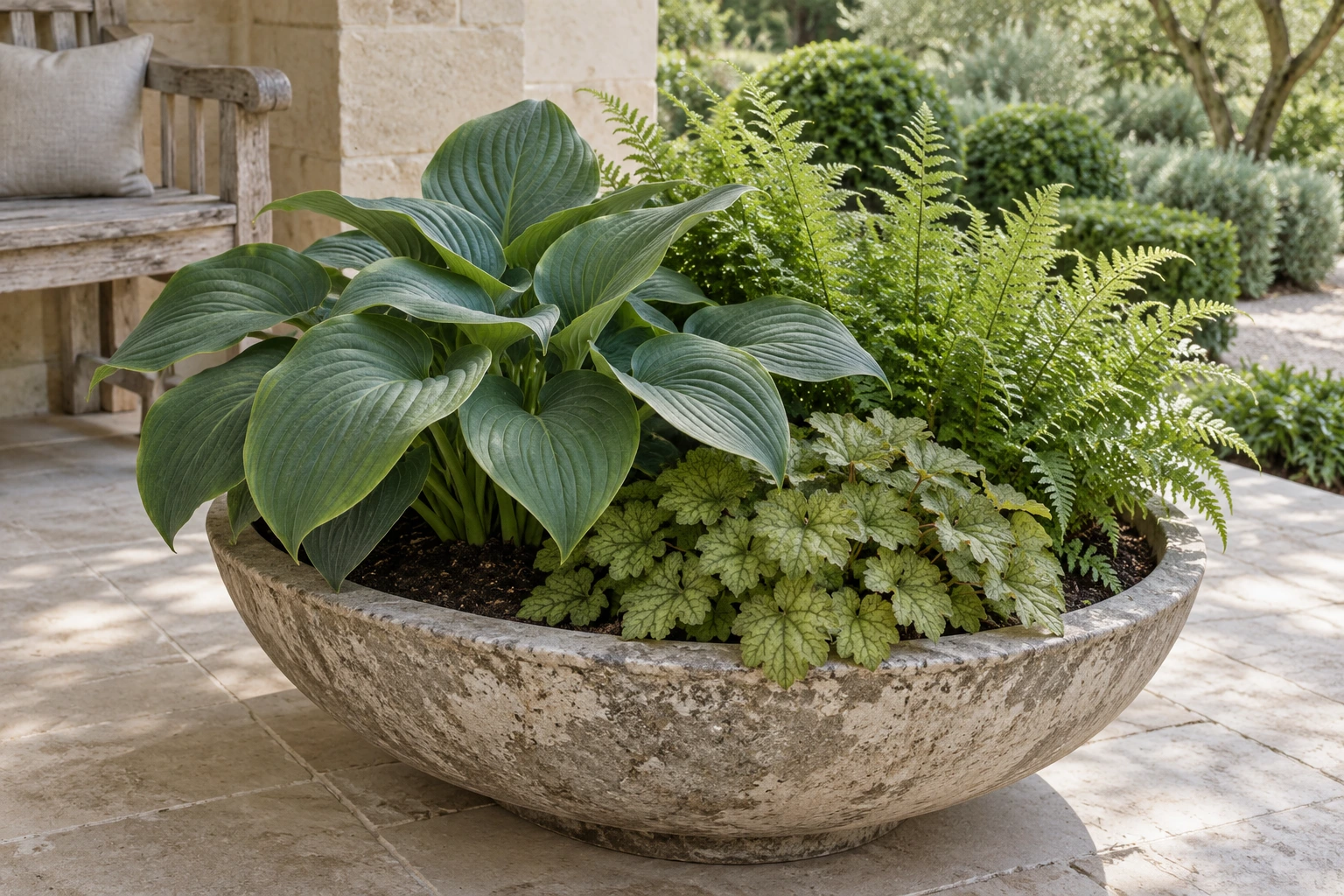
Ferns, hostas and heucheras offer contrasting foliage shapes for a sheltered container. Broad leaves, delicate fronds and smaller rounded foliage can provide fullness without relying on a large display of flowers. Allow room for each plant to develop.
Quiet foliage
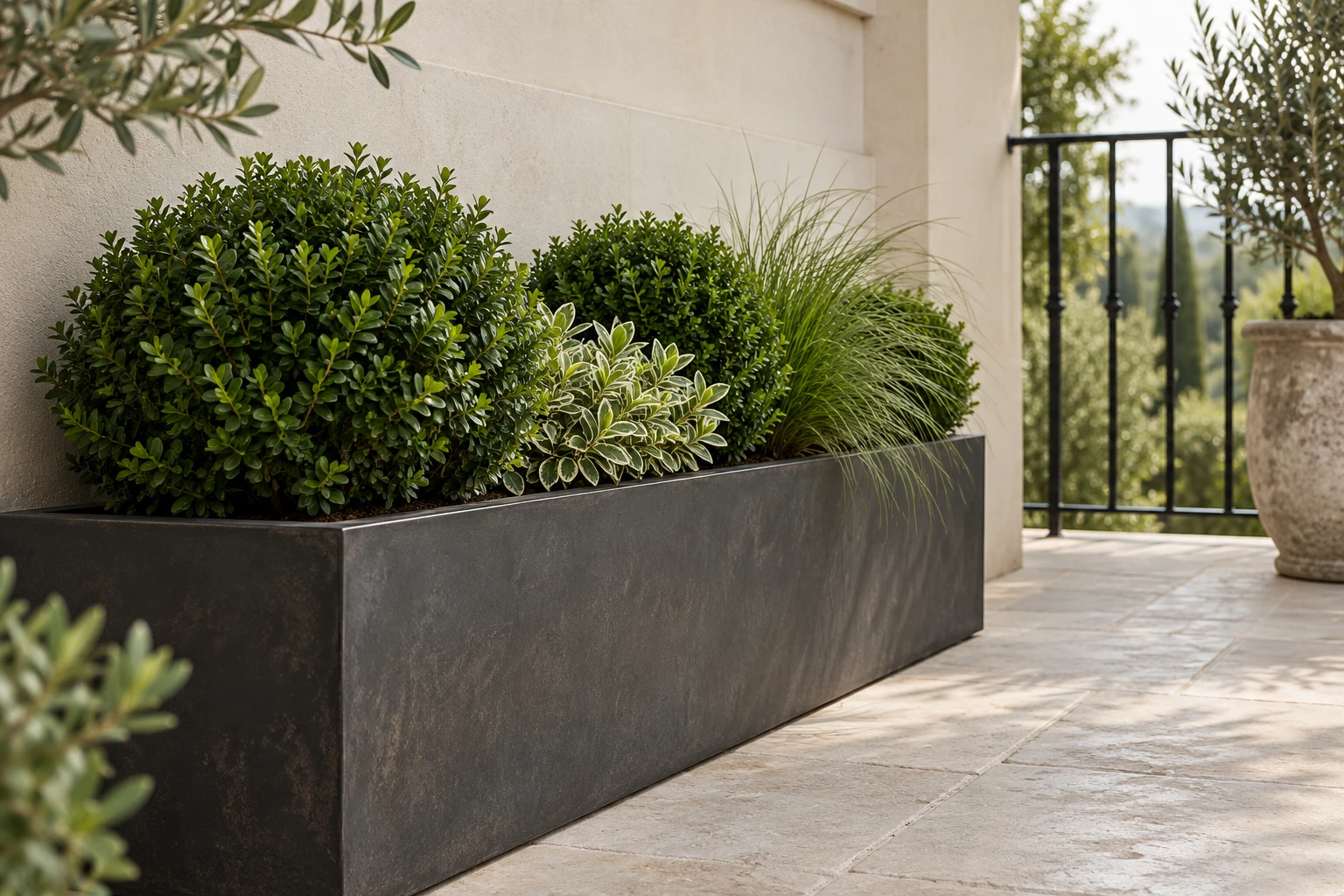
Boxwood, restrained variegated foliage and a suitable sedge can create a quieter composition where their growing requirements align. Repeat a limited range of greens and leave enough of the vessel visible to retain an architectural quality.
Remember that shade and moisture are separate conditions. Containers beneath a roof still need regular checks and watering. A plant that thrives in a damp garden bed may struggle in a dry pot beside the front door.
8. Let the planting travel beyond the steps
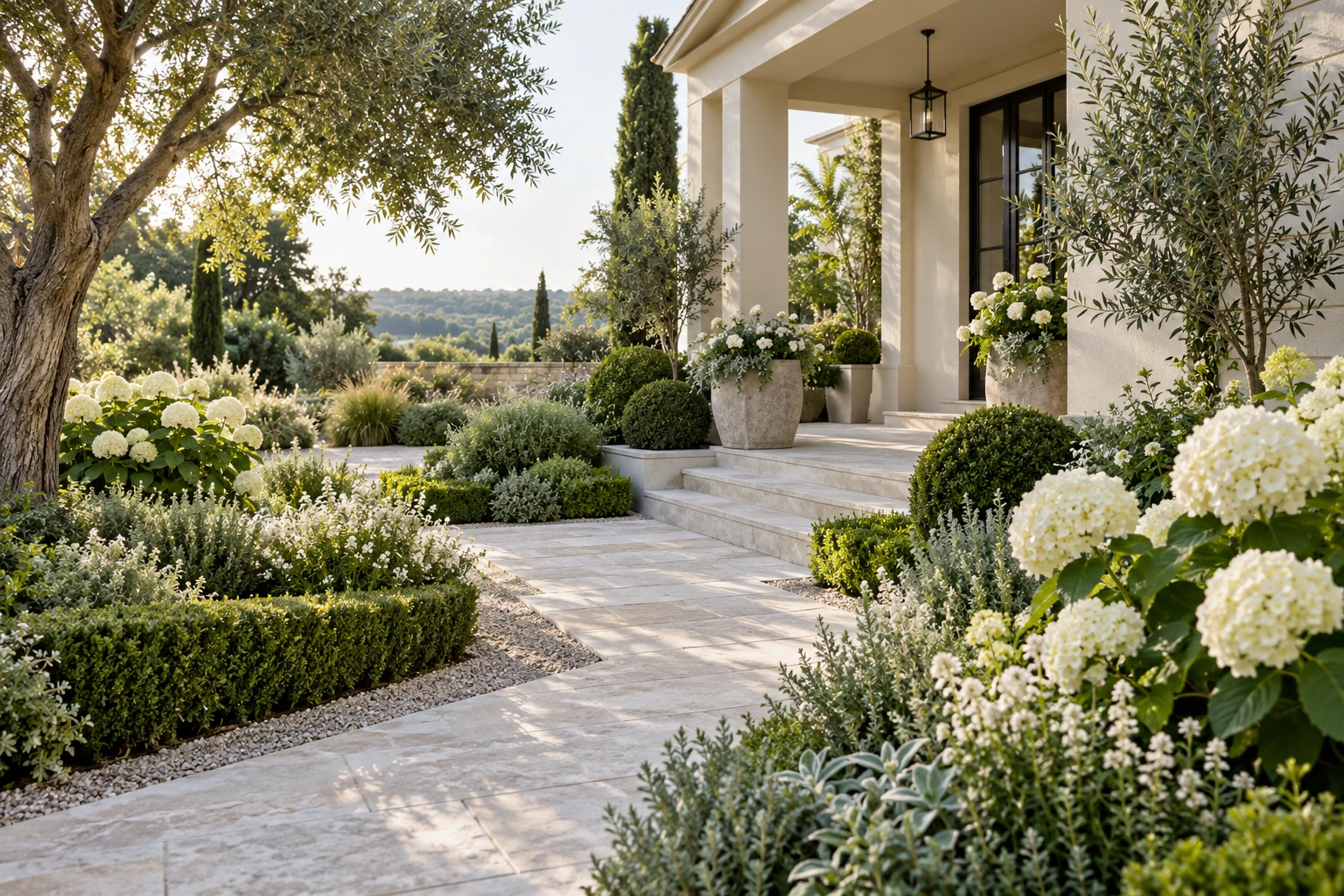
White flowers in a container can echo white hydrangeas beside the walkway. A clipped evergreen can repeat a shape in the foundation bed, while terracotta may reappear in a herb grouping farther along the path. A shared detail helps the porch feel part of the garden.
Compact shrubs provide lasting structure behind a middle layer of perennials and foliage plants. Low groundcovers or restrained edging finish the foreground, while porch containers add emphasis and seasonal flexibility. Let the containers complete the composition rather than carry the entire garden themselves.
Check mature height and spread before planting. Keep shrubs appropriately below windows and away from steps, railings, vents and paths. Leave enough room for the plants to grow without obscuring the entrance.
Repetition should feel intentional without making every element identical. A shared flower colour, vessel material or stone edge may be enough to link the porch and garden.
9. Keep the character, change the season
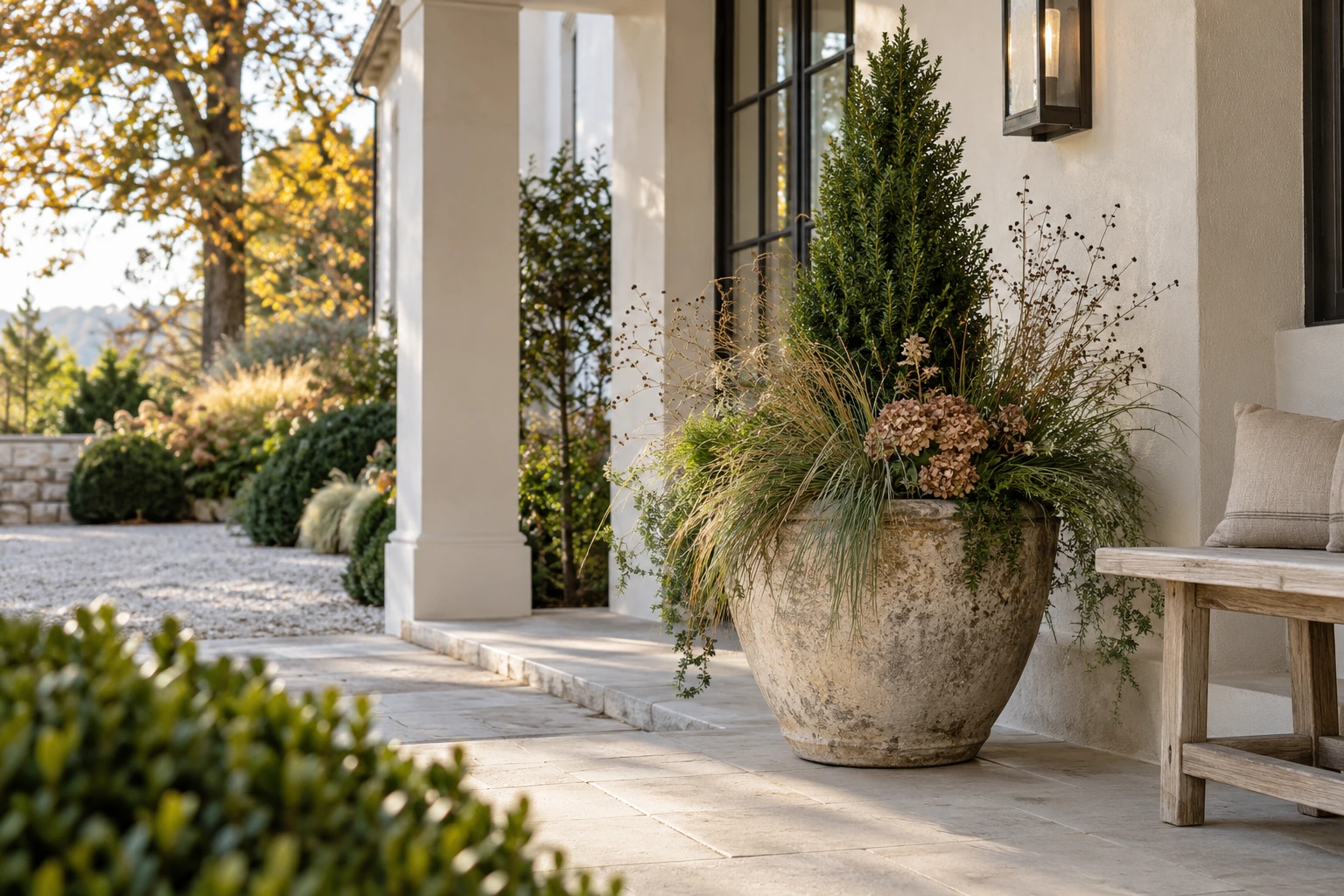
Seasonal planting works best when it supports the entrance’s established character. Keep the principal vessels and structural plants, then change a few softer details as the year moves on.
Spring might bring suitable white bulbs and fresh green foliage. Summer can introduce white flowers, lavender or herbs. In autumn, quieter foliage tones, grasses and seed heads can carry the composition. Winter may call for clipped conifers, evergreen branches and warm, restrained lighting.
There is no need to reinvent the porch four times a year. Let the house, vessels and main plant shapes remain the thread that holds the seasons together.
10. Make care part of the design
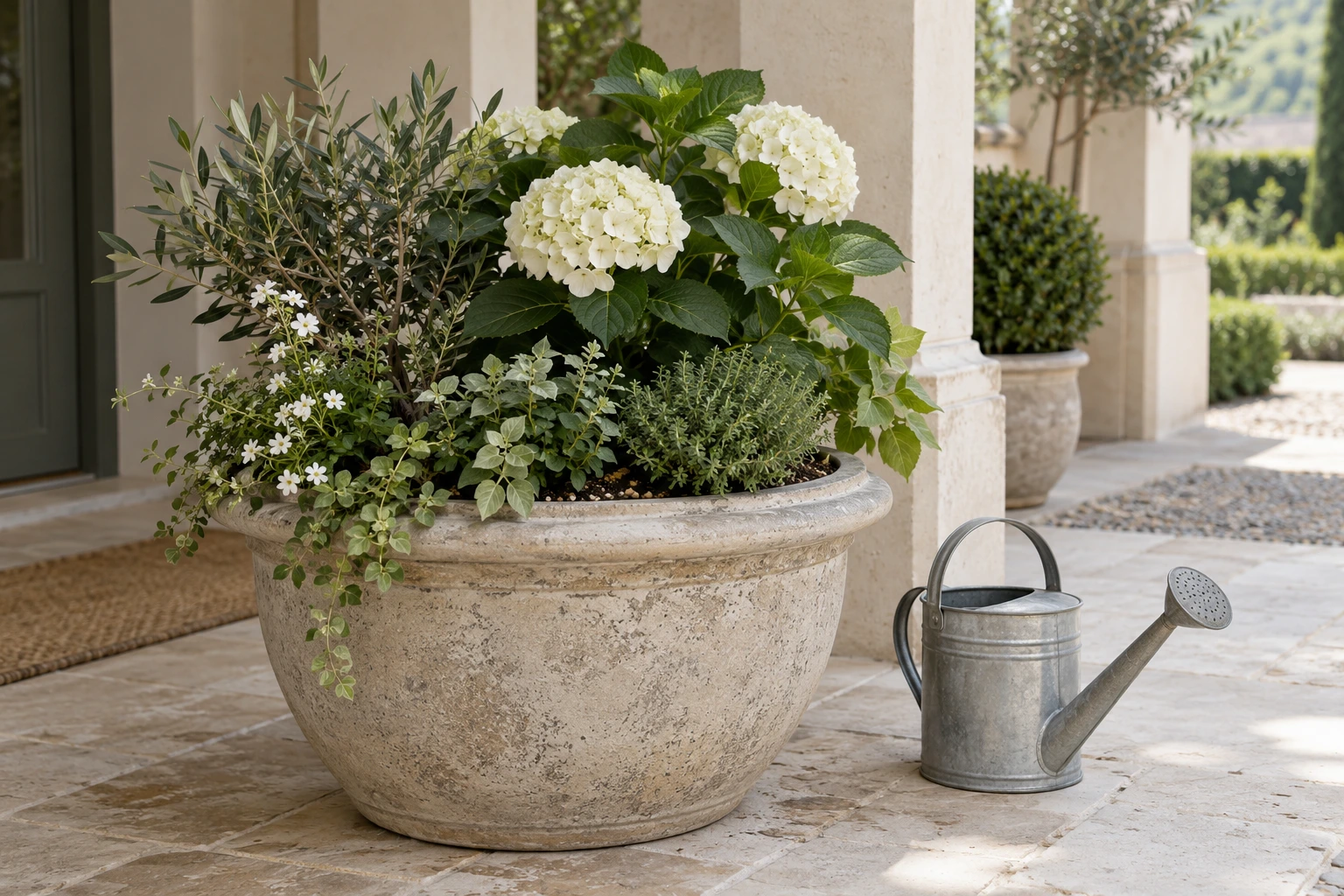
A beautiful container needs practical foundations. Use vessels with adequate drainage and a suitable container-growing medium. Position heavy pots before filling them, allow a watering lip beneath the rim and water thoroughly after planting.
Check moisture regularly, including during rainy weather when the porch roof may keep the soil dry. Remove damaged foliage and spent flowers, monitor plant health and feed according to the needs of the plants you have selected.
Consider winter care before buying a permanent container plant. Depending on the plant, vessel and climate, shrubs and trees in pots may need root protection, repotting or a sheltered winter position. Choose a scheme whose care fits your routine.
Frequently Asked Questions
How can I make a small front porch look more welcoming?
Begin with a clear route to the door and one well-scaled planter. Repeat a material or plant shape from the nearby garden, and remove small objects that compete for attention.
Do front porch planters have to match?
Matching pots can suit a formal, symmetrical entrance. An offset doorway or relaxed porch may work better with related vessels or one statement pot balanced by planting nearby.
What should I plant on a shaded porch?
The guide explores foliage-led combinations using suitable ferns, hostas, heucheras and sedges, with white seasonal flowers. Choose for the actual light, container size, moisture and winter conditions.
Can I use white hydrangeas near the front steps?
A suitable cultivar can help connect the porch to the garden. Check its mature dimensions and growing needs, and leave enough clearance beside steps, paths and windows.
Why do porch containers need watering when it rains?
A roof can prevent rainfall from reaching the growing medium. Check the soil in each pot rather than assuming that wet paving means the container has been watered.
A thoughtfully framed welcome
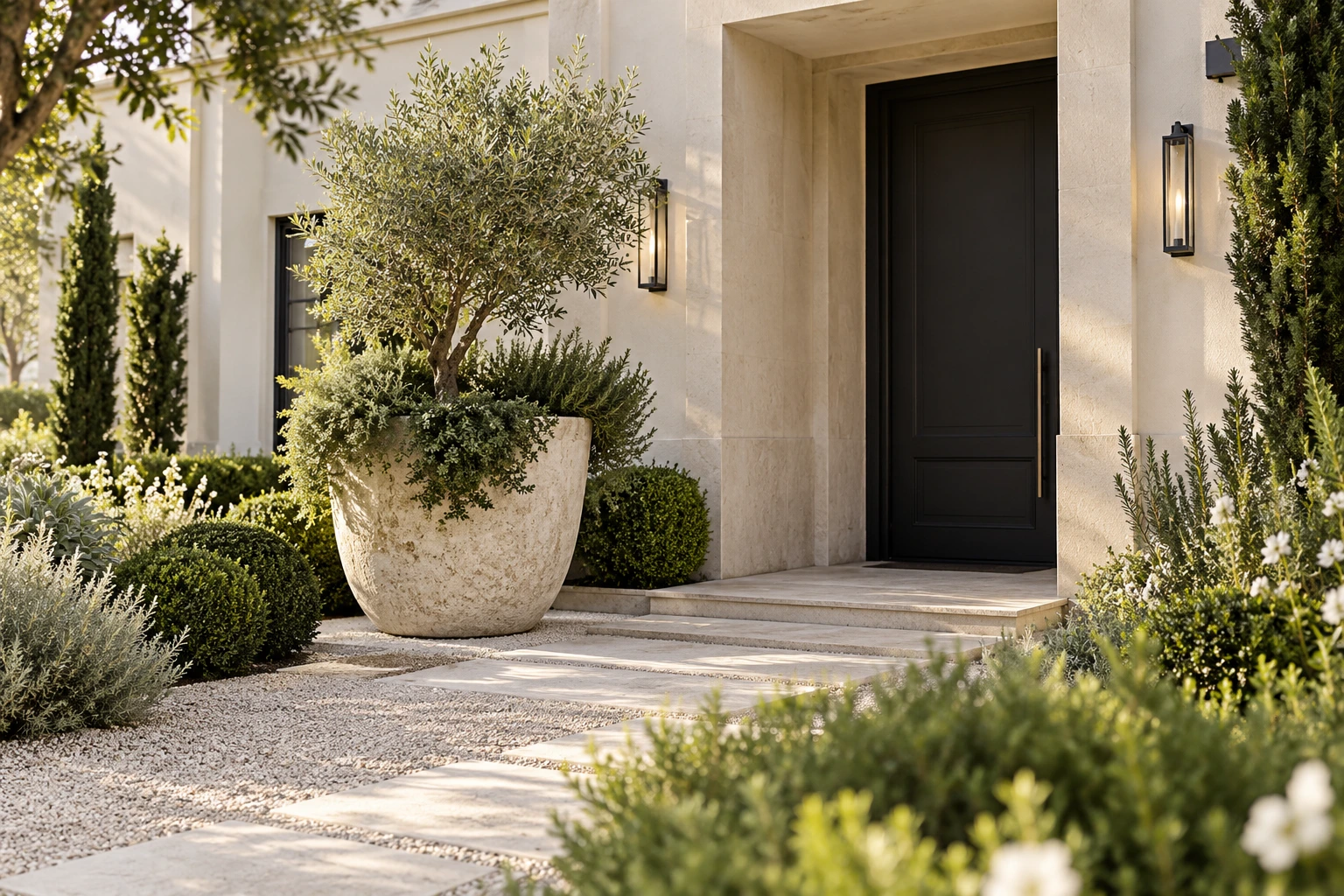
A welcoming porch is often the result of a few careful decisions: a vessel that belongs beside the house, a plant suited to its position and a repeated detail that connects the entrance to the garden.
Begin by looking at what is already there. Measure the space, observe the light and choose the elements that give the entrance a clear, comfortable frame. Leave room for the house and the planting to be enjoyed.
Thank you for being here and spending a little time in the garden with me. I hope these ideas help you create an entrance that feels welcoming, beautifully considered and entirely your own.
Before you go…
If you’re beginning to imagine your own welcoming entrance, I’ve created a complimentary Front Porch Garden Mini Guide to help you take the first steps. Enter your email below to access your free six-page guide, a little inspiration to keep close as you plan your plants, pots and layered greenery.
MORE IN GARDENS
Recent Reads
October 13, 2026
How to Create a Beautiful Low-Maintenance Garden: 7 Simple Design Ideas

October 10, 2026
How to Create a Beautiful Privacy Garden with Layered Planting

October 7, 2026
How to Choose a Garden Colour Palette: 7 Beautiful Plant Combinations
October 6, 2026