
THE GARDEN NOTEBOOK
How to Create a Beautiful Low-Maintenance Garden: 7 Simple Design Ideas
7 simple design ideas for a garden that feels beautiful without becoming another weekend chore.
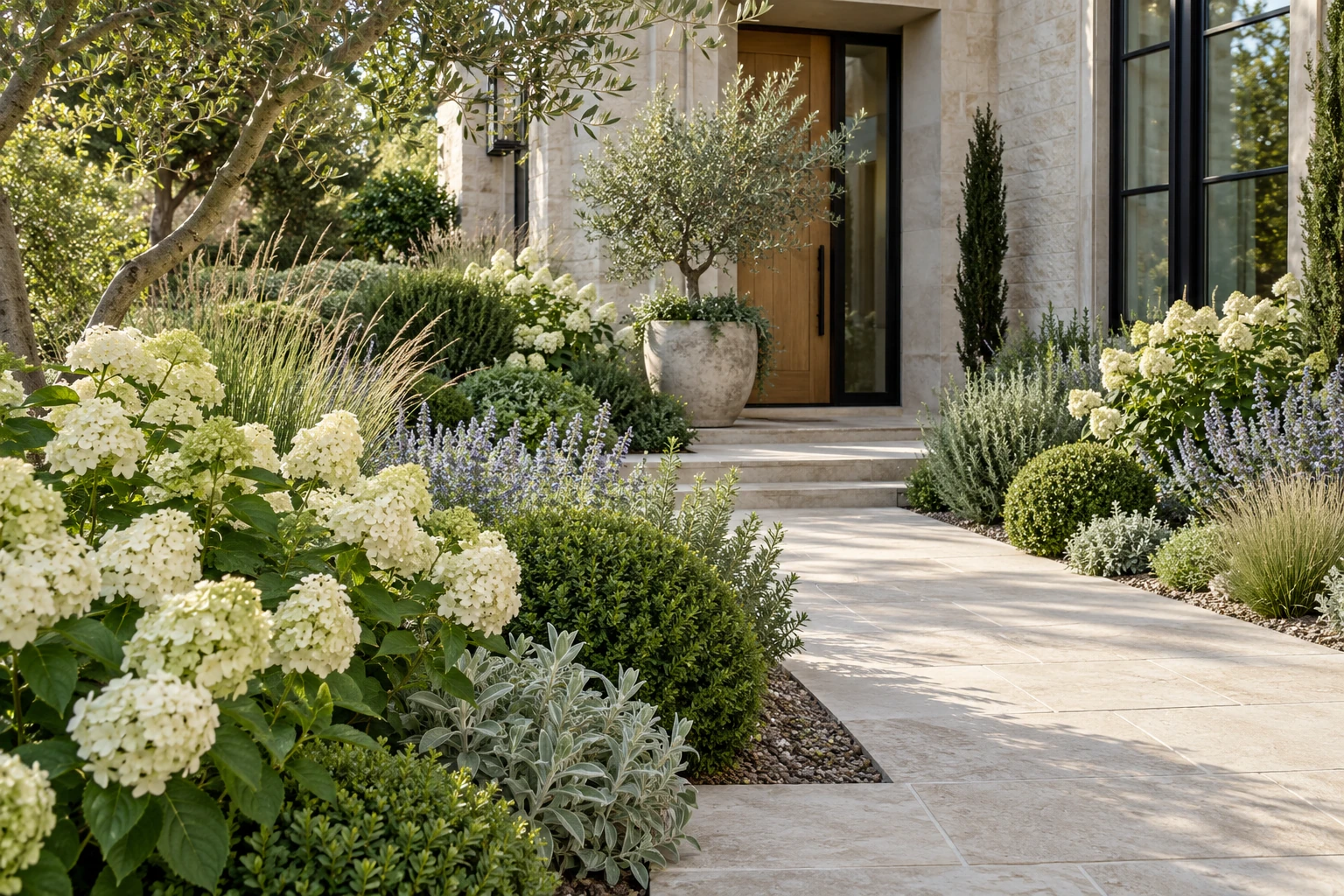
There is something especially lovely about a garden that always seems to look beautiful, even when you haven’t had much time to spend in it. The borders feel full without being crowded. The planting feels calm rather than chaotic.
I think that is what so many of us are really after: a space that looks beautiful, feels intentional and doesn’t demand all of our free time to keep it going.
1. Start with fewer plants and better structure
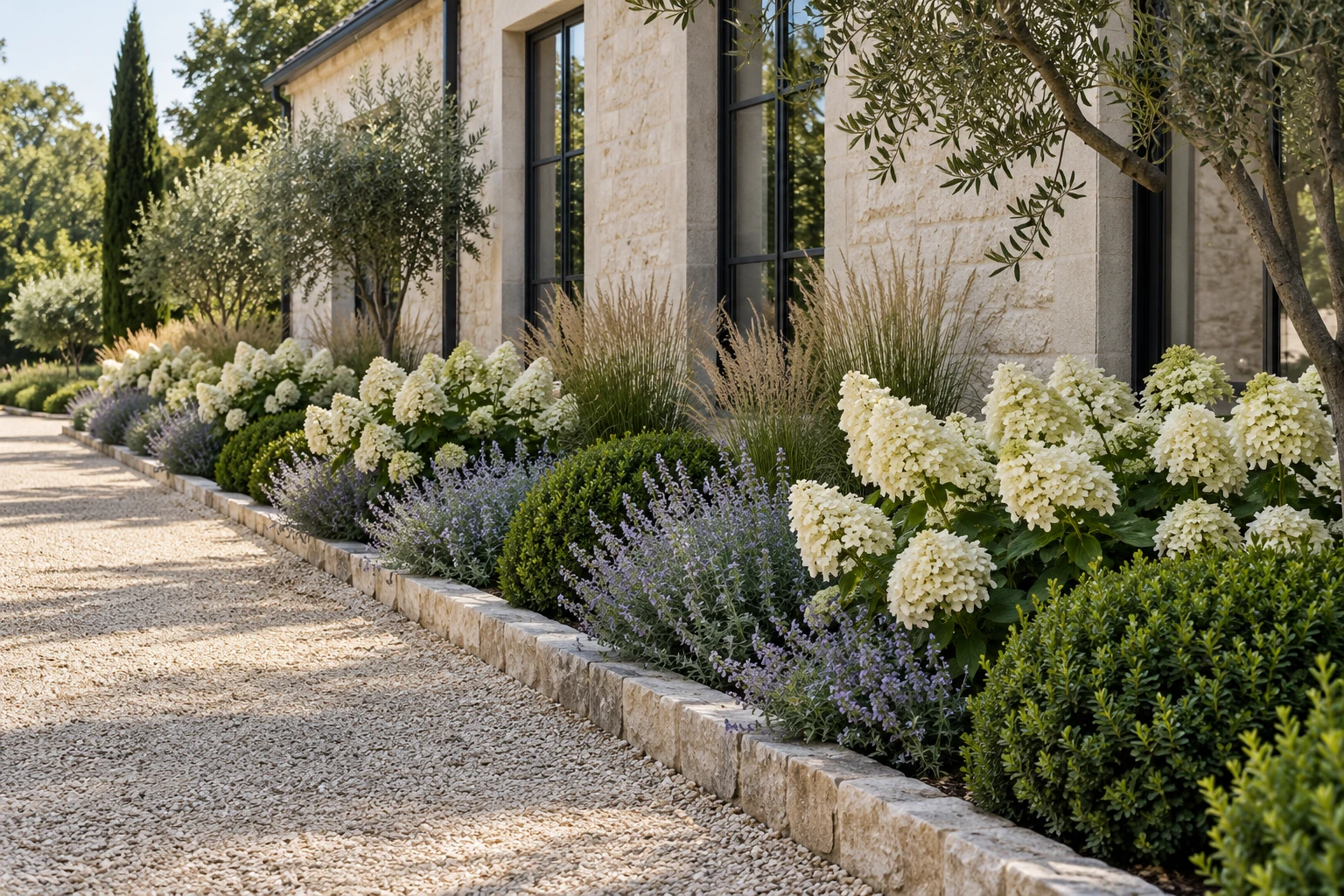
The real goal is not emptiness. It is clarity. A smaller palette of dependable plants, repeated in generous groups, makes a border feel peaceful and cohesive.
White hydrangeas, compact evergreen shrubs, catmint and ornamental grasses can create a soft European-inspired garden without dozens of varieties to maintain.
2. Use shrubs that earn their space
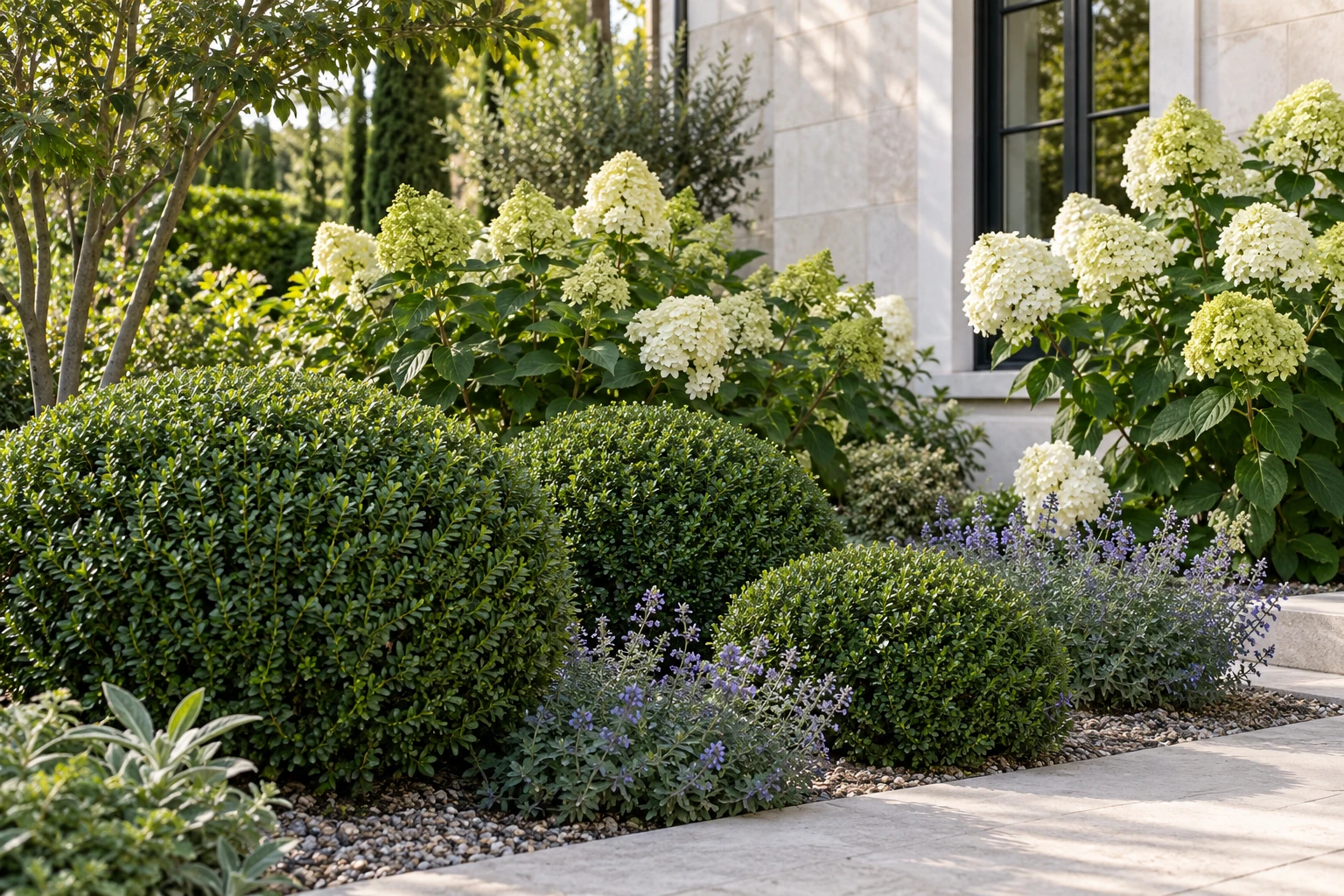
Shrubs do so much of the quiet work in a garden. They provide structure through the seasons and give the border a sense of permanence.
I especially love compact white panicle hydrangeas paired with naturally rounded evergreens. Before choosing any shrub, check its mature size, growing conditions and pruning needs.
3. Choose dependable perennials that return year after year
These four favourites from the guide bring texture, movement and long-lasting seasonal beauty.
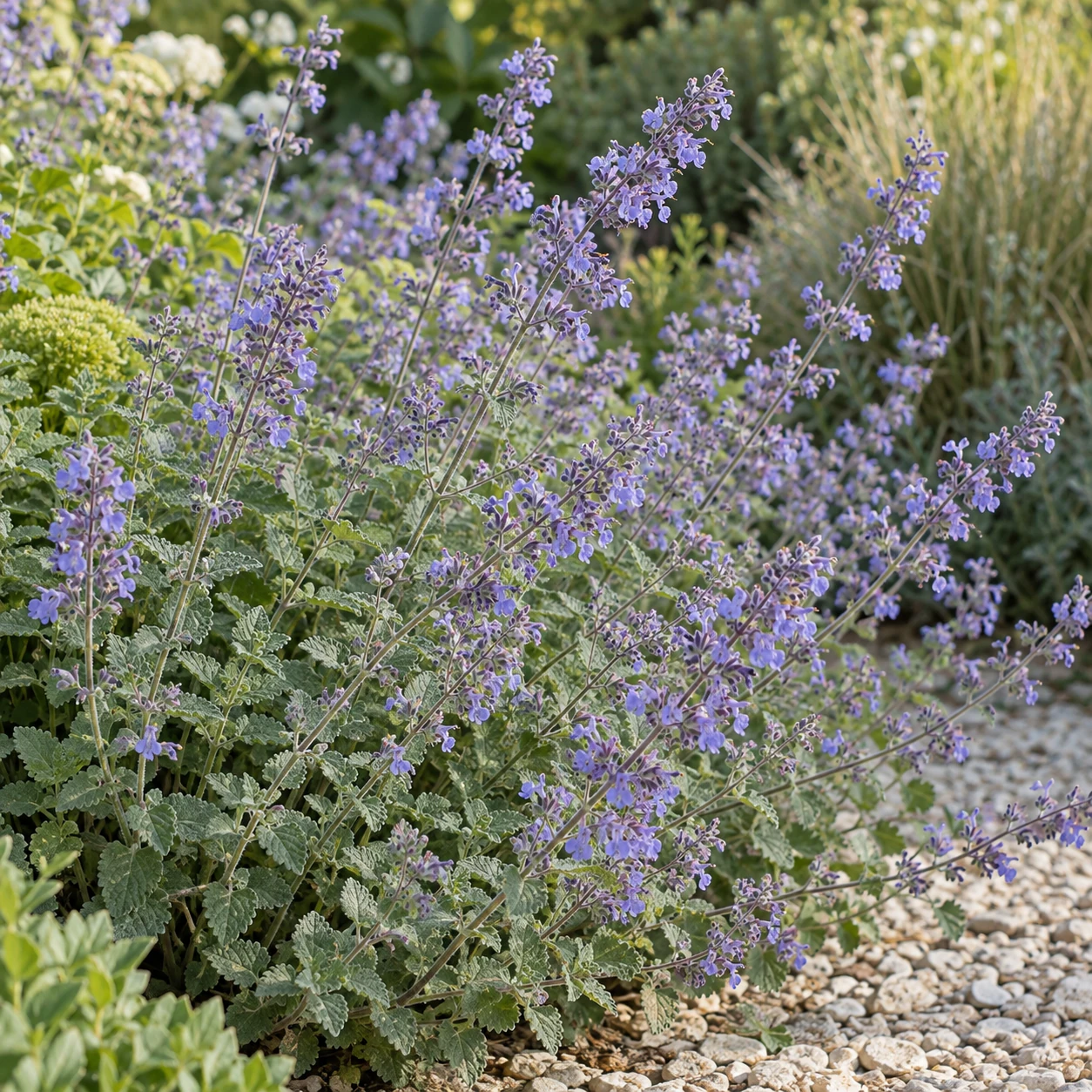
Catmint ‘Walker’s Low’
Soft lavender-blue flowers and a relaxed, flowing habit make catmint lovely beside paths. Once established, it performs well in sunny, suitable soil.
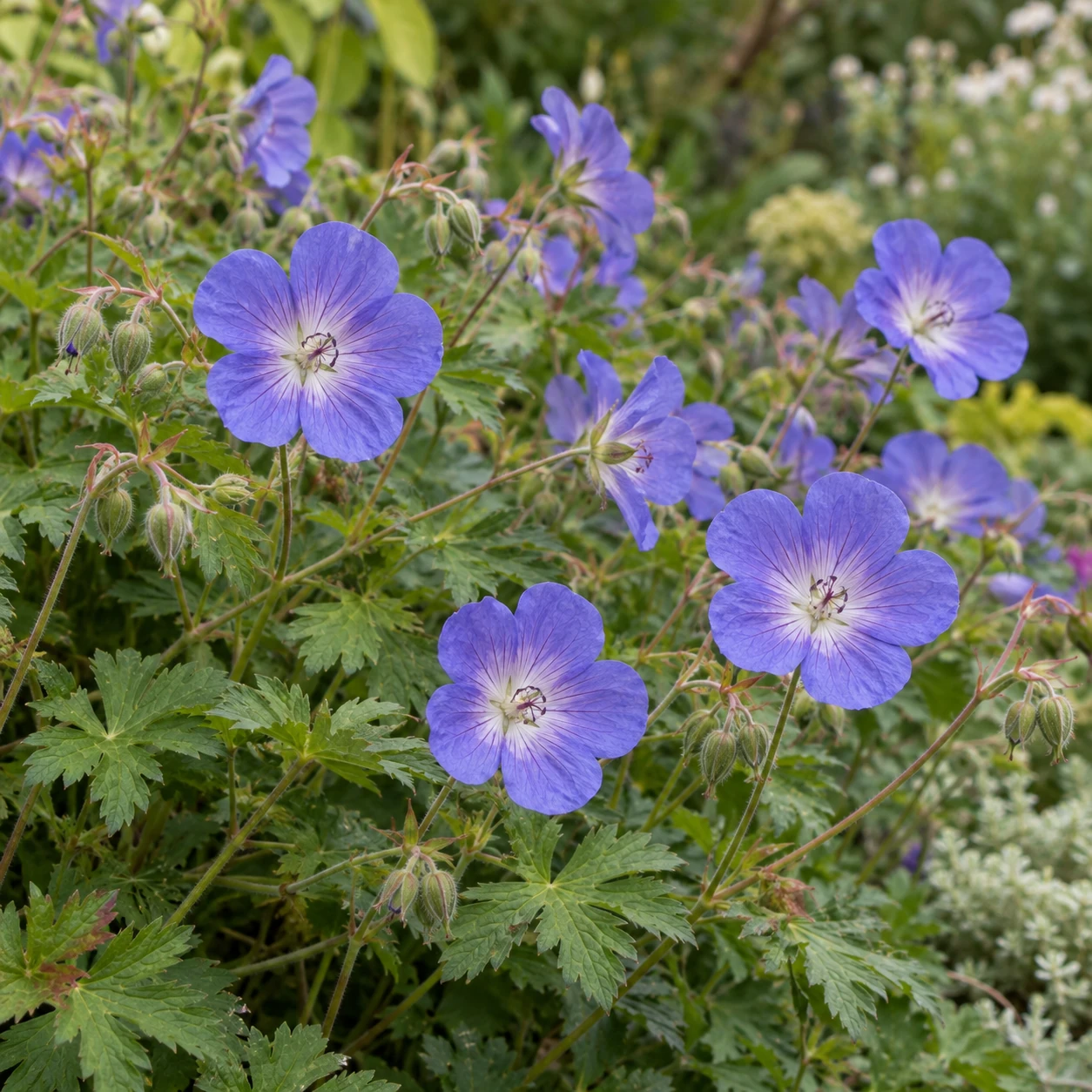
Geranium ‘Rozanne’
Violet-blue flowers soften the middle of a border, weaving gracefully around shrubs and ornamental grasses through a long flowering season.
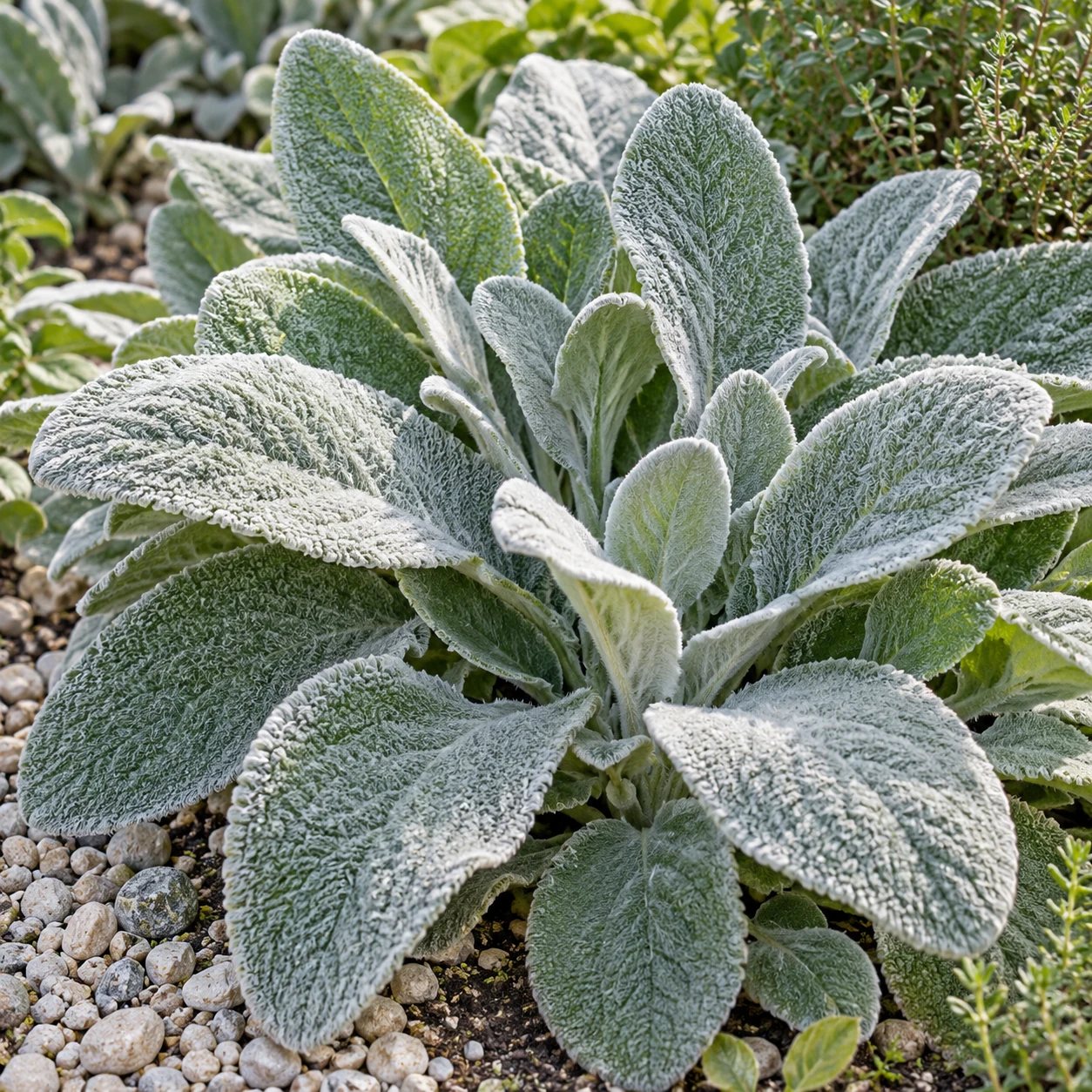
Lamb’s Ear ‘Big Ears’
Velvety silver foliage brings a beautiful contrast to green shrubs and looks particularly lovely against limestone and gravel.
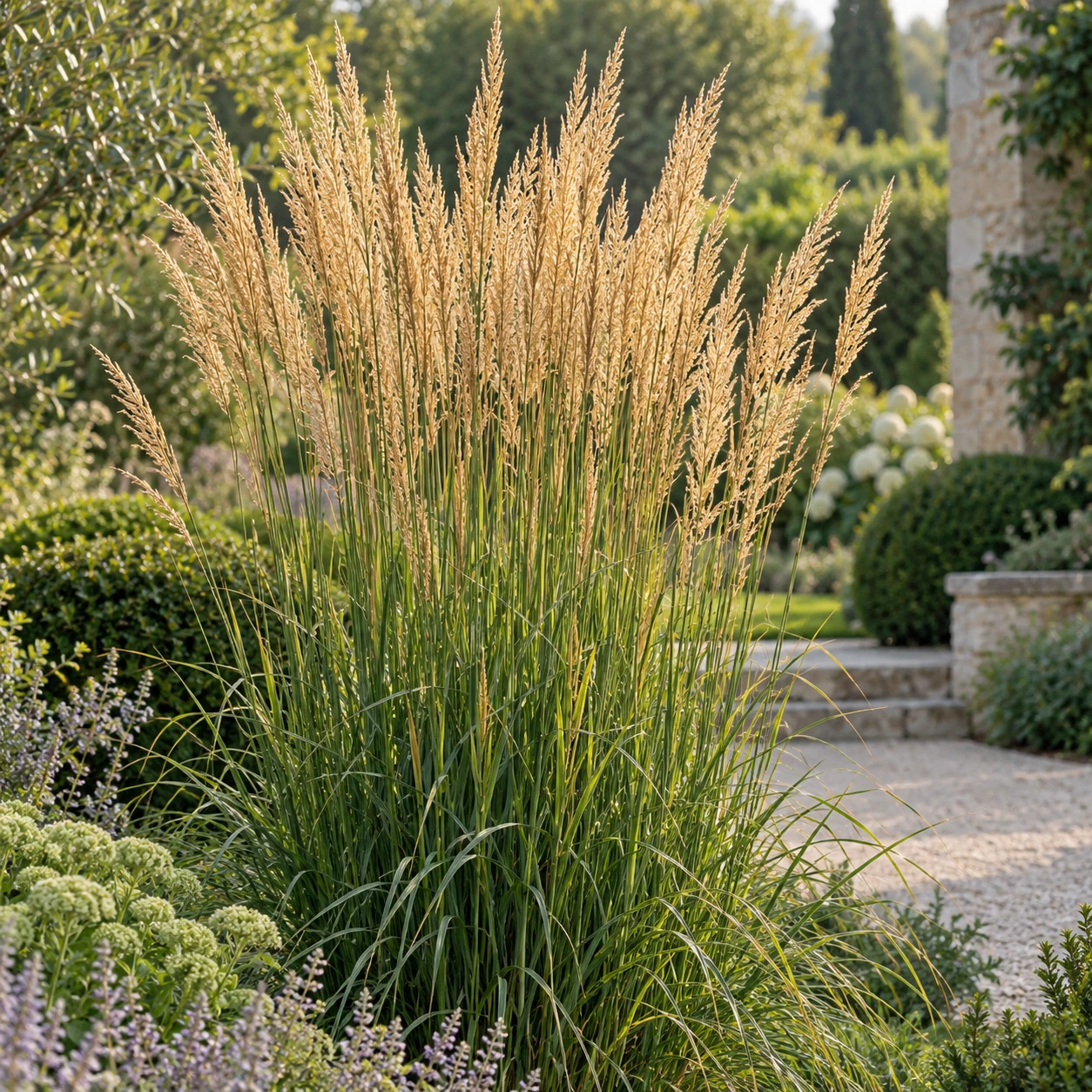
Feather Reed Grass ‘Karl Foerster’
Elegant upright movement and golden seed heads provide height, rhythm and seasonal interest without overwhelming the planting.
4. Layer your planting for a fuller, more polished border
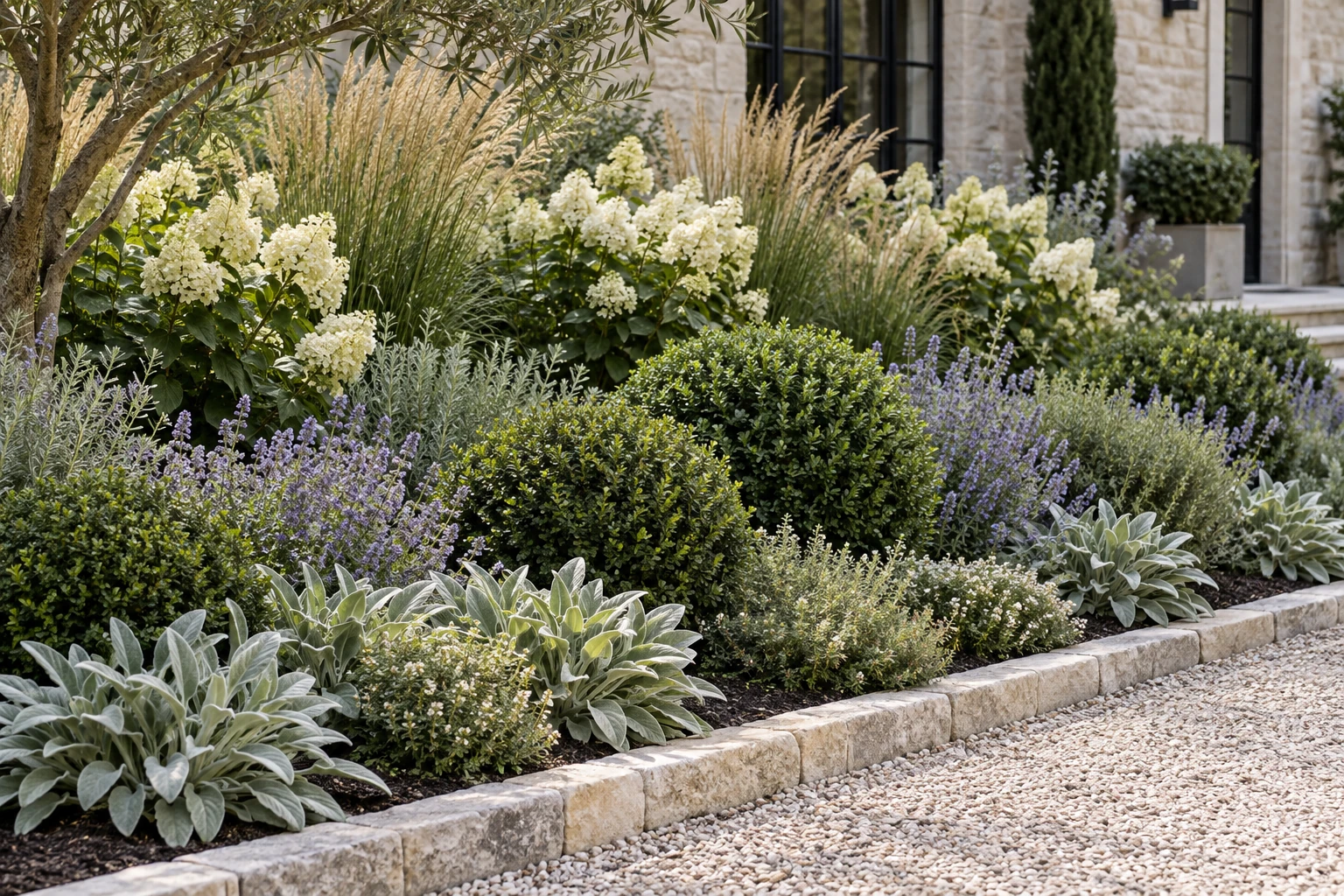
One of the easiest ways to make a garden feel thoughtfully designed is to plant in layers. Taller shrubs and grasses provide the backdrop. Flowering perennials fill the middle, and low foliage and ground cover soften the front.
Back: structural shrubs and taller grasses.
Middle: repeated flowering plants.
Front: compact perennials and ground cover.
Edge: natural stone, gravel or another simple finish.
5. Give your garden room to grow
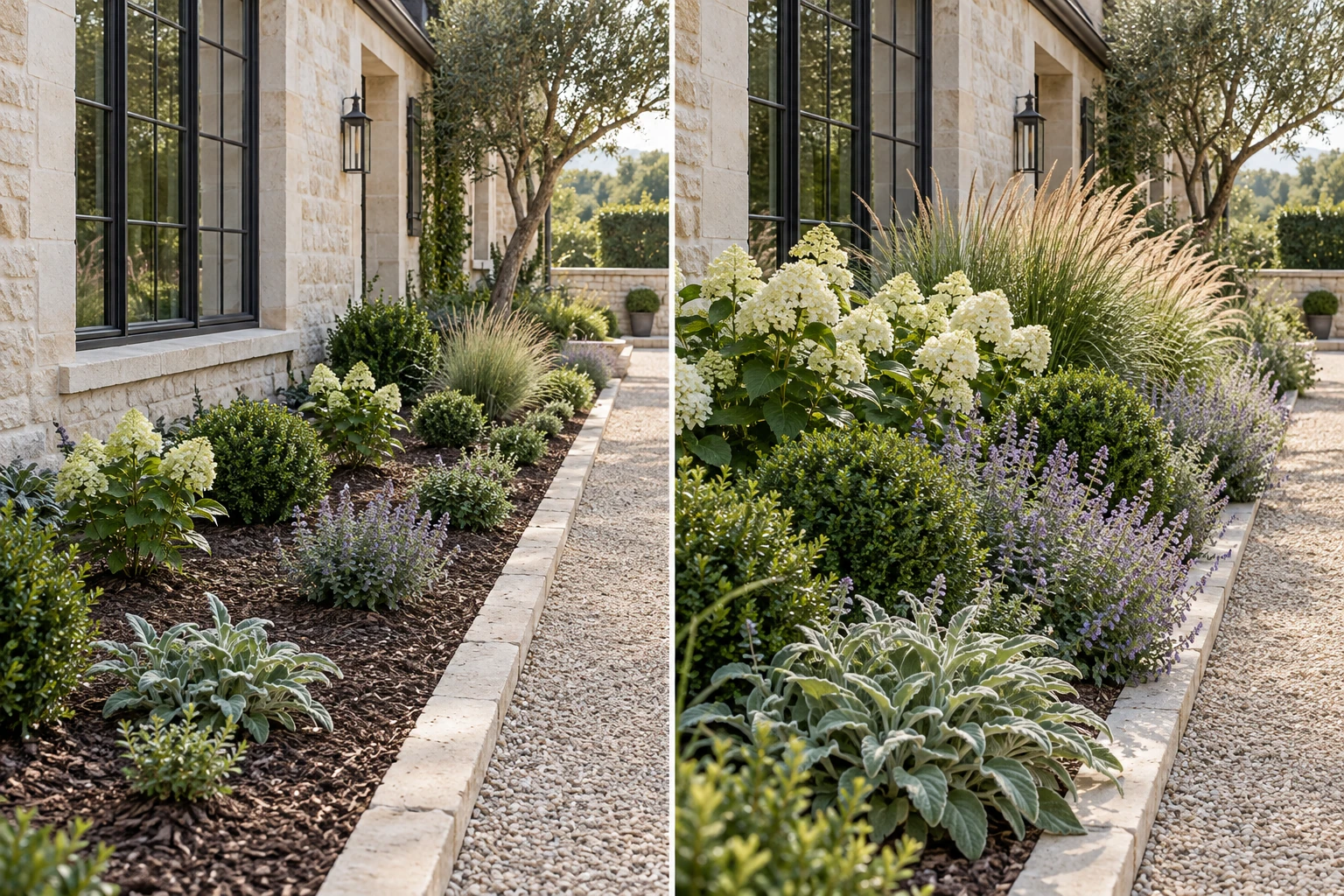
A new border can look a little sparse at first, and it is tempting to fill every gap. But overcrowding creates pruning, competition and extra work later.
Plan for mature height and width rather than the size of a plant in its nursery pot. A garden doesn’t need to look finished on planting day to become beautiful.
6. Let the practical details do some of the work
Sometimes the features that make the biggest difference are not plants at all. They are the little decisions you make around them.
Beautiful garden edging
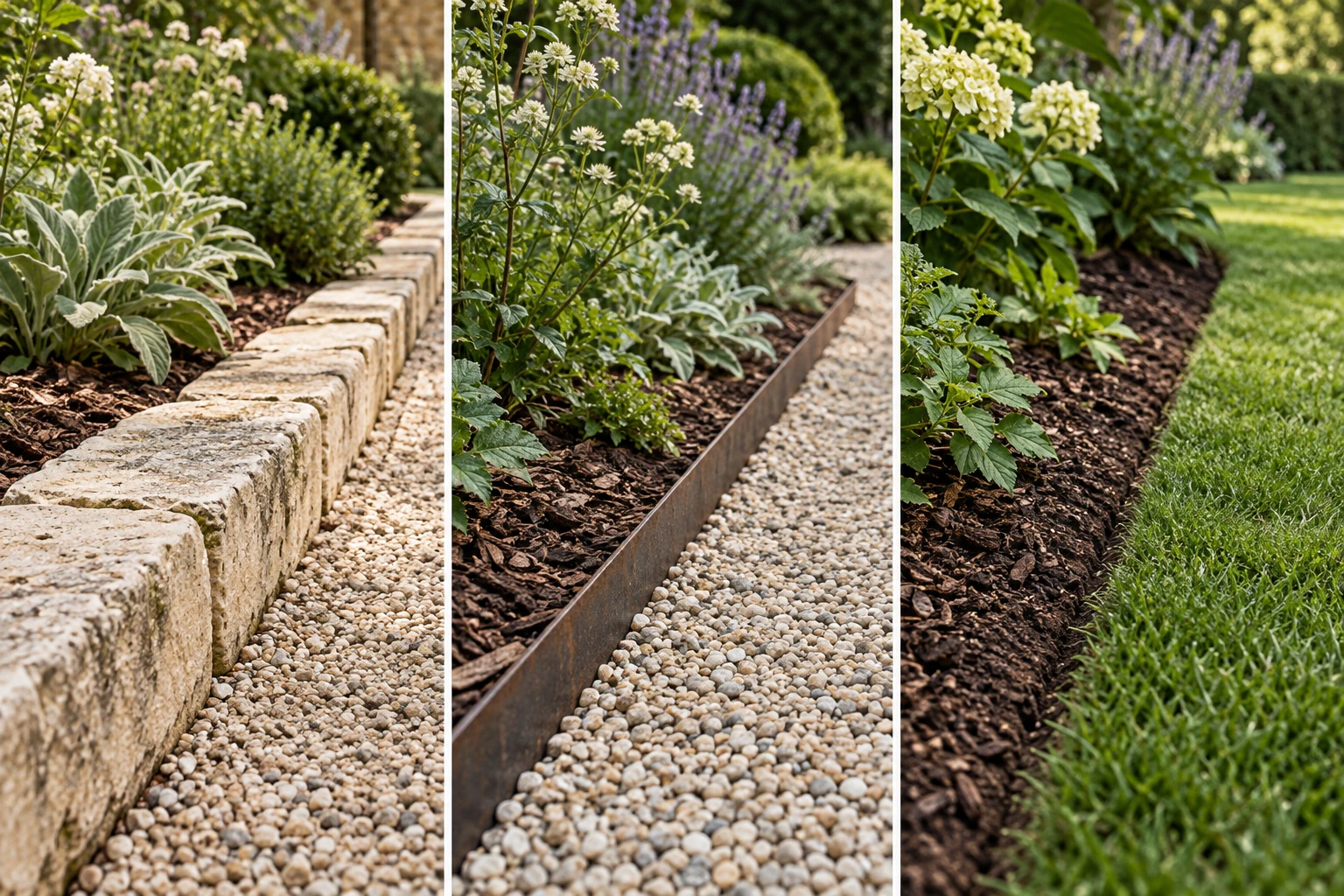
Natural stone gives a classic European finish. Steel edging offers clean, modern lines, while a simple trench can be economical for lawn borders. Choose a defined edge that is easy to care for.
Mulch and ground cover
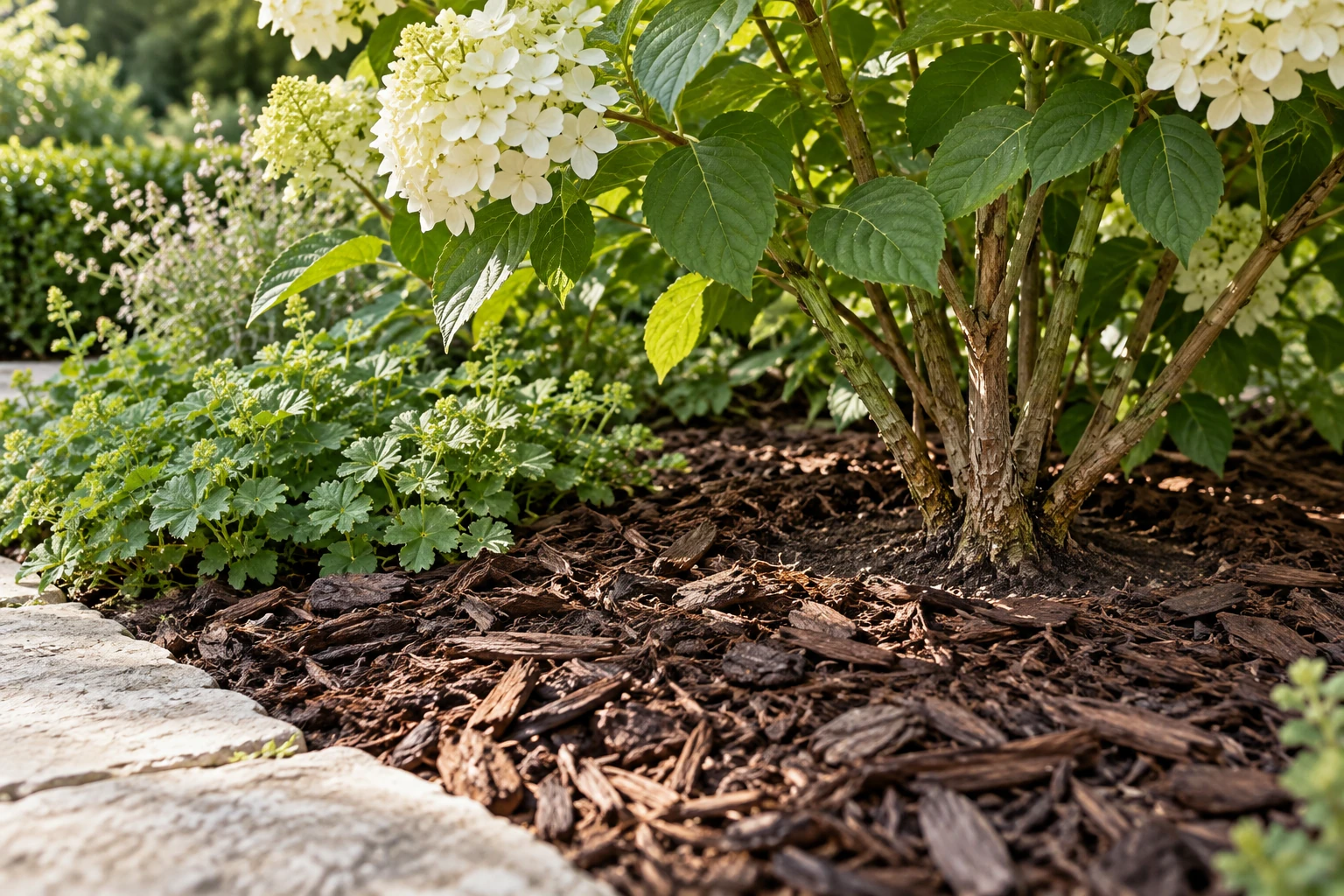
Mulch helps suppress weeds, preserve soil moisture and make a planting bed feel finished. Over time, suitable ground covers can soften bare gaps between shrubs.
Make watering easier
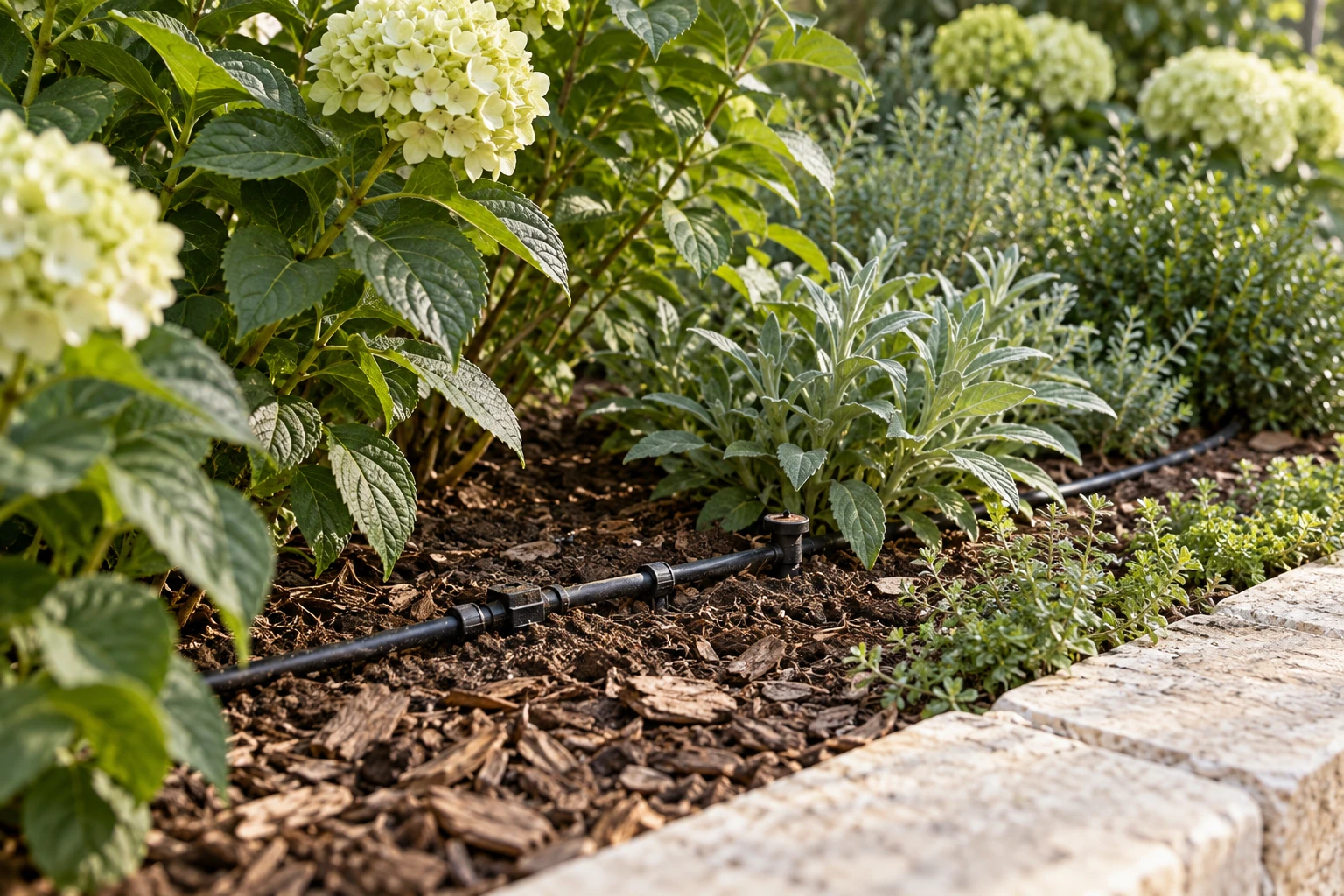
Drip irrigation or a soaker hose directs water toward the root zone. Group plants with similar moisture needs together and give new plants extra attention while they establish.
7. Choose plants that look beautiful across the seasons
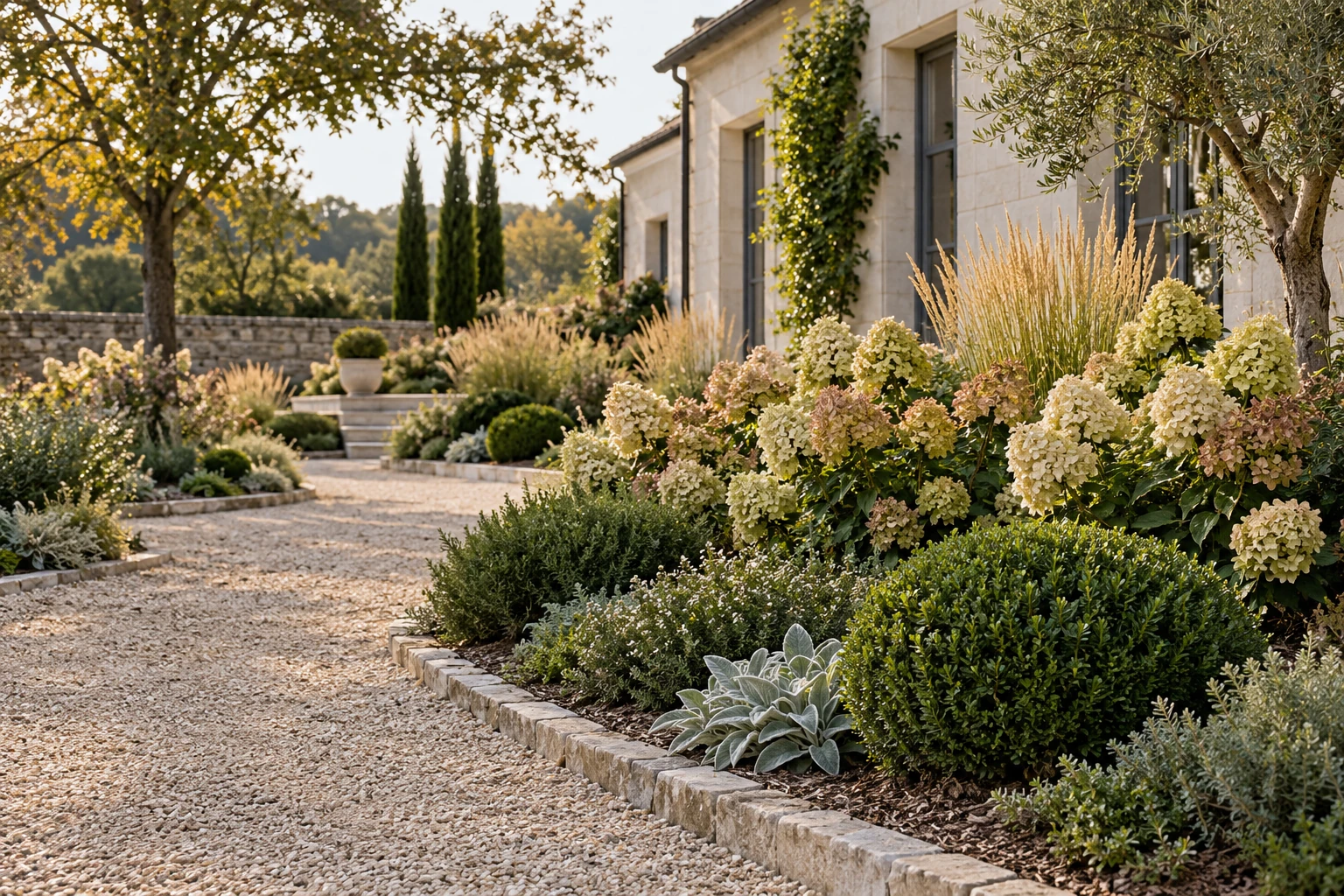
A thoughtfully planned garden does not depend on one brief flush of flowers. Spring foliage, summer hydrangeas, autumn grasses and winter evergreens each contribute something different.
A simple seasonal routine of pruning when appropriate, mulching, watering during dry periods and checking plant health can keep care manageable.
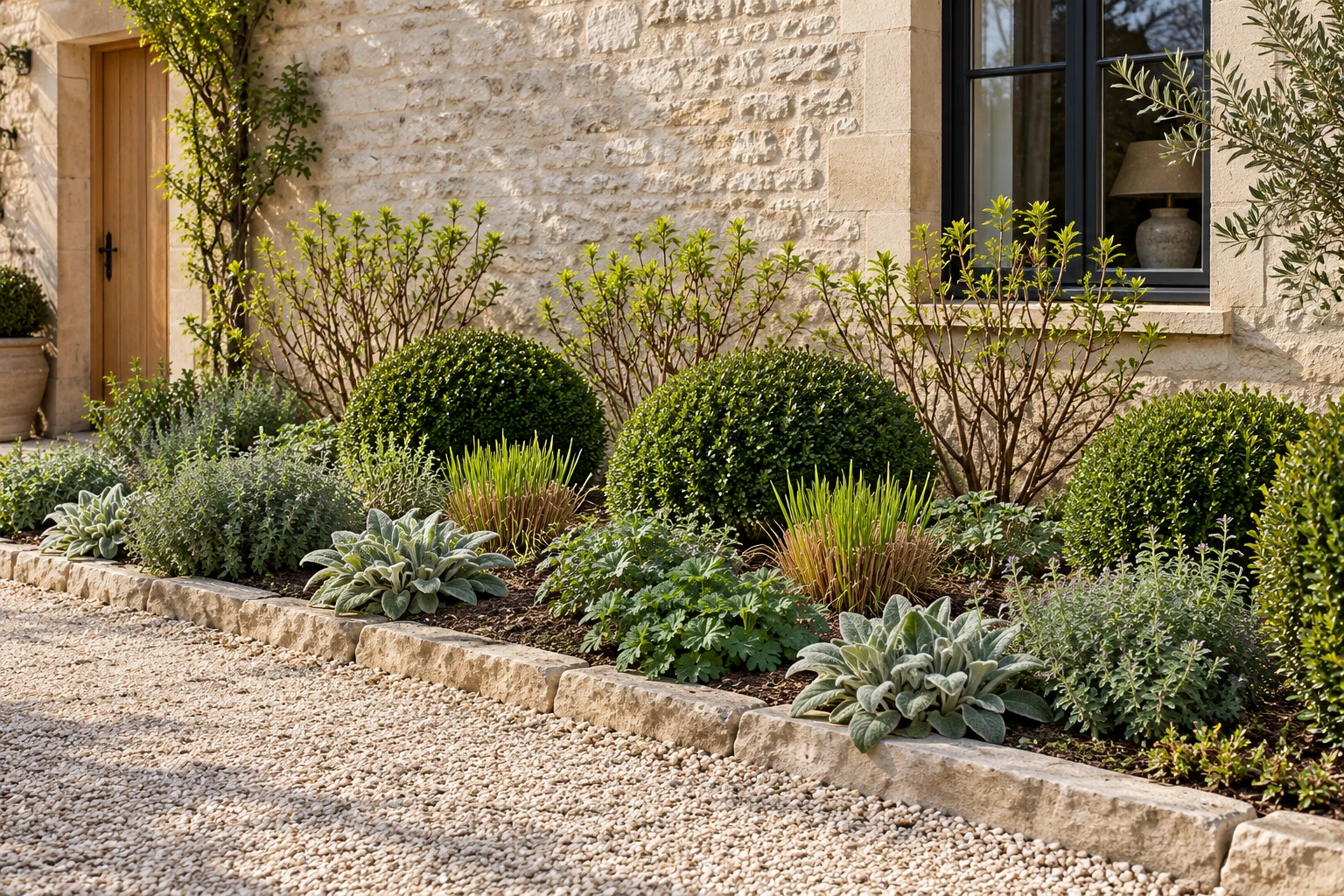
Spring
Remove damaged growth, prune appropriate plants and refresh mulch.
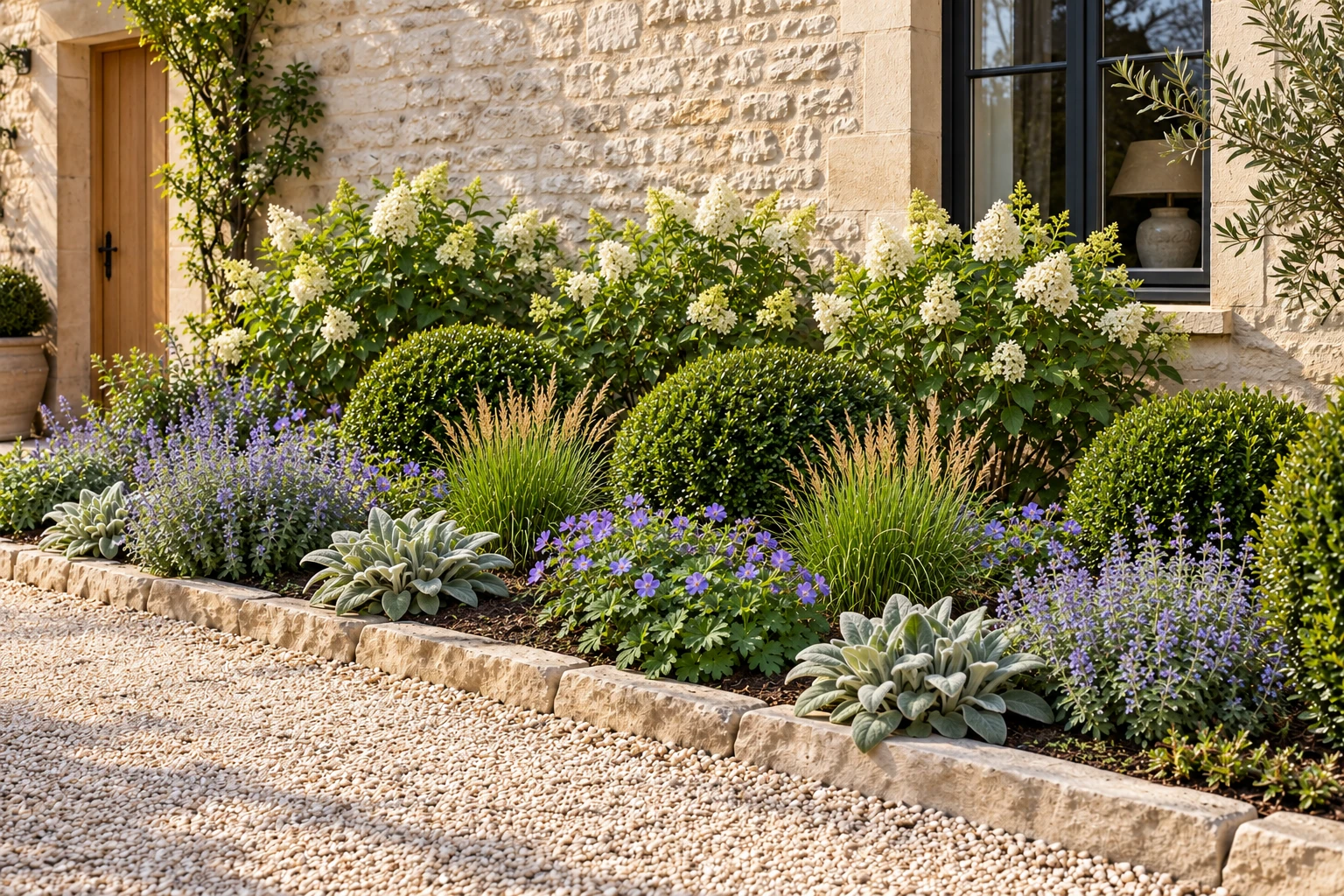
Summer
Water during dry periods, check weeds and monitor plant health.
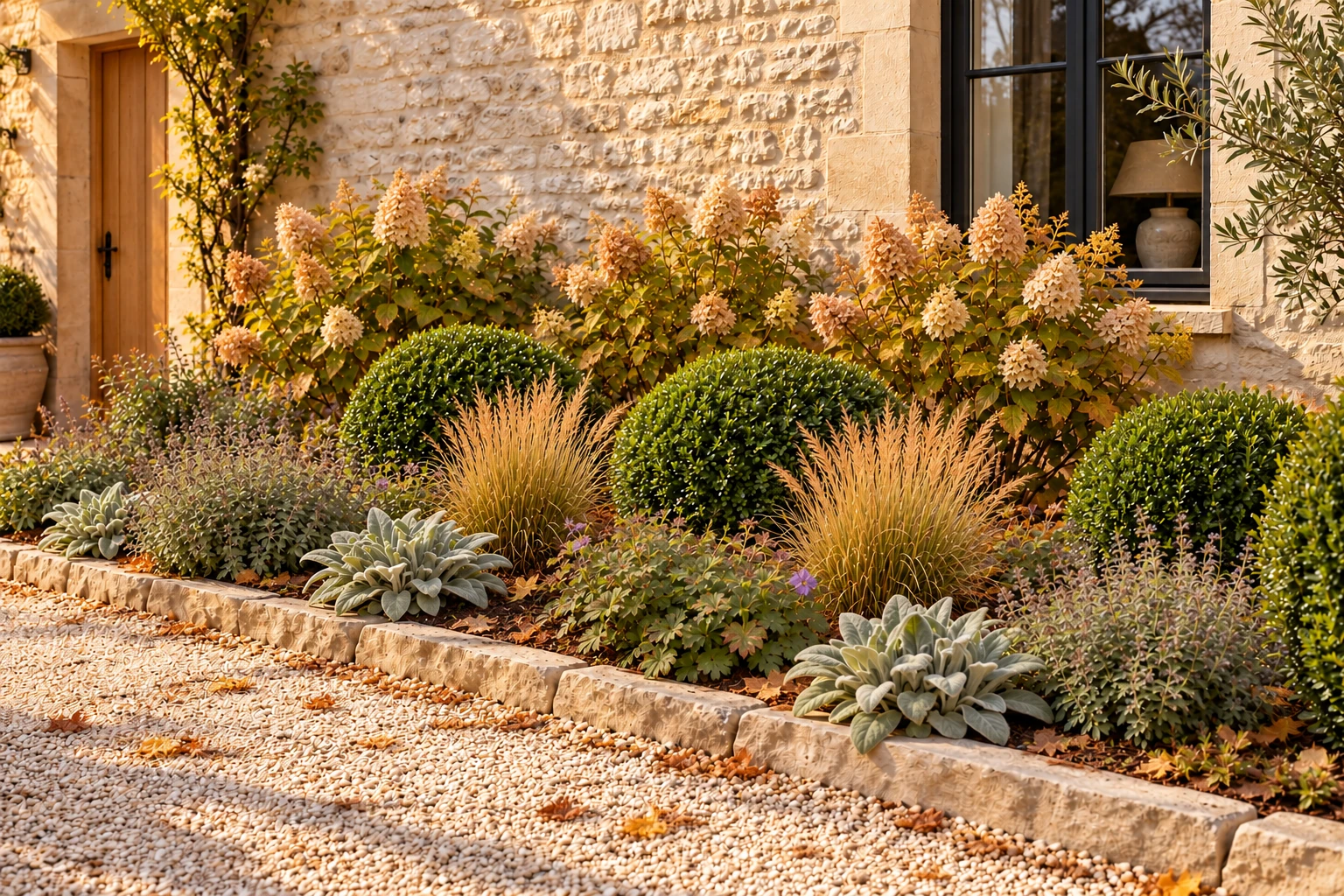
Autumn
Remove diseased foliage, tidy selectively and prepare tender plants.
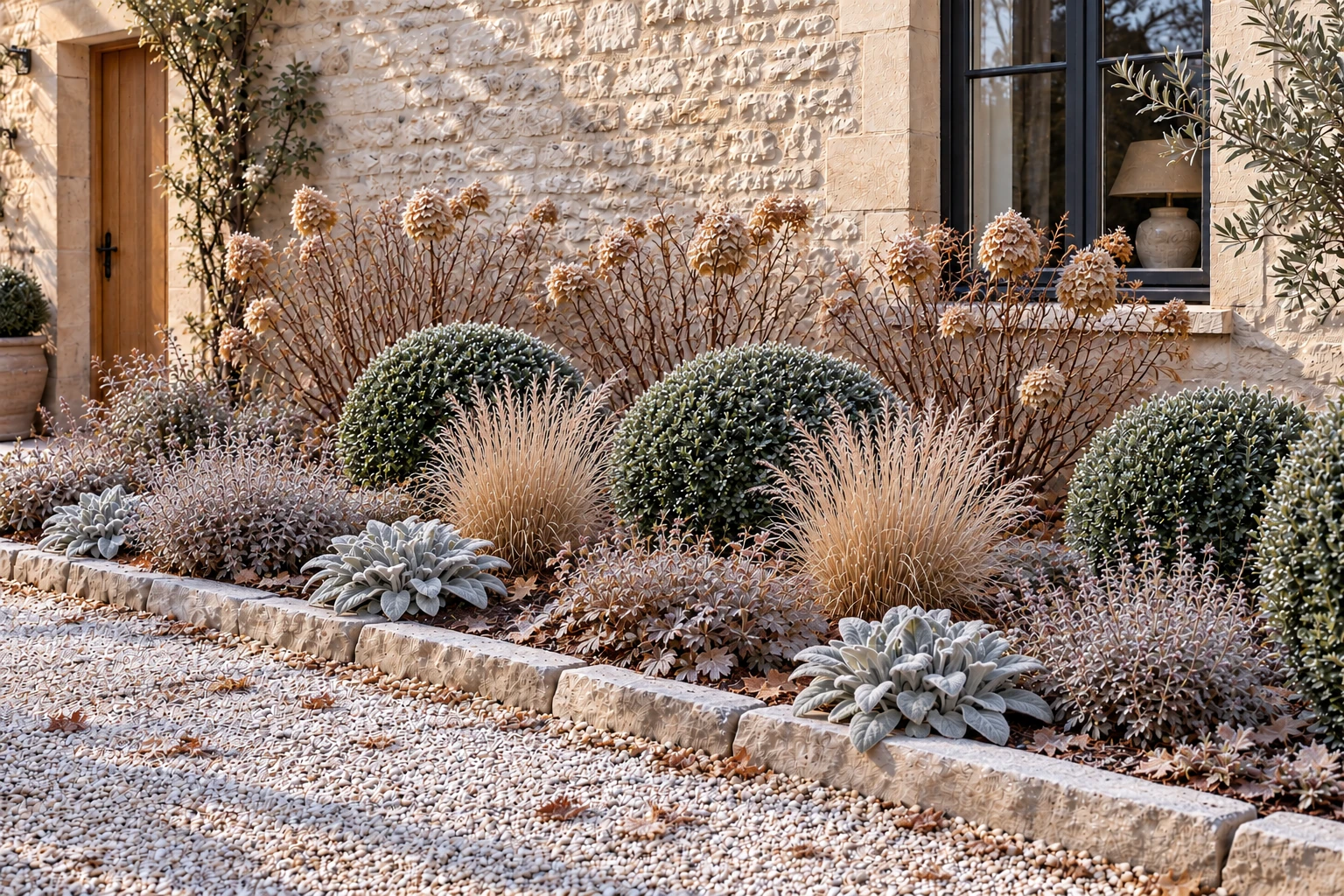
Winter
Check for storm damage and make notes for the coming season.
A low-maintenance border combination to try
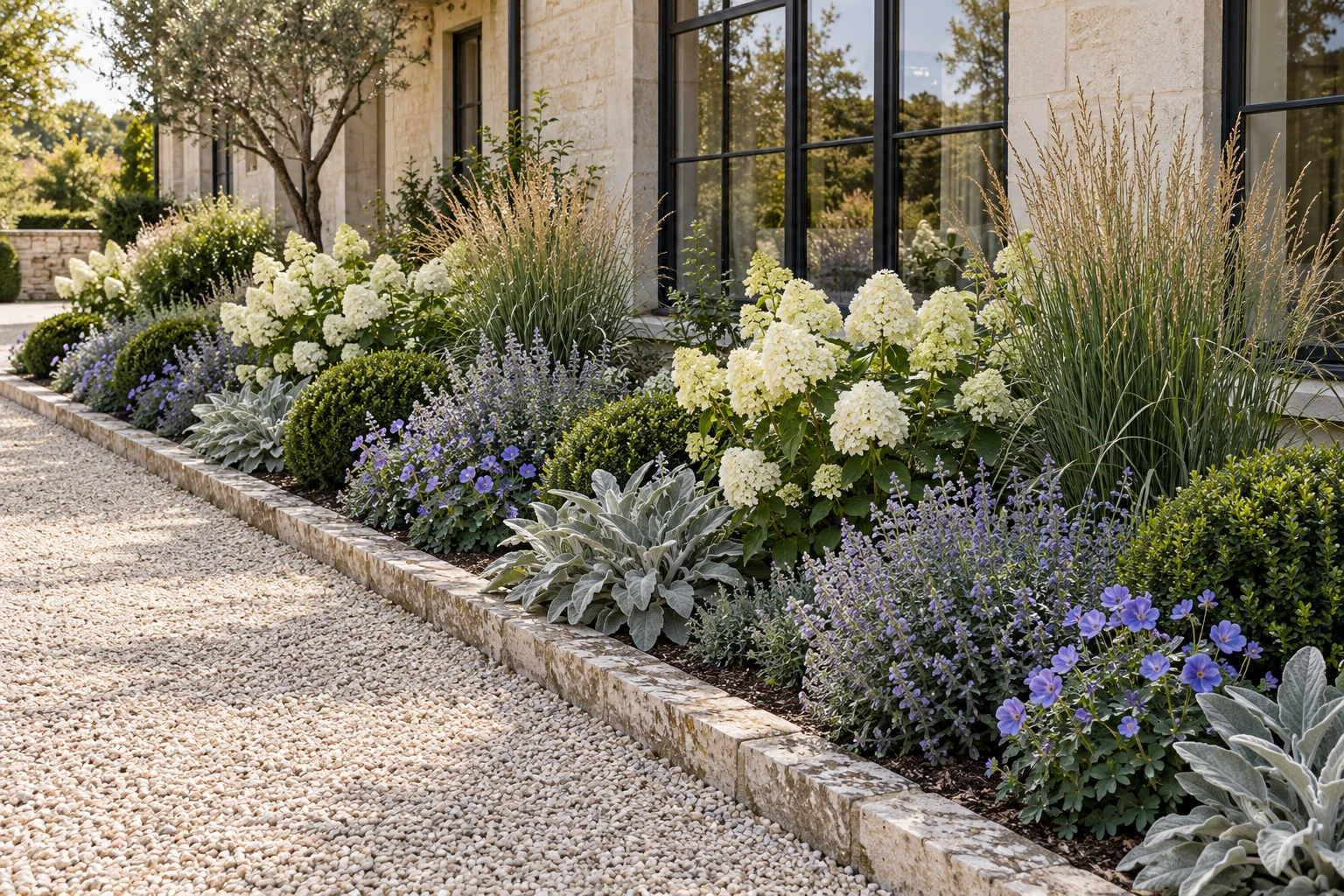
The guide’s 15-by-6-foot example uses compact panicle hydrangeas, compact evergreen shrubs, ‘Karl Foerster’ grass, ‘Walker’s Low’ catmint, ‘Rozanne’ geranium, ‘Big Ears’ lamb’s ear and hardy ground cover.
How the plants fit together
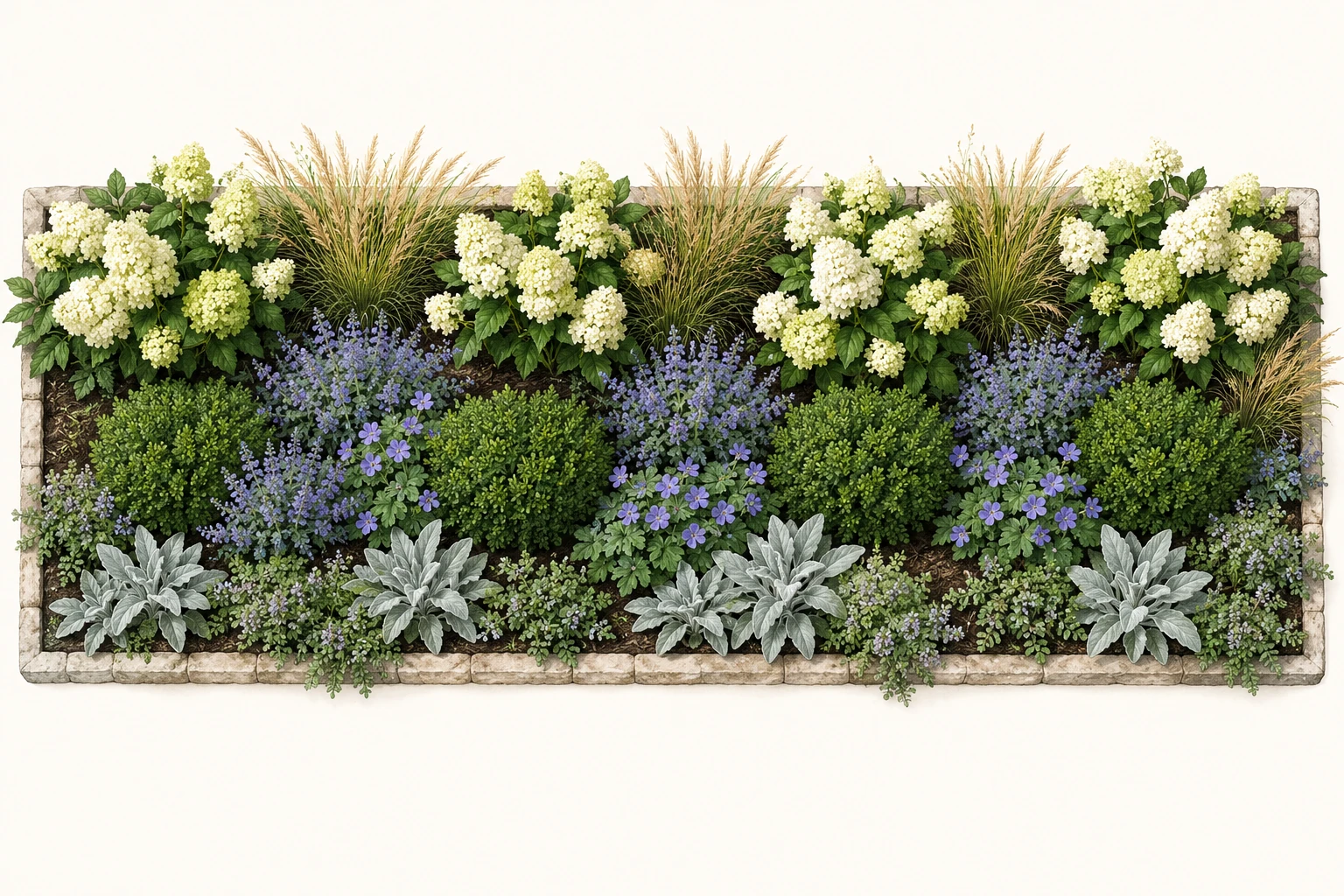
The example repeats shapes and plants rather than using one of everything. Exact quantities and spacing must be checked against mature widths and the conditions in your garden.
Common mistakes that create more work
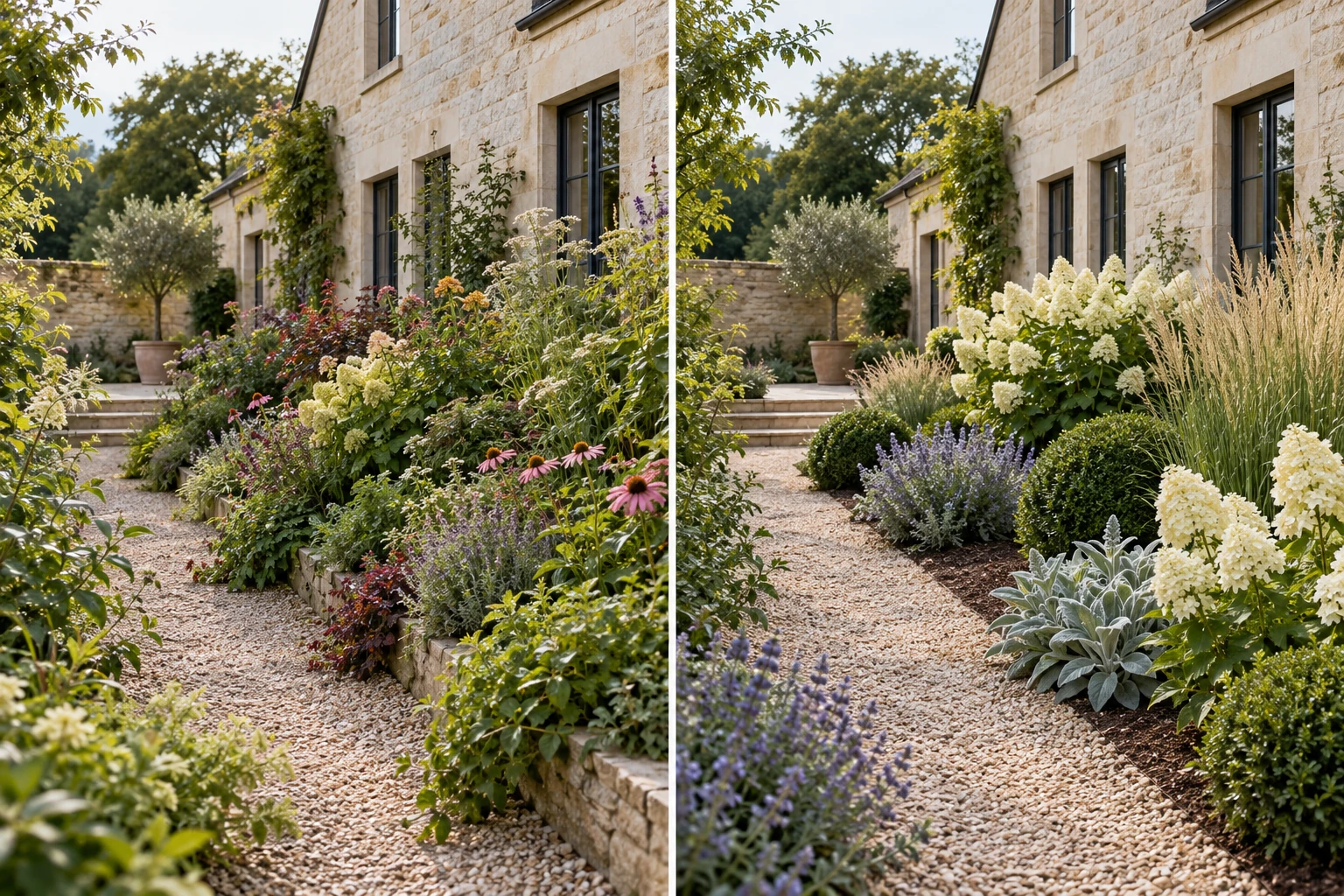
Too many different varieties, ignoring mature size, bare soil, unsuitable plant choices and complicated edges can all make a garden harder to manage than it needs to be.
The nicest low-maintenance gardens are usually simple, well-planned and planted with intention.
A little more beauty, a little less work
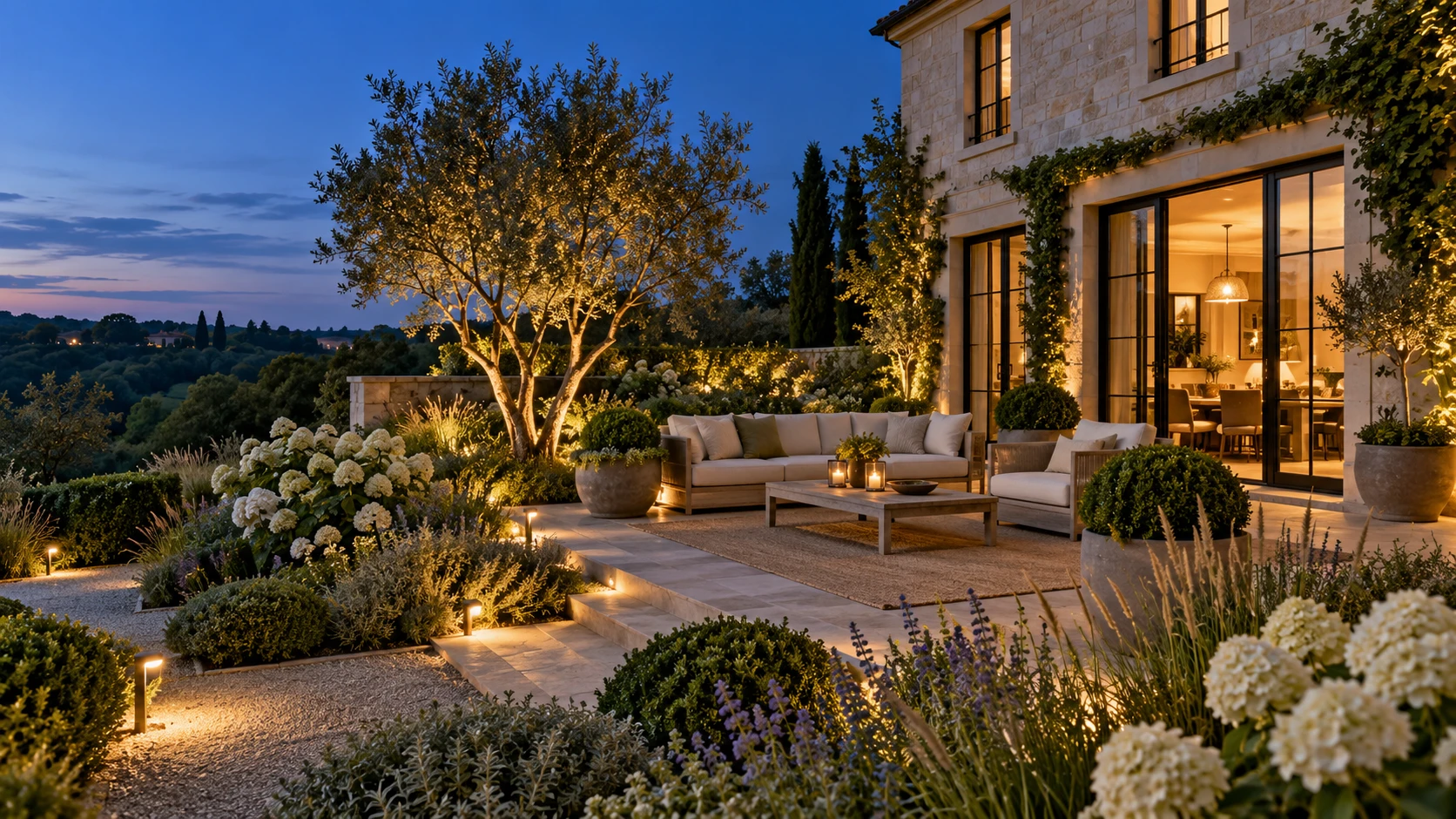
I think the loveliest gardens are the ones that invite you to slow down. The light softens, the planting catches the last warmth of the evening, and everything feels a little quieter.
Choose dependable plants, keep the palette simple and give everything room to grow. Because the best part of having a beautiful garden should be enjoying it.
Until next time, happy gardening.
Before you go…
Want the full planting plan? My 24-page Low-Maintenance Garden guide includes plant lists, planting diagrams, spacing guidance and seasonal care checklists.
MORE IN GARDENS
Recent Reads
October 11, 2026
How to Create a Beautiful Front Porch Garden
October 10, 2026
How to Create a Beautiful Privacy Garden with Layered Planting
October 7, 2026
How to Choose a Garden Colour Palette: 7 Beautiful Plant Combinations
October 6, 2026