
The European Garden Edit
Garden Design
How to Choose the Right Hydrangea for Your Garden
A thoughtful guide to bloom shape, colour, light and the varieties best suited to your garden.
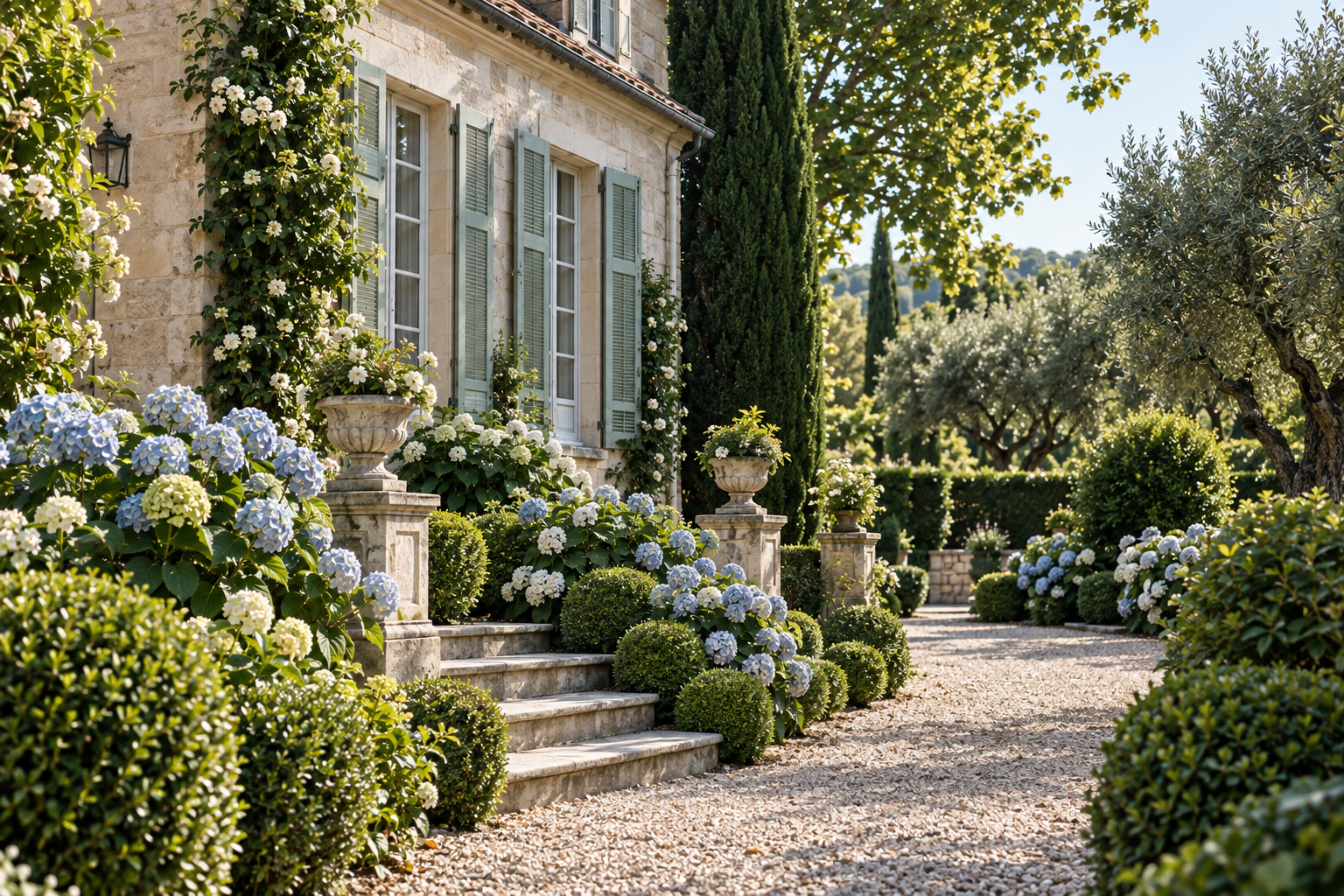
Hydrangeas can make a garden feel both relaxed and beautifully considered. Their generous flowers soften stone, frame an entrance and bring a long season of colour to borders and containers. Yet choosing one by bloom colour alone can lead to disappointment. The right hydrangea must also suit your light, climate, available space and preferred level of care.
The simplest approach is to begin with the garden you have. Once you understand its conditions, the differences between bigleaf, panicle, smooth and oakleaf hydrangeas become much easier to navigate.
Begin With Your Garden’s Conditions
Before falling in love with a particular flower, observe the planting location. Most hydrangeas appreciate moisture-retentive soil that drains well. They dislike sitting in water, but they are equally unhappy when allowed to dry completely during hot weather.
Morning sun followed by afternoon shade is an excellent starting point for many varieties. Panicle hydrangeas generally accept more direct sun, particularly where summers are not intensely hot. Bigleaf hydrangeas often perform best with protection from strong afternoon heat.
Measure the mature planting area as well. A compact hydrangea beside a pathway behaves very differently from a large shrub intended to anchor a generous border. Always choose for mature width, not the size of the plant at the nursery.
The Four Main Hydrangea Types
Bigleaf Hydrangeas
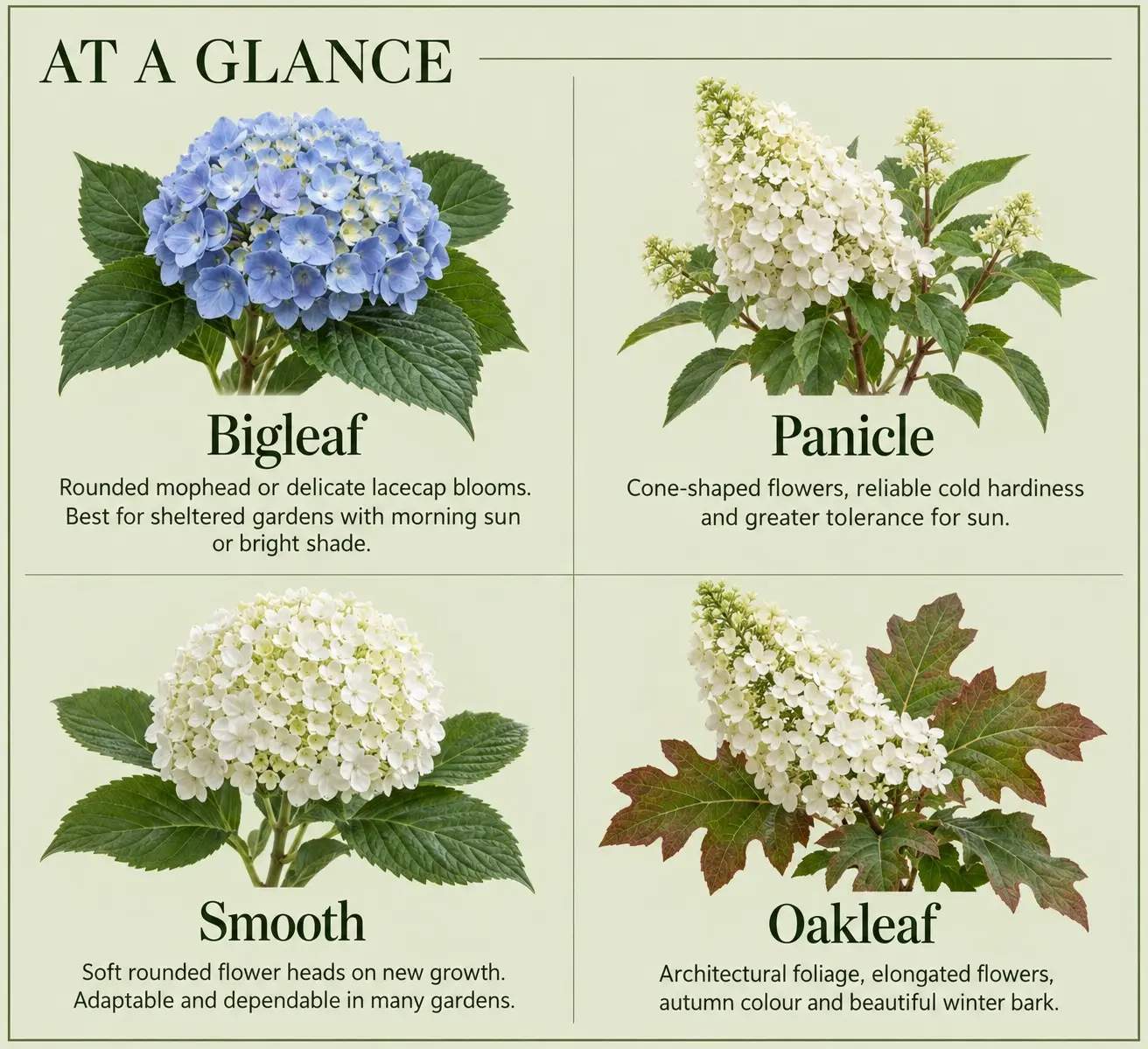
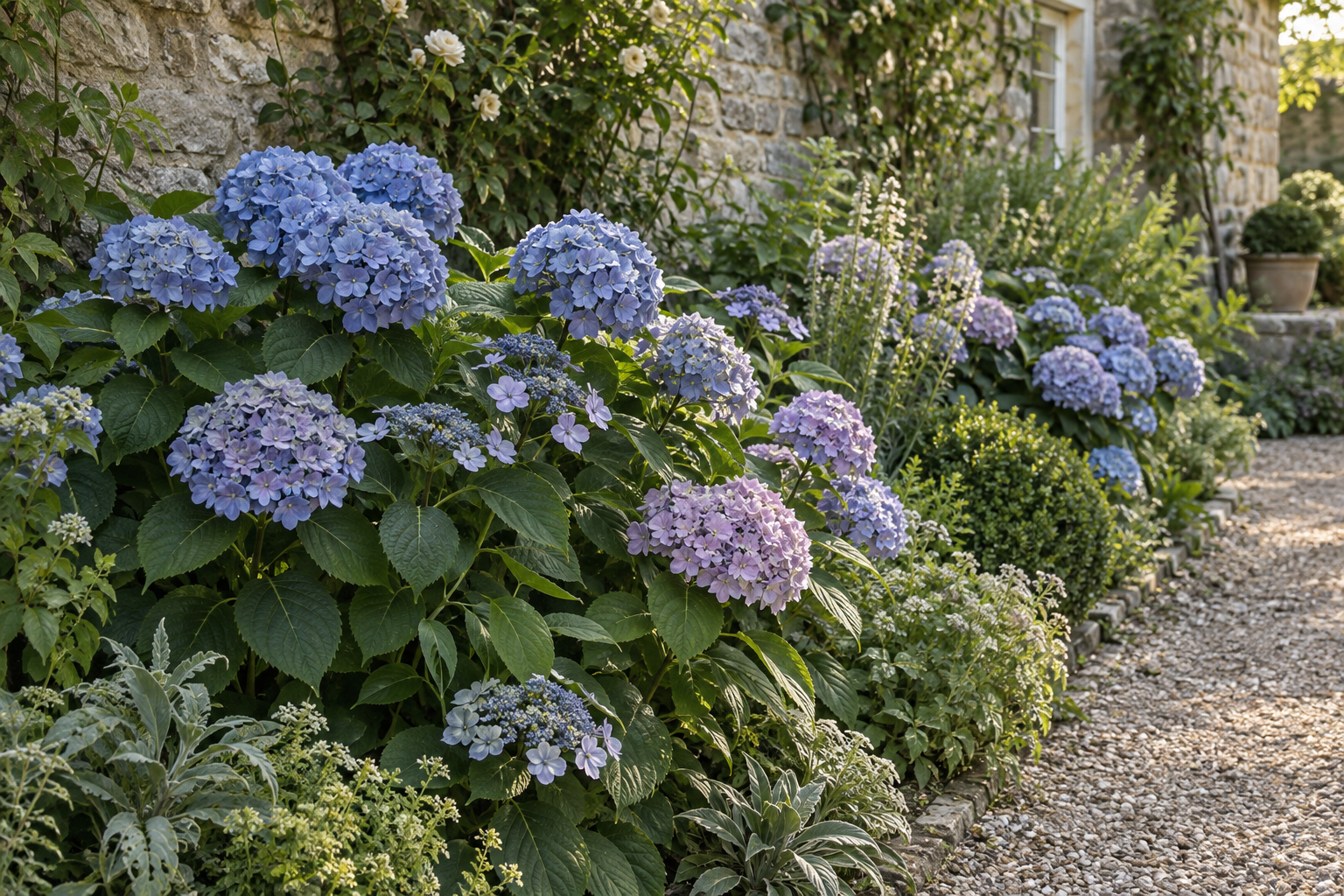
Bigleaf hydrangeas, Hydrangea macrophylla, include the familiar mophead and lacecap forms. Their blue, pink, lavender or white flowers create a romantic cottage-garden effect. Many traditional cultivars form buds on old wood, so an ill-timed pruning or a harsh winter can reduce the following season’s display. Reblooming selections provide a little more reassurance by flowering on both old and new growth.
Panicle Hydrangeas
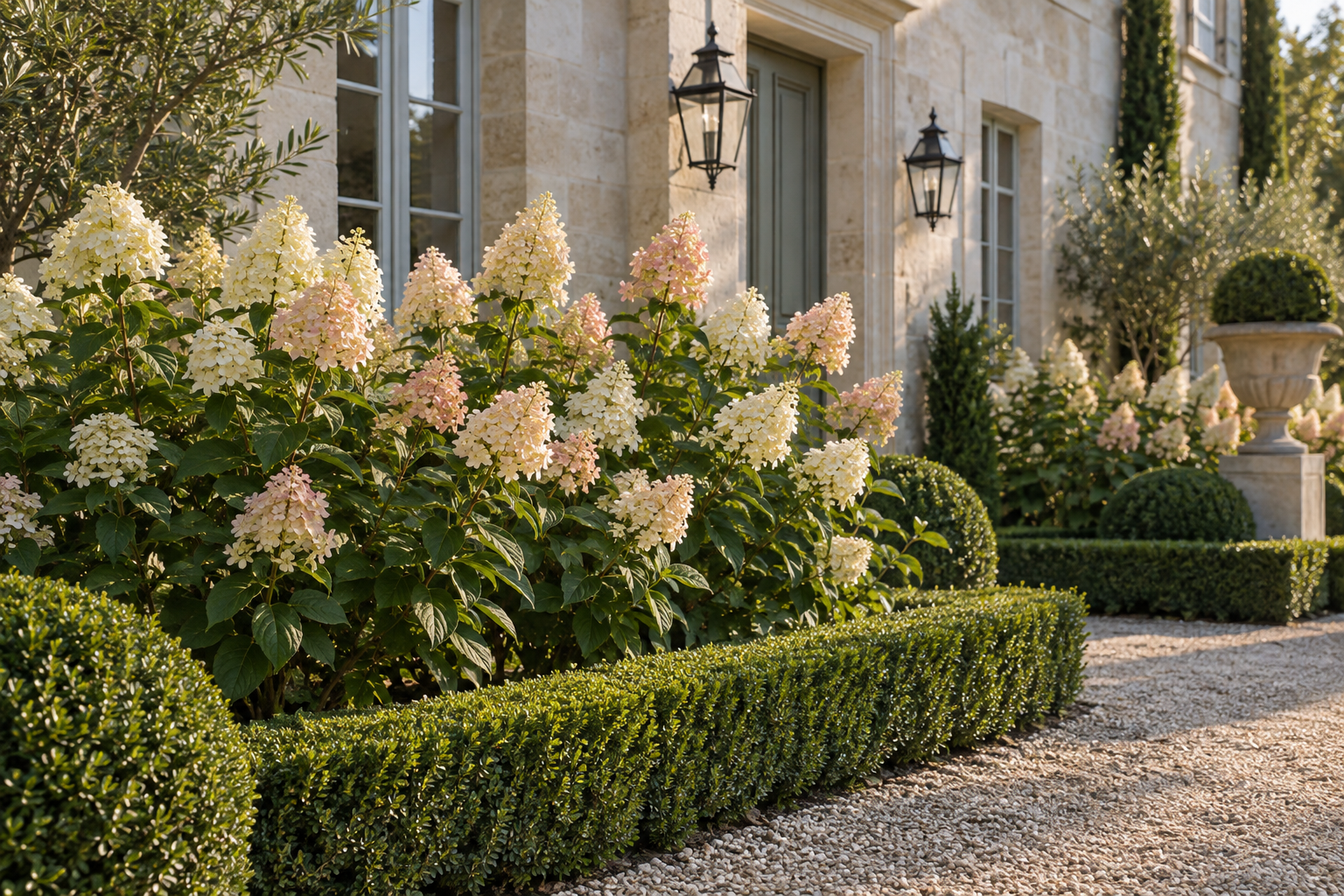
Panicle hydrangeas, Hydrangea paniculata, produce elongated flowers that often begin cream or white before developing blush, rose or antique tones. They bloom on new wood, tolerate colder winters and usually accept more sun than bigleaf types. Their upright shape makes them especially useful for front gardens, structured borders and small specimen trees.
Smooth Hydrangeas
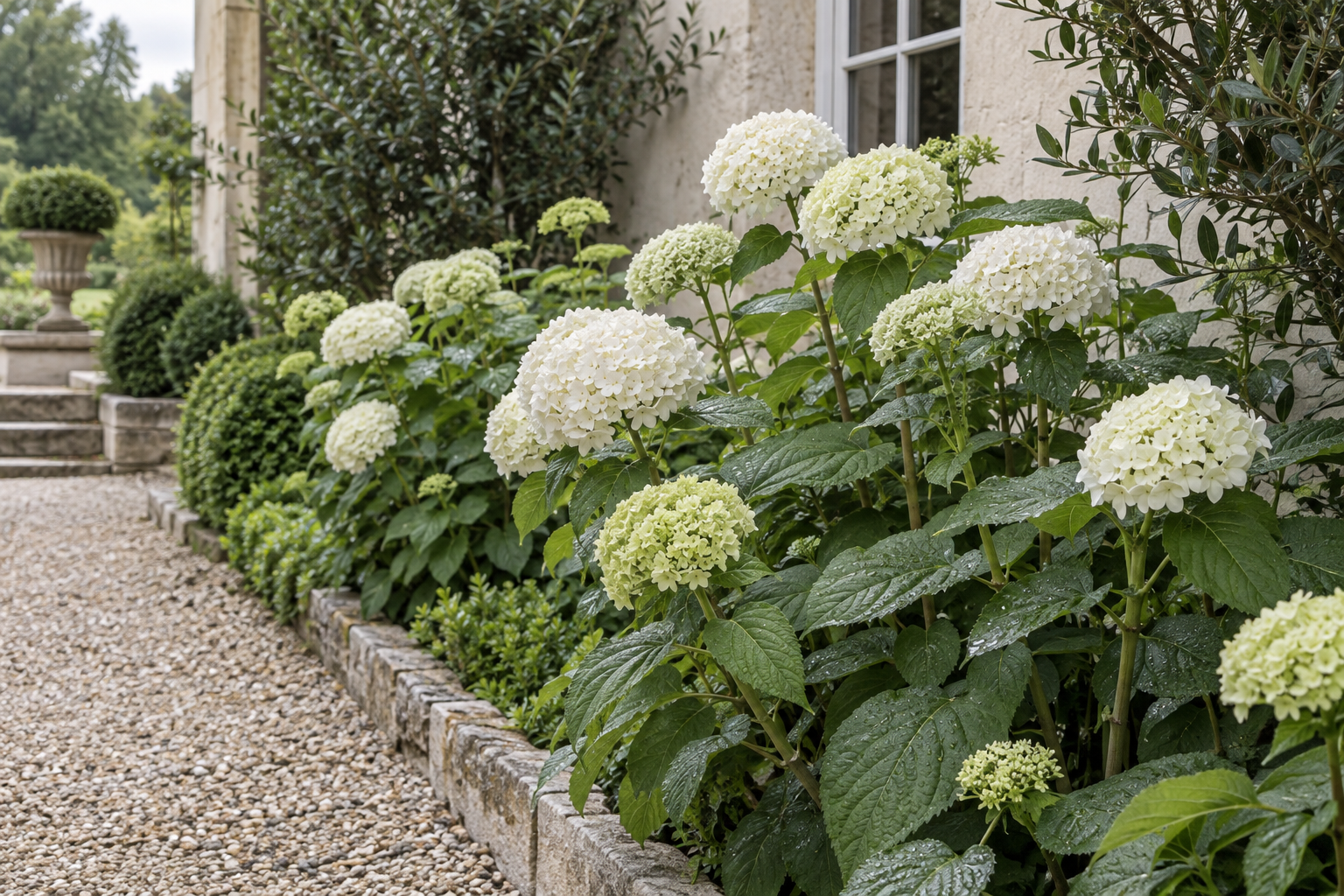
Smooth hydrangeas, Hydrangea arborescens, are known for rounded flower heads and reliable flowering on new growth. White and soft green selections are particularly easy to use in a restrained garden palette. Give large-flowered varieties enough support from neighbouring shrubs or discreet staking, especially after heavy rain.
Oakleaf Hydrangeas
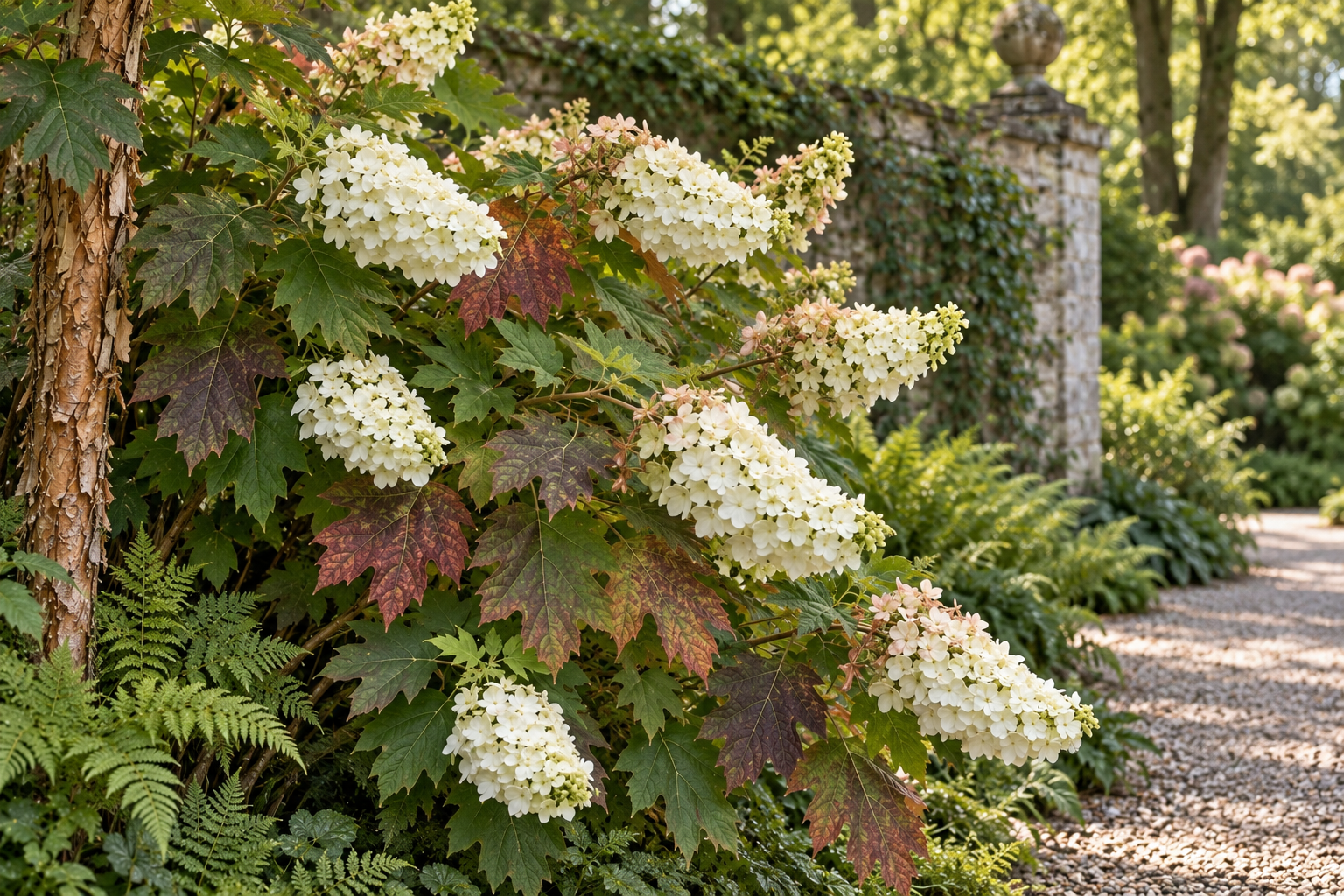
Oakleaf hydrangeas, Hydrangea quercifolia, offer beauty well beyond their flowers. Lobed leaves develop rich autumn colour, while mature stems reveal textured bark in winter. Their elongated blooms and relaxed habit suit woodland edges, informal borders and spaces where foliage is as important as flowers. They generally bloom on old wood, so pruning should be light and thoughtfully timed.
Choosing Colour With Intention
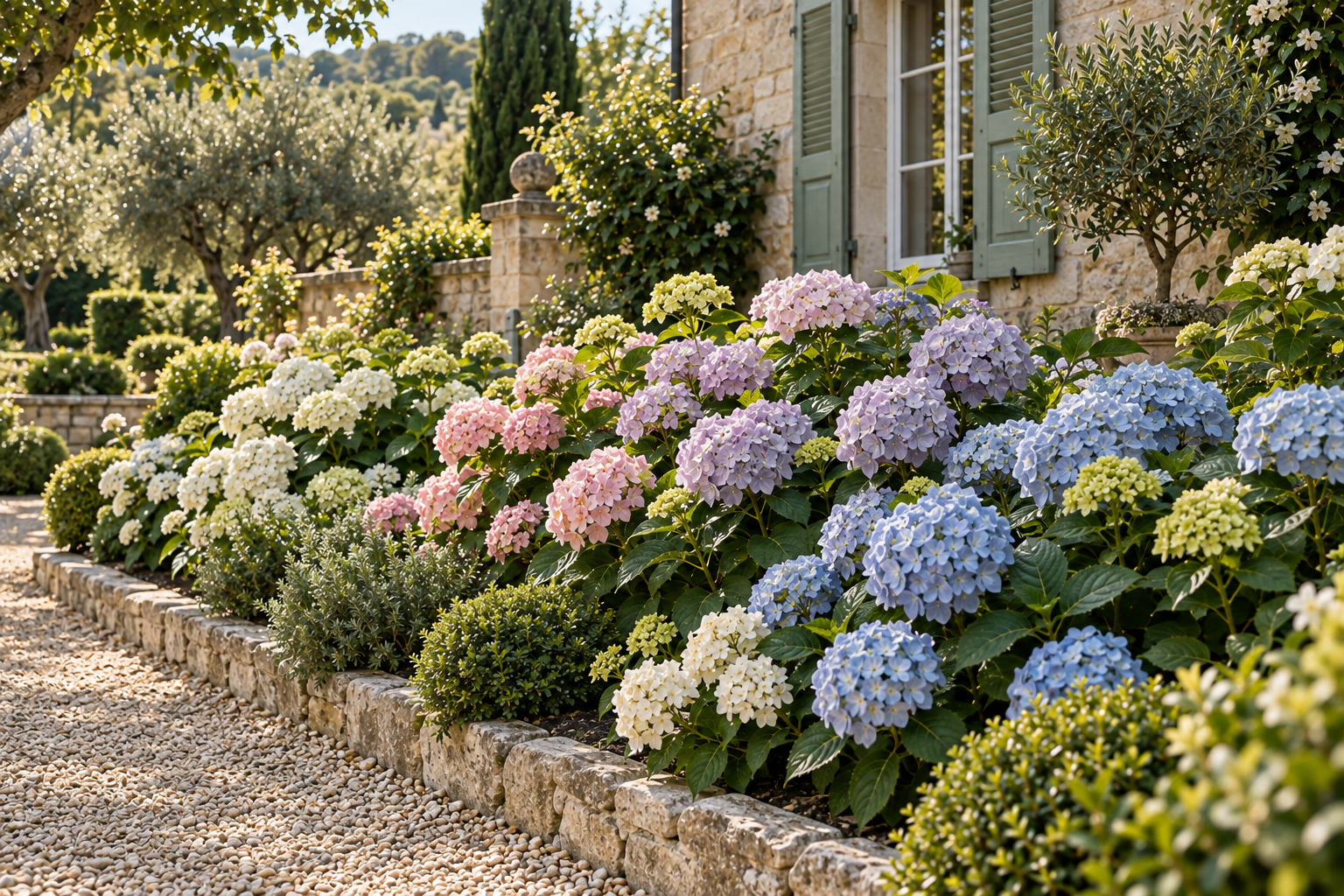
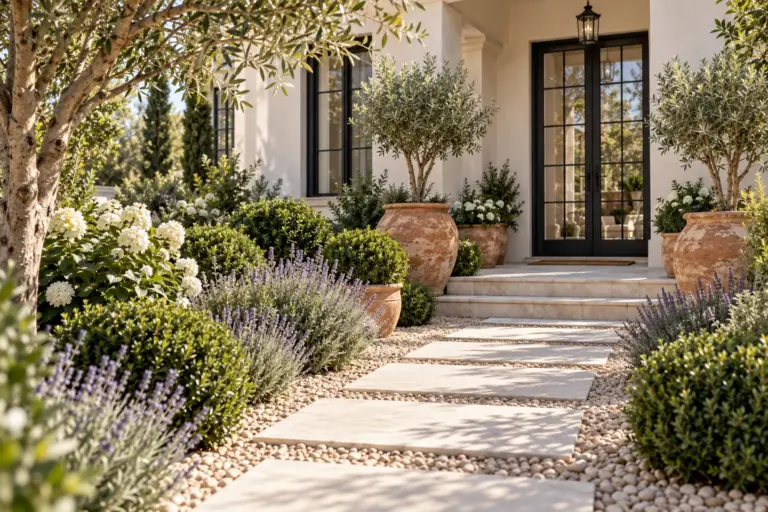
For a calm, timeless garden, begin with the colours already present in your home and hard landscaping. White and green hydrangeas sit beautifully against brick, limestone and painted timber. Pale blues feel especially at home beside grey shingles, weathered stone and soft green shutters. Blush tones bring warmth to gravel, terracotta and aged brick.
Only certain bigleaf and mountain hydrangeas meaningfully shift between blue and pink in response to soil chemistry and available aluminium. White-flowering varieties and other hydrangea species will not become blue simply because the soil is acidic. Test your soil before attempting to alter it, and make changes gradually.
Selecting the Right Size
A beautiful planting begins with honest measurements. Leave enough room for air to move through the mature shrub and for neighbouring plants to keep their natural shape. Compact cultivars are the better choice beneath windows, beside steps and in containers. Larger varieties are most convincing when given room to form a generous anchor at the back of a border.
Hydrangeas in Containers
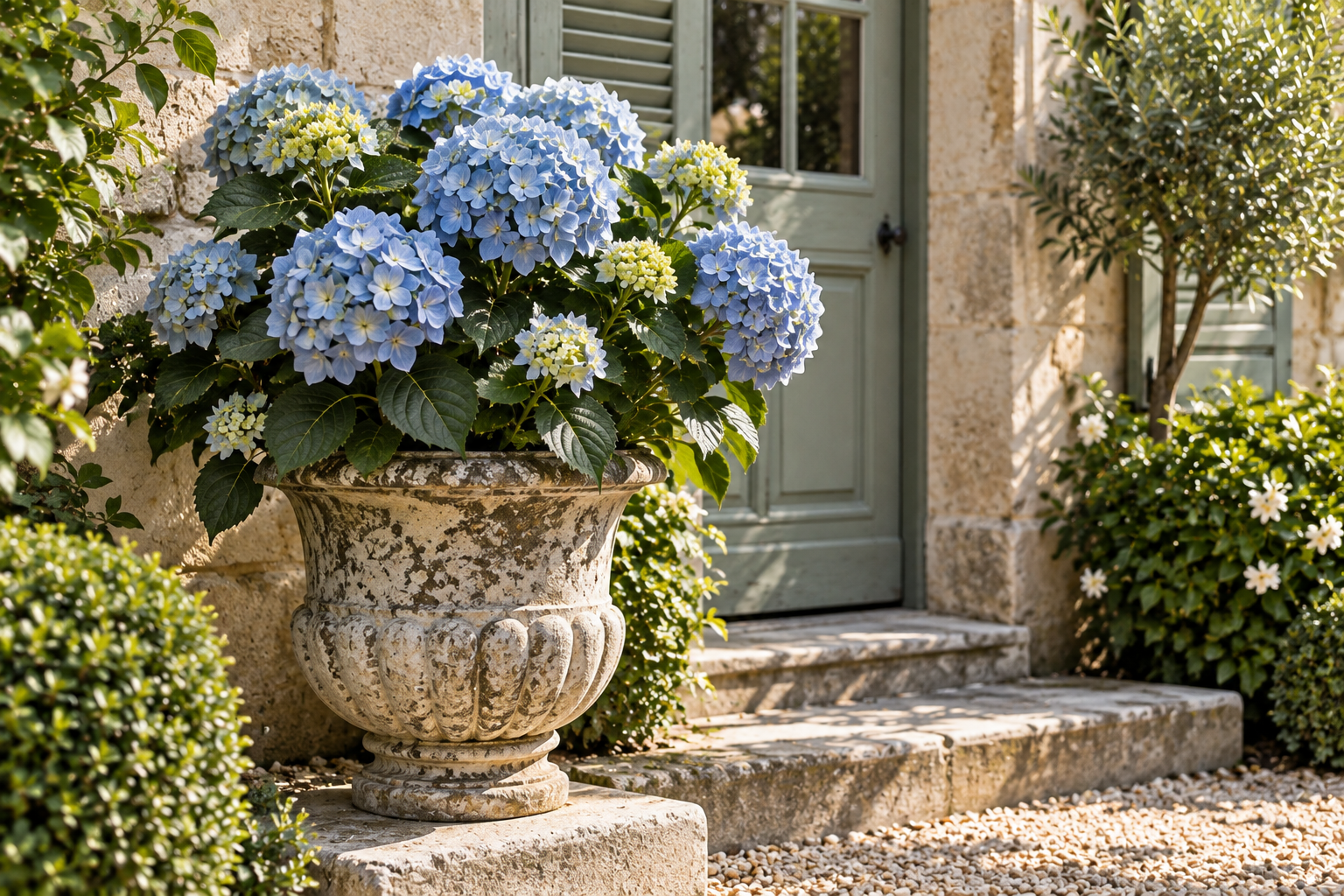
A compact hydrangea in a substantial pot can bring softness to an entrance or terrace. Choose a frost-tolerant container with generous drainage, use high-quality potting mix and expect to water more frequently than you would in the ground. In colder regions, container roots may need winter protection even when the selected cultivar is hardy in the landscape.
Pruning Without Losing the Flowers
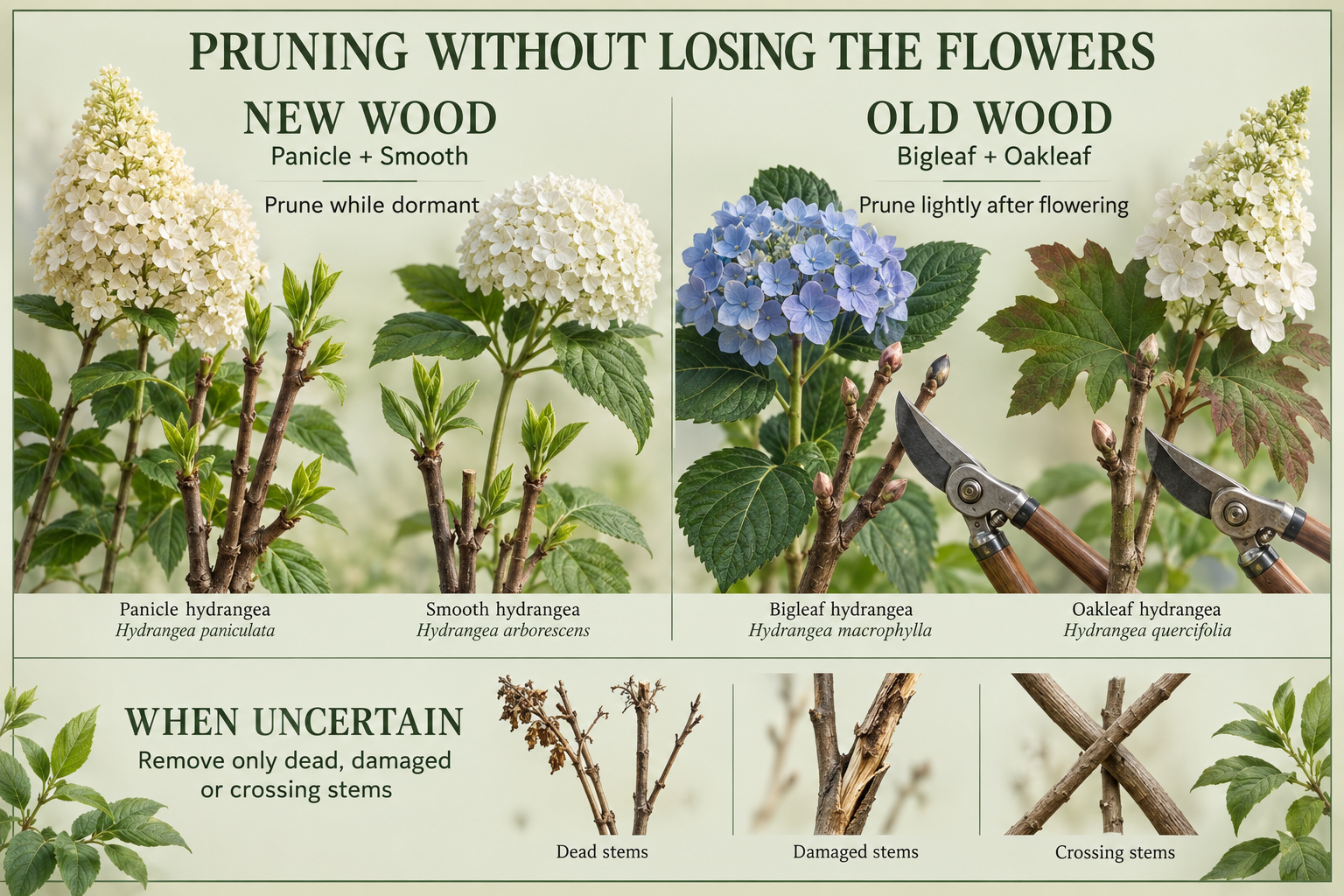
The safest rule is to identify your hydrangea before reaching for the secateurs. Panicle and smooth hydrangeas flower on new wood and can usually be pruned while dormant. Traditional bigleaf and oakleaf hydrangeas generally flower on old wood, so heavy winter or spring pruning can remove the buds you were hoping to enjoy. When uncertain, limit pruning to dead, damaged or crossing stems until you know the plant.
Three Common Selection Mistakes
- Choosing only by bloom colour. Light, mature size and cold hardiness matter just as much.
- Underestimating the final width. Crowded hydrangeas lose their graceful shape and compete with nearby plants.
- Pruning before identifying the type. This is one of the most common reasons an otherwise healthy hydrangea fails to flower.
A More Beautiful Starting Point
The best hydrangea is not necessarily the newest or most dramatic variety. It is the one that belongs naturally in your garden, suits the conditions and contributes to the overall composition. Choose thoughtfully, give it room to mature and let its flowers complement the architecture rather than compete with it.
Before You Go
Begin With a Beautiful Plan
Join The European Garden Edit for your complimentary Elegant Garden Starter Guide and occasional seasonal notes.
FROM THE JOURNAL
Recent Reads
October 7, 2026
How to Choose a Garden Colour Palette: 7 Beautiful Plant Combinations
October 6, 2026
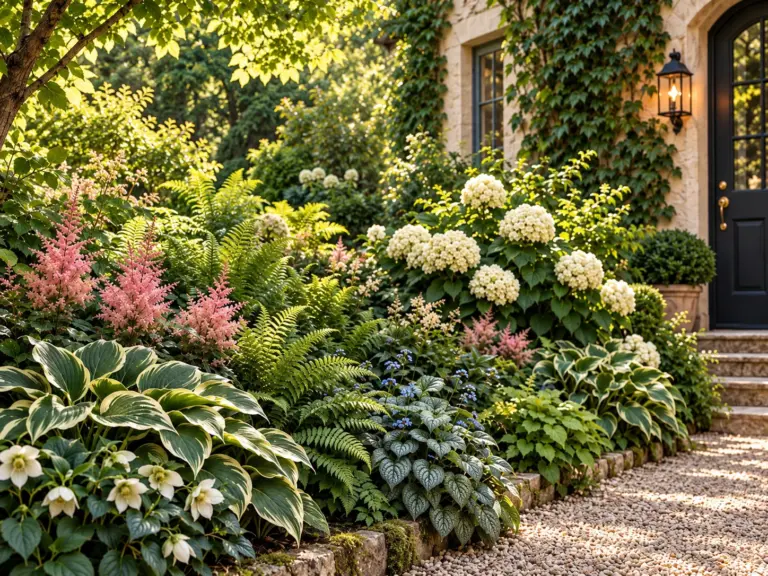
How to Design a Beautiful Shade Garden: A Simple Layering Formula
September 17, 2026
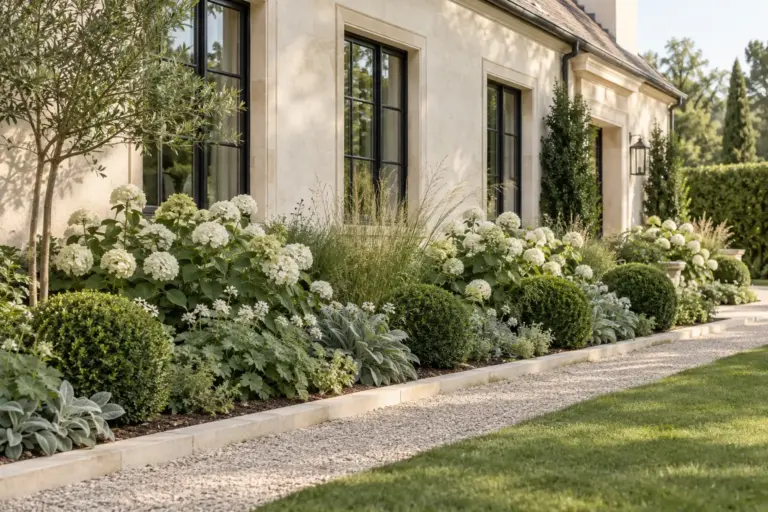
How to Design a White Hydrangea Border
September 16, 2026
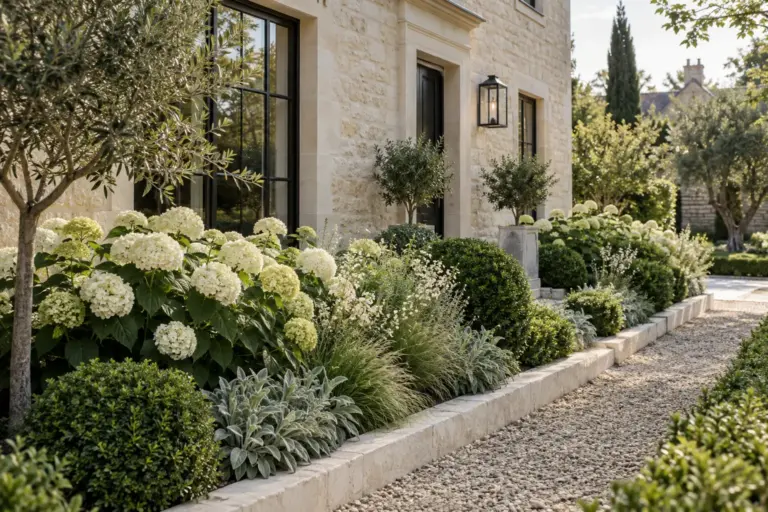
5 Beautiful Ways to Edge a Garden Border
September 10, 2026
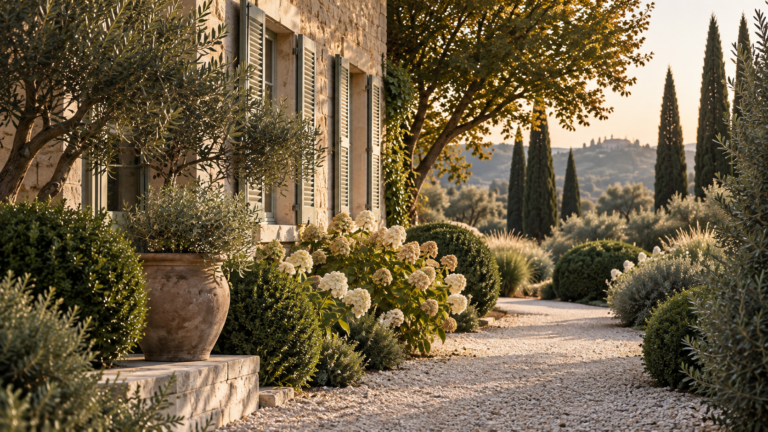
What to Plant, Prune and Notice This Season
September 10, 2026