
What to Plant, Prune and Notice This Season
What to Plant, Prune and Notice This Season
utumn does not ask us to rush.
The light softens, the pace of growth slows and the garden begins to reveal its underlying shape. Paths become more visible. Evergreens feel more important. Seed heads, bark and fading hydrangea flowers begin to carry the borders in a way that summer colour once did.
It is also one of the most useful times to work in the garden. The soil often remains warm even as the air becomes cooler, making conditions gentler for many new plants. At the same time, the season offers a natural opportunity to edit: to move what is crowded, remove what is struggling and record the combinations that deserve to be repeated.
The goal is not to put the entire garden to bed in a single weekend. A more considered approach is to plant what will benefit from autumn conditions, prune only what truly needs attention and leave enough standing to give the garden structure and life through winter.
The autumn garden is less about tidying everything away and more about deciding what is worth carrying forward.
What to Plant
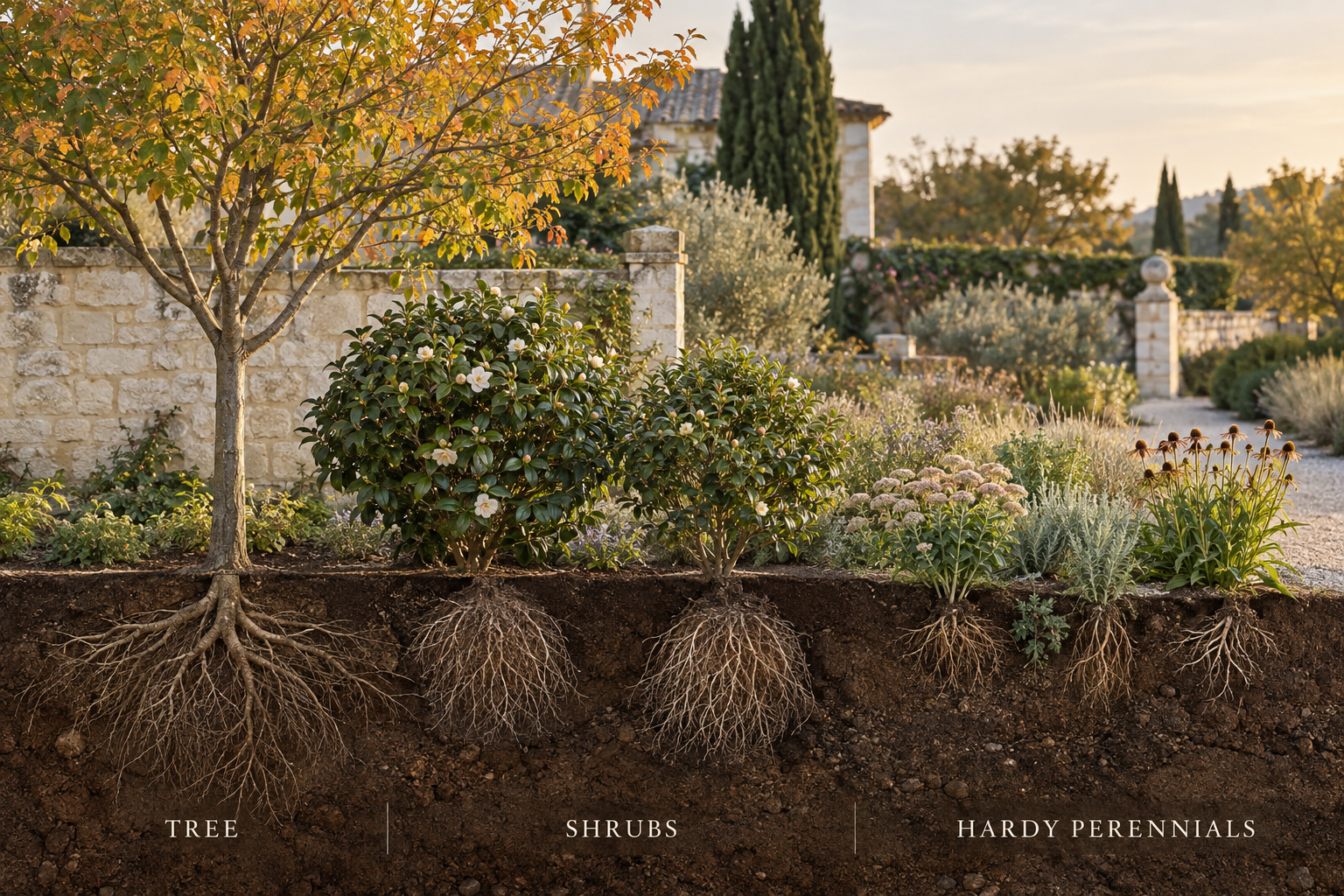
Begin with structure, then repeat the plants that already feel at home.
Trees, Shrubs and Hardy Perennials
For many temperate gardens, early autumn is an excellent planting window. Cooler air reduces stress on new growth, while warm soil supports root development. Trees, deciduous shrubs and hardy perennials planted now can begin settling in before winter and are often better prepared when spring arrives.
Choose plants suited to the light, drainage and mature scale of the space rather than filling every gap. A restrained planting plan usually ages more gracefully than an overfilled border.
Begin with structure. This might be a compact evergreen, a beautifully shaped deciduous shrub or a repeated perennial that visually connects one part of the garden to another.
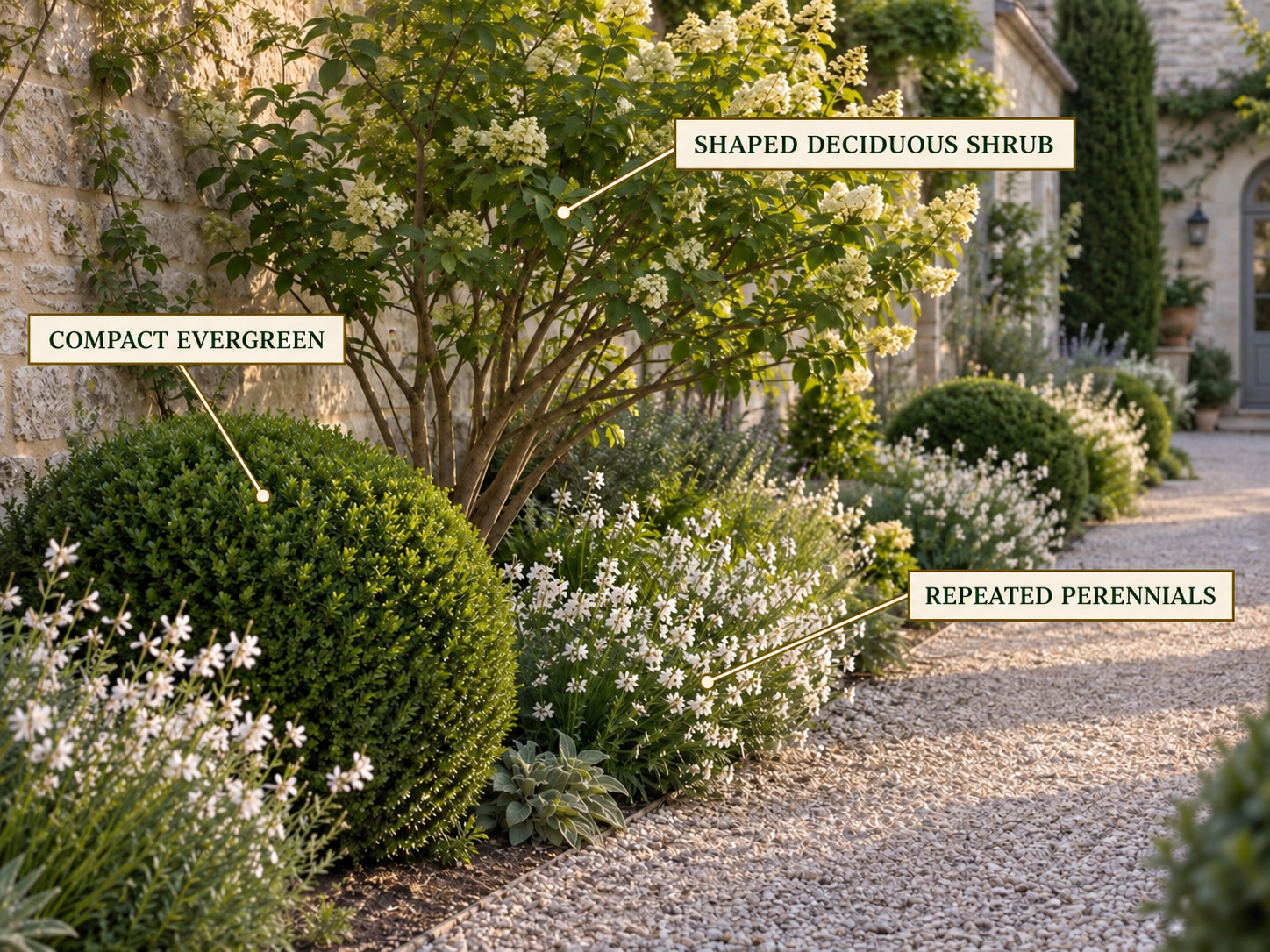
Water new plants deeply after planting and continue checking the soil during dry spells. Autumn rain is helpful, but it does not always reach the roots beneath dense foliage.
In colder regions, allow enough time for plants to establish before the ground freezes. In very mild or wet climates, drainage may matter more than the calendar.
A Simple Autumn Planting Edit
- Add one structural shrub where the border feels empty in winter.
- Repeat two or three successful perennials instead of introducing many unrelated varieties.
- Divide and move established perennials that have become crowded or poorly placed.
- Leave generous space around new plants for their mature width.
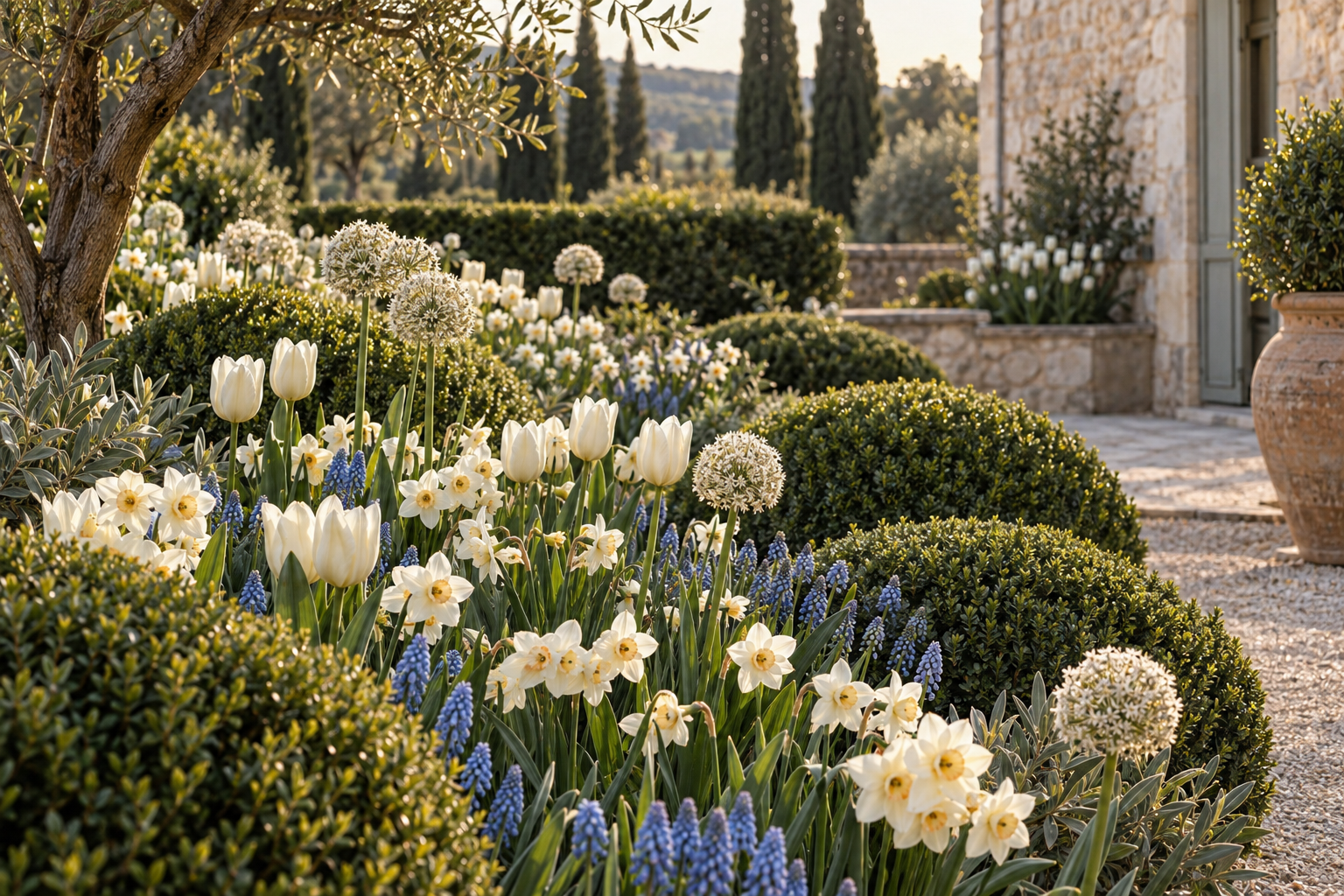
Spring-Flowering Bulbs
Bulbs are autumn’s quiet investment. Planted beneath perennials, beside clipped shrubs or in loose drifts along a path, they bring the first sense of abundance to the spring garden.
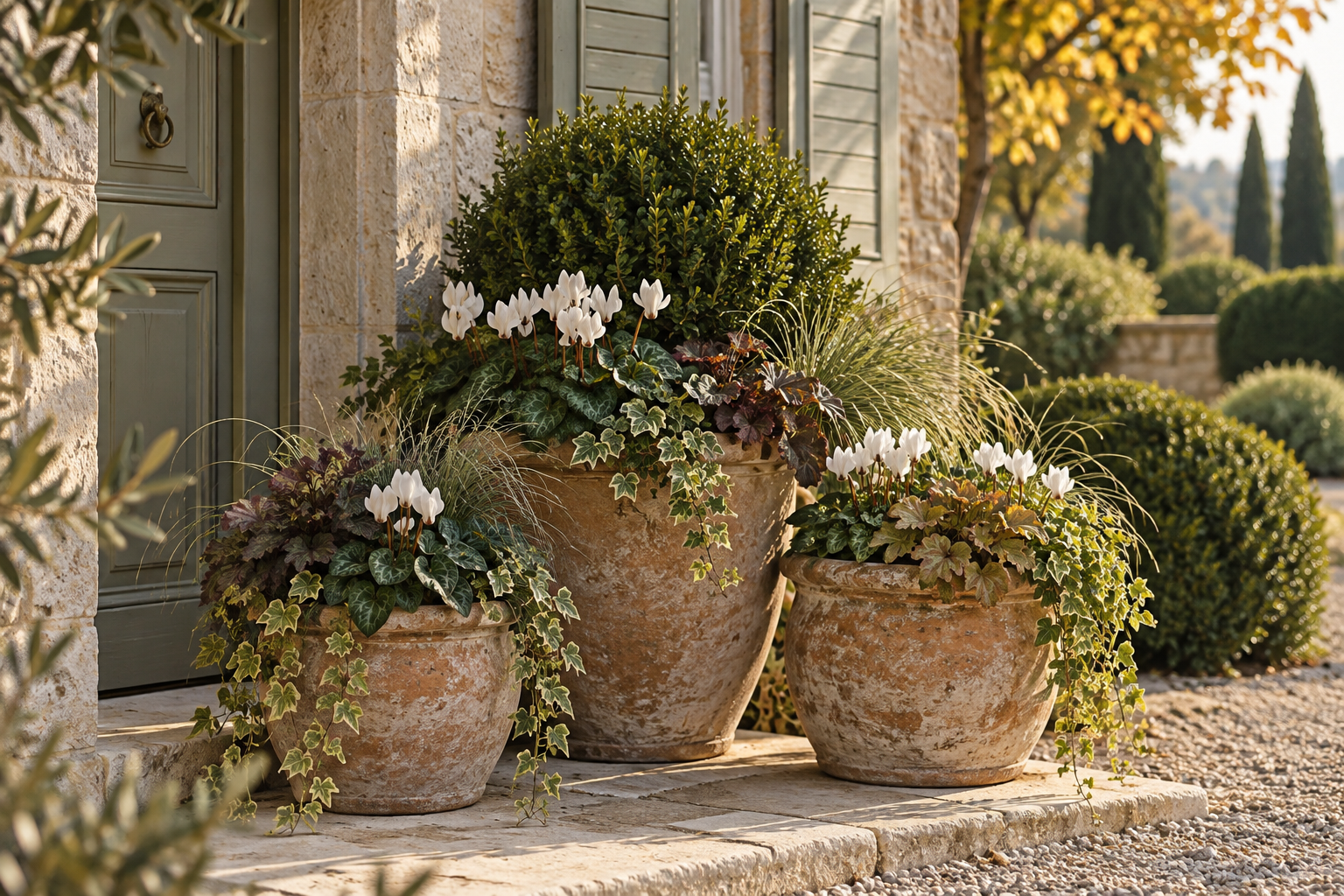
Containers for the Quieter Season
Autumn containers do not need to be filled with bright seasonal colour. A clipped evergreen, a restrained grass, silvery foliage or a small tree can feel more elegant and last far longer.
For a calm European palette, consider creamy narcissus, white tulips, pale alliums and soft blue muscari. Avoid spacing bulbs like dots on a grid. Small, irregular groups feel more natural, while repeating the same variety in several places gives the garden rhythm.
Plant each bulb at the recommended depth and choose a position with suitable drainage. Tulips are generally planted once the weather has cooled, while many narcissus varieties benefit from going into the ground earlier. Local climate and soil conditions should always guide the final timing.
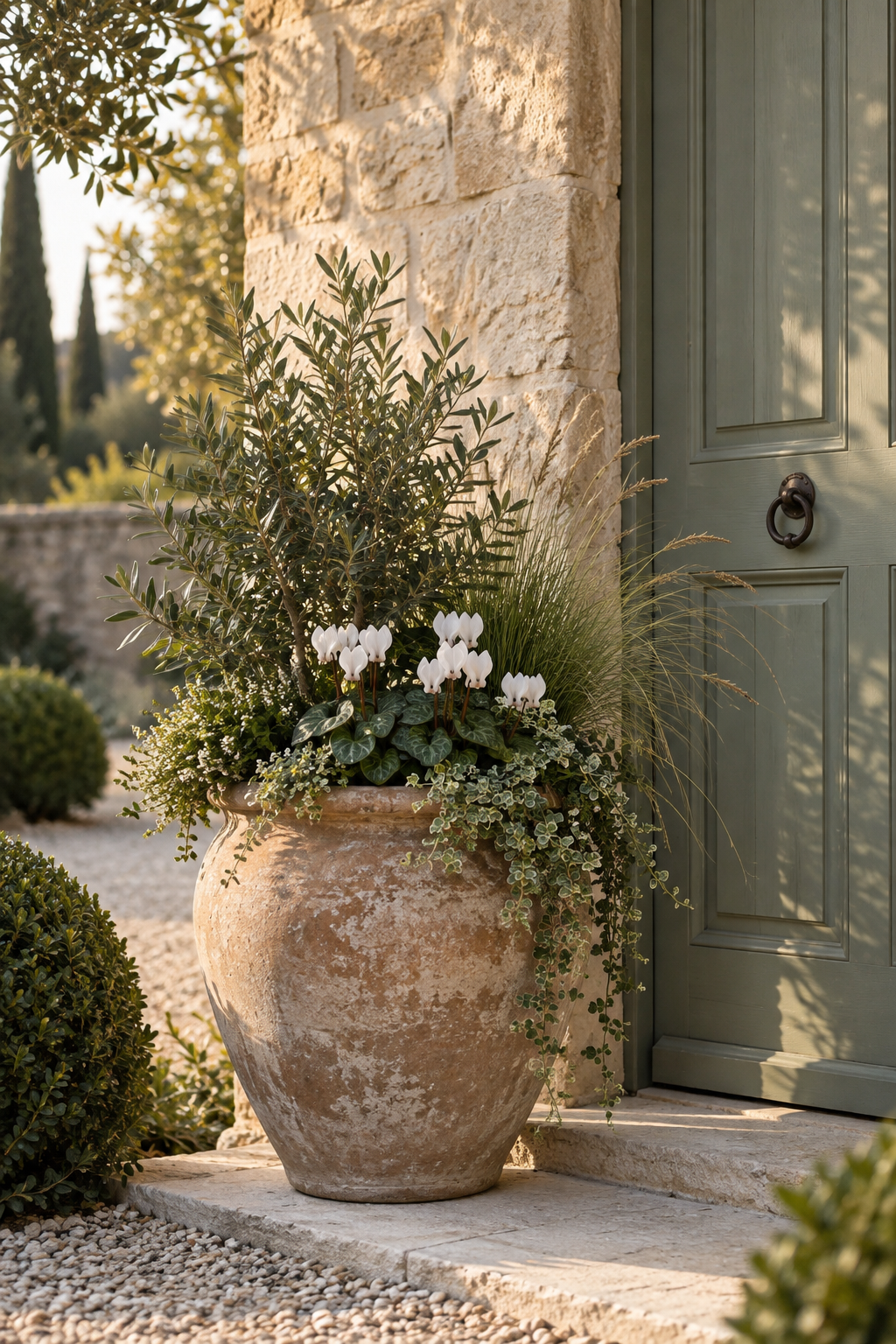
For containers, try one strong focal plant in a weathered terracotta or stone pot. Add a modest underplanting of heuchera, carex or trailing ivy where appropriate. Keep drainage holes clear and lift vulnerable pots slightly above wet paving. The container should feel connected to the architecture, not like a separate decoration placed in front of it.
What to Prune
Begin With Restraint
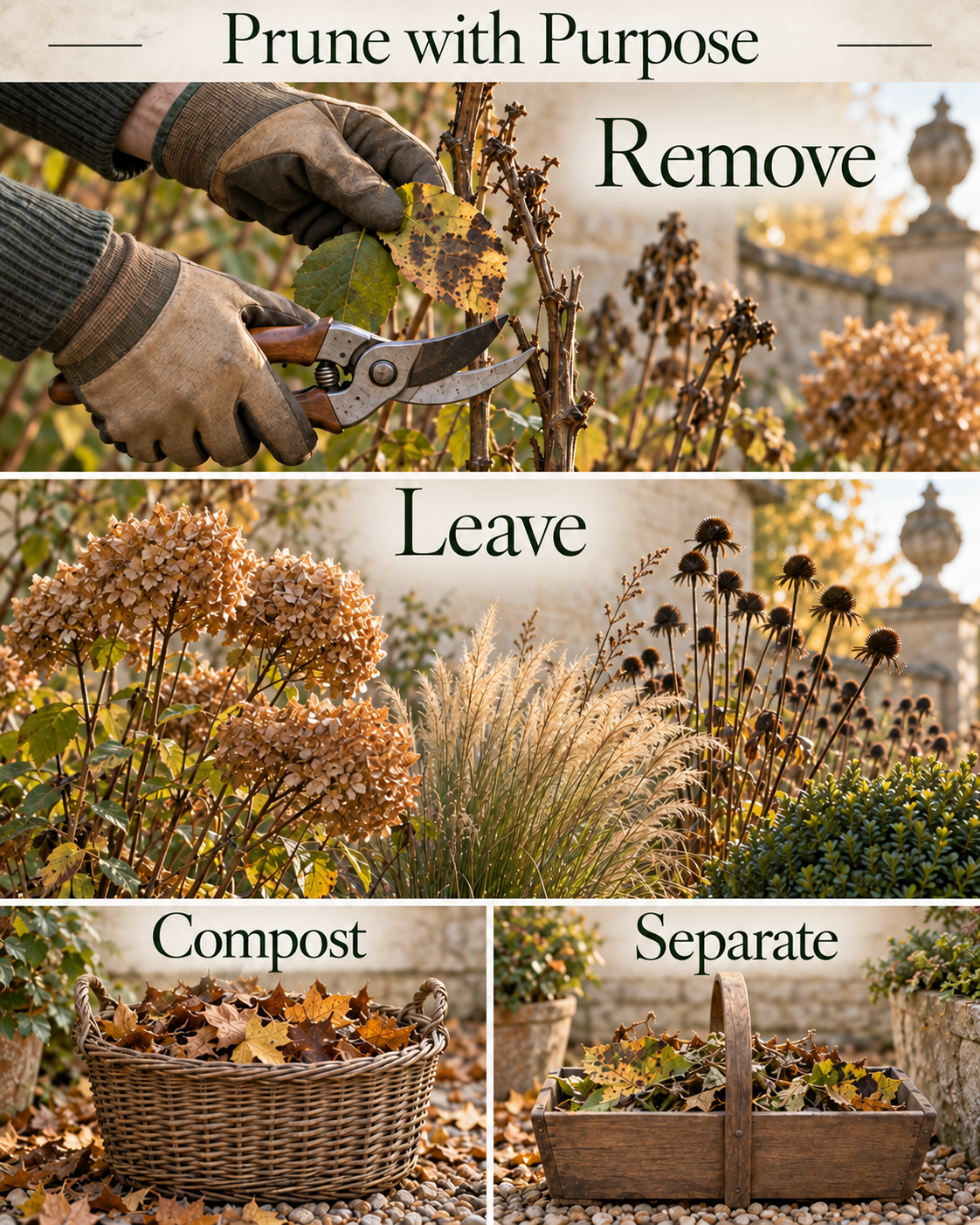
Autumn is often treated as the season for cutting everything down, but many gardens benefit from a lighter hand.
Before reaching for the secateurs, ask whether the plant is diseased, damaged, obstructing a path or likely to collapse badly in winter. If none of these apply, it may be worth leaving until late winter or spring.
Remove broken stems and foliage affected by disease. Clear soft growth that has become a wet mat over smaller plants.
Healthy leaves can be gathered and composted or used to make leaf mould. Diseased material should be handled separately according to local guidance.
Leave Hydrangeas and Ornamental Seed Heads
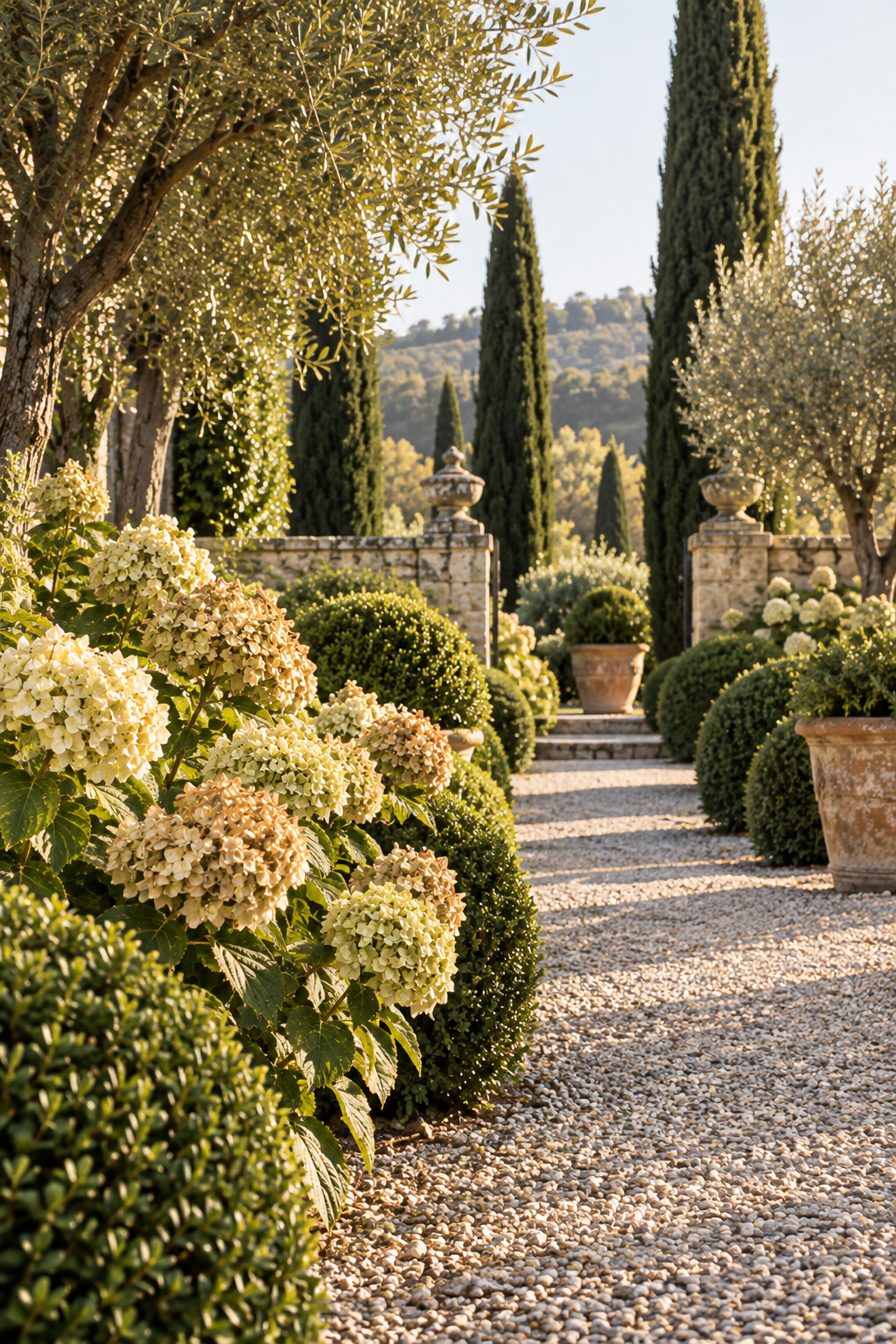
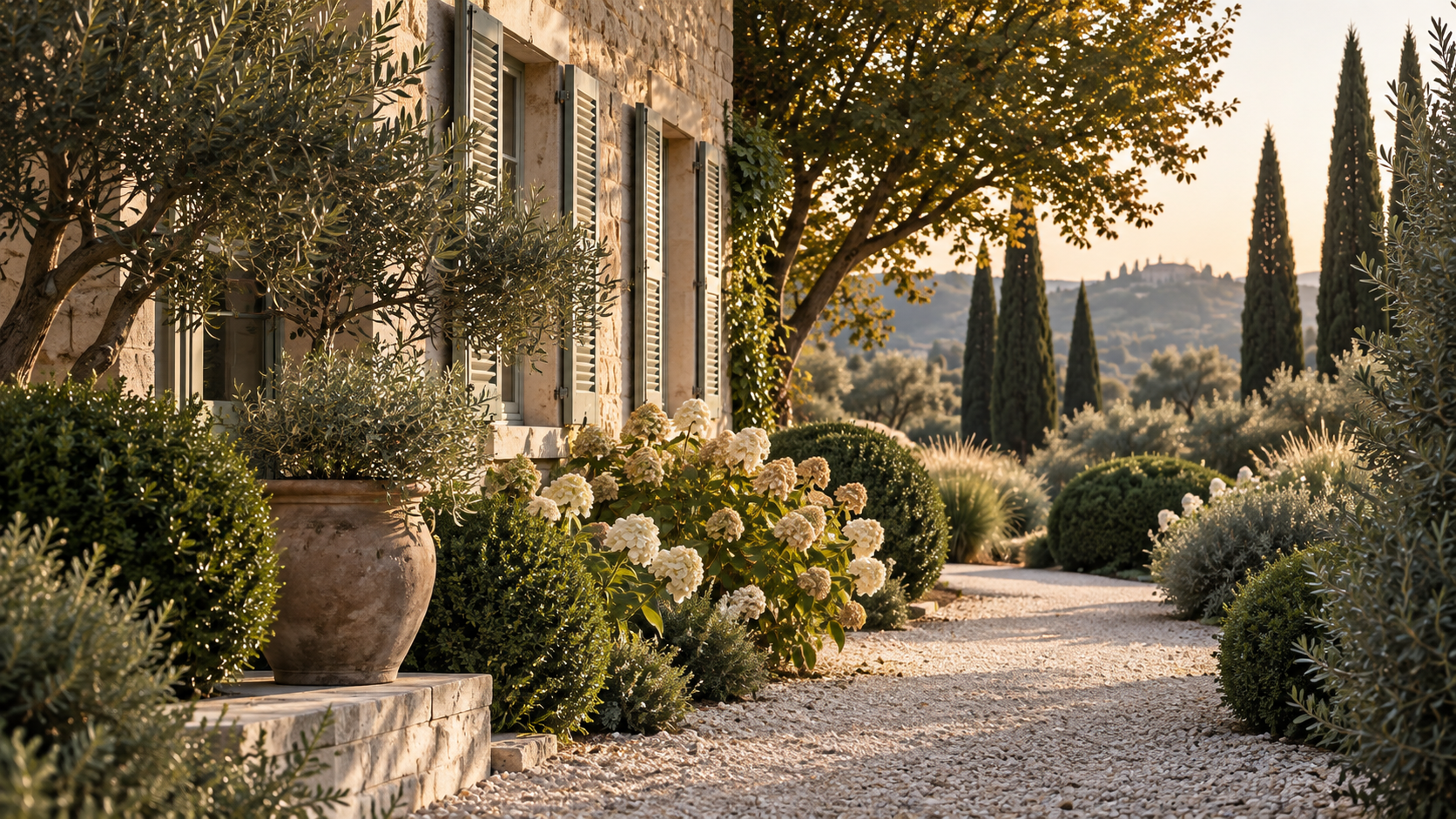
White blooms soften through cream, parchment and pale green, holding the light long after their summer peak. On many hydrangeas, leaving the flower heads in place also adds winter interest and can offer some protection to the buds below.
Protect the Garden’s Structure
Late pruning can stimulate or expose tender growth, and not every woody plant responds well to autumn cutting. Major renovation work is best timed according to the needs of the individual species.
Pruning time depends on the hydrangea type. Mophead and lacecap forms that flower largely on old wood are usually treated differently from panicle and smooth hydrangeas that flower on new wood.
If the variety is uncertain, resist a hard autumn prune. Remove only damaged growth and make a proper pruning decision when the plant can be confidently identified.
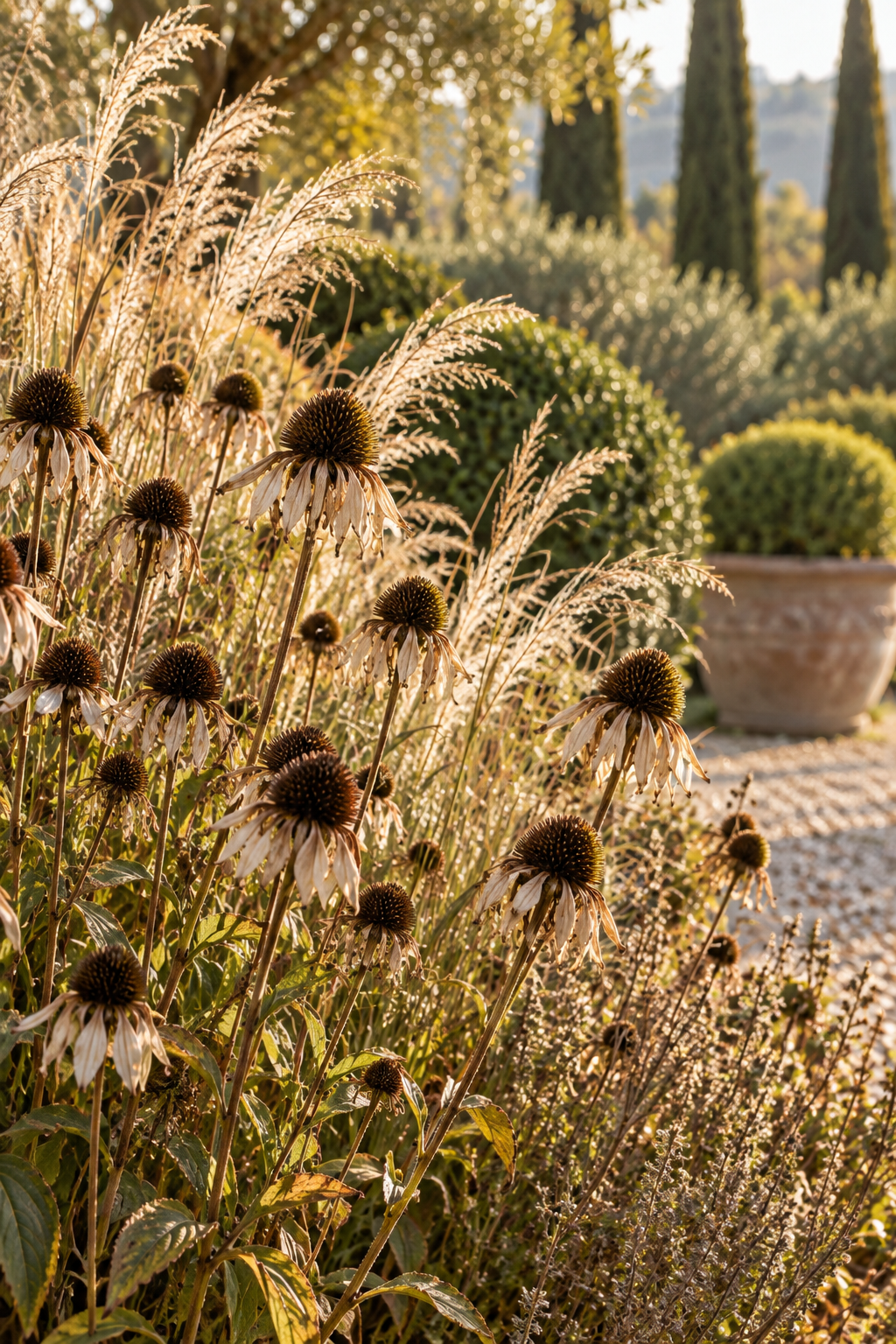
Also consider leaving the seed heads of plants such as echinacea, sedum and ornamental grasses. They catch frost beautifully, offer food and shelter for garden wildlife and keep the border from becoming flat. Plants that become soggy, diseased or visually messy can still be removed selectively.
For now, concentrate on safety, access and plant health. Lightly clear growth from steps and paths. Check that branches are not rubbing against windows, gutters or roofs. Tie in long shoots that could be damaged by wind.
Keep formal hedging crisp only if a final light trim is appropriate for the plant and climate. Avoid cuts that may leave tender new growth vulnerable to cold.
What to Notice
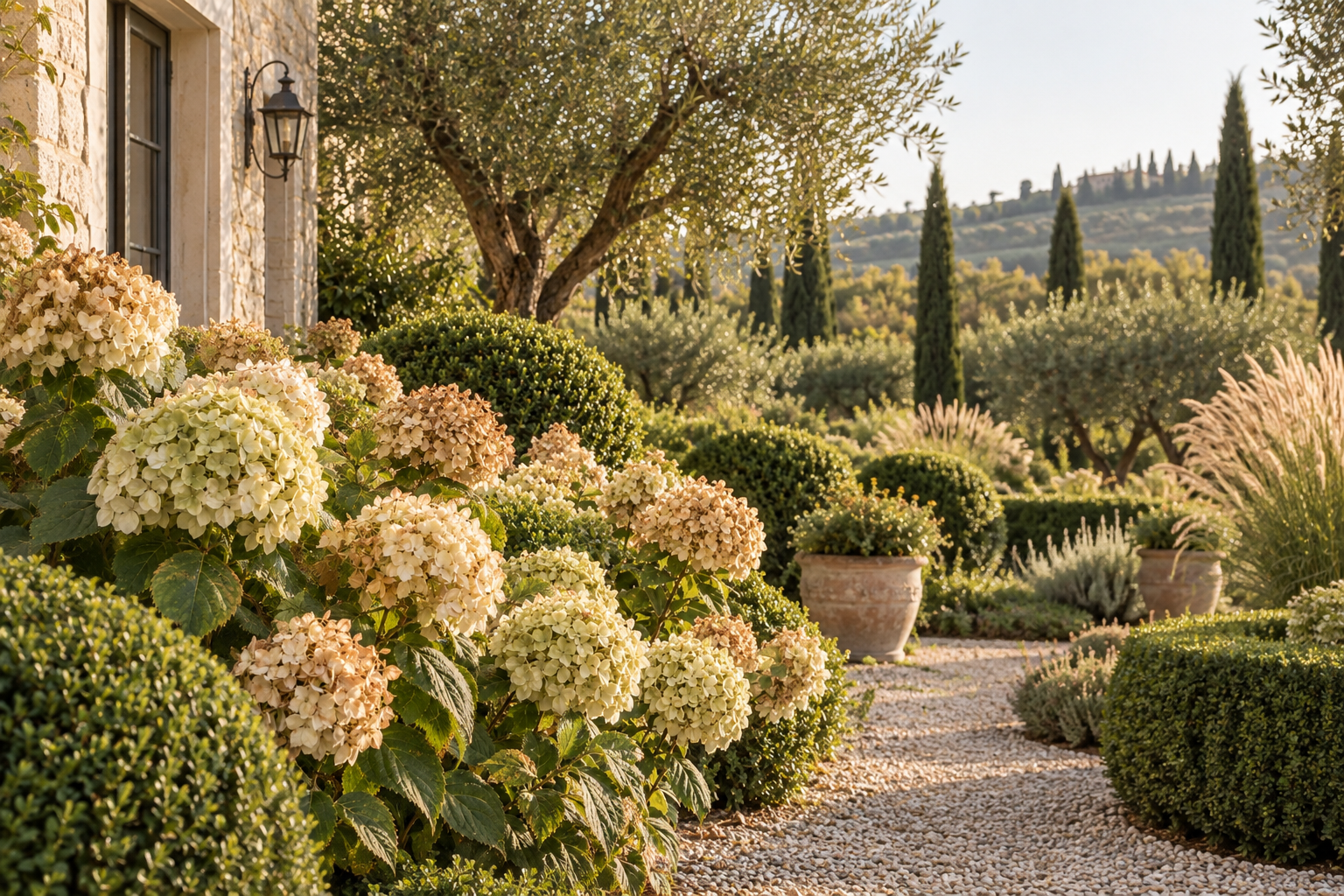
Where the Structure Disappears
Once summer flowers fade, the design of a garden becomes easier to read.
Stand at the main window, the entrance and the place where you most often sit. Notice where the garden still feels composed and where it suddenly looks empty.
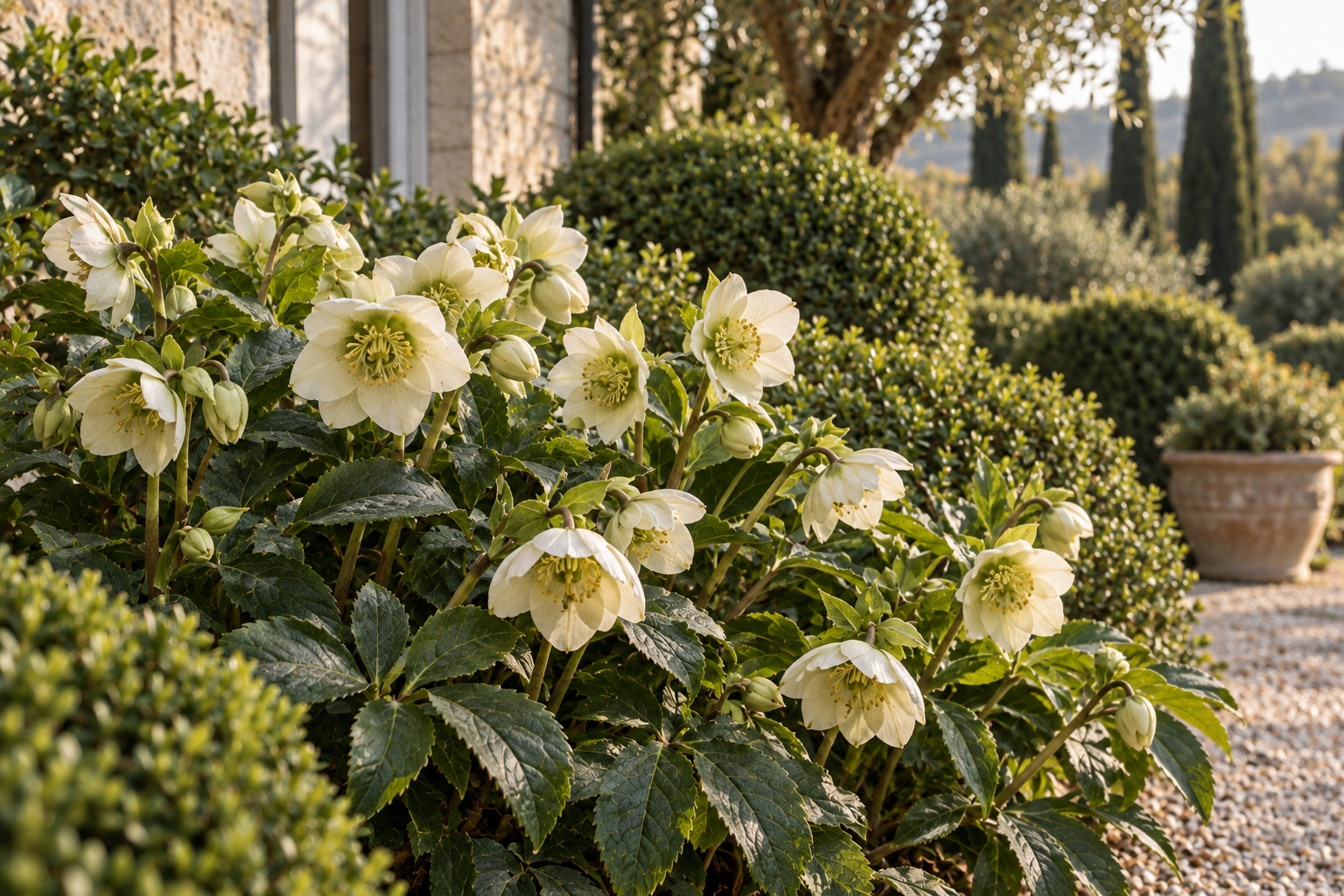
What Is Thriving and What Is Merely Surviving
Look for foliage that stayed healthy, stems that held their shape and combinations that remained attractive after flowering.
The answer is not always another evergreen. A deciduous shrub with beautiful branching, persistent fruit, warm bark or dried flower heads can provide structure without making the garden feel rigid.
Stone edging, a simple bench, a gravel path and a well-placed pot can also hold the scene together.
Take photographs from the same viewpoints you use every day. These images will be invaluable when planning additions during winter, especially when paired with photographs of the garden at its midsummer peak.
The Places Where Water Settles
Watch the garden during steady rain.
Puddling beside a path, water collecting around a container or a downspout emptying into a border can explain problems that were less obvious during summer.
Clear blocked drains and gutters, adjust saucers beneath pots and note areas where the soil remains saturated. Avoid compacting wet ground by walking repeatedly through borders.
Larger drainage changes deserve a considered plan, but autumn observations help identify exactly where that work is needed.
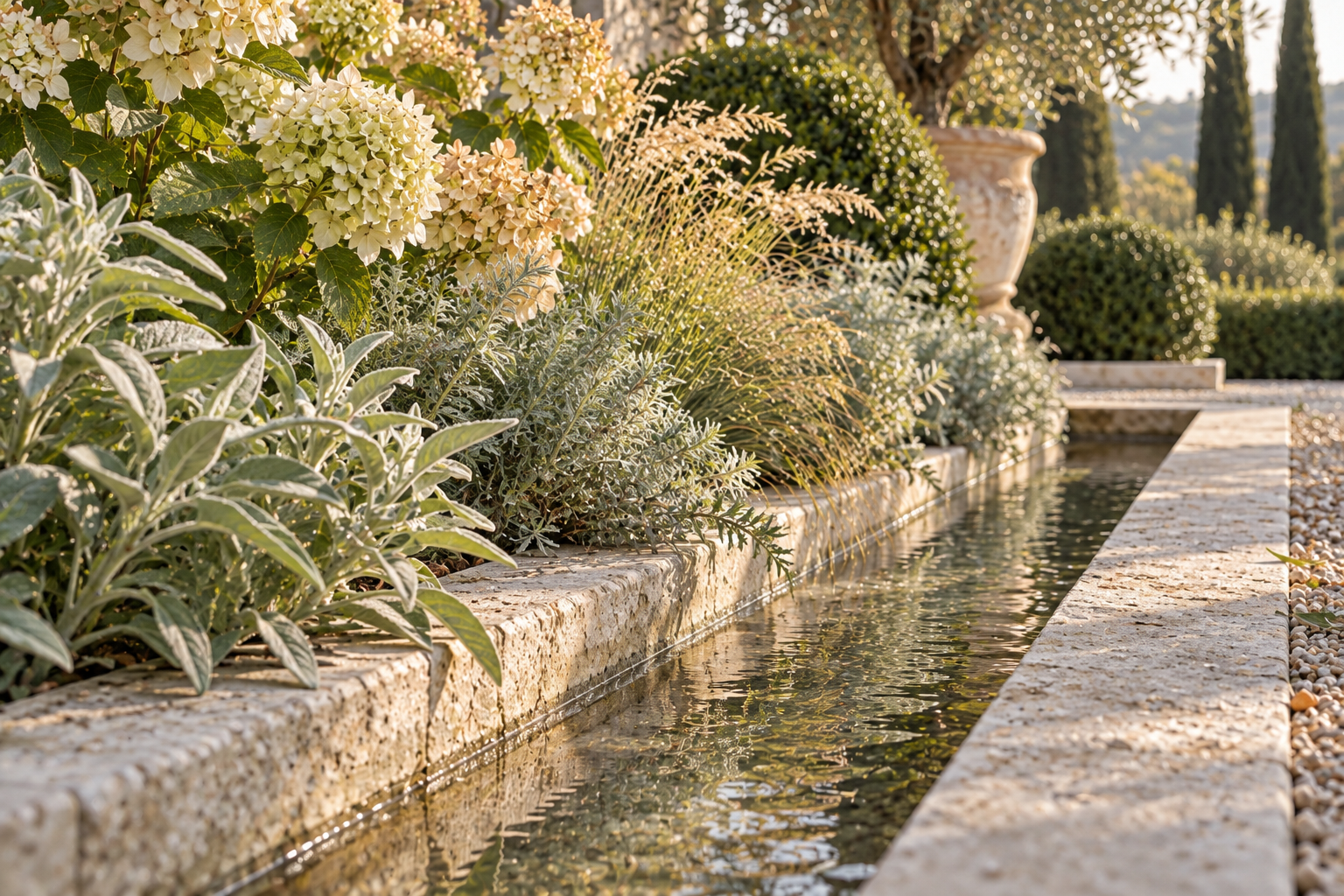
The Details Worth Repeating
Notice the smallest successes: pale hydrangea flowers against dark foliage, a grass catching low sunlight, sage leaves beside weathered limestone or a clipped form reflected in a window.
These are the details that give a garden its identity.
Rather than redesigning everything, choose two or three of these moments to repeat next year.
Repetition can be as simple as using the same white tulip in several borders, echoing one silver-leaved plant along a path or matching a pair of terracotta pots at two entrances.
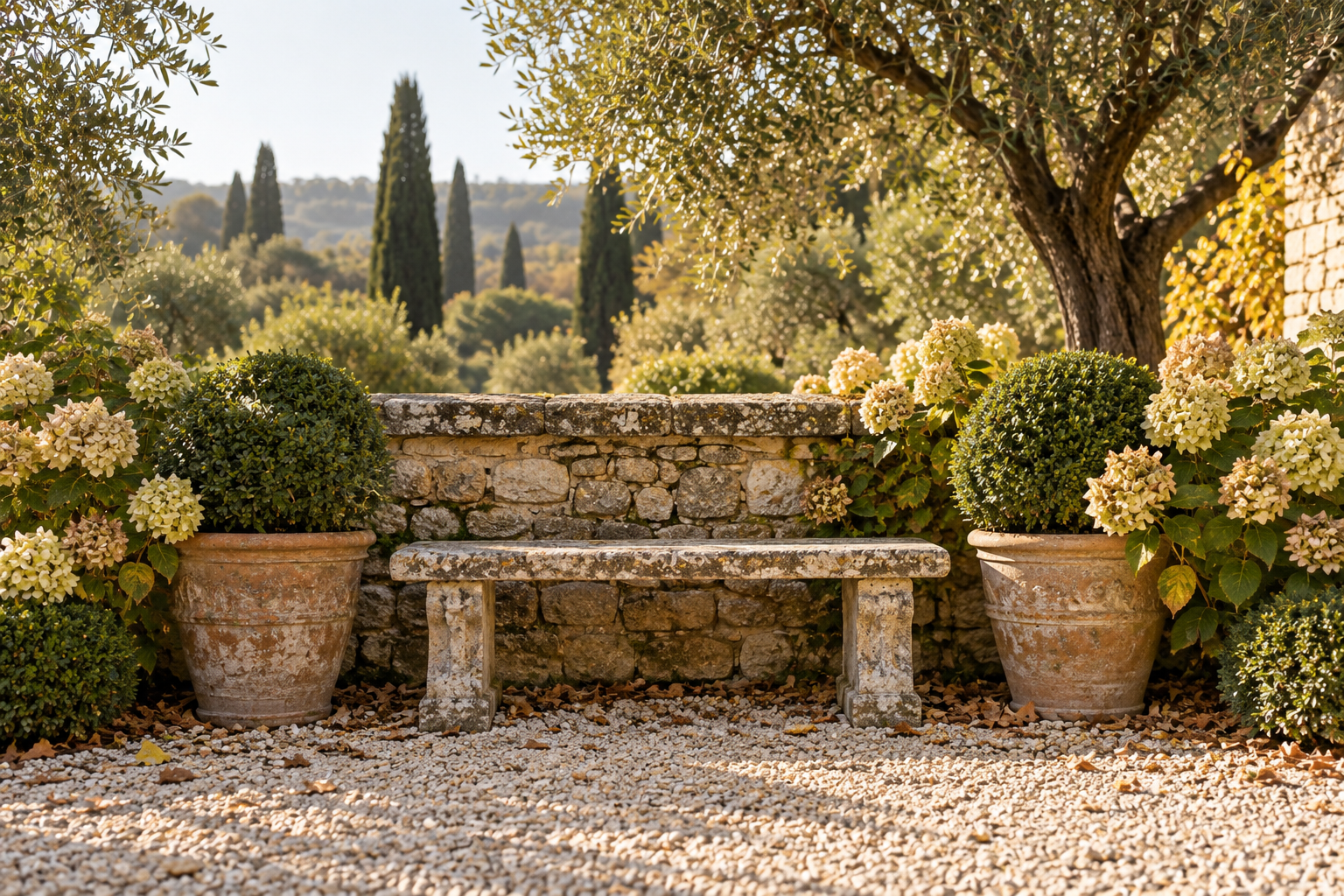
A Gentle Autumn Checklist
- Plant suitable trees, shrubs, hardy perennials and spring-flowering bulbs.
- Divide or relocate crowded perennials when conditions suit the plant.
- Water new planting during dry spells until it is established.
- Remove diseased, damaged or hazardous growth.
- Leave beautiful seed heads, grasses and hydrangea flowers where possible.
- Gather healthy fallen leaves for compost or leaf mould.
- Mulch suitable borders after weeding, keeping mulch away from stems and crowns.
- Clear gutters, drains and irrigation lines before prolonged cold.
- Clean and store supports, tools and empty containers.
- Photograph the garden’s autumn colour and underlying structure.
- Write down three priorities for next year.
Before Winter Arrives
Give yourself one final walk through the garden without a tool in your hand.
Look at the view from indoors, the route to the front door and the plants that still hold your attention. Make a note of what feels calm, what feels crowded and what is missing.
A thoughtful autumn edit is not about leaving the garden immaculate. It is about protecting what is valuable, making a few well-timed changes and allowing the season to remain visible.
The faded flowers, seed heads and quieter colours are not the end of the garden.
They are the beginning of next year’s plan.
Your complimentary garden guide
The Elegant Garden Starter Guide
An eight-page introduction to a timeless, beautifully layered garden.
Enter your email to receive the guide, plus occasional garden notes. Unsubscribe anytime.
FROM THE JOURNAL
Recent Reads
September 17, 2026
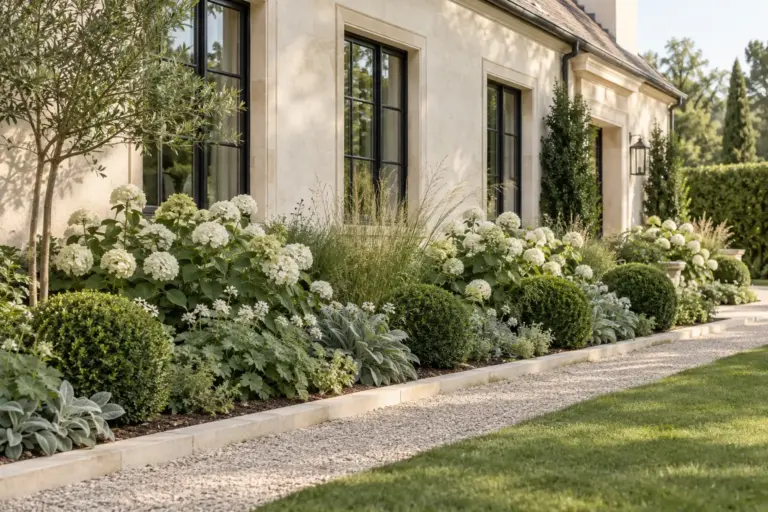
How to Design a White Hydrangea Border
September 16, 2026
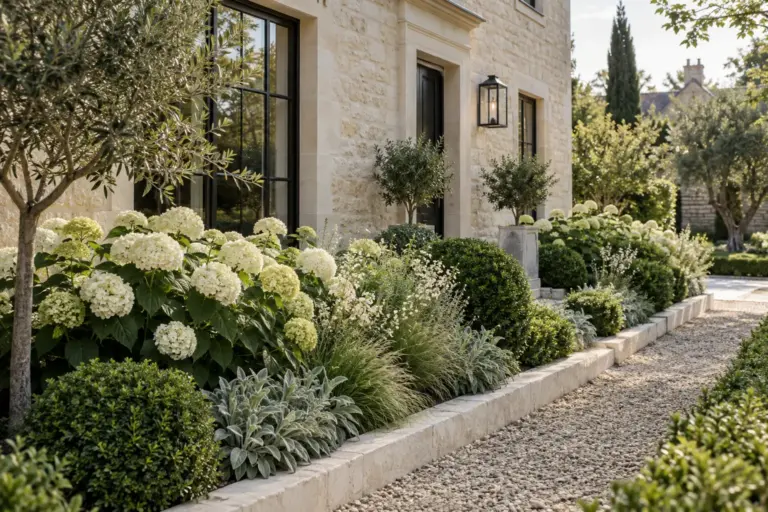
5 Beautiful Ways to Edge a Garden Border
September 12, 2026
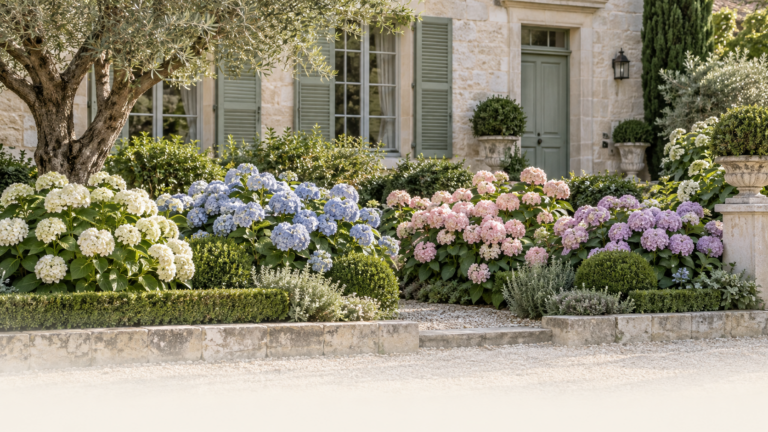
How to Choose the Right Hydrangea for Your Garden
September 10, 2026
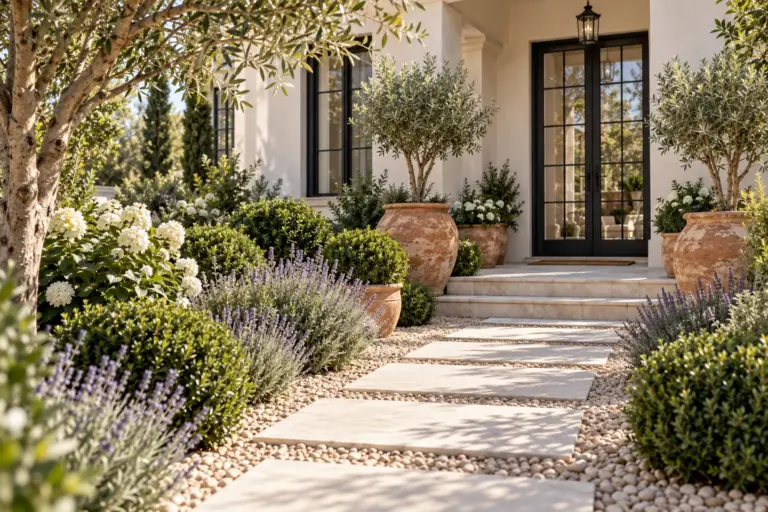
How to Design a Mediterranean Front Entrance
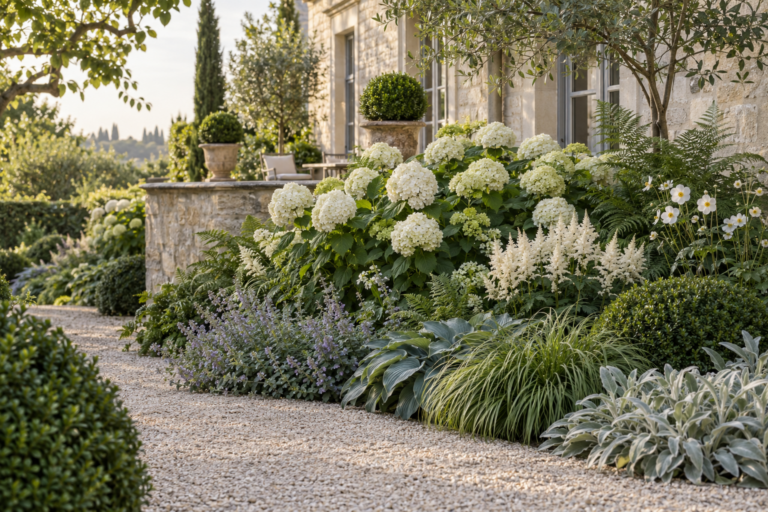
September 7, 2026