
How to Design a Mediterranean Front Entrance
Garden Design
How to Design a Mediterranean Front Entrance
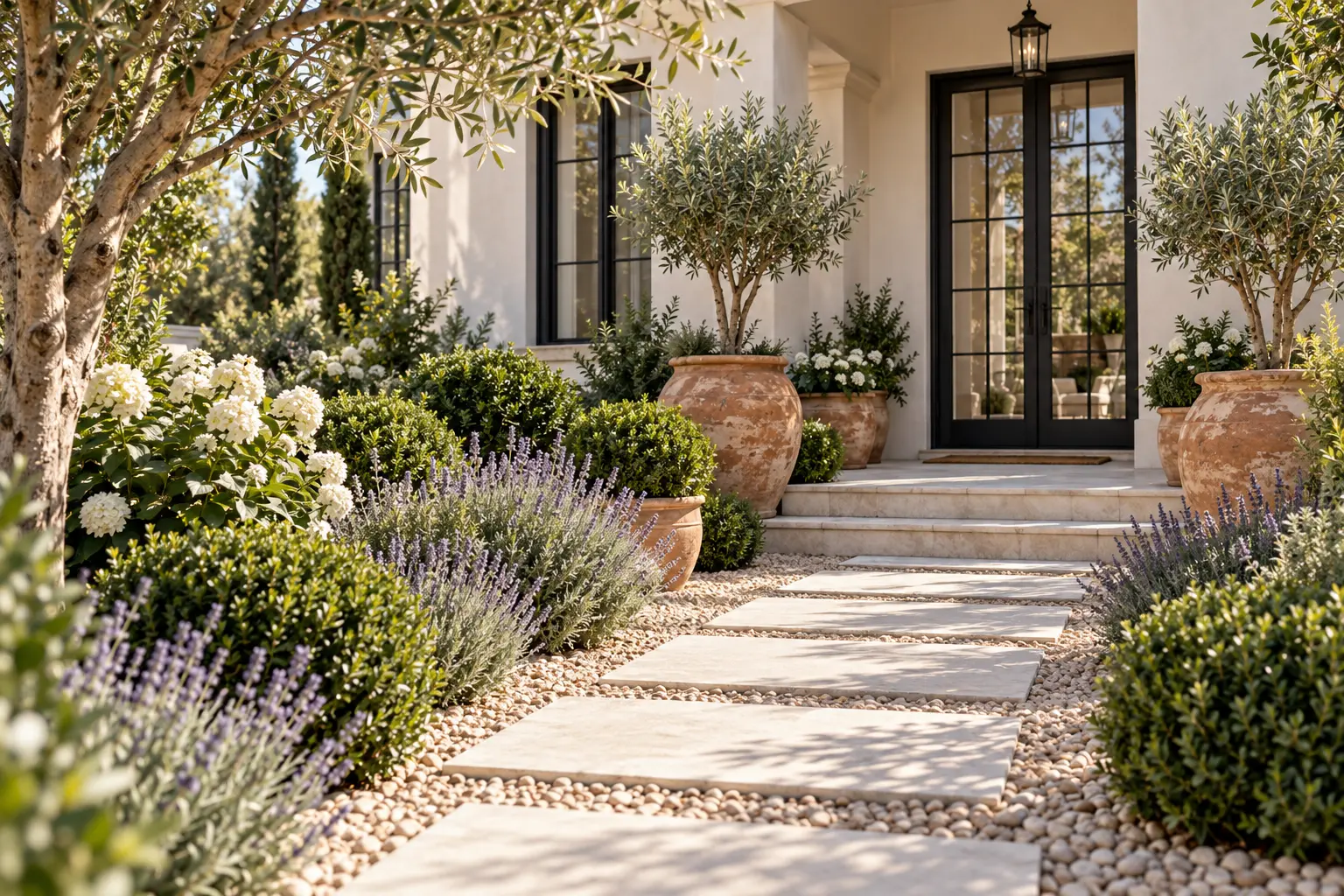
A timeless entrance layered with lavender, terracotta, gravel and sculptural greenery
A Mediterranean front entrance feels warm and established rather than overly decorated. The beauty comes from a restrained palette, honest materials and a few strong plants repeated with confidence. Whether your entrance is a generous courtyard or a narrow path to the front door, the same principles can create a welcoming European character.
The Foundation
Begin With a Warm, Restrained Palette
Start with the colours already present in your home and garden. Mediterranean entrances are most convincing when the architecture, paving, containers and planting feel as though they belong to the same quiet family.
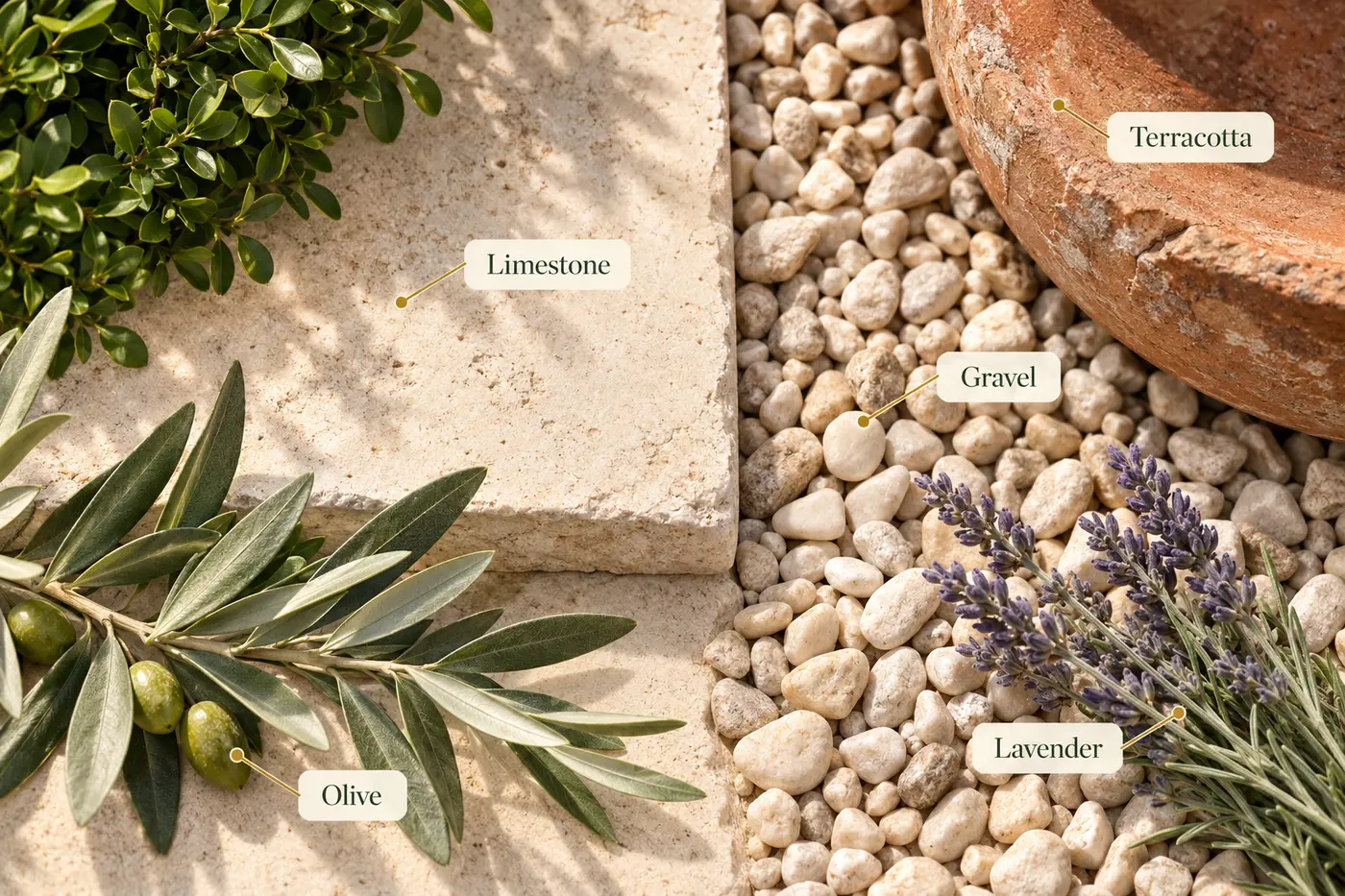
Choose warm white or soft cream for walls, limestone and pale sand for hard surfaces, olive and sage for foliage, and weathered terracotta for depth. Lavender blue can provide a restrained seasonal note without overwhelming the entrance.
The Main Line
Establish the Walkway First
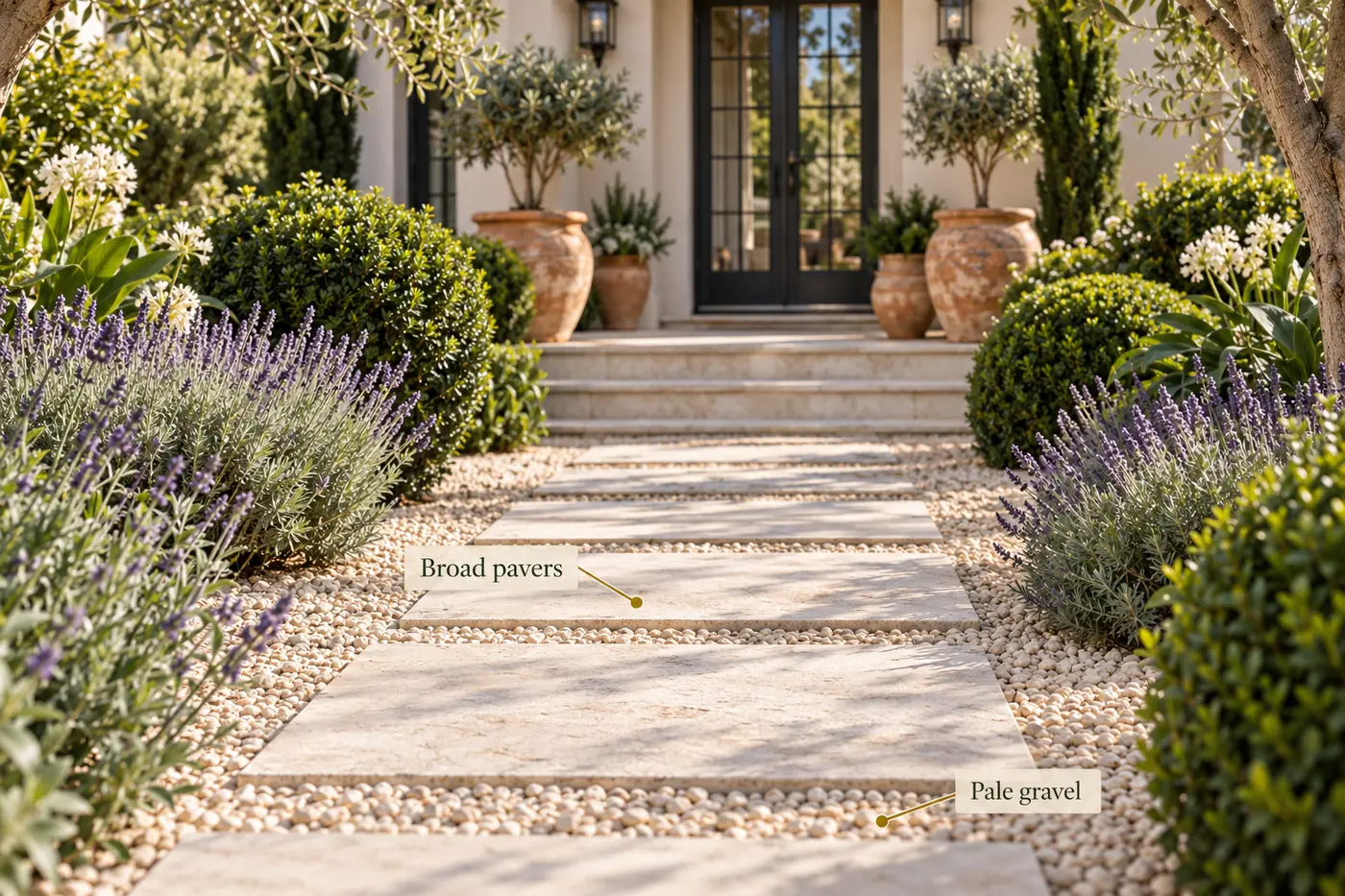
The path determines how the entire entrance feels. A clear, well-proportioned walkway leads the eye to the door and gives the planting a framework.
Broad limestone pavers set into fine, pale gravel create structure without looking rigid. If natural limestone is not practical, choose concrete pavers with a warm, matte finish and subtle colour variation.
- Use pavers wide enough for a comfortable stride.
- Choose compacted gravel that remains stable underfoot.
- Keep the path visually generous, even in a small space.
- Limit the design to one main stone and one gravel colour.
Soft Seasonal Colour
Line the Walkway With Lavender
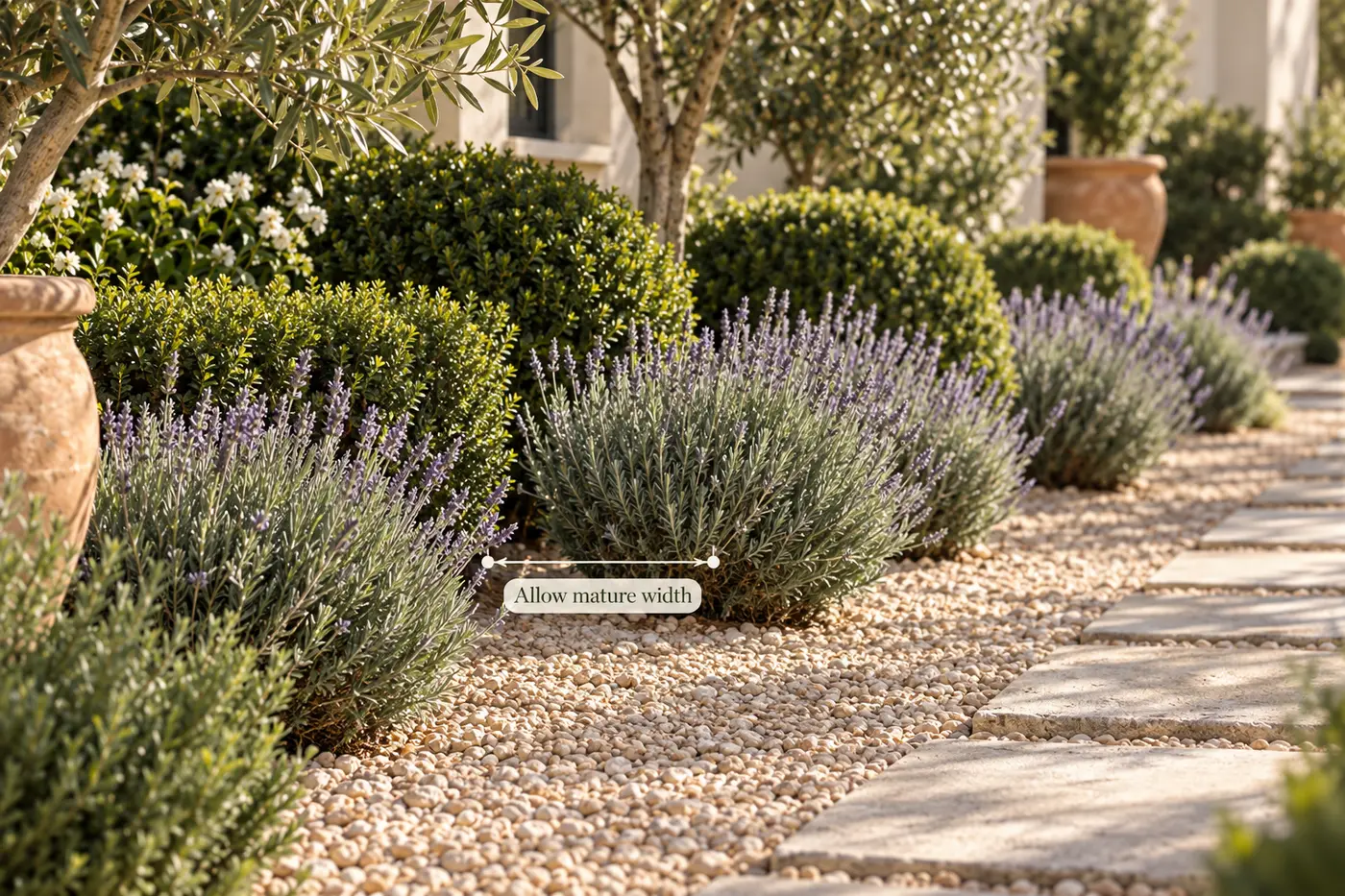
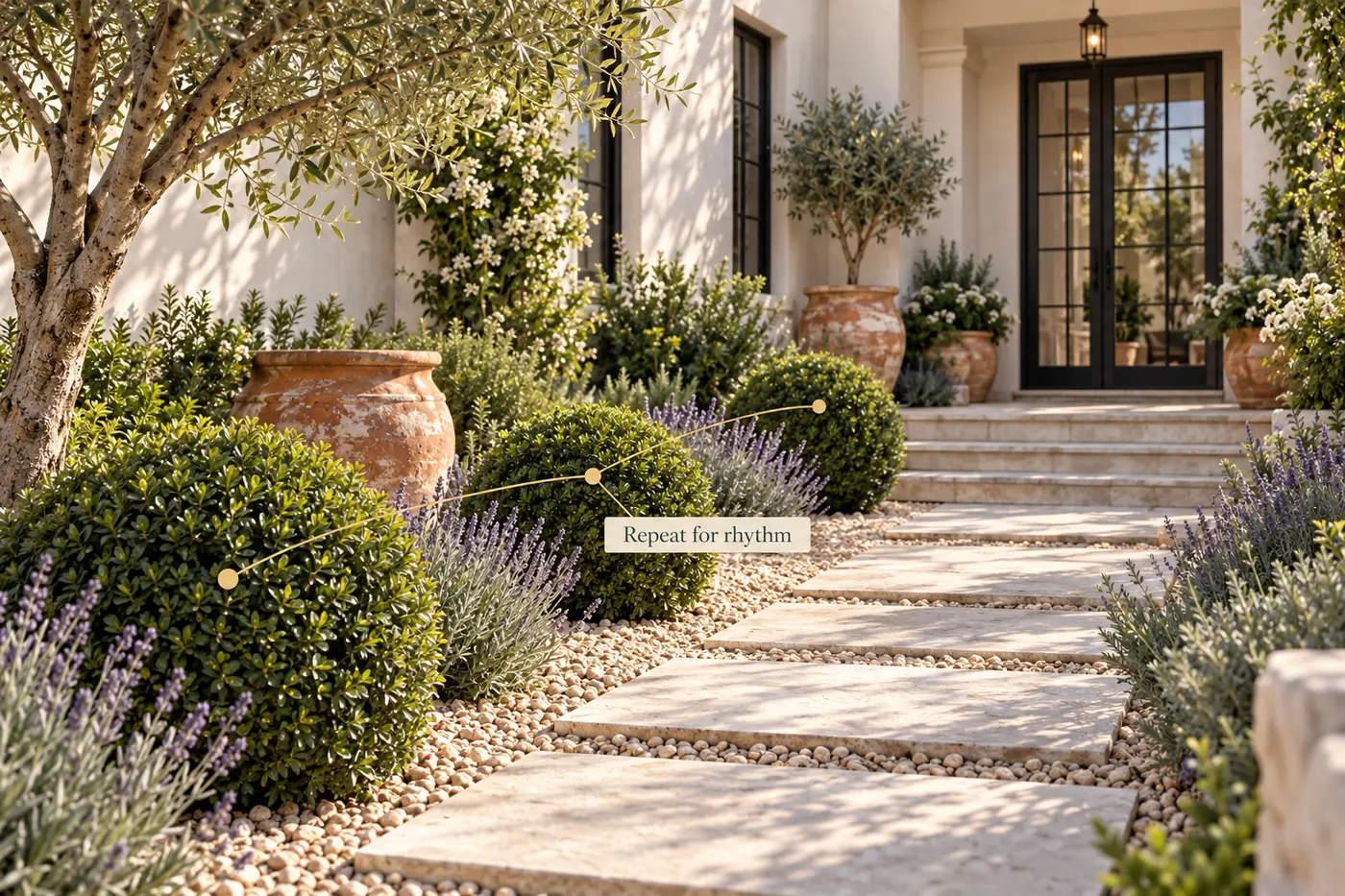
Lavender brings fragrance, movement and the unmistakable character of a Mediterranean garden. Plant it in relaxed repetitions rather than a perfectly clipped row. Small shifts in position keep the composition natural while the repeated colour holds it together.
Allow for mature width so the plants can soften the edge without swallowing the path. Lavender performs best in full sun, lean soil and excellent drainage. Air circulation is essential, especially in humid climates.
Use catmint, meadow sage or a compact Russian sage for a similar soft, silver-green effect. The goal is the rhythm and texture, not one compulsory plant.
Collected Character
Use Terracotta Pots in Layered Groupings
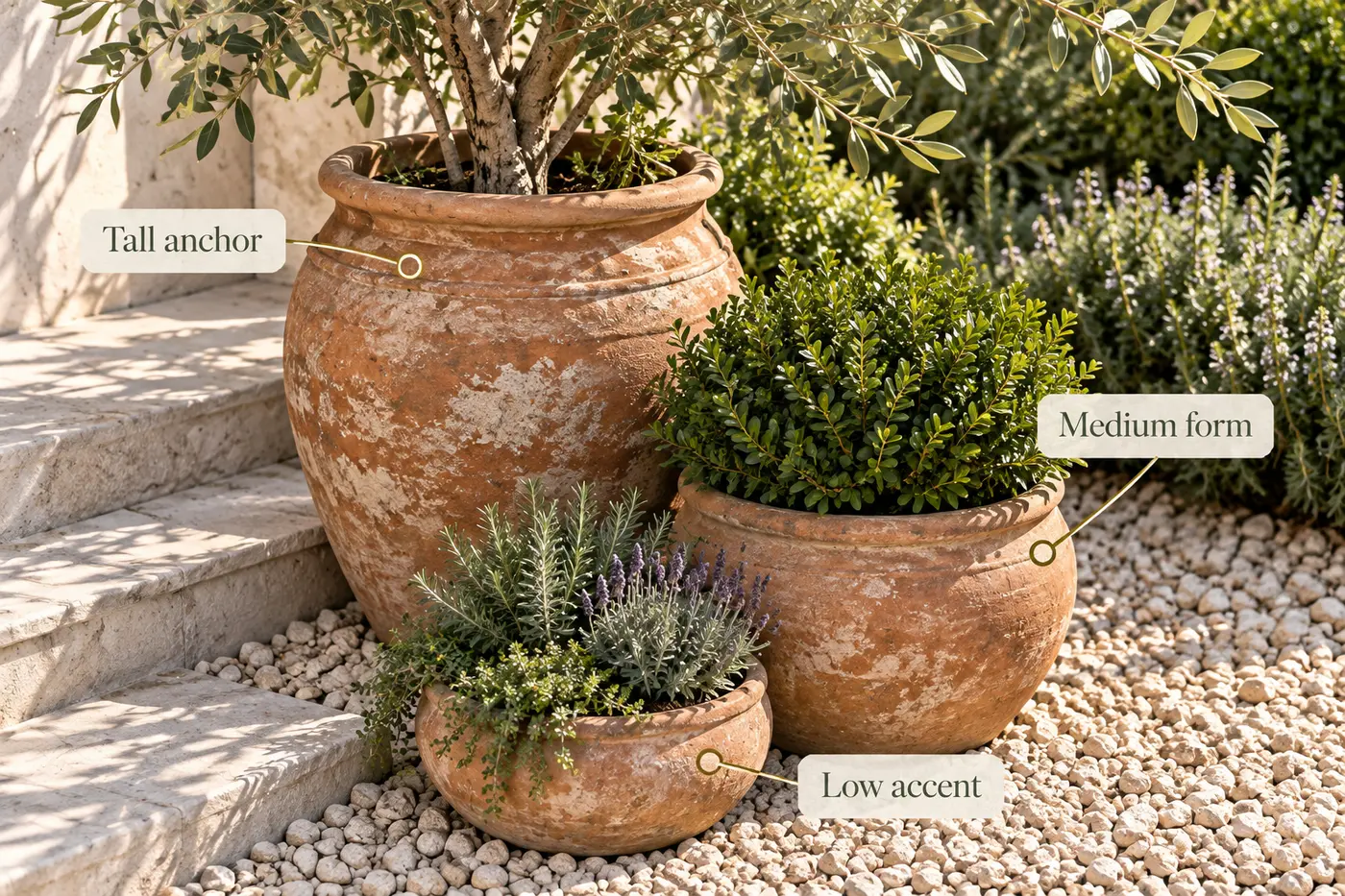
A collection of terracotta pots feels richer than a row of identical containers. Begin with one tall anchor, add a medium form and finish with a low accent. The pots should relate without matching exactly.
Look for deep clay tones, weathered surfaces and simple silhouettes. Pair an olive-like tree or bay with evergreen structure, herbs and restrained seasonal planting. Leave a little gravel visible between the pots so the grouping can breathe.
Year-Round Form
Create Evergreen Structure
Evergreen forms keep the entrance composed when lavender and flowering plants are resting. Clipped spheres, low hedging and upright accents bring year-round shape and balance.
Boxwood is the classic choice, but yew, dwarf holly, euonymus and compact conifers can create the same architectural effect. Repeat one or two forms rather than collecting many different evergreens.
Allow these plants to frame the entrance instead of crowding the door. A strong silhouette with visible space around it will always feel more polished.
A Living Focal Point
Add One Sculptural Tree
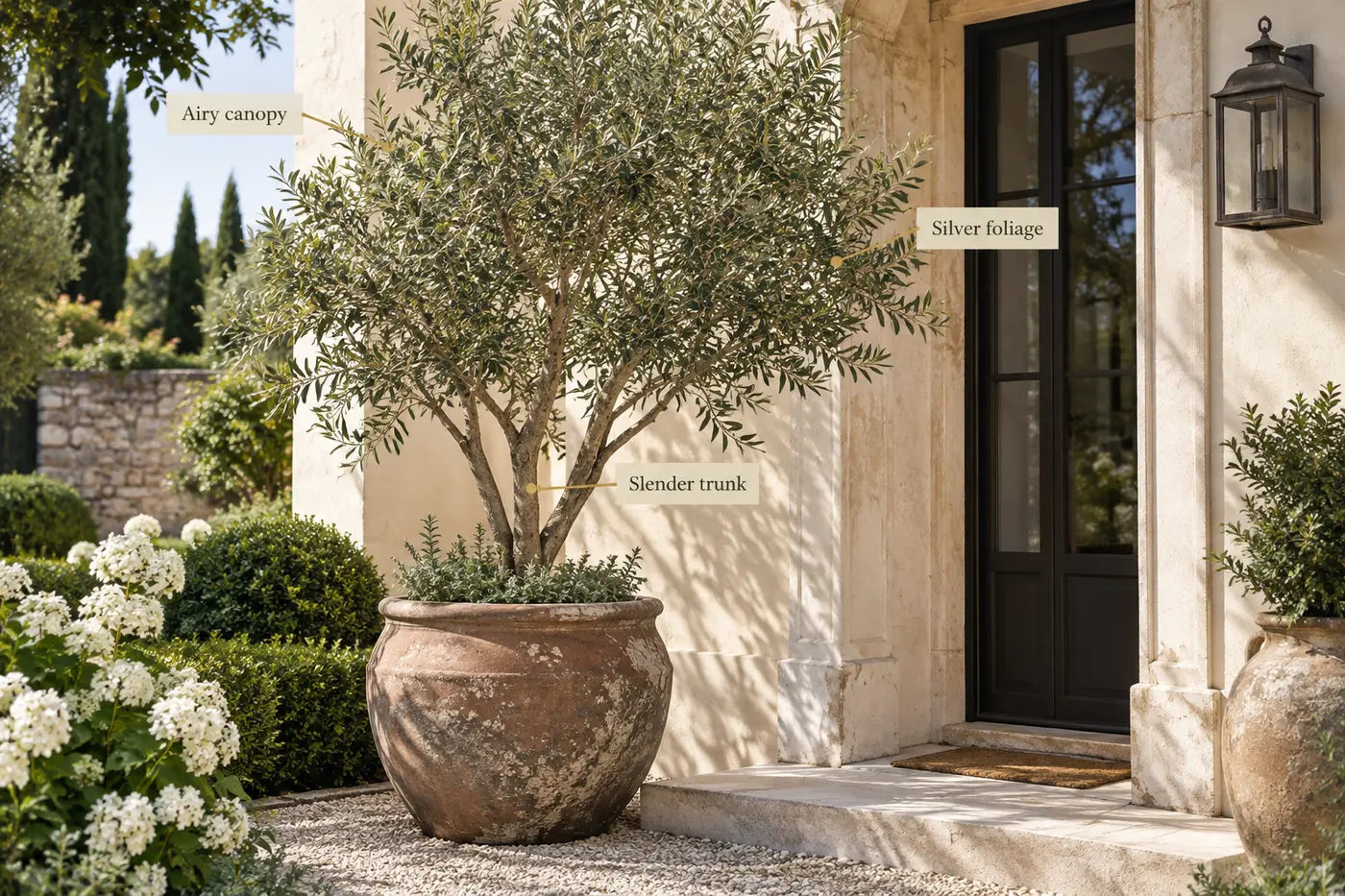
An olive tree instantly suggests the Mediterranean, but its real contribution is its airy canopy, slender trunk and muted silver foliage. That character can be recreated in colder climates.
Consider a container-grown bay laurel that can be protected in winter, willow-leaved pear, multi-stem serviceberry, compact ornamental pear, a narrow evergreen or a standard-form shrub. Choose a plant with a light canopy so it filters light rather than blocking the entrance.
Cold-Climate Olive Alternatives
- Willow-leaved pear: silver foliage and a graceful outline.
- Serviceberry: a beautiful multi-stem form with seasonal interest.
- Columnar juniper: evergreen structure in a narrow footprint.
- Bay laurel in a pot: movable and easy to overwinter indoors.
- Standard-form privet or myrtle: the same tailored container silhouette.
The Design Principle
Balance Symmetry With Natural Variation
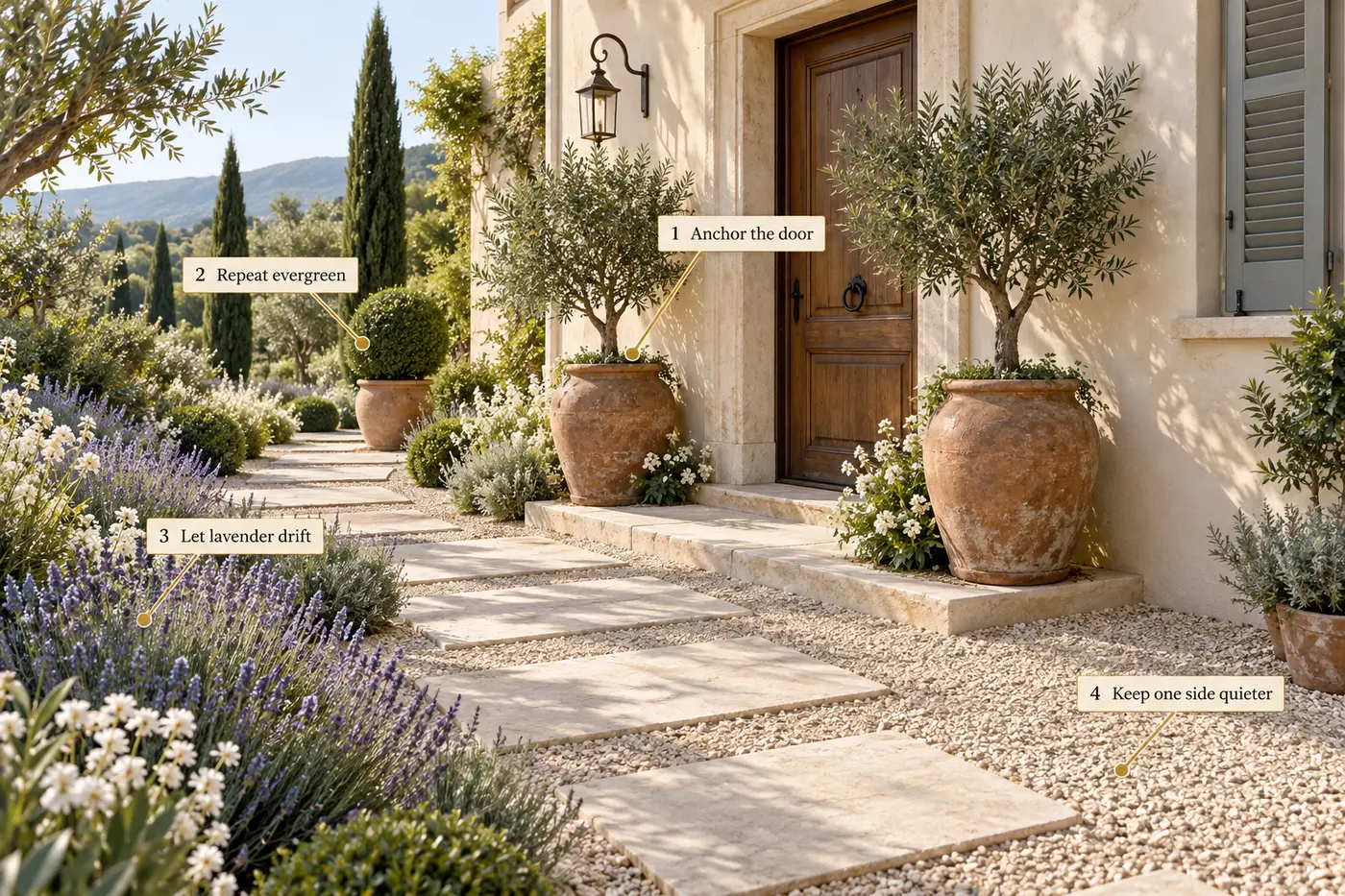
Symmetry is useful at a front entrance because it signals arrival. Place the strongest elements on both sides of the door, then relax the arrangement as it moves away from the house.
The two sides do not need to be mirror images. Repeat the same material, plant shape or pot colour while varying the height and spacing. This creates balance without stiffness.
A Simple Way to Do It
- Anchor the door with a pair of substantial forms.
- Repeat one evergreen shape farther down the path.
- Allow lavender and flowering plants to drift more naturally.
- Keep one side slightly quieter if the architecture is already asymmetrical.
Supporting Flowers
Use White Flowers Carefully
White flowers brighten shaded corners and connect beautifully with cream walls and pale stone. Choose restrained groups of white roses, geraniums or flowering shrubs rather than filling every gap.
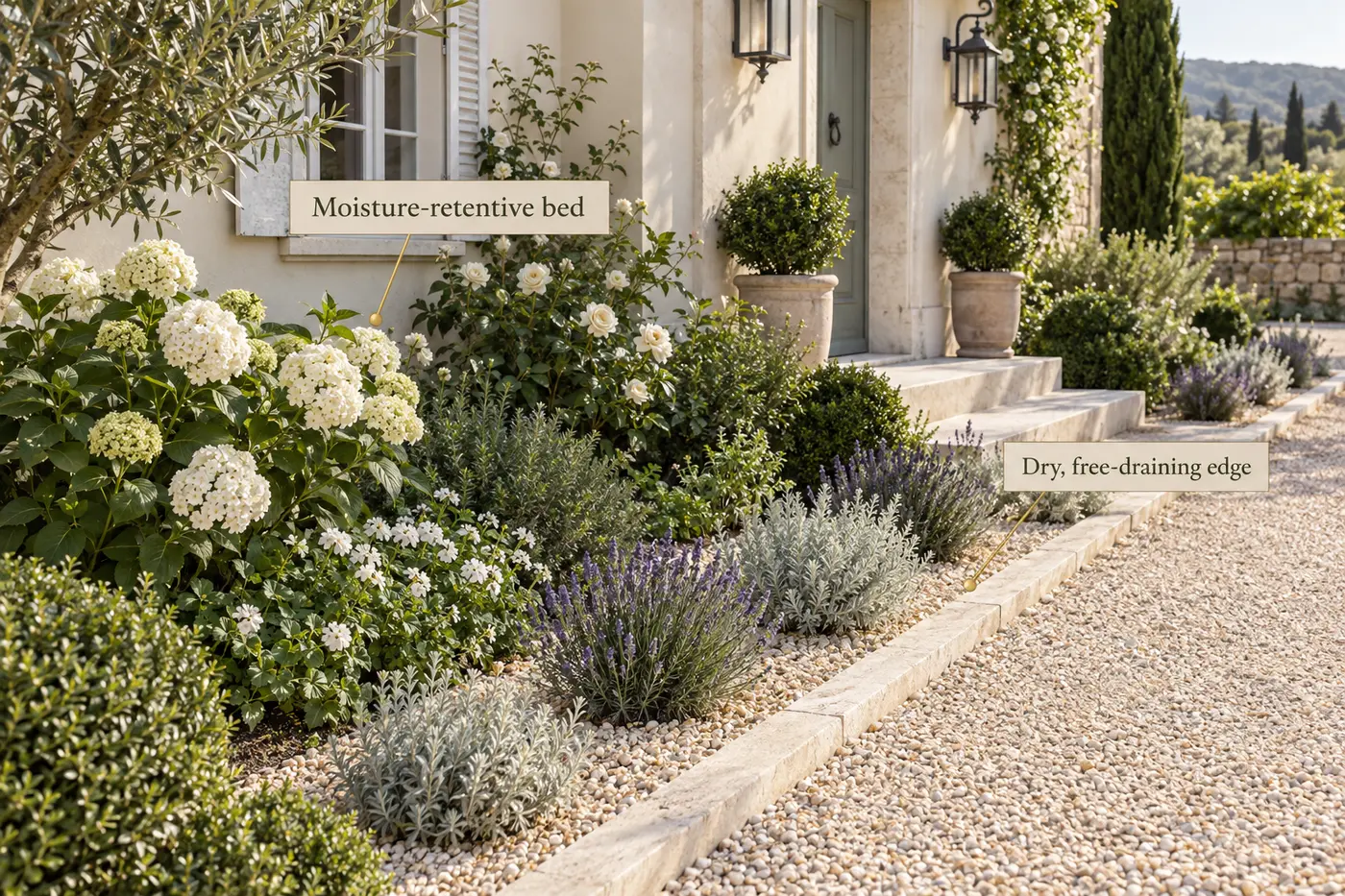
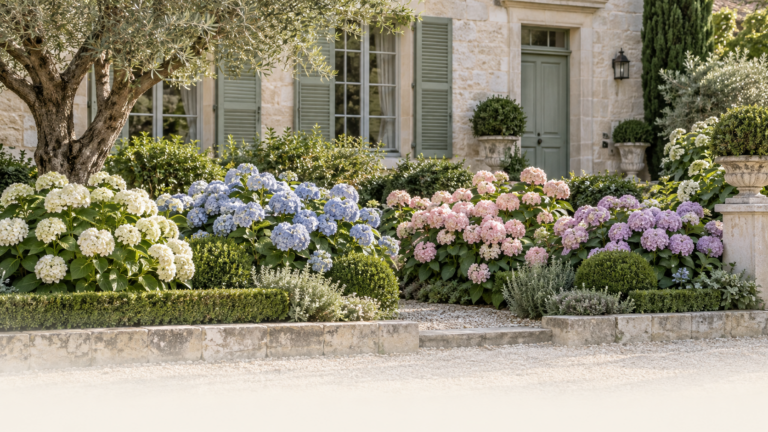
White hydrangeas can work beautifully near a Mediterranean-inspired entrance when they are placed in a separate, moisture-retentive bed. Do not plant them in the same dry, fast-draining conditions preferred by lavender.
This contrast can be especially effective: lush white flowers close to the house, with gravel-loving plants along the sunnier edge of the walkway.
For Compact Spaces
A Small Front-Entrance Layout
A small entrance does not need many plants. It needs a clear hierarchy. Give each element a role and preserve enough open paving or gravel to make the space feel generous.
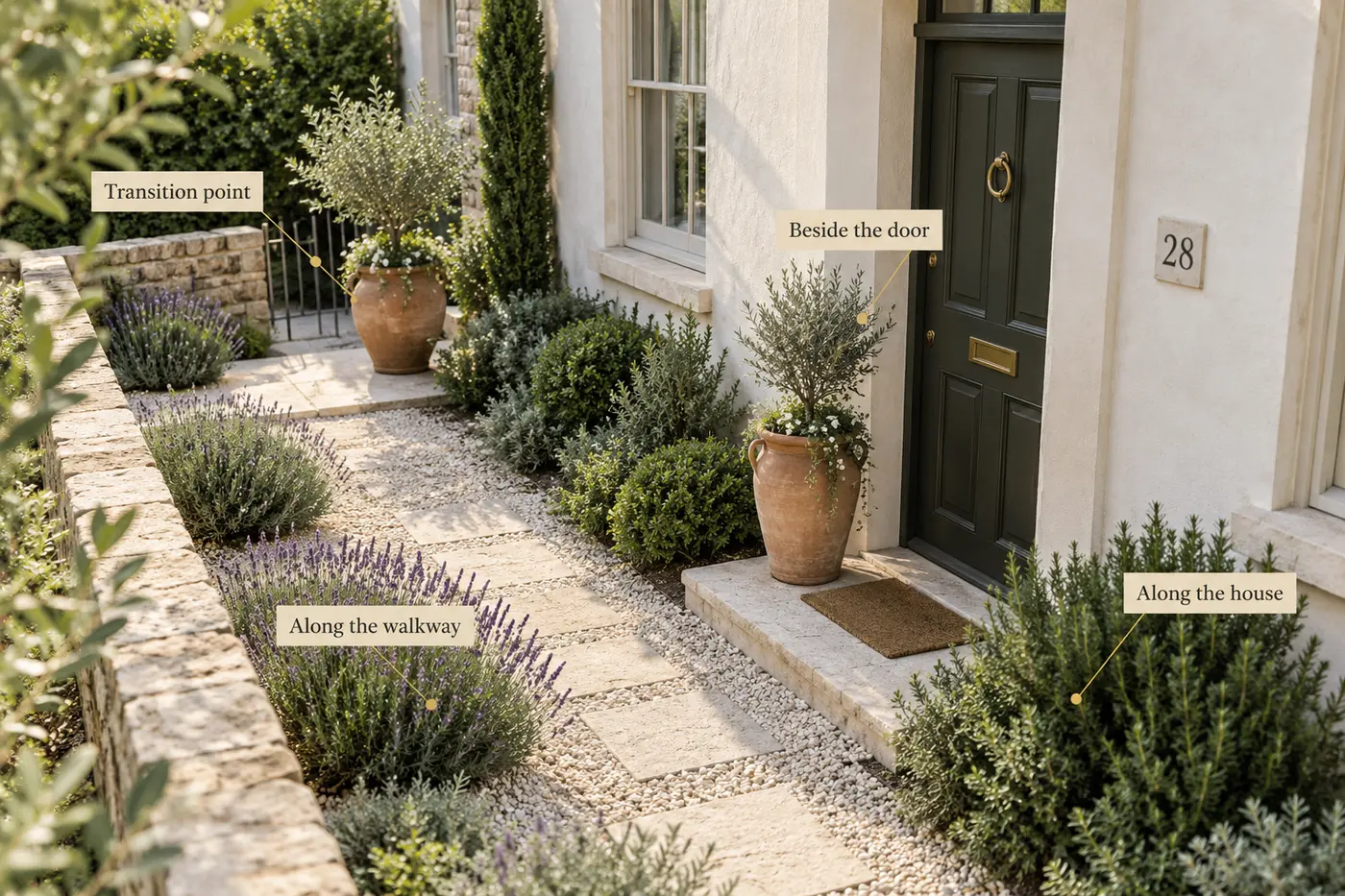
Beside the Door
Use one tall container or narrow evergreen on each side. If the doorway is off-centre, use one stronger grouping on the wider side rather than forcing symmetry.
Along the House
Keep foundation planting low enough to reveal the architecture. Choose a compact evergreen rhythm with one pale flowering layer.
Along the Walkway
Repeat lavender or its regional alternative in three to five generous groups. Avoid a continuous hedge if the path is narrow.
At the Transition Point
Place the tallest terracotta pot or sculptural tree where the walkway turns, widens or meets the front step. This creates a natural pause before the door.
Architecture and Finish
Choose Exterior Colours and Materials That Support the Garden
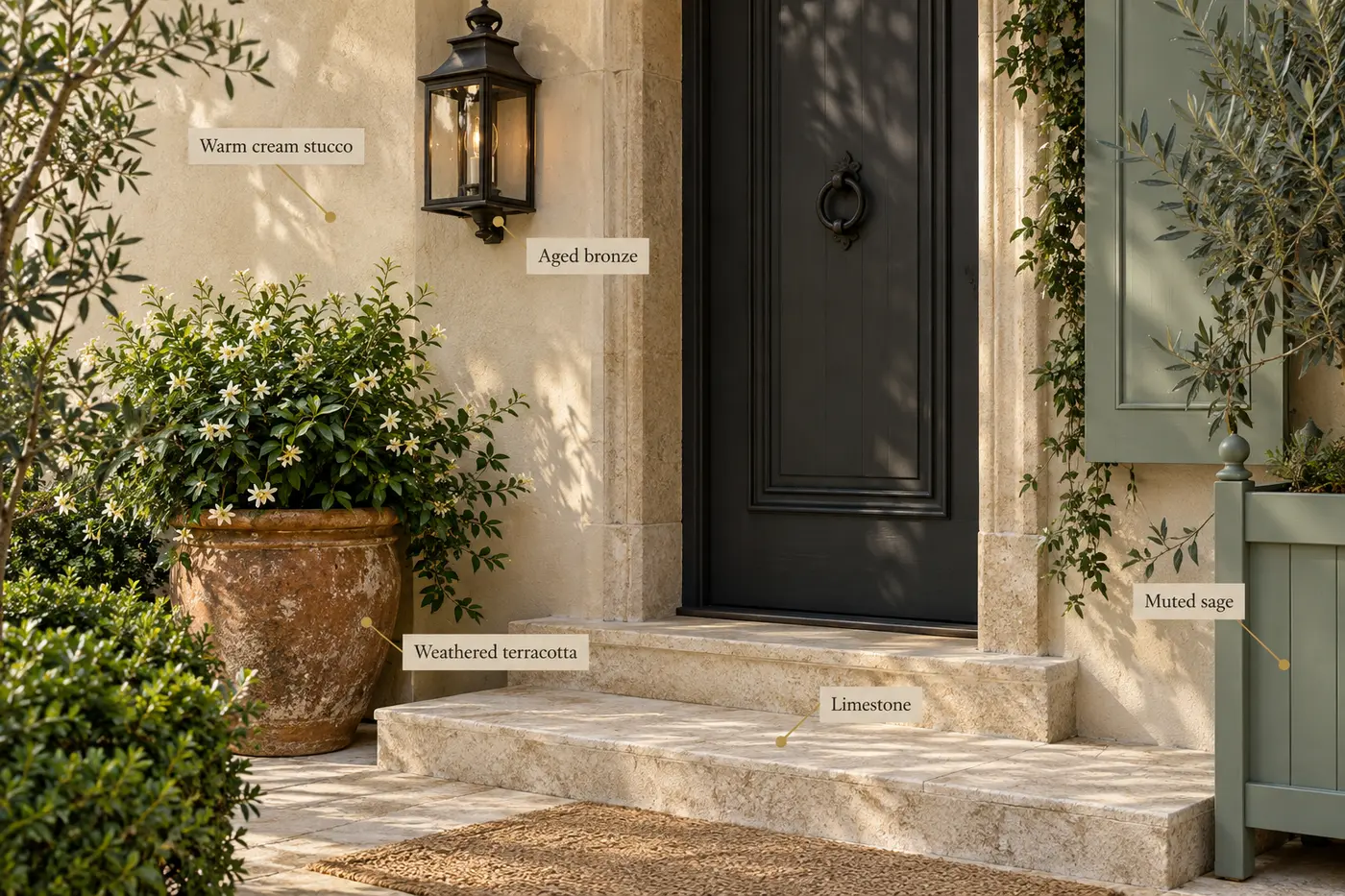
The garden should feel connected to the house. Warm white, light sand, limestone and muted putty tones make an ideal backdrop. Sage or olive details can be used sparingly on shutters, gates or painted planters.
Recommended Details
- Warm cream or mineral-white stucco
- Natural limestone steps and thresholds
- Matte black or aged-bronze lanterns
- Dark timber, charcoal or muted sage doors
- Simple ironwork rather than ornate metalwork
- Weathered terracotta with a deeper natural clay colour
Avoid mixing bright white stone, orange new brick and cool grey concrete. The undertones should feel warm and quietly related.
Regional Practicality
Adapt the Look to Your Climate
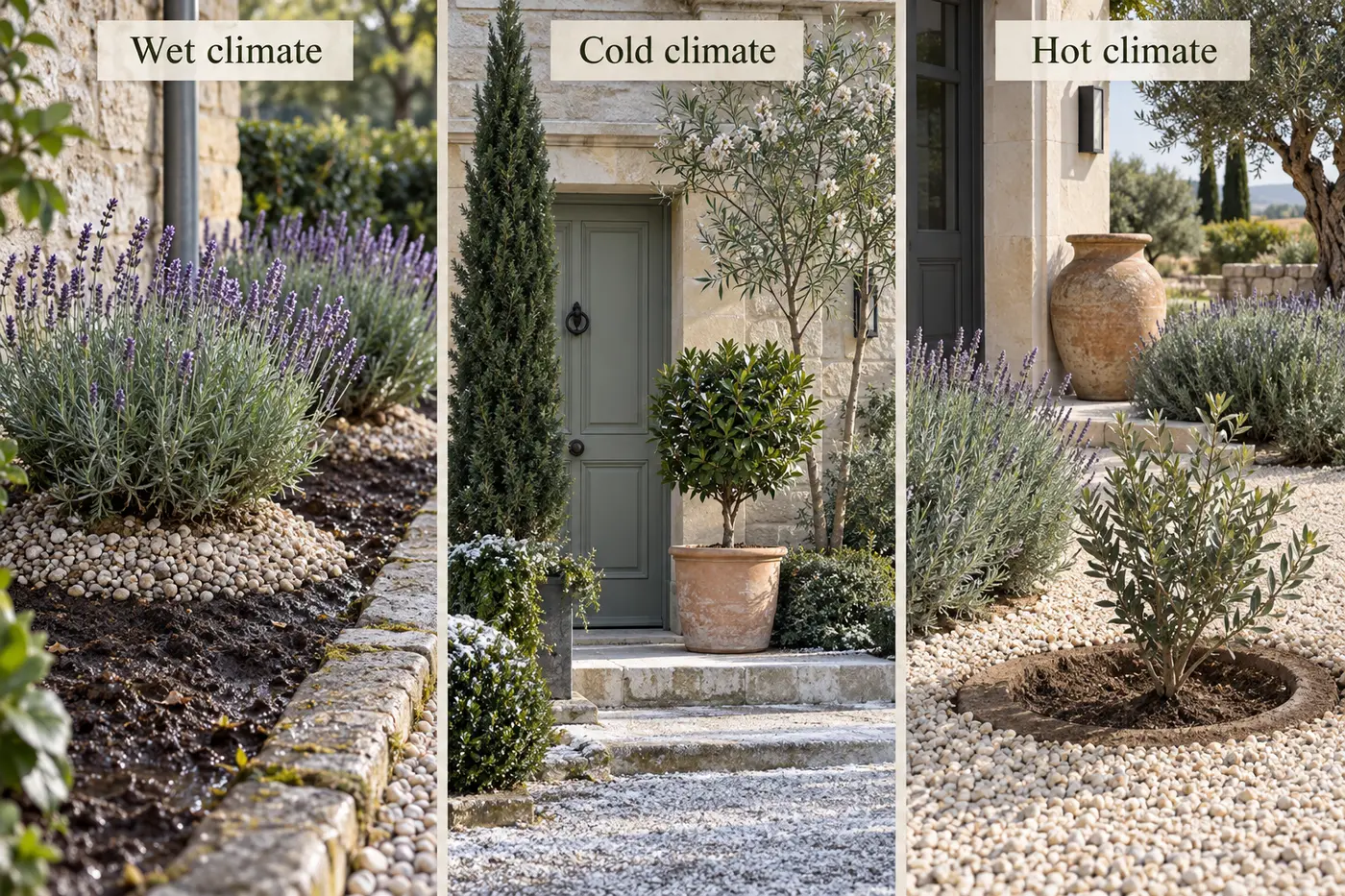
Mediterranean design is a feeling, not a requirement to grow plants that dislike your conditions. Begin with the composition: a pale path, sculptural evergreen forms, silver foliage, terracotta and one softly repeated flower.
In wet climates, raise crowns above the surrounding soil and use free-draining gravel mulch near lavender. In cold regions, choose hardy architectural plants and reserve true Mediterranean species for containers. In intense heat, provide deep, infrequent watering while plants establish.
The most believable entrance will always be the one designed for its actual soil, exposure and winter temperatures.
The Mediterranean Front-Entrance Formula
Six Elements to Repeat
- A warm, restrained exterior palette
- A clear limestone or gravel walkway
- Soft rhythm from lavender or a regional alternative
- Terracotta pots grouped in varied heights
- Evergreen structure repeated with restraint
- One sculptural tree or upright focal point
FROM THE JOURNAL
Recent Reads
October 7, 2026
How to Choose a Garden Colour Palette: 7 Beautiful Plant Combinations
October 6, 2026
How to Design a Beautiful Shade Garden: A Simple Layering Formula
September 17, 2026
How to Design a White Hydrangea Border
September 16, 2026
5 Beautiful Ways to Edge a Garden Border
September 12, 2026
How to Choose the Right Hydrangea for Your Garden
September 10, 2026