
White Front Entrance Garden Ideas: How to Create an Elegant Welcome
White Front Entrance
Garden Ideas
How to Create an Elegant Welcome
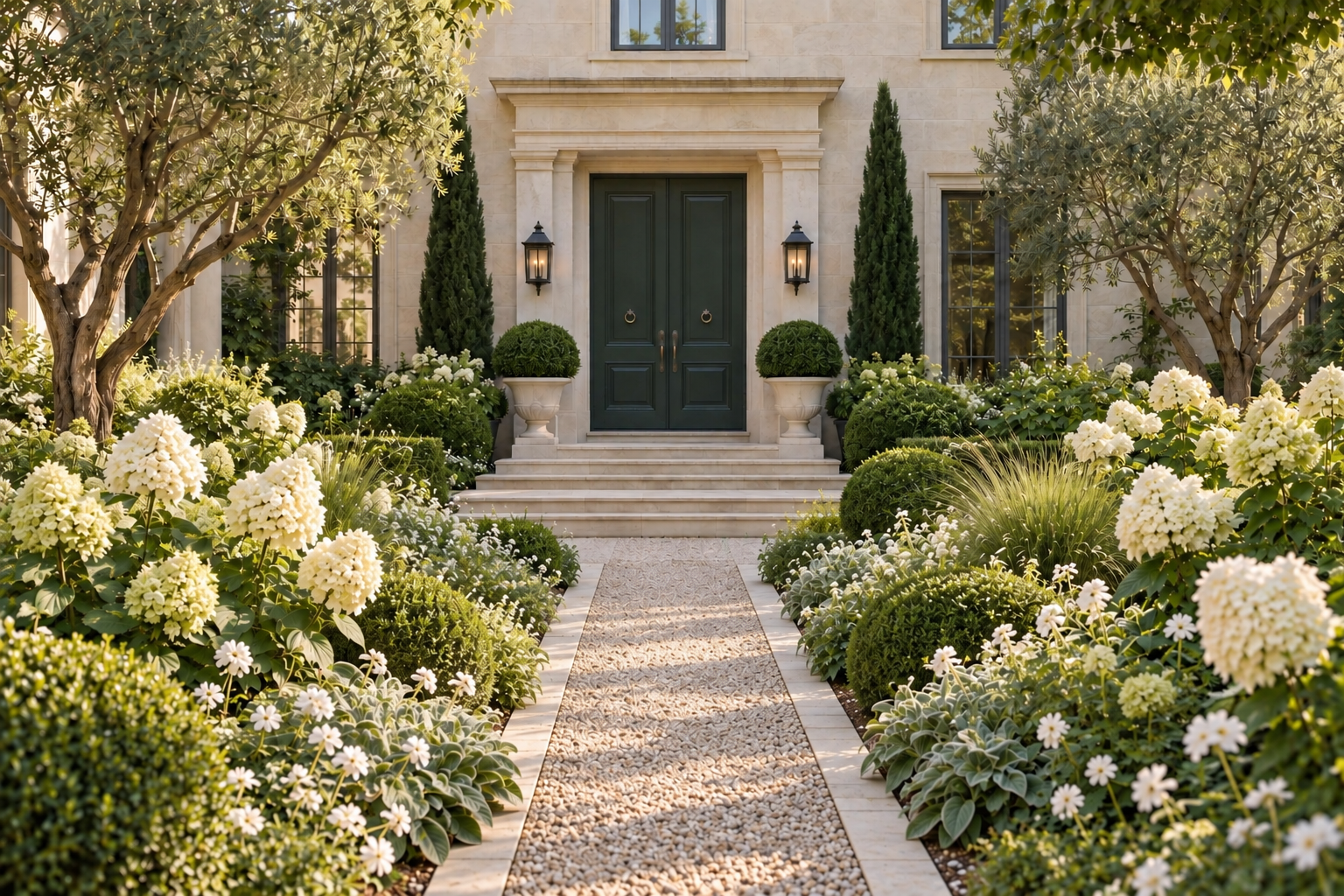
A beautifully planted entrance does more than improve curb appeal. It establishes the character of the entire home before the front door is even opened. The most inviting white entrance gardens combine soft flowers, dependable evergreen structure, layered foliage and natural materials in a way that feels graceful rather than overly formal.
Begin with the Architecture
Before selecting plants, look carefully at the entrance itself. Notice the exterior colour, the shape of the windows, the width of the walkway and the materials already present. A successful front garden should complement these features rather than compete with them.
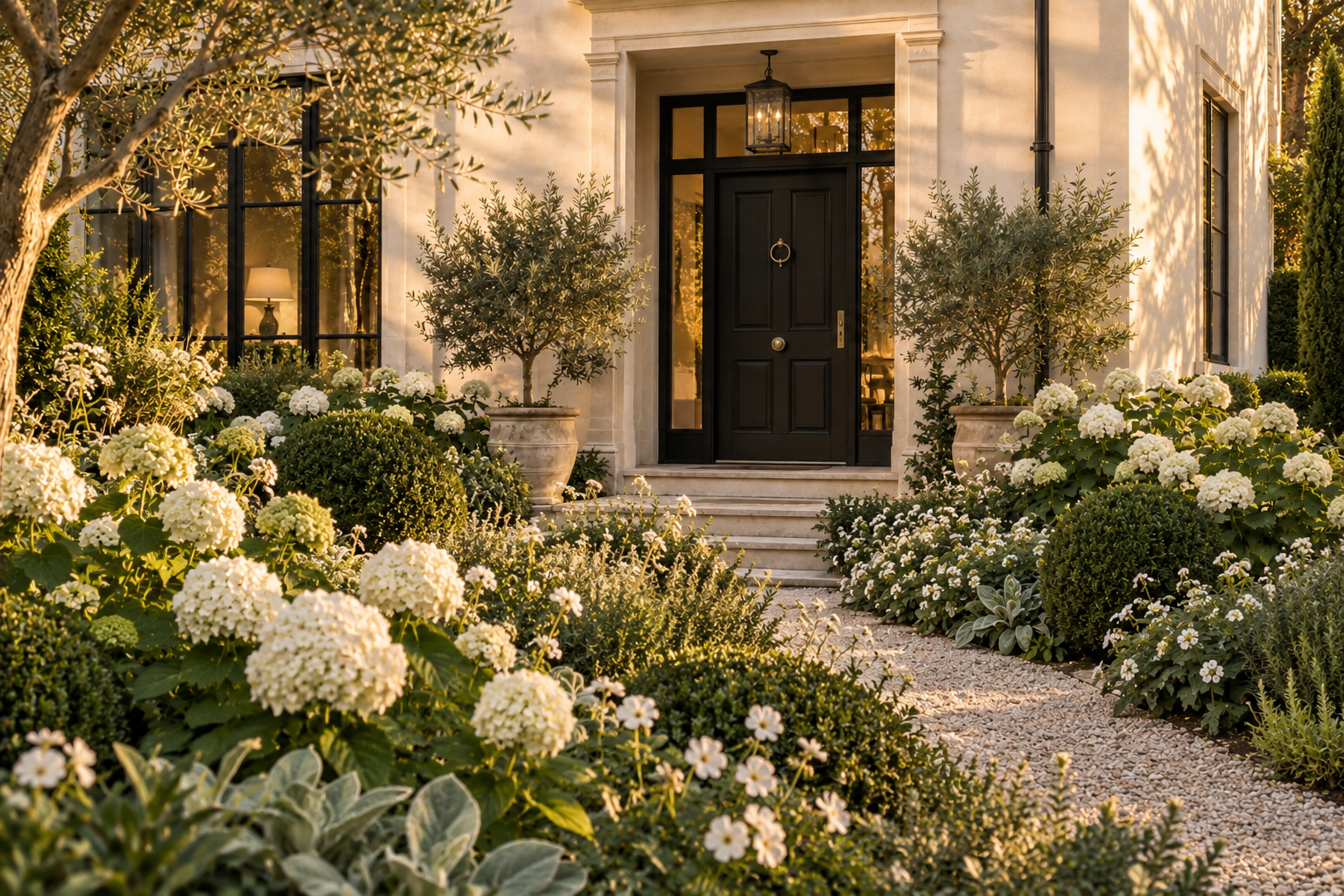
Cream render, warm brick, natural stone and sage-painted details pair beautifully with soft white flowers and muted green foliage. Dark doors and window frames create contrast, while gravel, limestone and aged terracotta add warmth.
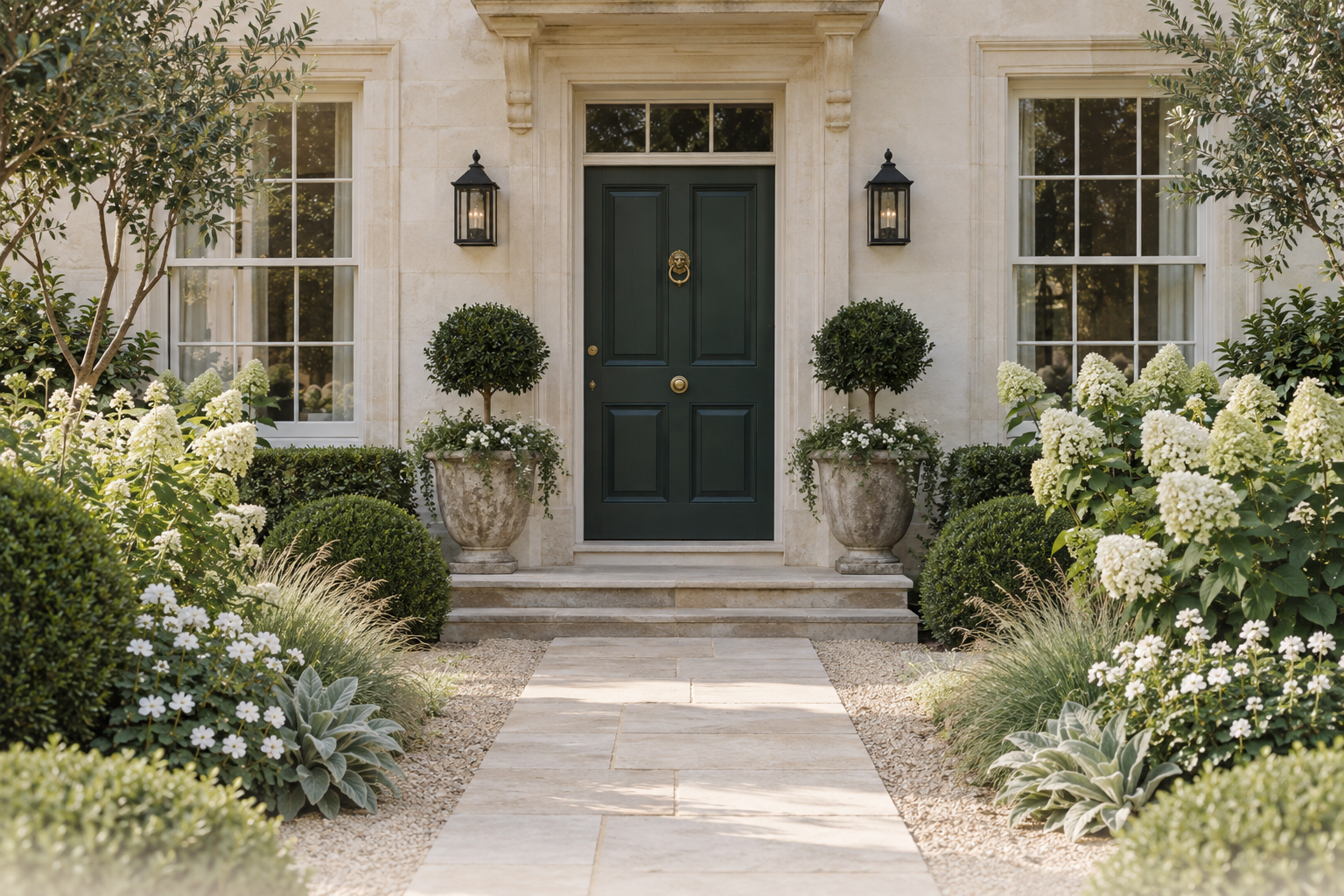
If the home has strong architectural symmetry, the planting can echo it without becoming rigid. Matching shrubs or containers near the entrance may provide balance, but the surrounding flowers should vary slightly in height and placement.
Create a Clear View of the Front Door
Every front entrance needs a strong visual destination. The walkway should lead the eye naturally toward the door, without large plants obscuring the route or crowding the steps.
Keep taller shrubs near the corners of the house or behind the main planting, and use lower plants along the path. A pair of clipped evergreens or substantial containers can frame the entrance beautifully and provide year-round structure.
Use a Simple Layering Formula
A front entrance border becomes easier to design when it is divided into three planting layers.
The Structural Layer
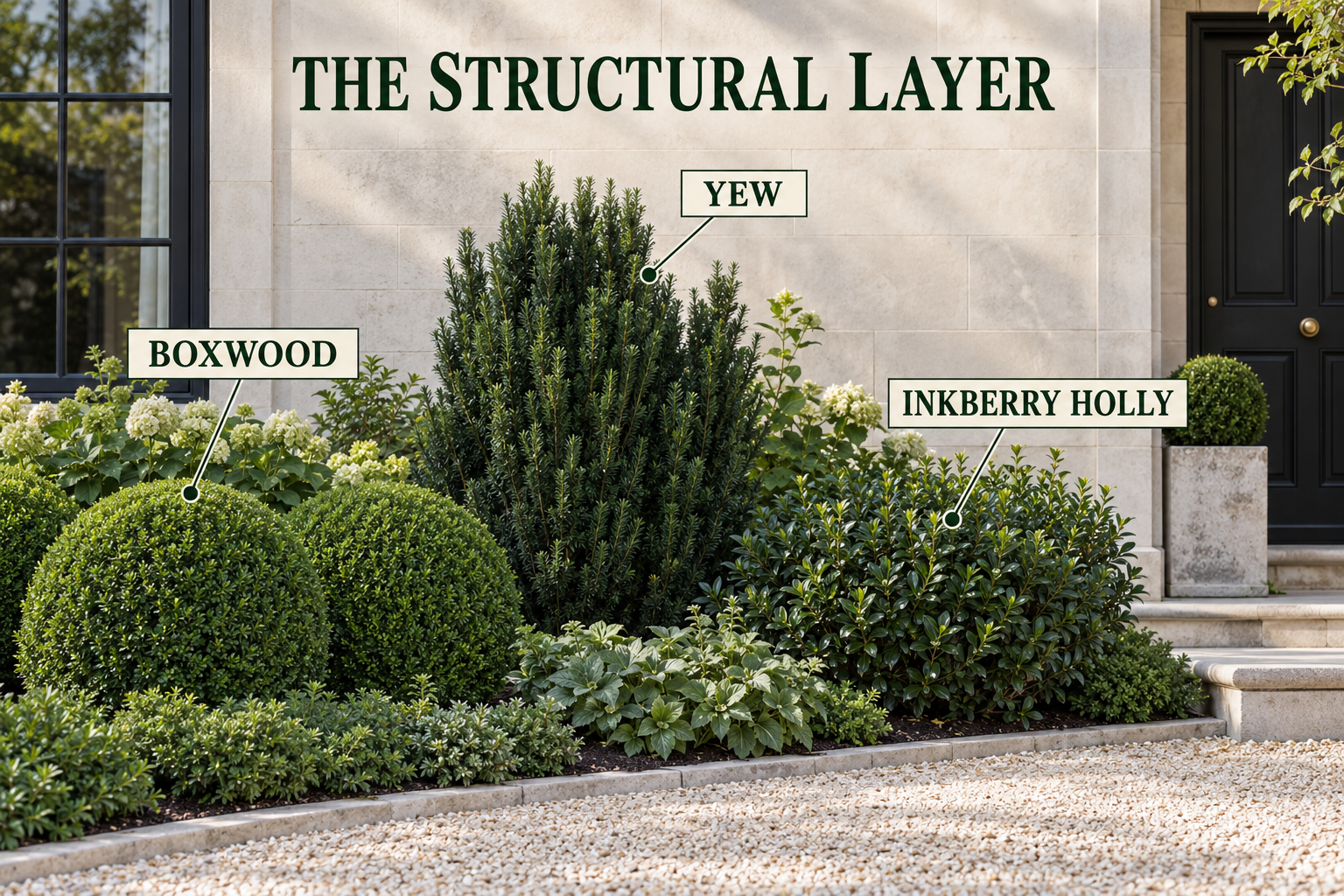
Begin with plants that will give the garden shape throughout the year. Depending on the scale of the entrance, this might include compact boxwood, yew, inkberry holly or other small evergreen shrubs. A few well-positioned forms are often enough to anchor the border.
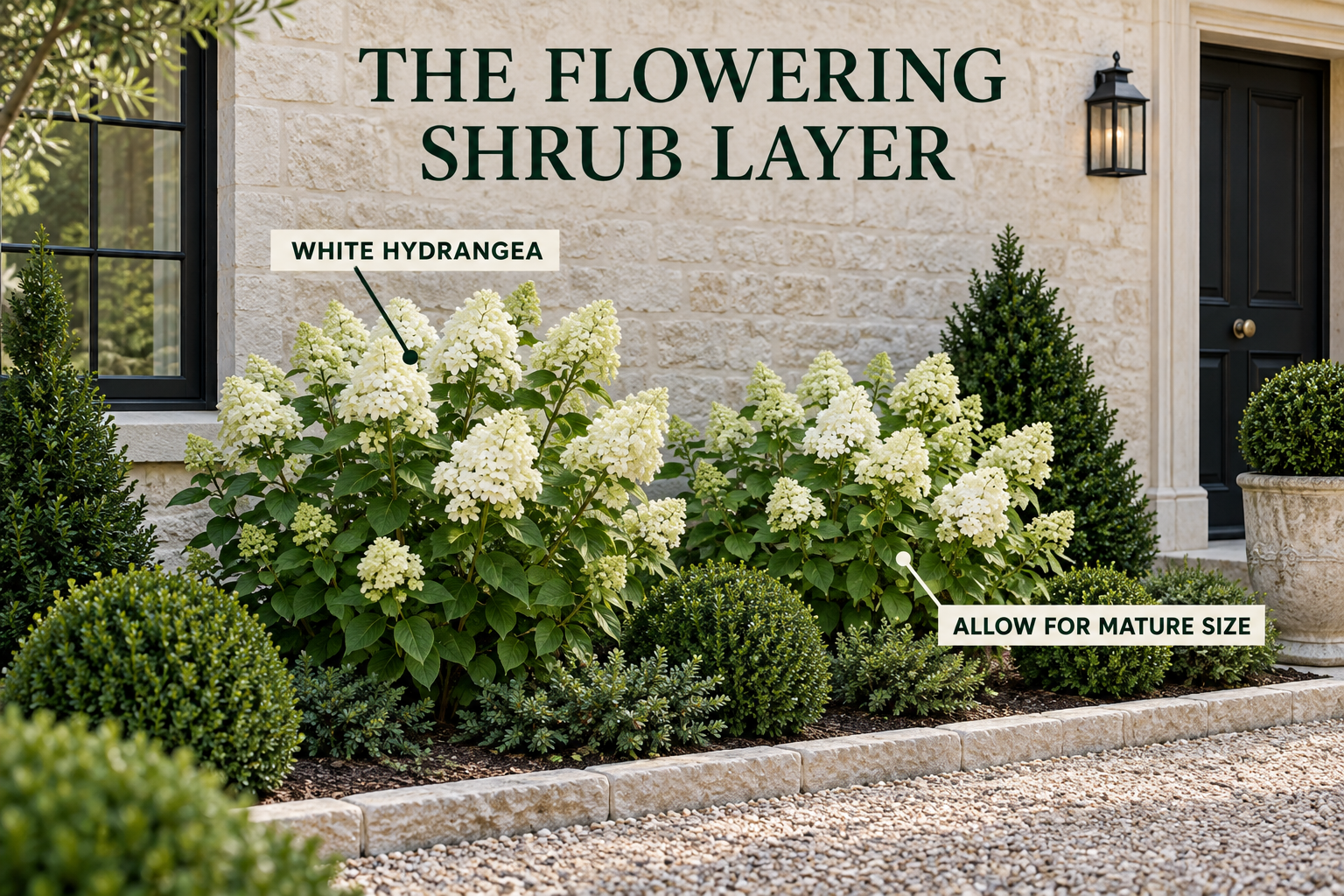
The Flowering Shrub Layer
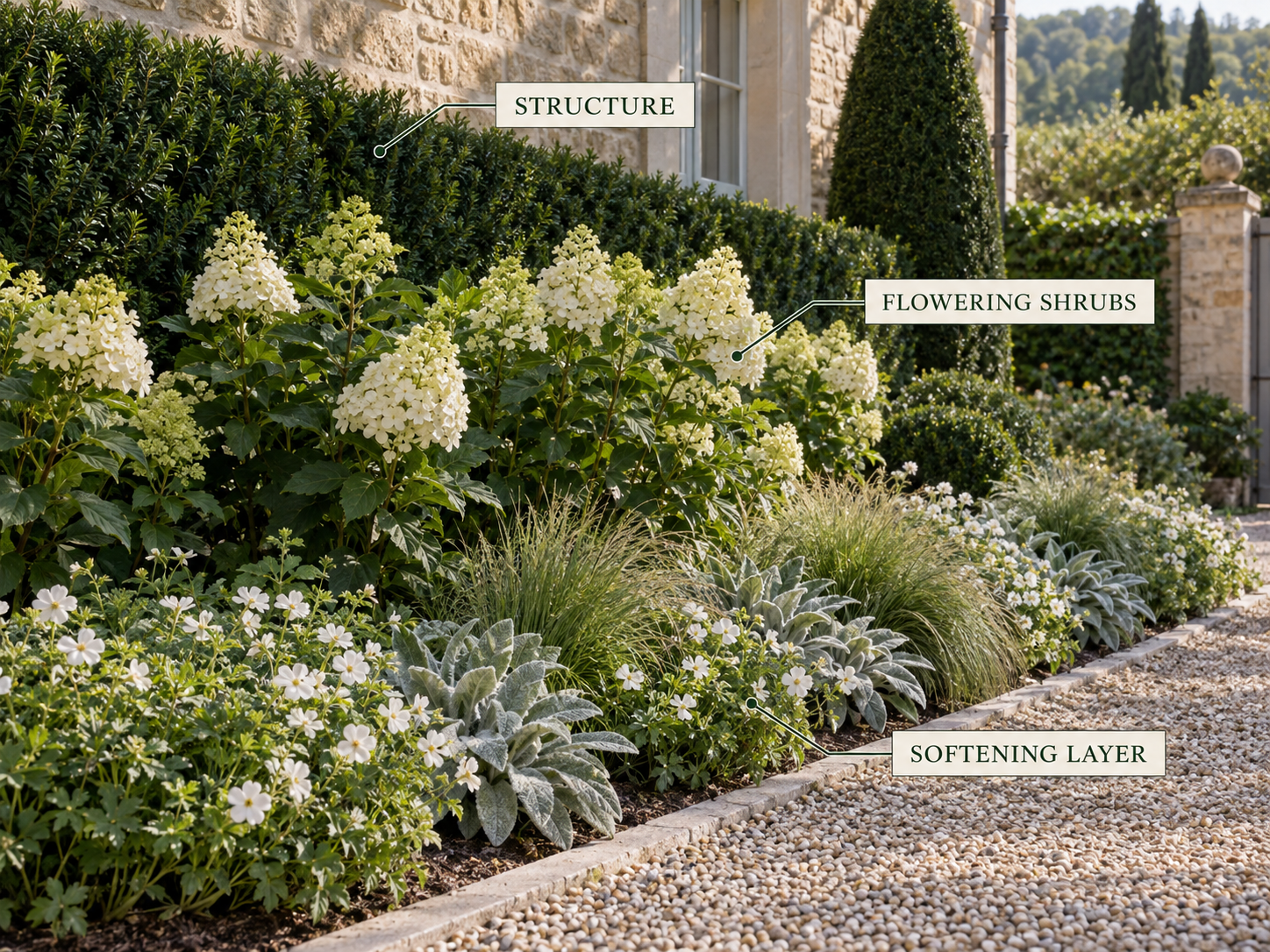
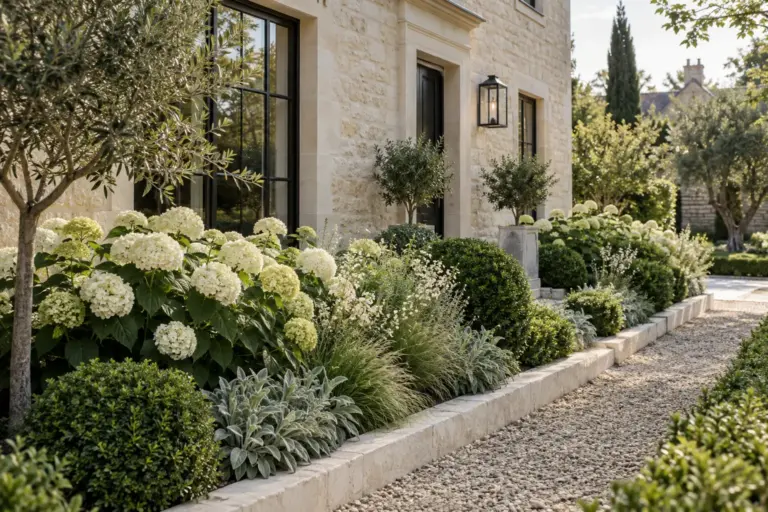
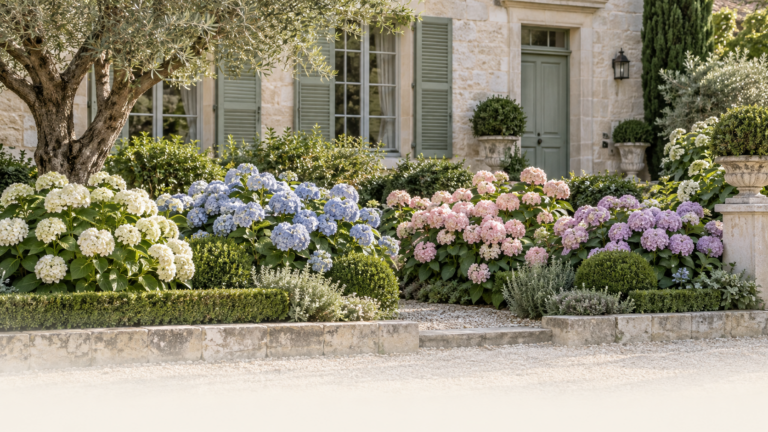
Next, add one or two varieties of flowering shrubs. White hydrangeas are especially effective beside a front entrance because they provide generous summer flowers, attractive foliage and a long season of interest. Choose a variety that suits the available space and always plan for its mature size.
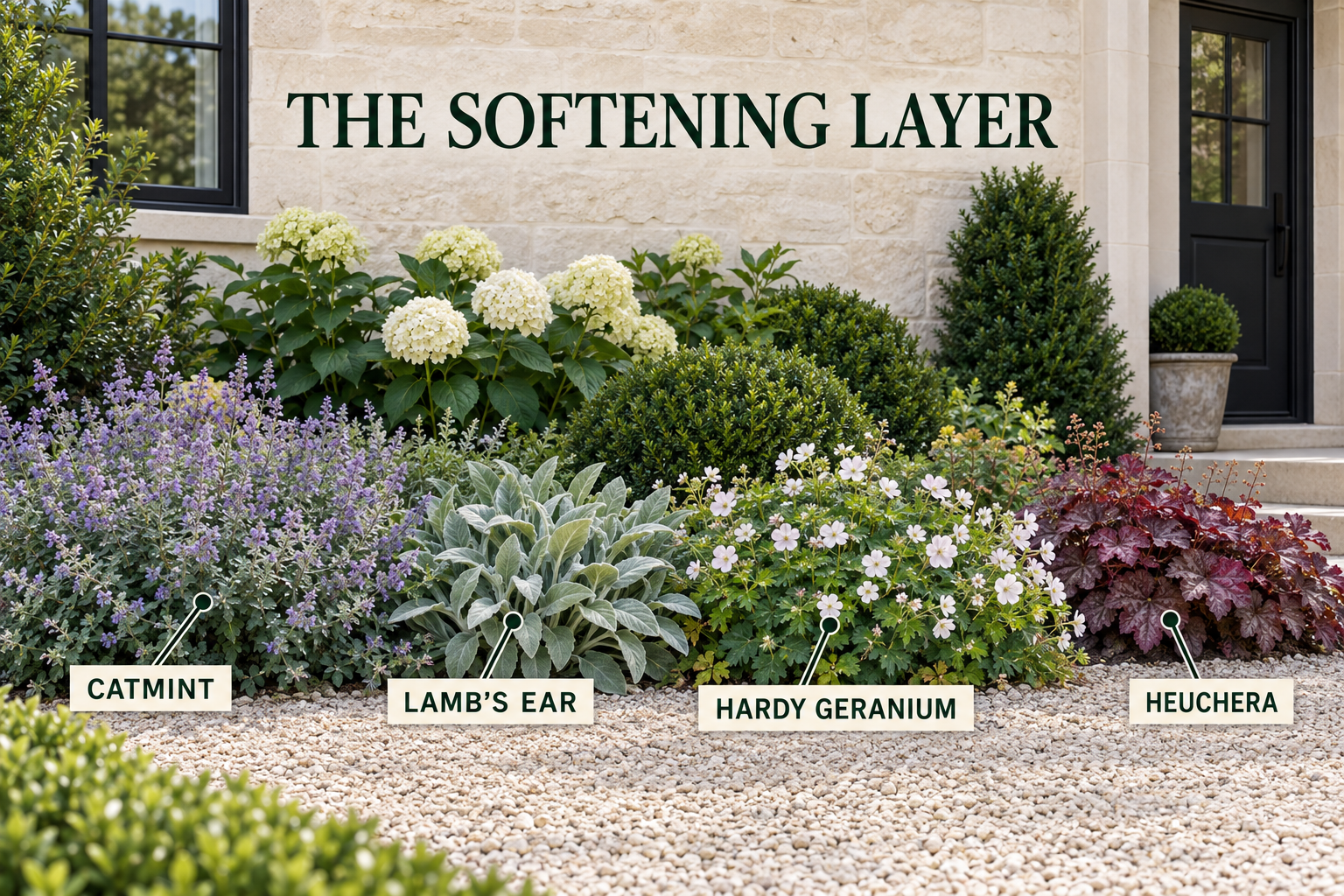
The Softening Layer
Complete the planting with lower perennials and ground-level foliage. Catmint, white hardy geraniums, lamb’s ear, heuchera and restrained ornamental grasses soften the base of shrubs and gently spill toward the path. Repeat a few dependable plants without making the garden perfectly symmetrical.
A White Planting Palette
An all-white garden is most beautiful when it contains subtle variation. Combine pure white with warmer cream, ivory and pale green blooms, then add depth through deep evergreen, muted sage and silver foliage.
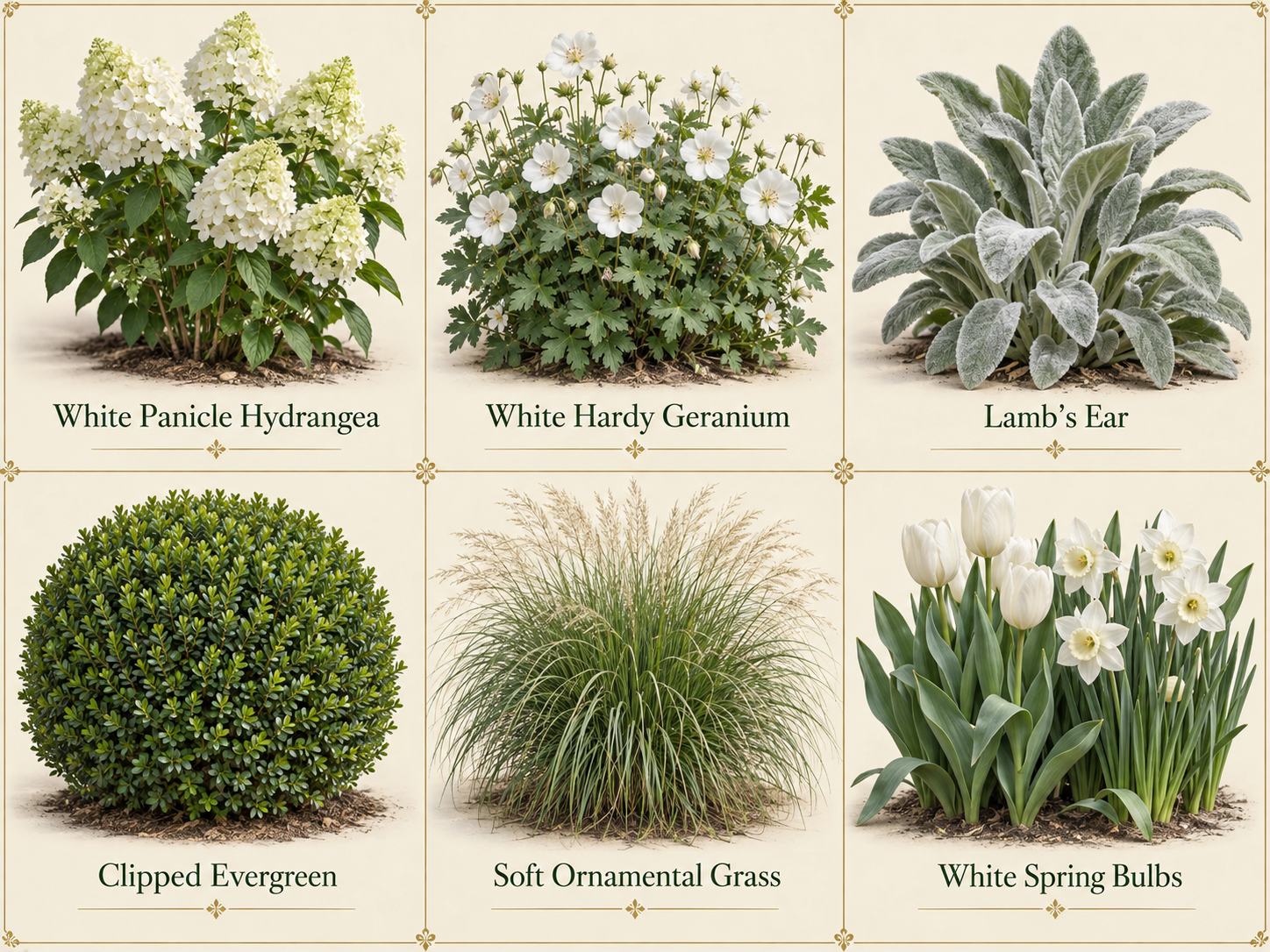
Rather than including many unrelated varieties, select a restrained group and repeat it throughout the entrance. This gives the garden the calm, intentional appearance of a professionally designed landscape.
Frame the Walkway Without Crowding It
Planting beside a front path should feel welcoming, not restrictive. Leave enough room for plants to reach their mature width without leaning heavily into the walkway.
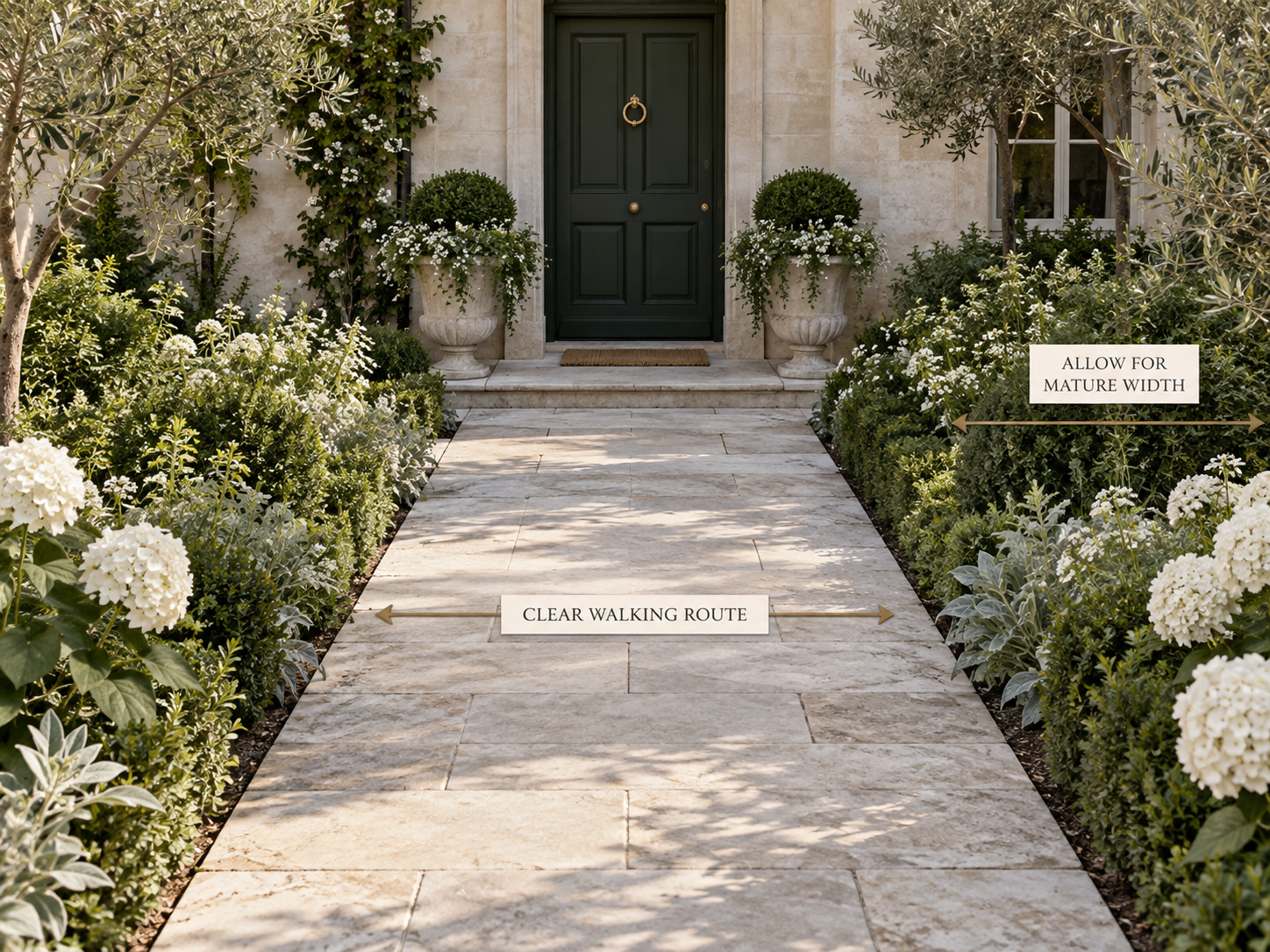
Keep the lowest plants nearest the path and place larger forms farther back. A loose ribbon of repeated ground-level planting can visually connect the entrance to the rest of the garden. Stone edging provides a crisp boundary, while gravel creates a softer European character.
Add Containers with Intention
Containers provide immediate impact and are particularly useful while surrounding planting is still young. For a restrained entrance, use one large container on each side of the door or create a small grouping on only one side.
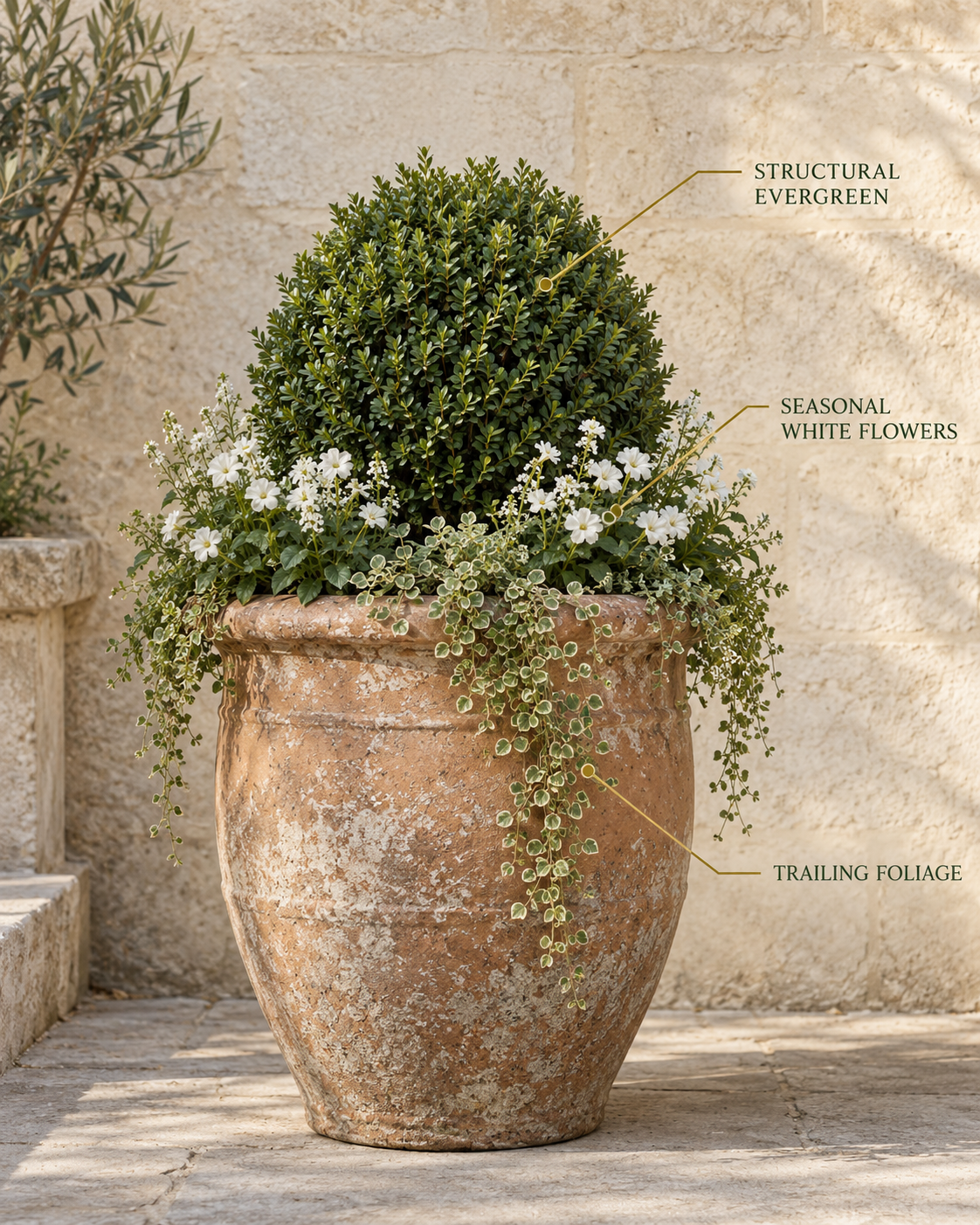
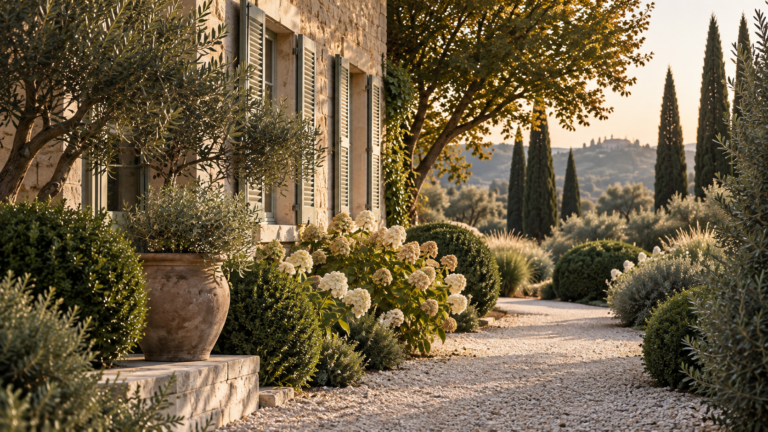
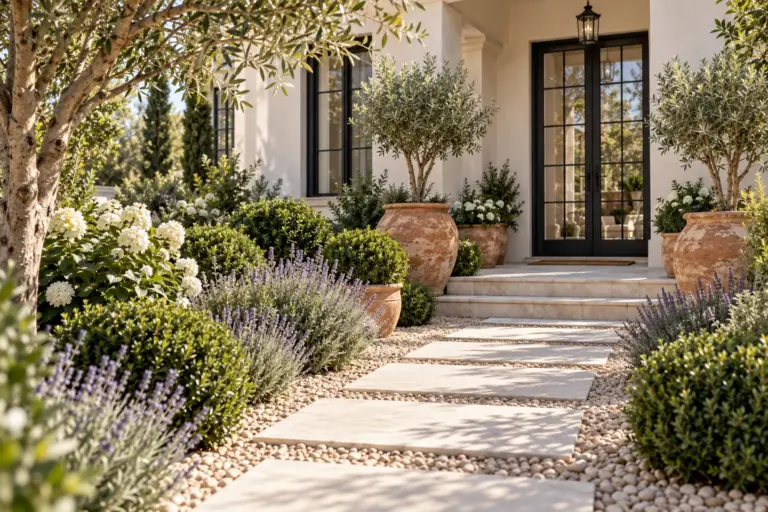
A single structural evergreen surrounded by one or two softer companions usually looks more elegant than a crowded mixture. Weathered terracotta, aged stone and limestone planters feel collected over time and work especially well in European-inspired gardens.
Design for Every Season
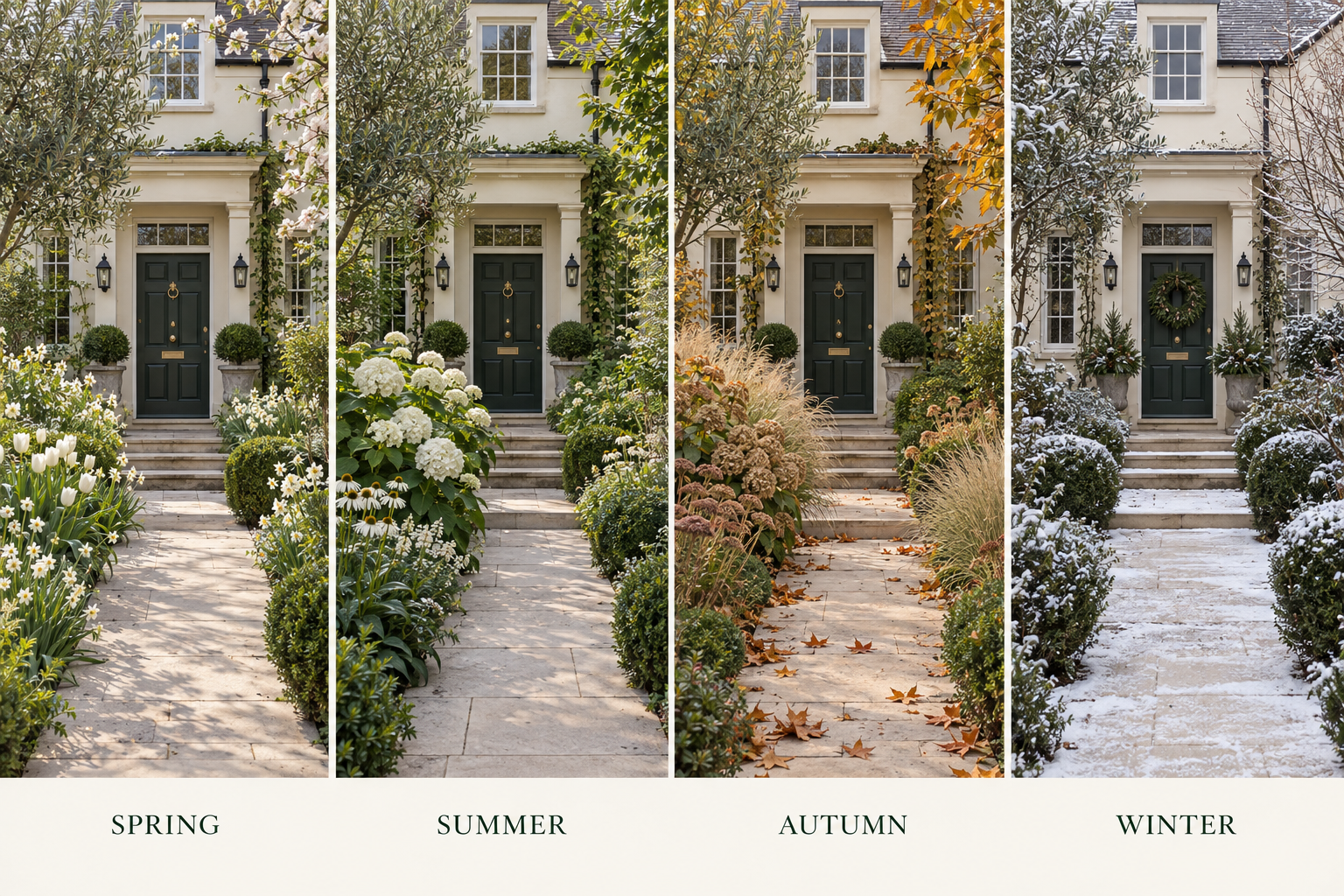
A white entrance garden should not depend on one short flowering period. Spring bulbs can appear beneath emerging perennials before shrubs are fully leafed out. In summer, hydrangeas and flowering perennials become the focus. As autumn arrives, grasses and faded flower heads add movement and texture. Evergreen shrubs, visible stonework and well-chosen containers provide winter structure.
Work with the Available Light
The amount of sunlight the entrance receives should guide every plant choice. Panicle hydrangeas generally flower best with good light and consistent moisture. Smooth hydrangeas often suit gardens with morning sun or partial shade, while deep shade may result in fewer blooms.
Observe the entrance at several points during the day. Reflected heat from pale walls and paving, exposure to wind and drainage can all influence how plants perform.
Avoid the Most Common Front-Garden Mistakes
One of the most common mistakes is planting too close to the house. Shrubs need sufficient space for air circulation, maintenance and mature growth. Oversized shrubs can also hide windows and overwhelm a small entrance.
Another common mistake is using too many unrelated plants. A front garden looks more polished when a limited palette is repeated across the border. Resist filling every gap immediately. Appropriate spacing creates healthier plants and a more natural result as the garden matures.
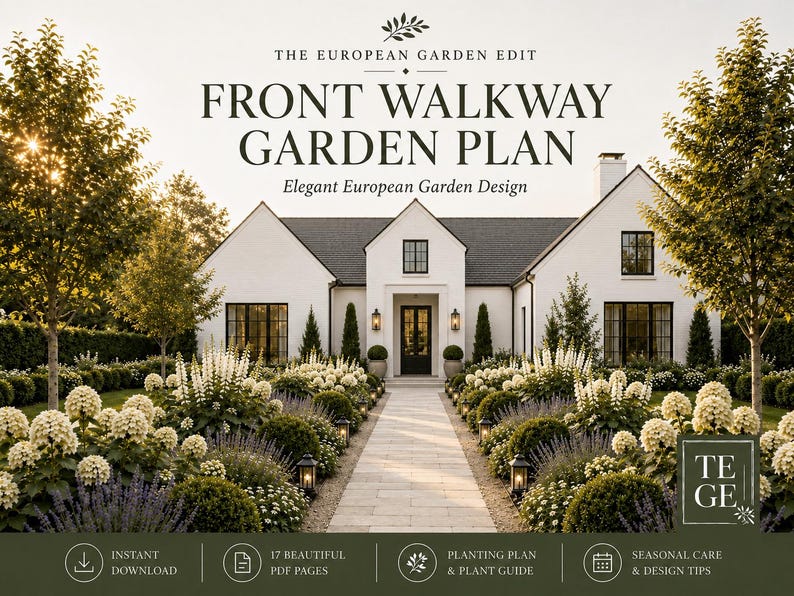
Plan a More Beautiful Walkway
Practical layouts, plant suggestions and thoughtful spacing for a welcoming entrance.
A Simple White Entrance Planting Formula
- Two or three evergreen shrubs for permanent structure
- One flowering shrub variety repeated across the entrance
- Two dependable flowering perennials
- One foliage plant with silver, sage or deep green leaves
- Spring bulbs woven between the permanent planting
- One pair or small grouping of stone or terracotta containers
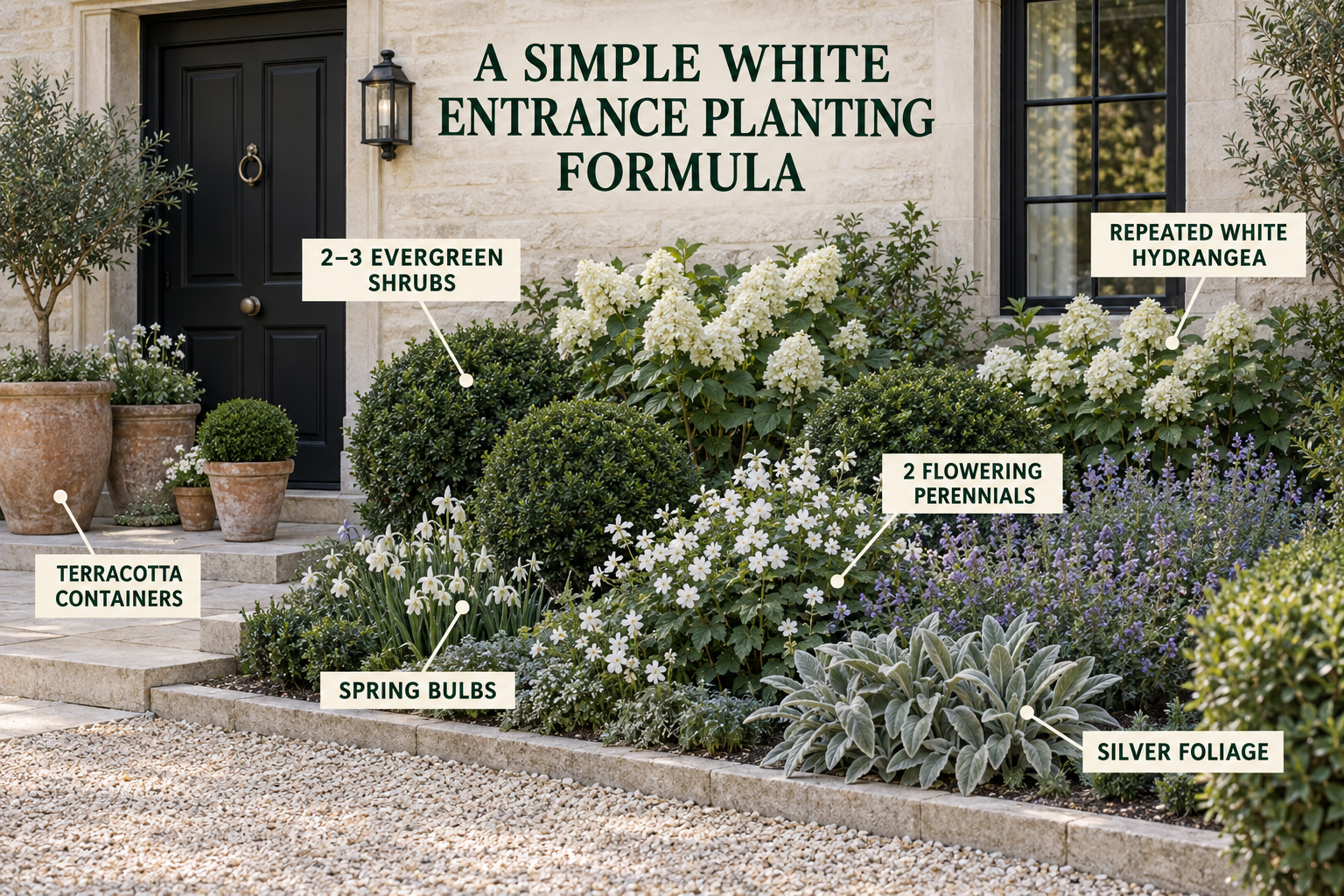
Adjust the quantities to suit the available space, but keep the overall palette restrained. Repetition will make even a modest entrance feel cohesive.
Create an Entrance That Feels Established
An elegant entrance garden is not defined by the number of flowers it contains. Its beauty comes from proportion, repetition and the relationship between the garden and the home.
Begin with structure, leave room for plants to mature and repeat a limited palette of white flowers and nuanced greens. With these foundations in place, the entrance will feel welcoming in every season: polished without being rigid, romantic without becoming overgrown and timeless enough to evolve with the home.
Before You Go
Receive your complimentary Elegant Garden Starter Guide below to assess your space, clarify your direction and begin planning with confidence. ↓
FROM THE JOURNAL
Recent Reads
October 7, 2026
How to Choose a Garden Colour Palette: 7 Beautiful Plant Combinations
October 6, 2026
How to Design a Beautiful Shade Garden: A Simple Layering Formula
September 17, 2026
How to Design a White Hydrangea Border
September 16, 2026
5 Beautiful Ways to Edge a Garden Border
September 12, 2026
How to Choose the Right Hydrangea for Your Garden
September 10, 2026
What to Plant, Prune and Notice This Season
September 10, 2026