
The Mediterranean Garden Palette
The European Garden Edit
The Mediterranean Garden Palette
How to Combine Olive Trees, White Flowers, Aromatic Foliage and Timeless Natural Materials
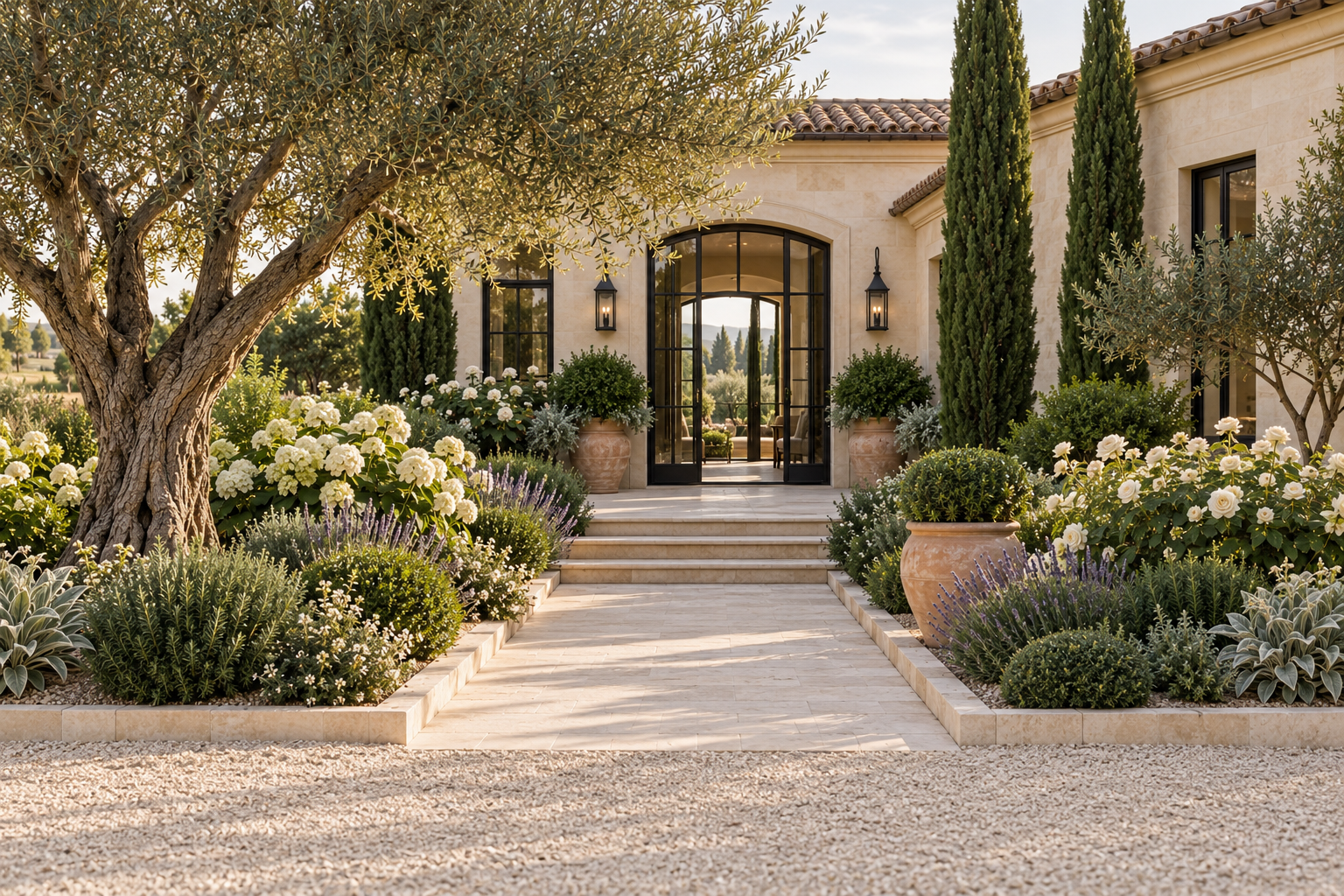
A Mediterranean garden feels both composed and wonderfully relaxed. Its beauty comes from a restrained collection of plants and materials repeated with confidence: the sculptural presence of olive trees, dark evergreen forms, soft white flowers, aromatic foliage and warm stone underfoot. The result is not a garden crowded with variety, but one shaped by rhythm, texture and light.
A Restrained Foundation
What Defines a Mediterranean Garden Palette?
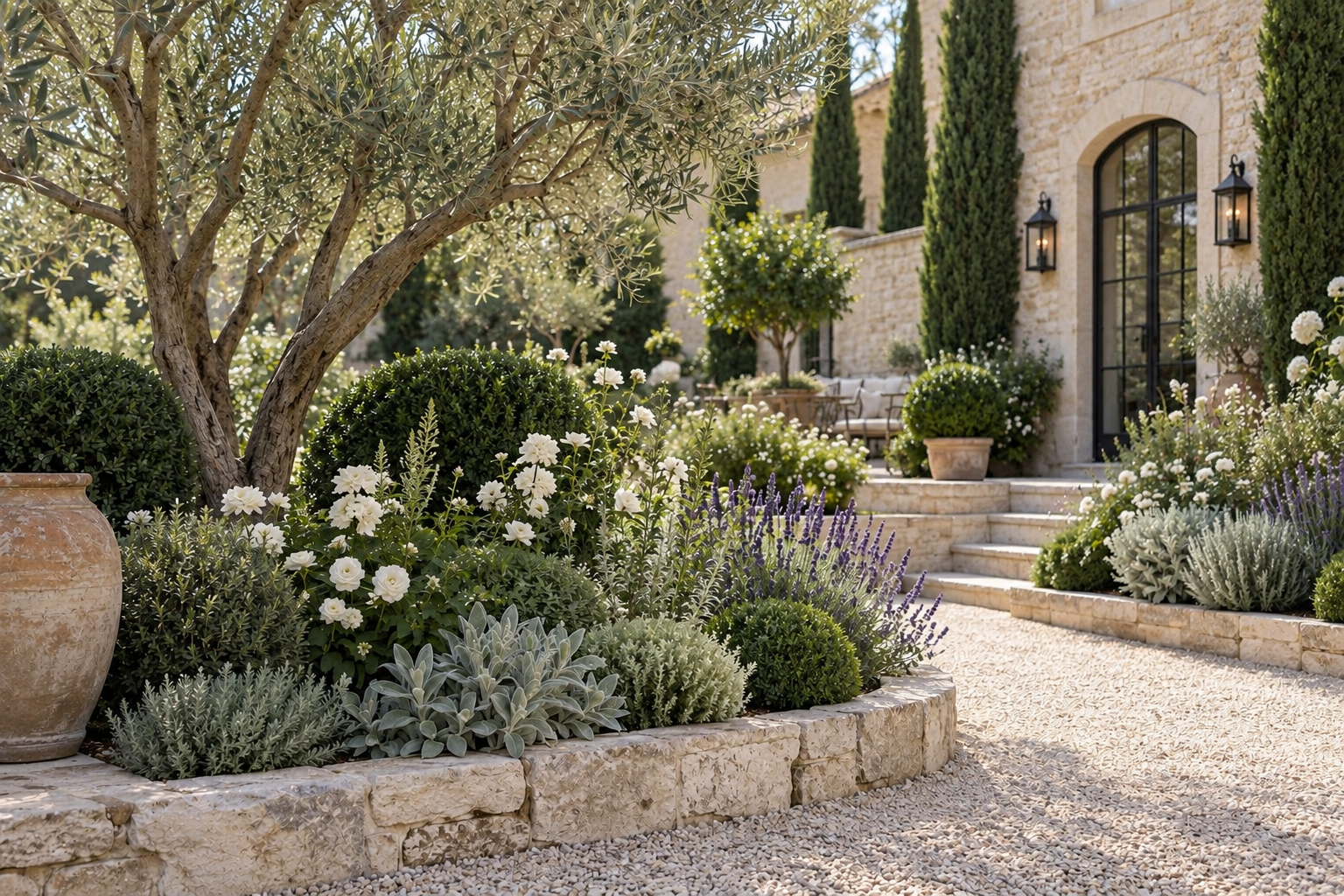
The most memorable Mediterranean gardens are built from contrast. Silvery foliage sits against deep evergreen structure. Loose flowers soften clipped forms. Pale gravel and limestone brighten the ground, while terracotta introduces a warm, weathered note.
A successful palette usually includes four essential elements:
- Architectural plants that establish scale and permanence
- A restrained flowering layer in white, lavender and soft violet
- Textural foliage in silver, sage and muted green
- Natural materials that become more beautiful with age
This limited vocabulary creates calm. It also makes a garden easier to plan because every new plant or material must support the same quiet visual story.
The Garden’s Framework
Begin with Structural Plants
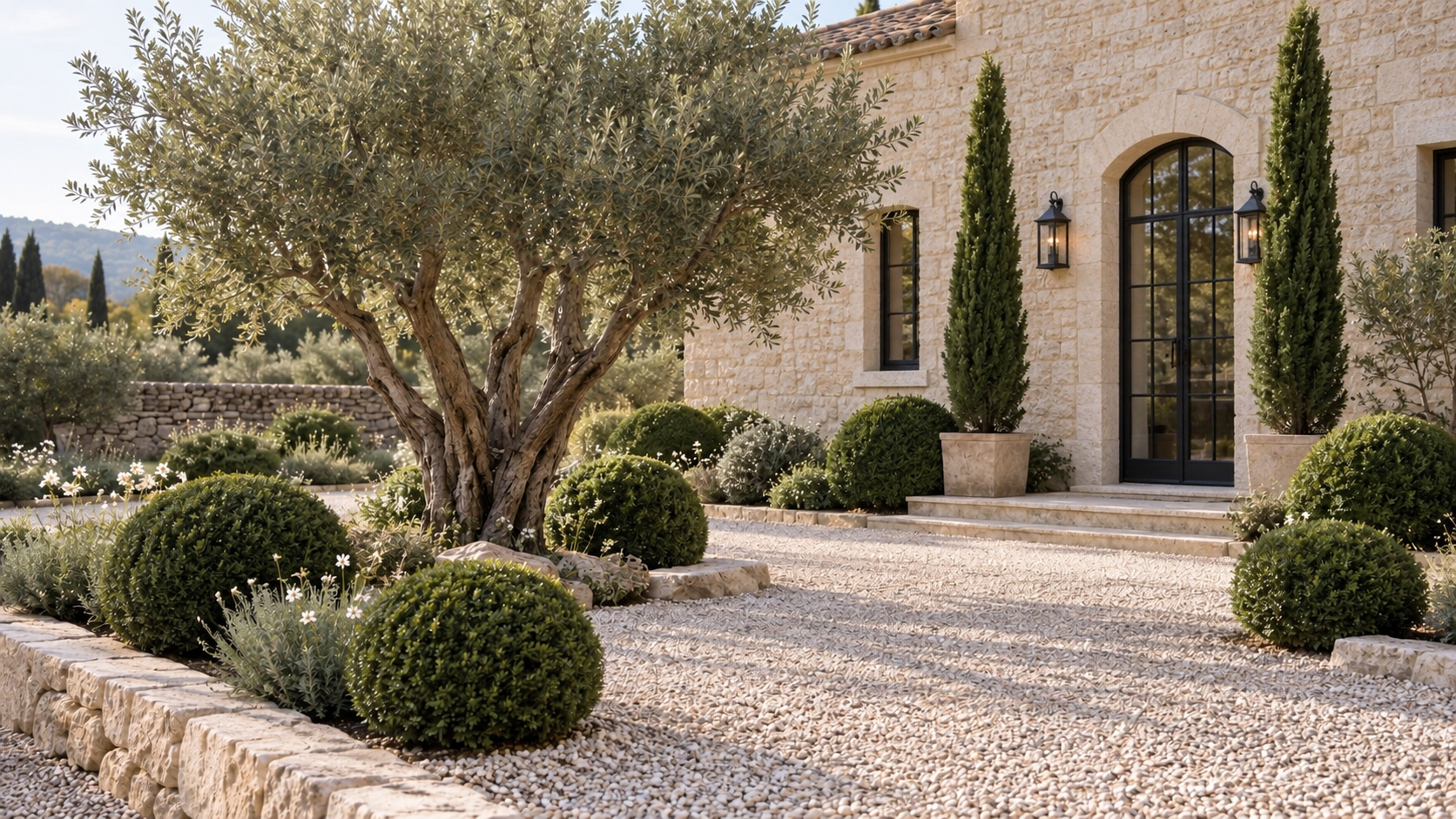
Before choosing flowers, establish the shapes that will hold the garden together throughout the year. An olive tree creates a broad, airy canopy and an unmistakable Mediterranean character. Italian cypress introduces a narrow vertical line, while clipped bay, myrtle and evergreen shrubs provide weight closer to the ground.
These forms should be placed with intention. Use an olive as a focal point near an entrance, terrace or turning point in a path. Position cypress to mark an axis, frame a view or add height beside architecture. Repeat rounded evergreens through the borders so the garden still feels considered after the flowers fade.
In colder climates, the same composition can be created with hardy substitutes. A multi-stem serviceberry or ornamental pear can provide the canopy, while upright juniper offers the cypress silhouette. The exact species may change, but the design role should remain the same.
A Soft Flowering Layer
Soften the Structure with White Flowers
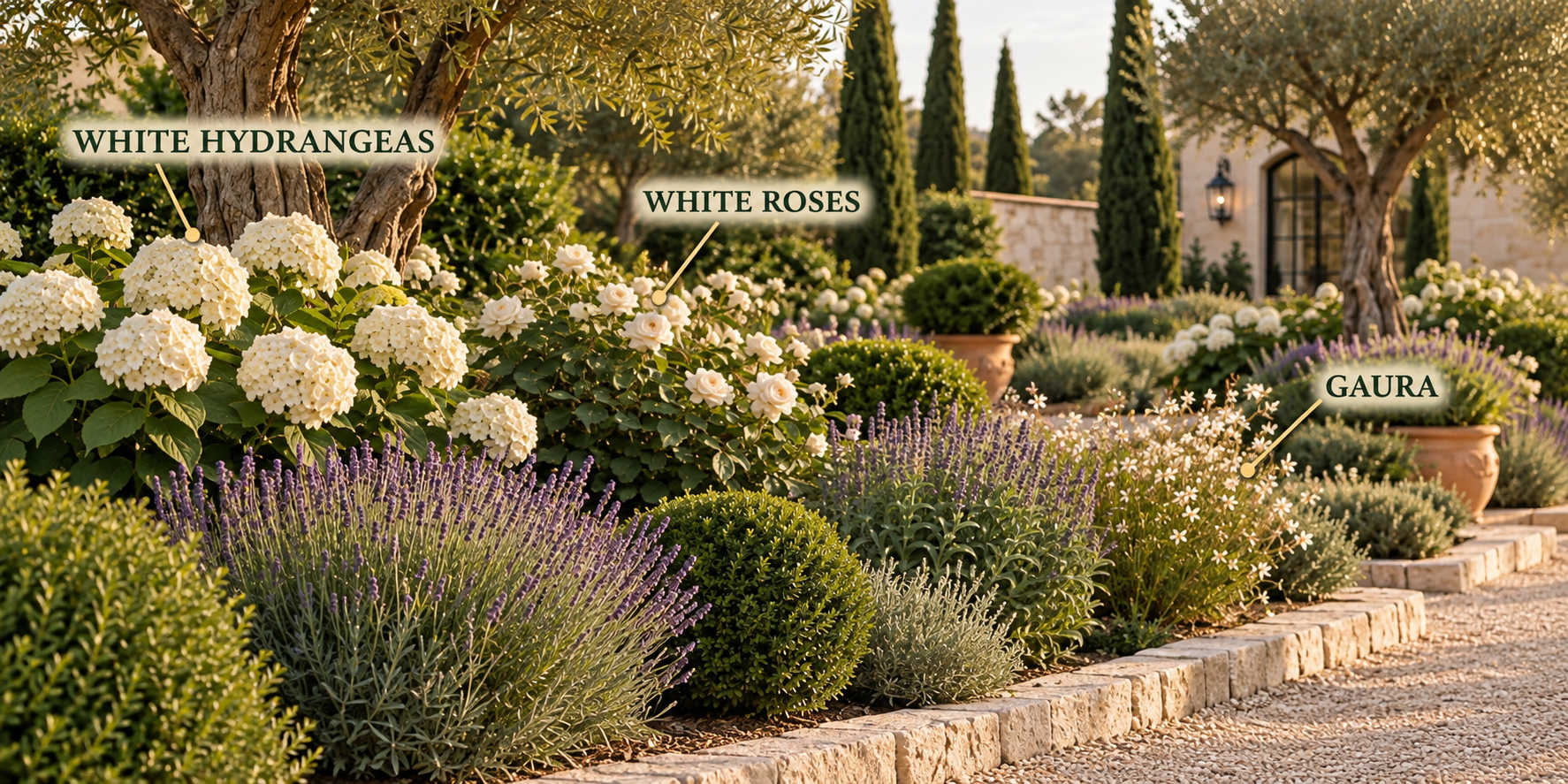
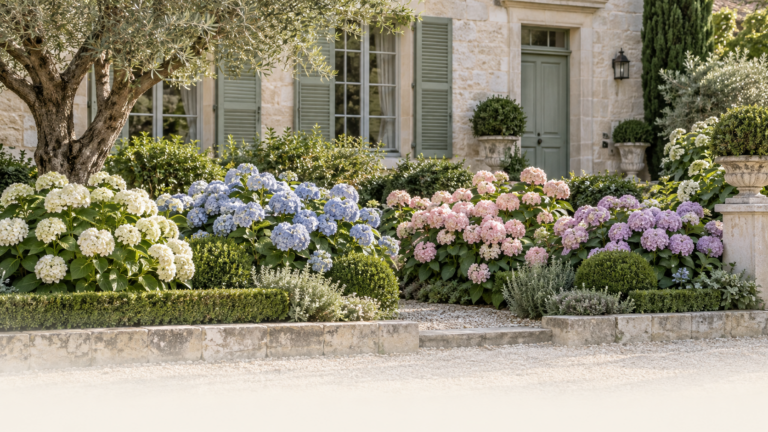
White flowers bring light into the planting without disrupting the restrained palette. White hydrangeas create generous flowering structure, while white roses add romance and a finer leaf texture. Together they soften stone, gravel and clipped evergreens.
Choose white flowers with subtle variation rather than stark, uniform colour. Hydrangea heads that move from cream to pale green feel especially natural beside olive foliage and limestone. Roses with warm ivory centres sit beautifully against terracotta and weathered walls.
Allow these plants enough room to mature naturally. One well-shaped hydrangea has more presence than several shrubs crowded together, and an open rose shows its branching form more gracefully than one pressed into neighbouring plants.
Controlled Colour
Add Restrained Lavender and Salvia
Lavender and salvia introduce the familiar violet notes of a Mediterranean landscape, but they are most effective when used with restraint. Treat them as repeated ribbons or small drifts rather than filling every open space.
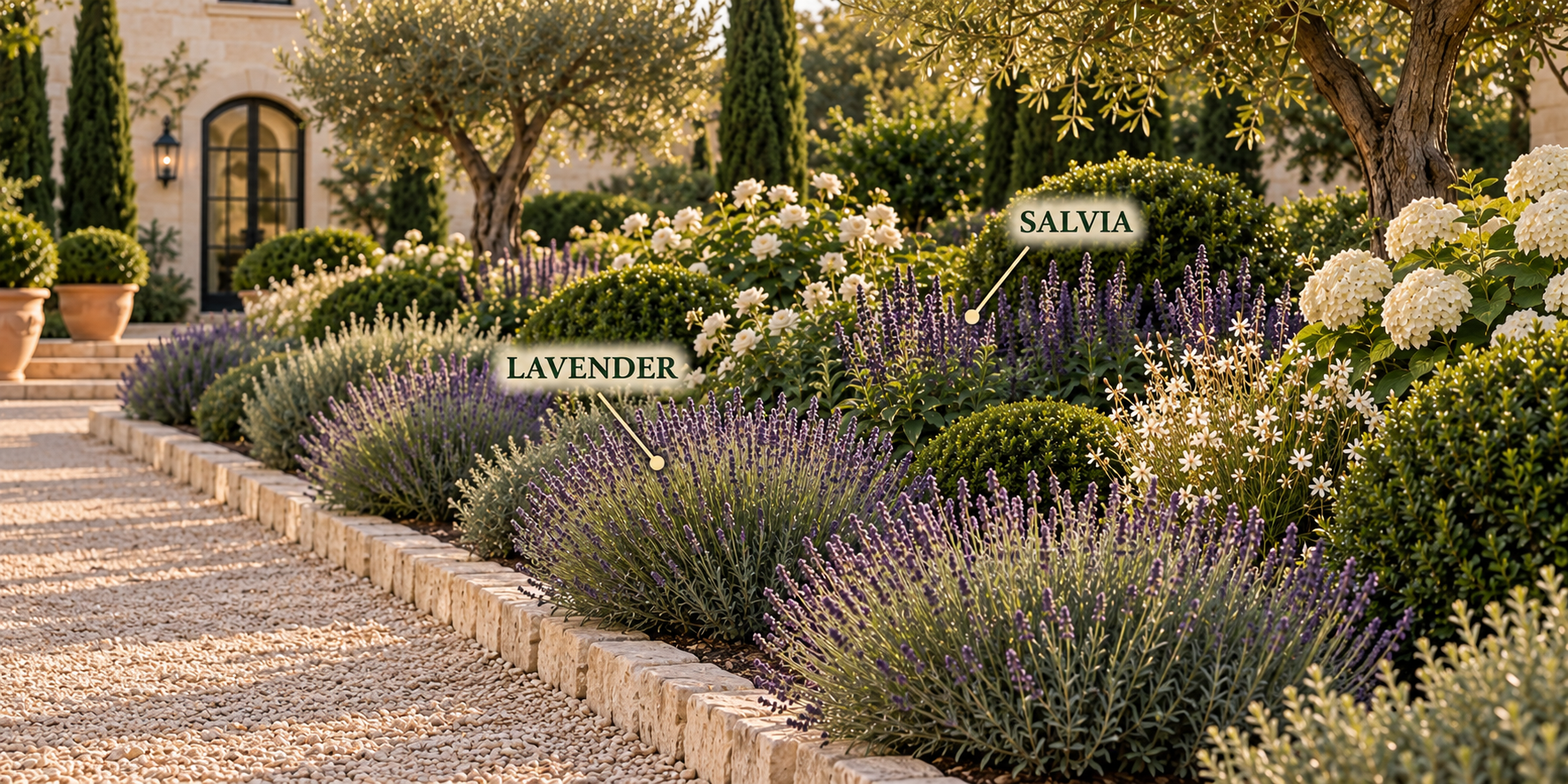
Lavender is especially valuable along paths and sunny edges where its fragrance can be appreciated. Salvia brings an upright flowering rhythm and extends the pollinator season. Airy gaura can be woven between them to add movement and soften the transition to white roses or hydrangeas.
Repeat one or two flowering combinations throughout the garden. Lavender with white roses, or salvia with gaura and silver foliage, will create more cohesion than a different mix in every bed.
A Practical Starting Point
Before you continue, receive this complimentary five-page starter plan, created to help you bring the planting, materials and layout of a Mediterranean-inspired entrance together with confidence.
Quiet Contrast
Use Silver Foliage for Texture
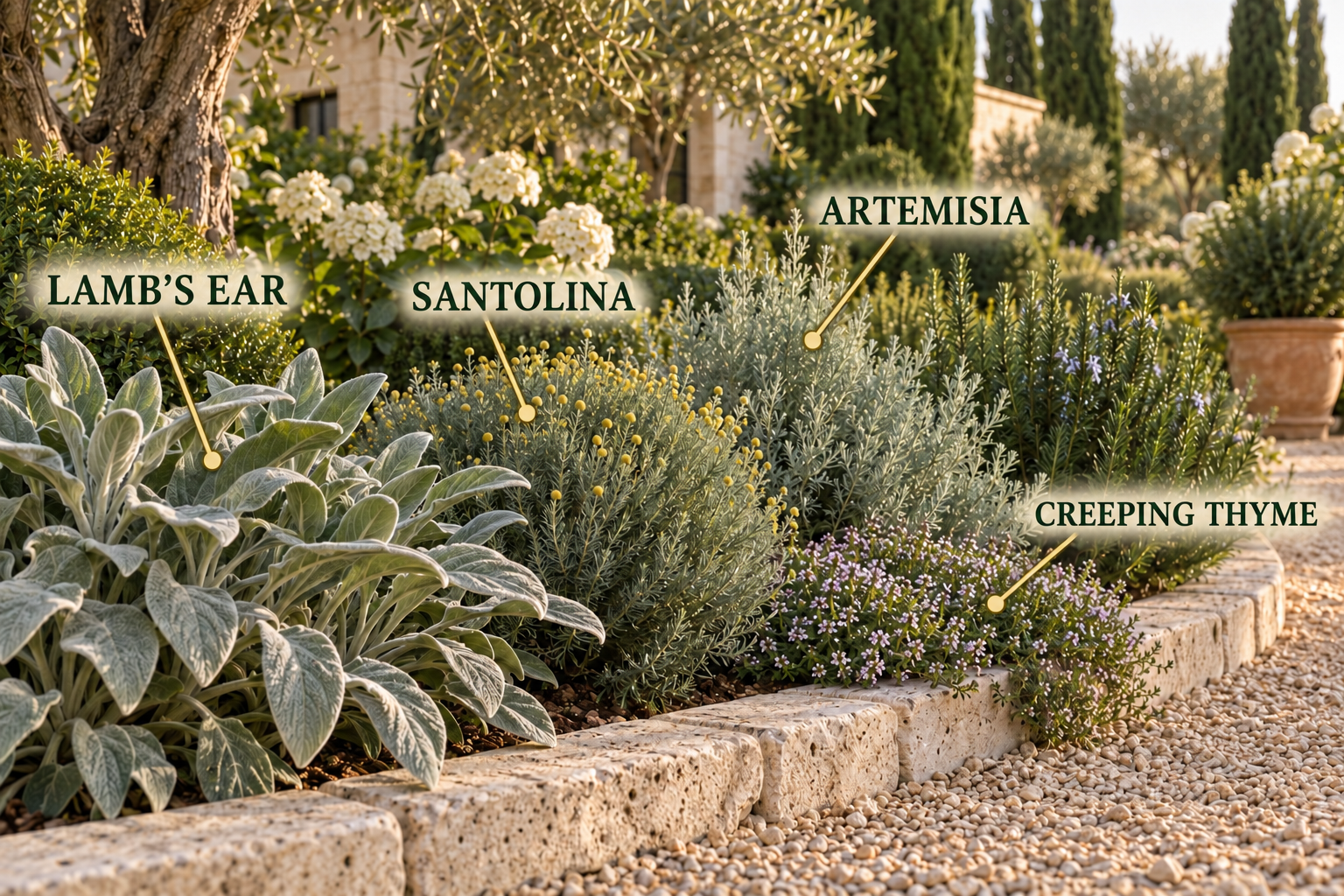
Silver foliage is one of the most useful tools in a Mediterranean palette. It reflects light, softens the darker mass of evergreens and creates interest long after the flowering season has passed.
Lamb’s ear brings broad, velvety leaves to the front of a border. Santolina forms neat, finely textured mounds. Artemisia adds a looser silvery shape, while creeping thyme settles between stones and spills gently over an edge. Rosemary can add a deeper, needle-like texture in mild climates or in containers that can be protected through winter.
Use these plants where their differences can be appreciated. A border made entirely from similar fine foliage can feel flat; combining broad, rounded and feathery leaves gives the planting depth without adding more colour.
From Back to Front
Layer the Border with Intention
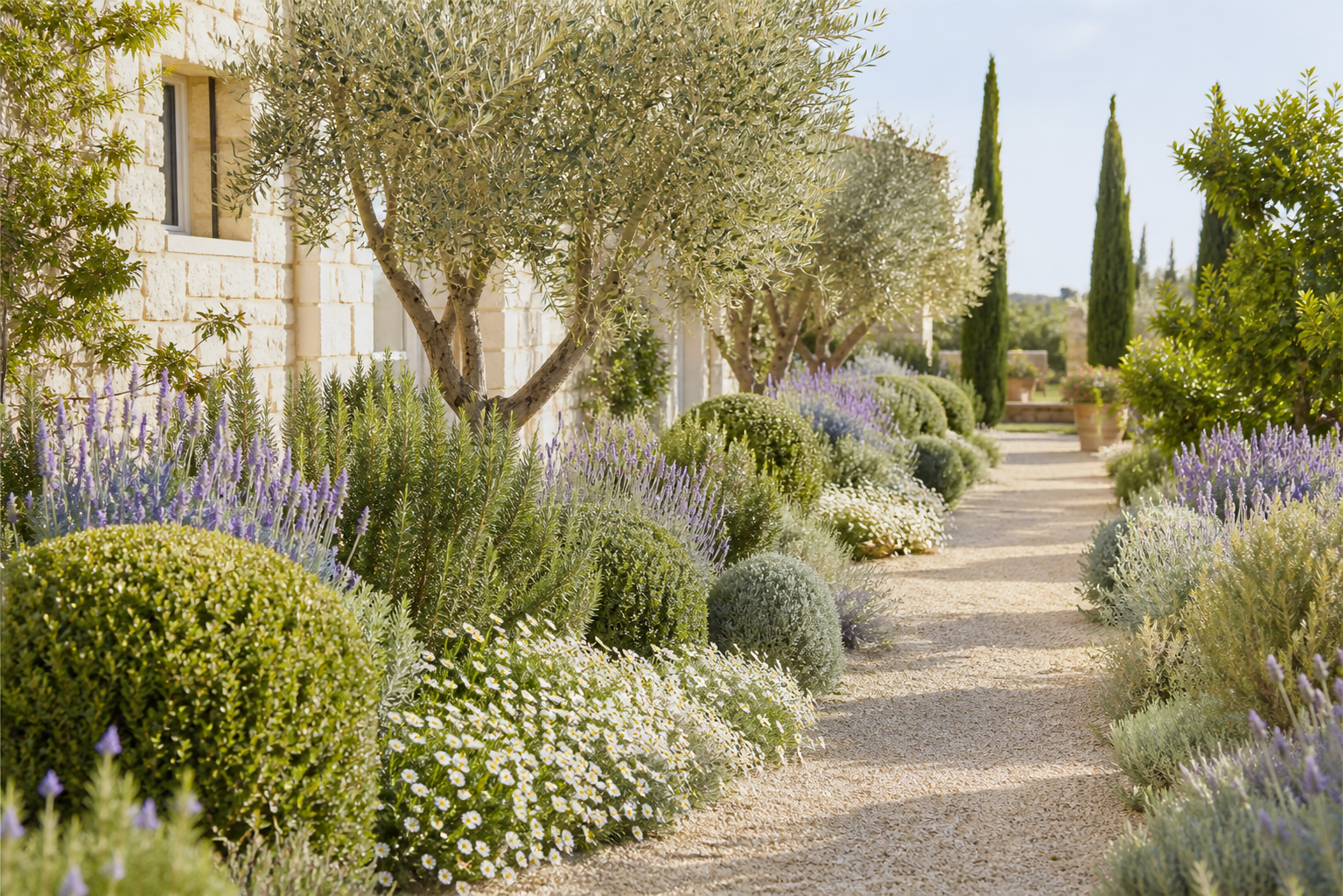
A Mediterranean border should feel full, but never crowded. Build it in three clear layers. Begin with the structural layer: trees, upright evergreens and rounded shrubs that give the composition height and permanence. Add a flowering layer of hydrangeas, roses, lavender, salvia and gaura. Finish with a textural edge of lamb’s ear, santolina, thyme or low clipped forms.
Vary the spacing slightly so the planting does not look rigid, but keep the overall rhythm legible. Leave glimpses of soil, gravel and stone between mature forms. That breathing room is part of the aesthetic and allows each plant to retain its natural outline.
Stone edging is especially effective here. It gives the loose planting a crisp boundary, holds gravel away from the soil and visually connects the border to the architecture.
The Grounding Elements
Choose Materials That Age Beautifully
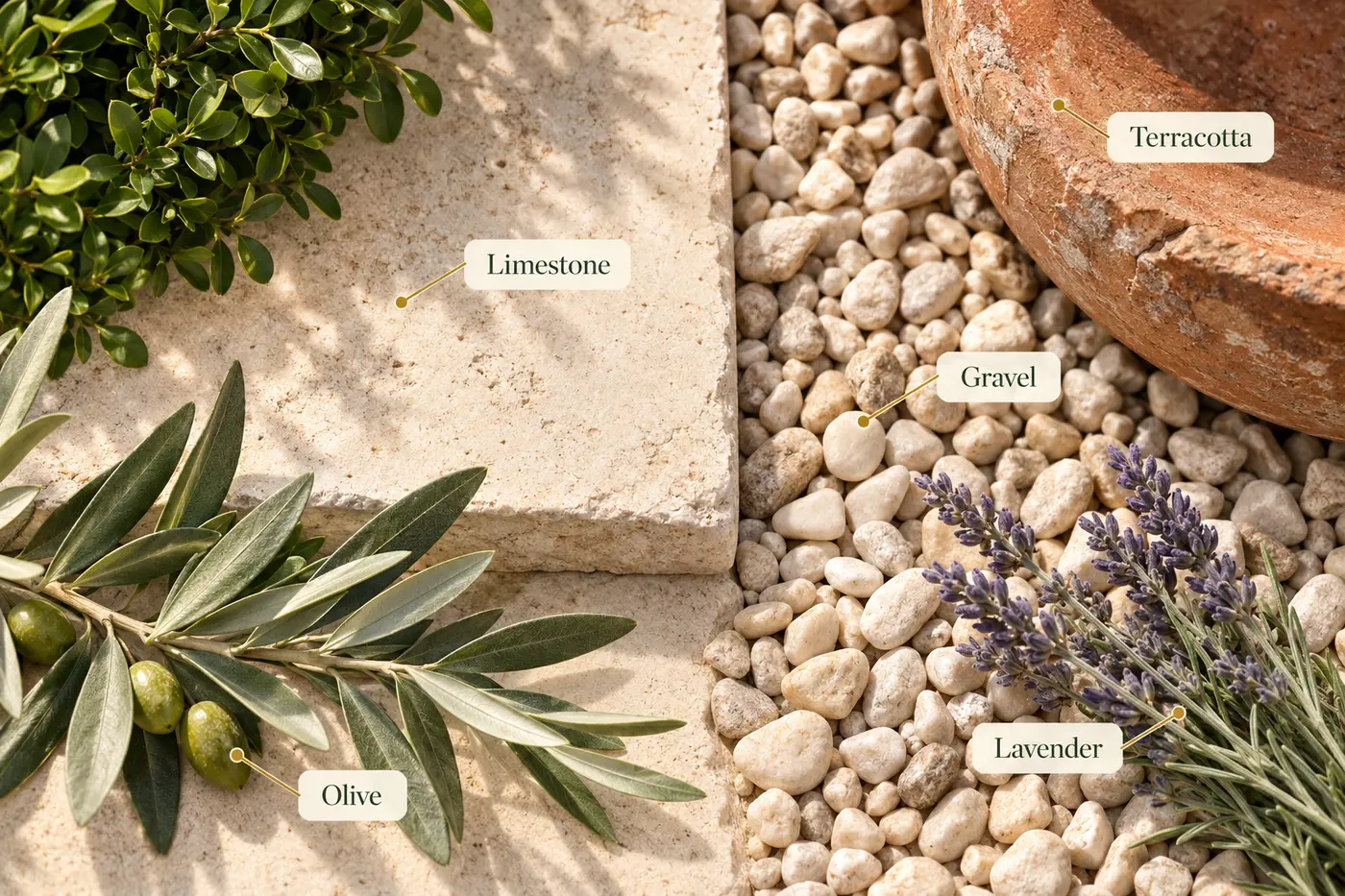
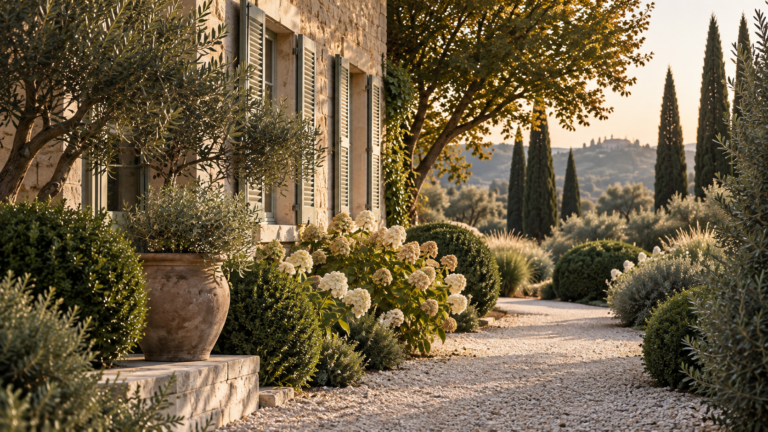
The materials in a Mediterranean garden should feel warm, tactile and settled into the landscape. Limestone provides a pale architectural line for steps, terraces and garden edging. Gravel creates a soft, permeable surface and introduces a gentle sound underfoot. Terracotta brings warmth through pots and aged surfaces, while black metal lanterns and window frames add a restrained graphic contrast.
Choose a small family of materials and repeat them. If limestone appears at the front step, use a related tone for bed edging. Repeat the terracotta of a large entrance pot in smaller containers further into the garden. Avoid mixing too many stone colours or finishes; continuity is what makes simple materials feel luxurious.
Allow patina to develop. Slightly softened stone edges, faded terracotta and the subtle variation of natural gravel give a garden the sense that it has evolved over time.
The Source of Calm
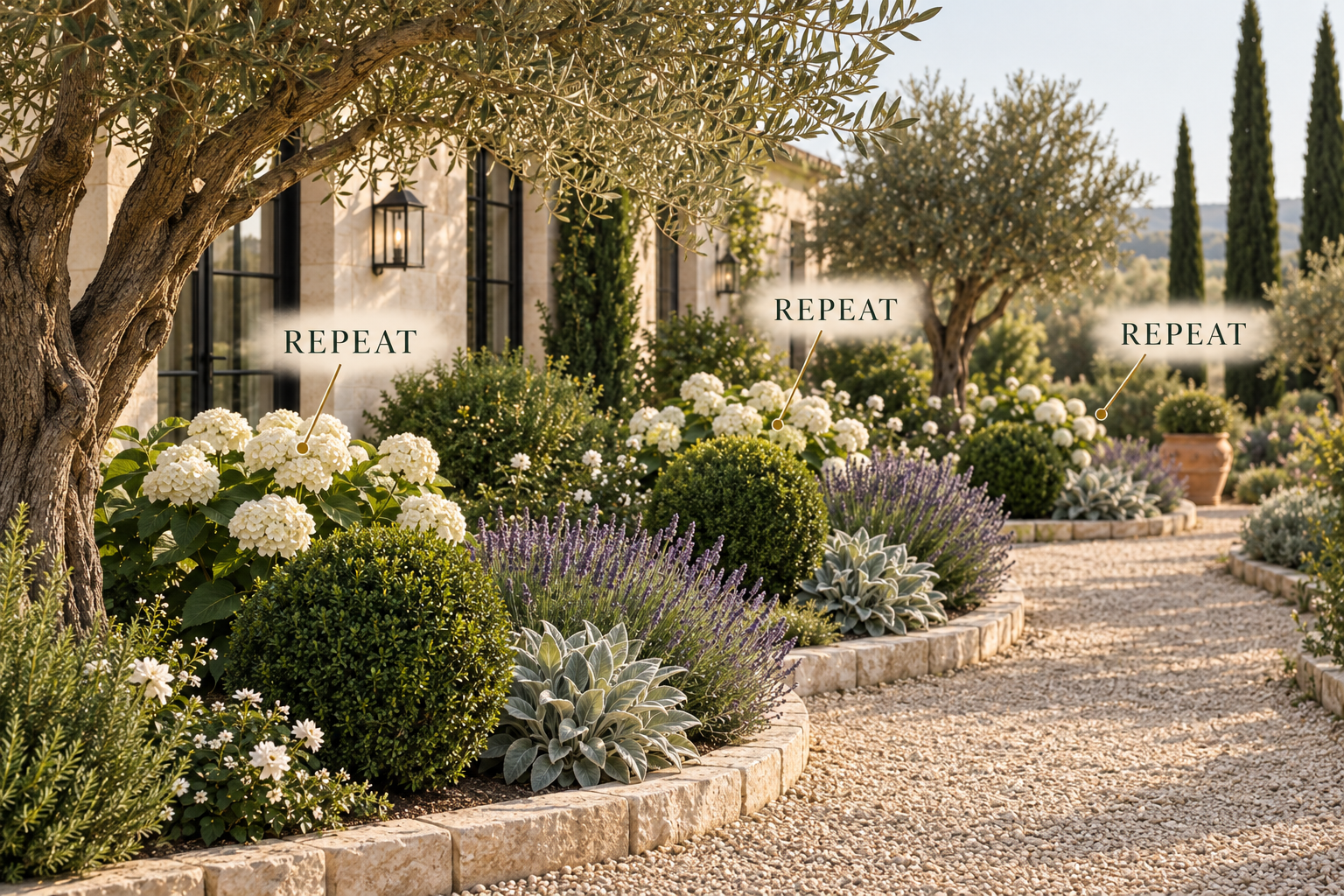
Create Cohesion Through Repetition
Repetition is what transforms a collection of beautiful plants into a designed garden. A clipped evergreen form repeated at intervals leads the eye through the space. The same white flower appearing on both sides of a path makes separate borders feel connected. Silver foliage echoed near an entrance, along a terrace and beside a focal tree ties the entire garden together.
Repeat shapes as well as species. A rounded hydrangea can echo a clipped shrub, while an upright salvia relates to the narrow line of a cypress. The garden begins to feel harmonious because its forms are having a quiet conversation.
Three or four repeated plant combinations are often enough for an entire small garden. Restraint gives each combination greater visual strength and makes seasonal care more manageable.
A More Attainable Interpretation
Adapting the Look to a Smaller Garden
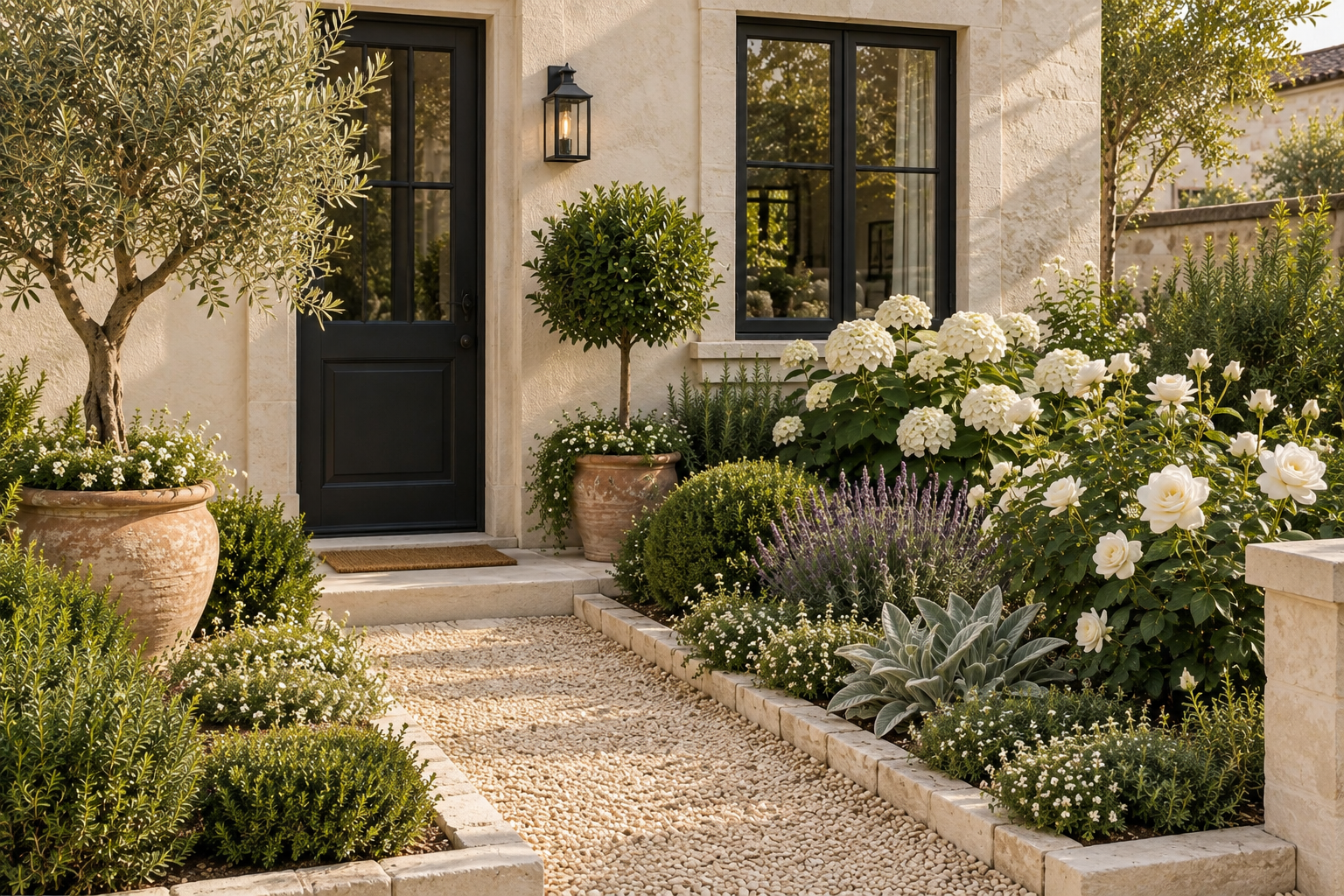
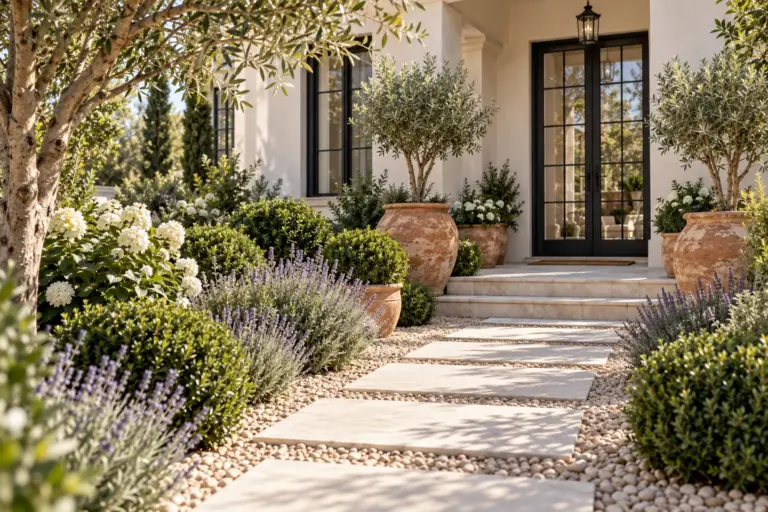
A Mediterranean palette does not require an expansive property. In a compact front garden, one small olive tree in a weathered terracotta pot can establish the mood. A single clipped bay standard can provide evergreen height beside the door. White roses or a carefully placed hydrangea can create the flowering focus, with lavender and lamb’s ear softening the stone edge below.
Keep the layout simple. Define one clear route to the entrance, use a consistent limestone or gravel finish, and repeat only a few plants on either side. The architecture and planting will feel more generous when the walkway is not crowded.
If space is limited, prioritize plants with more than one season of value. Evergreens create winter structure, silver foliage remains attractive beyond flowering, and aromatic herbs bring fragrance as well as texture. Containers can hold tender Mediterranean plants without committing valuable bed space.
A Considered Final Note
A Timeless Garden Begins with Restraint
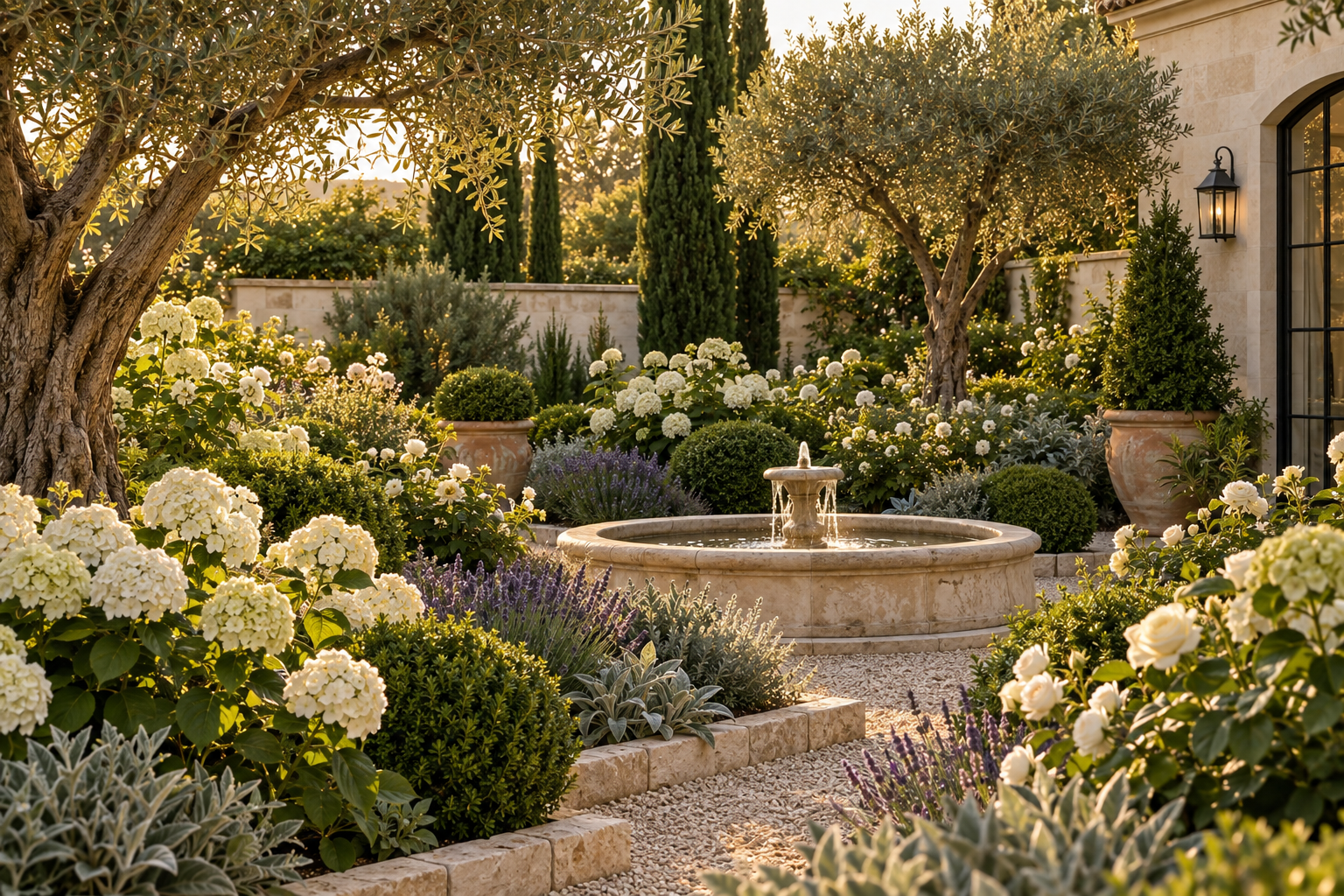
The enduring appeal of a Mediterranean garden does not come from filling every space. It comes from choosing a few beautiful plants and materials, giving them room to mature and repeating them with intention.
Begin with the structure, soften it with white flowers, weave in aromatic and silver foliage, and let limestone, gravel and terracotta provide the quiet foundation. Over time, the planting will loosen, the materials will weather and the garden will acquire the layered character that makes European landscapes feel so timeless.
Thank You for Being Here
I hope this article has helped you see how a restrained collection of plants and natural materials can create a garden that feels timeless, calm and distinctly Mediterranean. Take what speaks to you, adapt it to your own climate and space, and allow your garden to develop beautifully over time.
Continue Planning Your Garden
Explore the Mediterranean Plant Palette
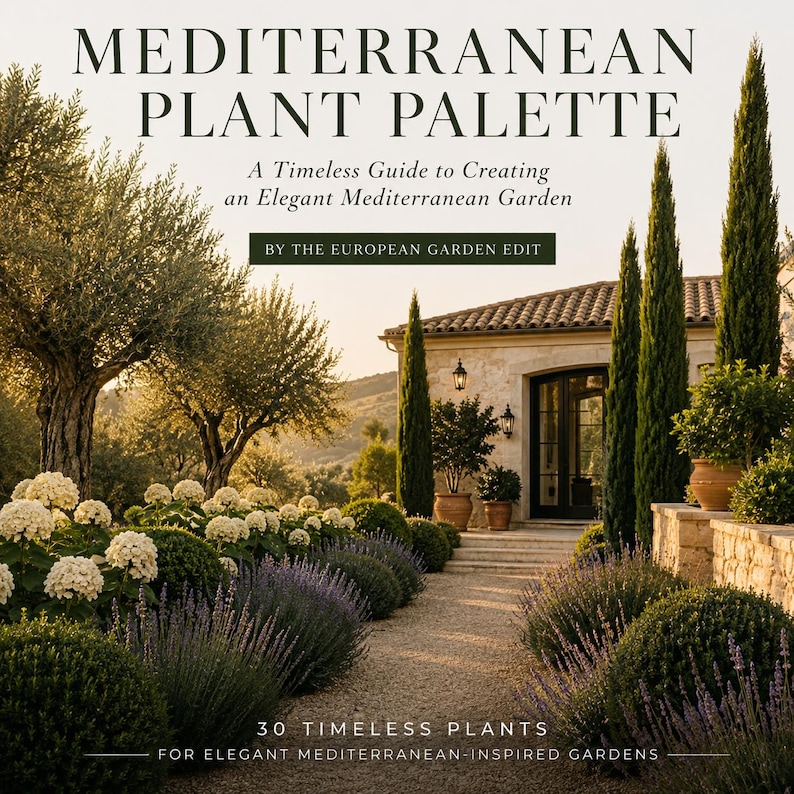
Ready to bring the complete Mediterranean palette into your own landscape? Explore the Mediterranean Plant Palette for detailed plant guidance, thoughtful combinations, spacing advice and a beautifully considered approach to creating a timeless garden.
FROM THE JOURNAL
Recent Reads
October 7, 2026
How to Choose a Garden Colour Palette: 7 Beautiful Plant Combinations
October 6, 2026
How to Design a Beautiful Shade Garden: A Simple Layering Formula
September 17, 2026
How to Design a White Hydrangea Border
September 16, 2026
5 Beautiful Ways to Edge a Garden Border
September 12, 2026
How to Choose the Right Hydrangea for Your Garden
September 10, 2026
What to Plant, Prune and Notice This Season
September 10, 2026
One Comment
Comments are closed.