
How to Choose a Garden Colour Palette: 7 Beautiful Plant Combinations
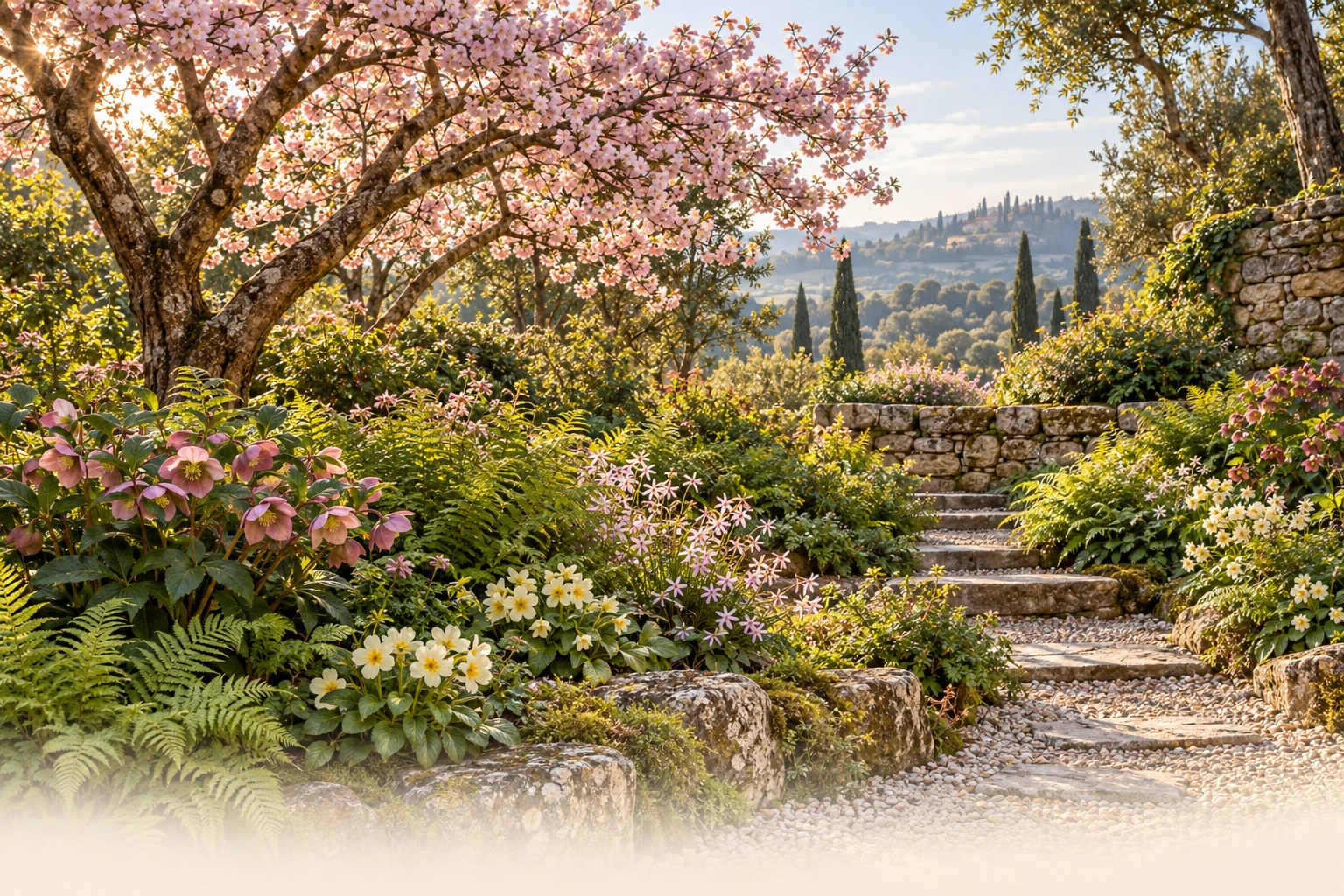
How to Choose a Garden Colour Palette
7 beautiful plant combinations to bring flowers, foliage and texture together.
A garden can be filled with beautiful plants and still feel a little unsettled. A pink rose catches your eye at the nursery, a lavender comes home the following weekend, and a collection of pots gradually becomes a border without much connection between them.
Choosing a garden colour palette gives those individual choices a shared direction.
It can be as simple as soft white flowers against layered green foliage, or lavender paired with silver leaves and warm stone. You do not need every flower to match. A few repeated colours, balanced with foliage and texture, can help a garden feel more considered.
These seven palettes from The European Garden Edit’s Garden Pairing Palette offer different starting points, from quiet whites and silvery planting to romantic roses and richer autumn tones.
Start with your garden, then choose your colours
Before choosing a palette, take a little time to understand the space where it will grow.
Notice how much sunlight the border receives, whether the soil stays damp or dries quickly, and how much room plants will have as they mature. A colour combination is only useful when the plants behind it suit your garden.
Look at the permanent surroundings, too. Cream render, red brick, weathered timber and grey paving each bring their own colours to the planting. Warm limestone can soften a lavender border, while dark green foliage can provide a beautiful backdrop for white flowers.
Then consider the view you want to improve. Is it an entrance you pass every day, a border outside the kitchen window, or a seating area you use on summer evenings?
Starting with one defined area makes the choices easier and gives you somewhere manageable to try a new palette.
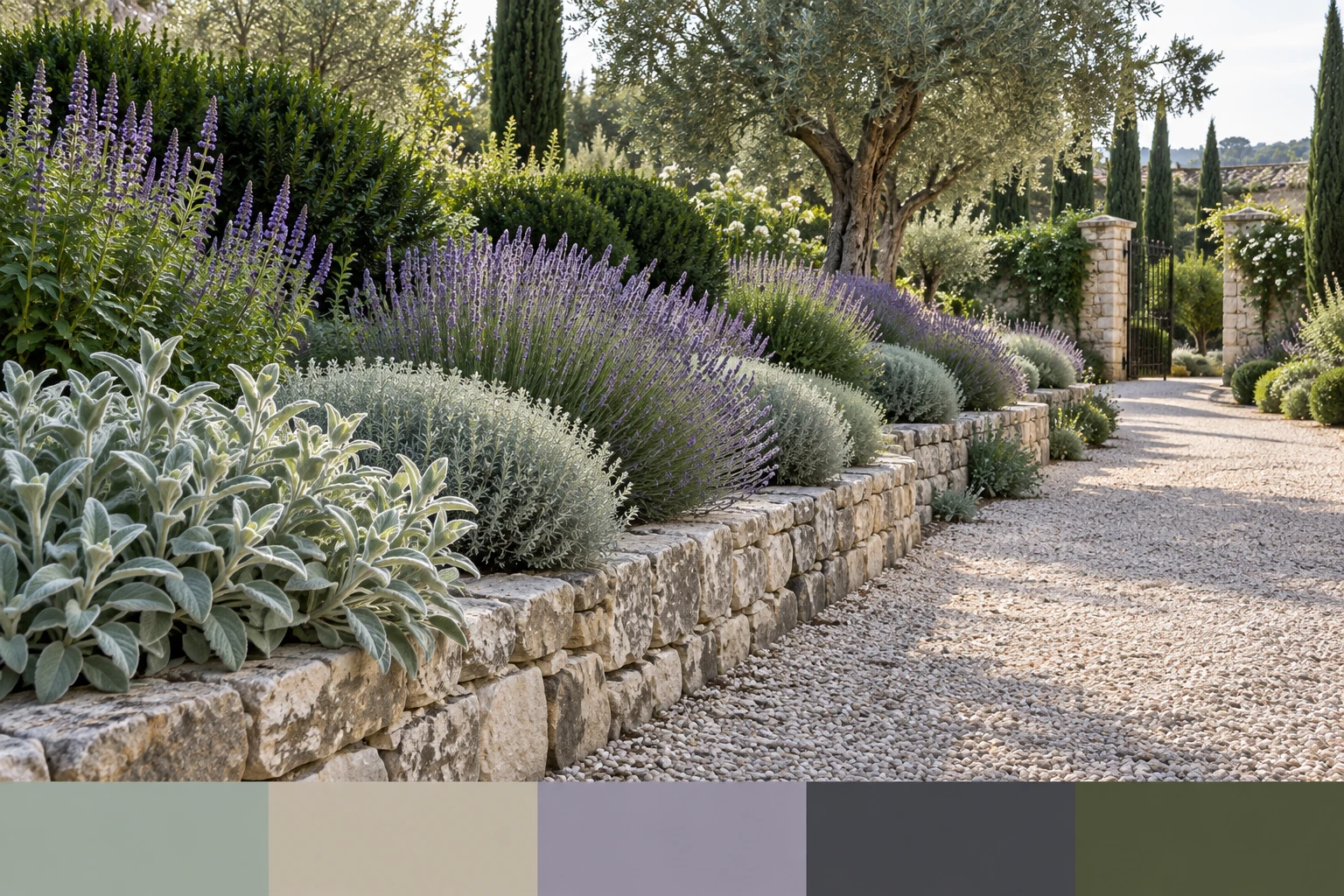
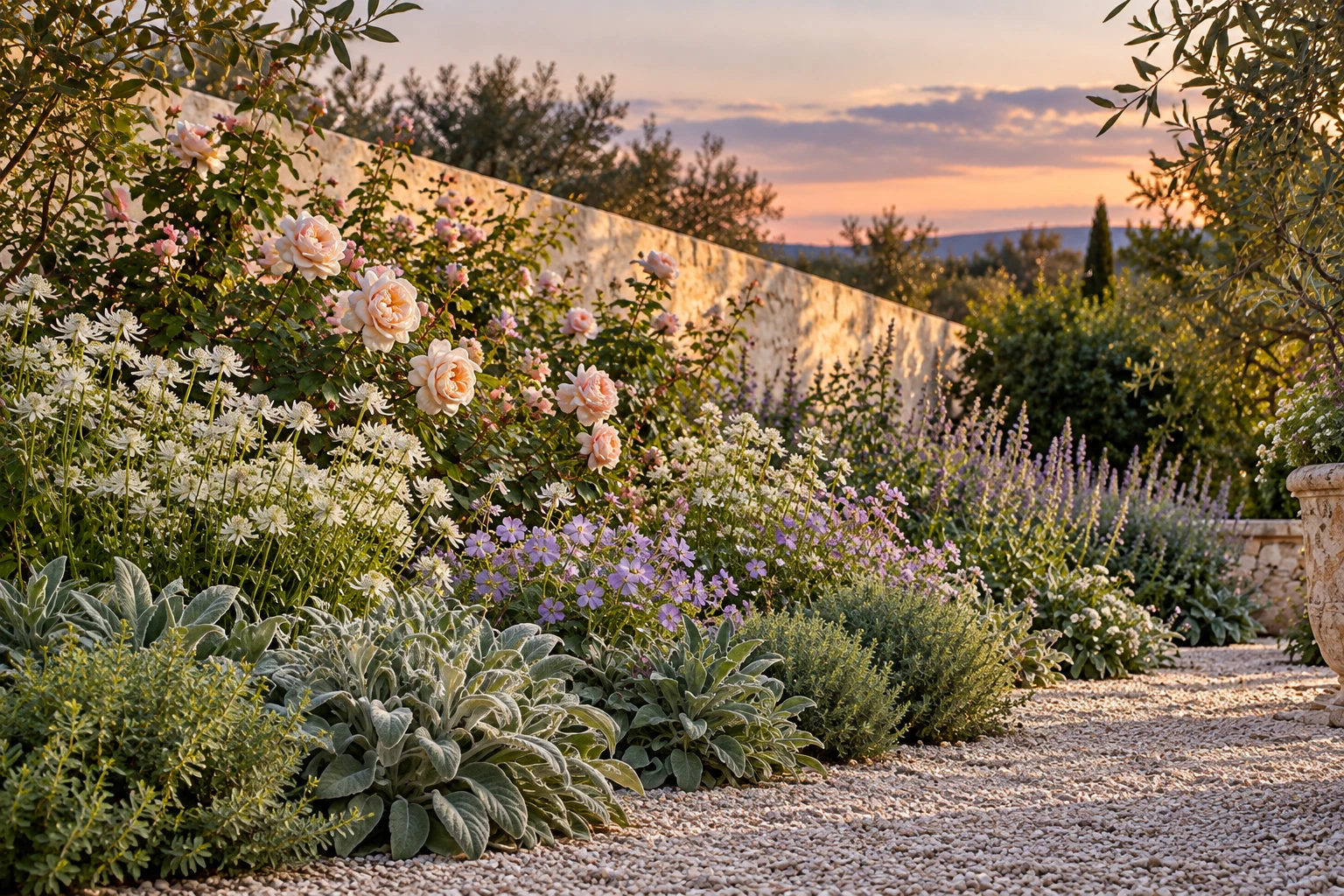
1. Lavender Hush: lavender flowers and soft silver foliage
There is something restful about lavender flowers rising above soft silver leaves. The colours sit gently together, while their different textures keep the planting interesting.
In Lavender Hush, muted violet flowers are balanced by silver foliage, warm greige and deeper olive tones. Gravel and weathered stone give the combination a natural setting.
The design works through contrast in shape as much as colour: upright flower spikes, low rounded plants and broader leaves each contribute something different.
To bring this feeling into your own garden, repeat pockets of lavender-coloured flowers through a border and use silver foliage to connect them. Leave enough space for individual plant forms to remain visible.
Many familiar lavender and silver-leaved plants favour sunny, well-drained conditions, so check the requirements of your chosen varieties before planting.
Try it in: a sunny entrance border, beside a gravel path, or along a low stone wall.
Design note: Use dark green foliage sparingly to give the softer colours definition.
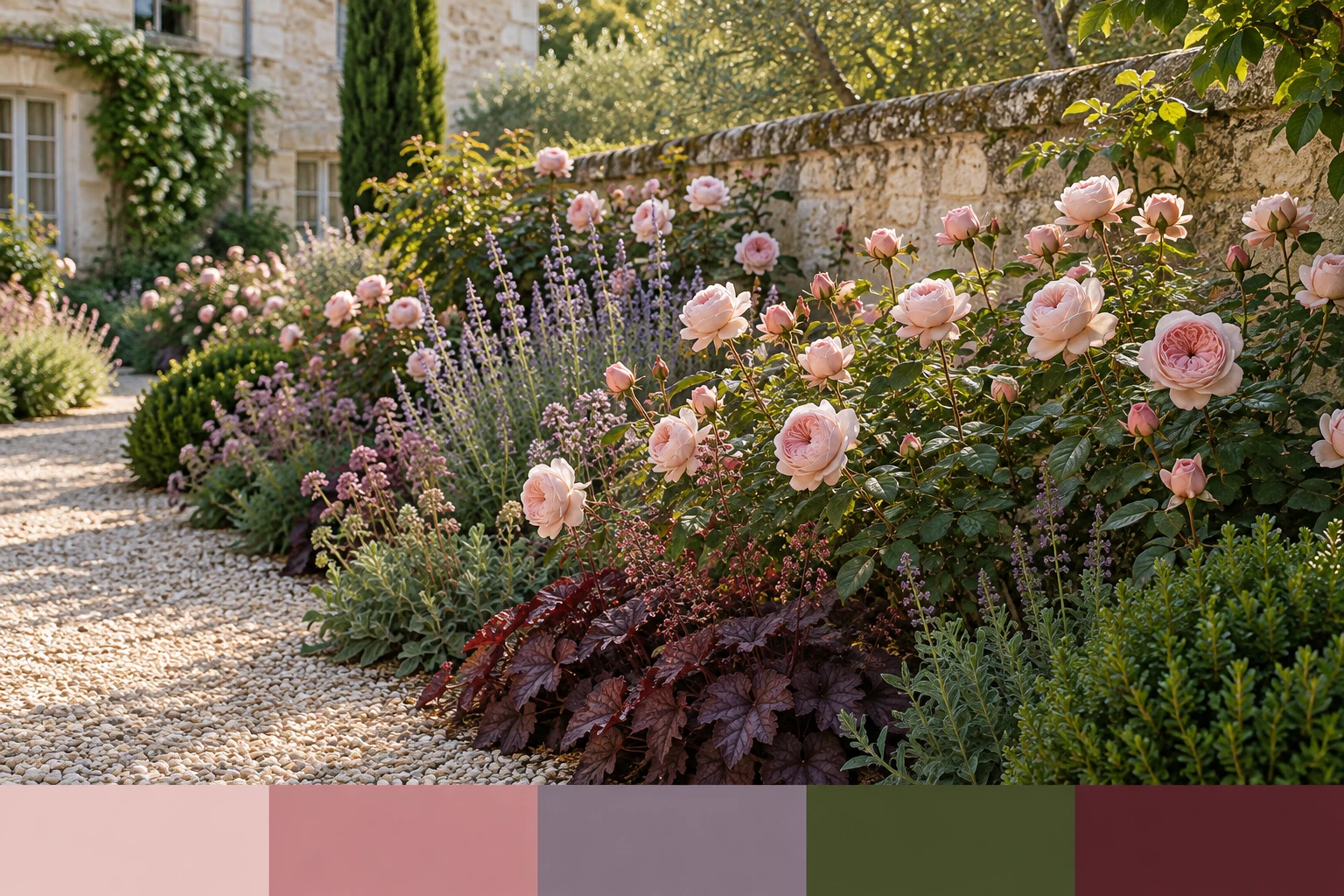
2. Antique Rose: blush, muted violet and deeper foliage
Antique Rose has a romantic quality, with soft blush flowers, dusty rose tones and muted violet set against deeper greens and merlot accents.
The darker colours give the pale flowers something to stand out against. They also prevent the overall effect from becoming too sweet.
Rather than filling every gap with another flowering plant, give roses room to show their shape. Surround them with planting that offers a different texture, such as fine leaves, airy stems or slender flower spikes.
Repeat the blush colour in a few places, then let the supporting plants carry the connection between them.
You can also draw on the materials around the border. Weathered stone, mellow brick and simple gravel paths sit comfortably with this softer, older-looking palette.
Try it in: a rose border, a cottage-style front garden, or planting beside a terrace.
Design note: A small amount of deep foliage can make pale pink flowers feel more luminous.
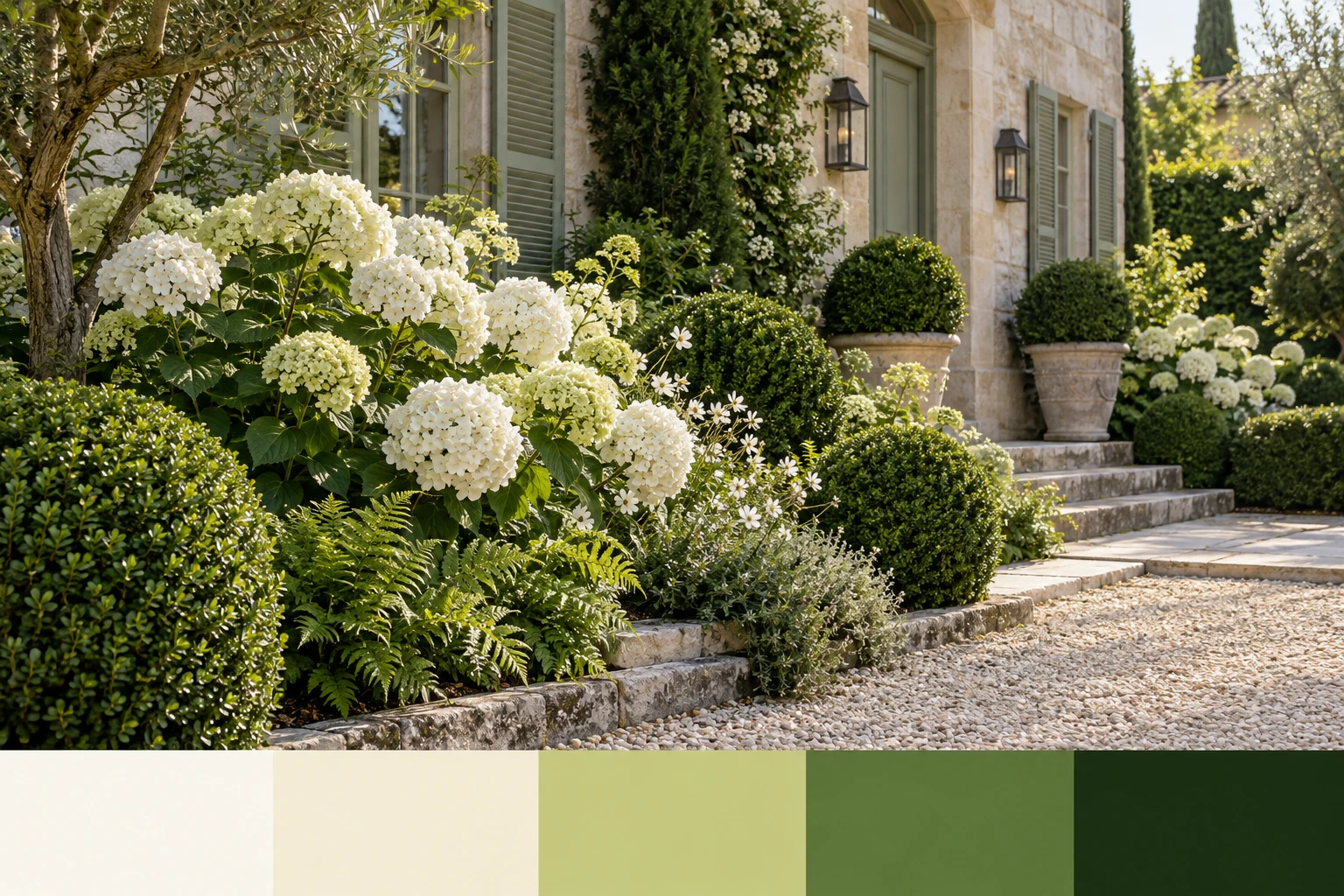
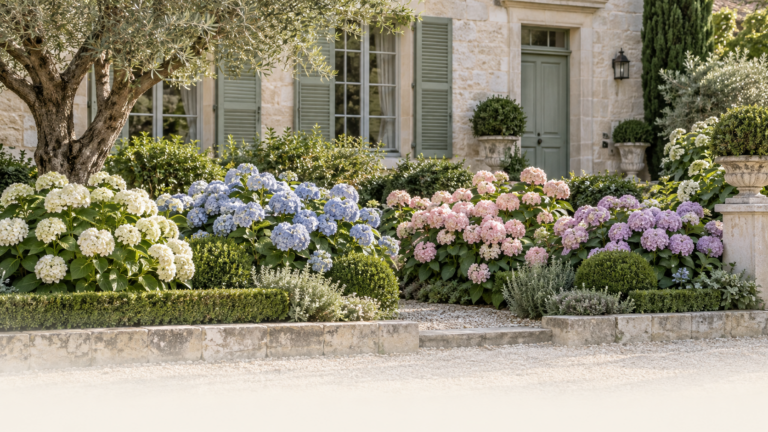
3. Hydrangea & Boxwood: white flowers and layered greens
White hydrangeas and clipped evergreen forms create a pleasing balance between softness and structure.
The flower heads bring volume and seasonal interest, while the evergreens give the garden a steady shape. Fresh, olive and deep shades of green add depth even within a restrained palette.
To adapt the look, think about the relationship between loose and defined forms. A generous flowering shrub might sit beside a lower rounded evergreen, with smaller plants softening the front of the border.
Allow space for the hydrangeas to reach their mature size. A border that looks comfortably planted at first can become crowded surprisingly quickly.
Choose the hydrangea species and cultivar for your conditions rather than flower colour alone. If boxwood is unsuitable locally, another appropriate evergreen can provide a similar structural role.
Try it in: a front garden, an entrance planting, or a border viewed from the house.
Design note: Keep some gravel, paving or soil-level space visible so the planting has room to breathe.
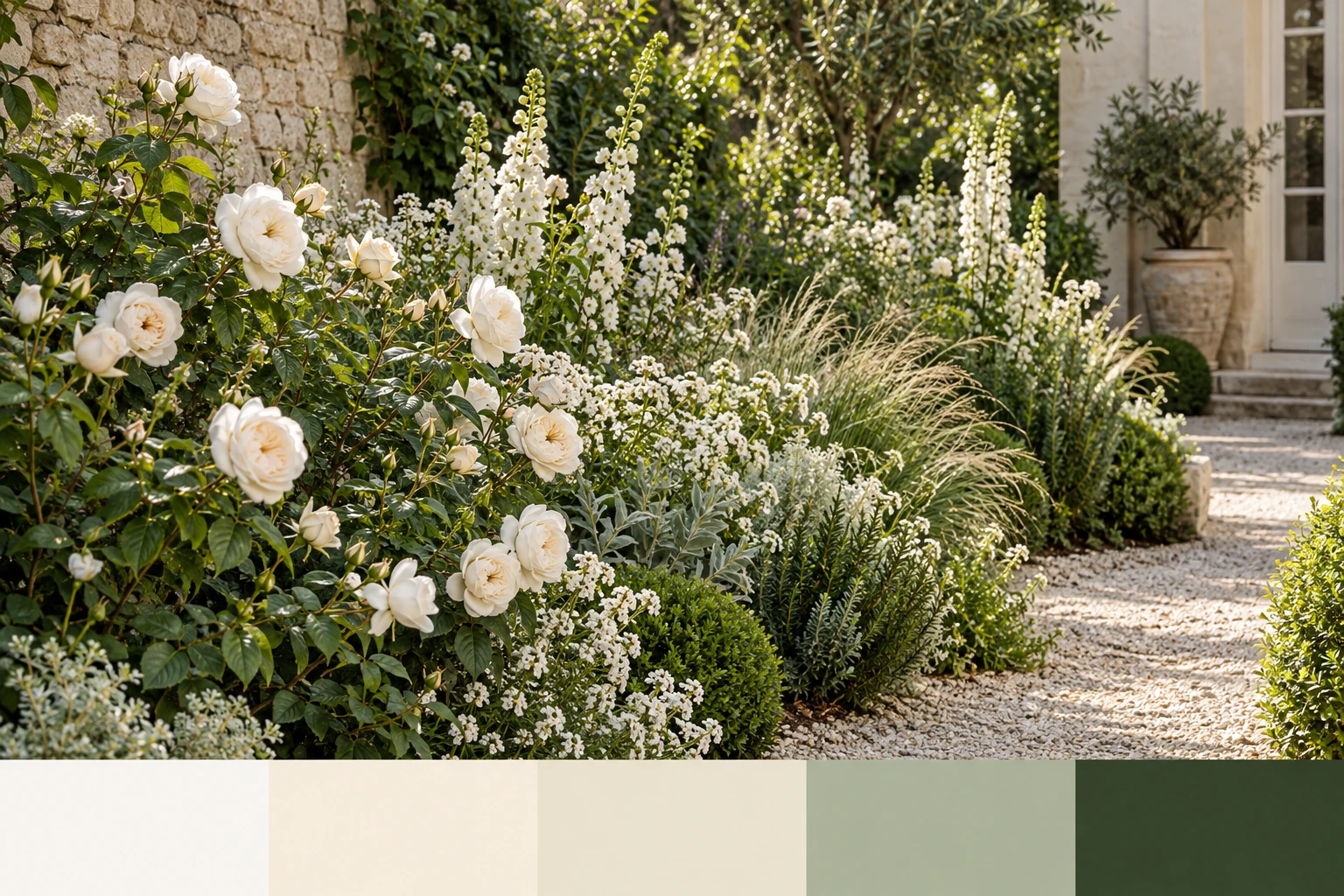
4. Quiet White: soft flowers against a green backdrop
A white garden can feel calm, romantic and remarkably varied.
The interest comes from differences within the restrained colour scheme: creamy flowers beside brighter whites, rounded blooms beside slender spikes, and glossy leaves beside softer foliage.
Quiet White is a useful direction if you love flowers but prefer a gentle overall effect.
Begin with a green framework, then introduce white flowering plants at different heights. Let some blooms sit close to the front of the border while others rise behind them.
Pay attention to flowering times. A spring display followed by summer and autumn interest can be more satisfying than a border that flowers all at once and then becomes quiet.
White flowers also benefit from a backdrop. Against darker leaves, their individual shapes become much easier to appreciate.
Try it in: a courtyard border, beside a terrace, or in a garden viewed during the evening.
Design note: Include cream and soft green tones to give the whites depth and variation.
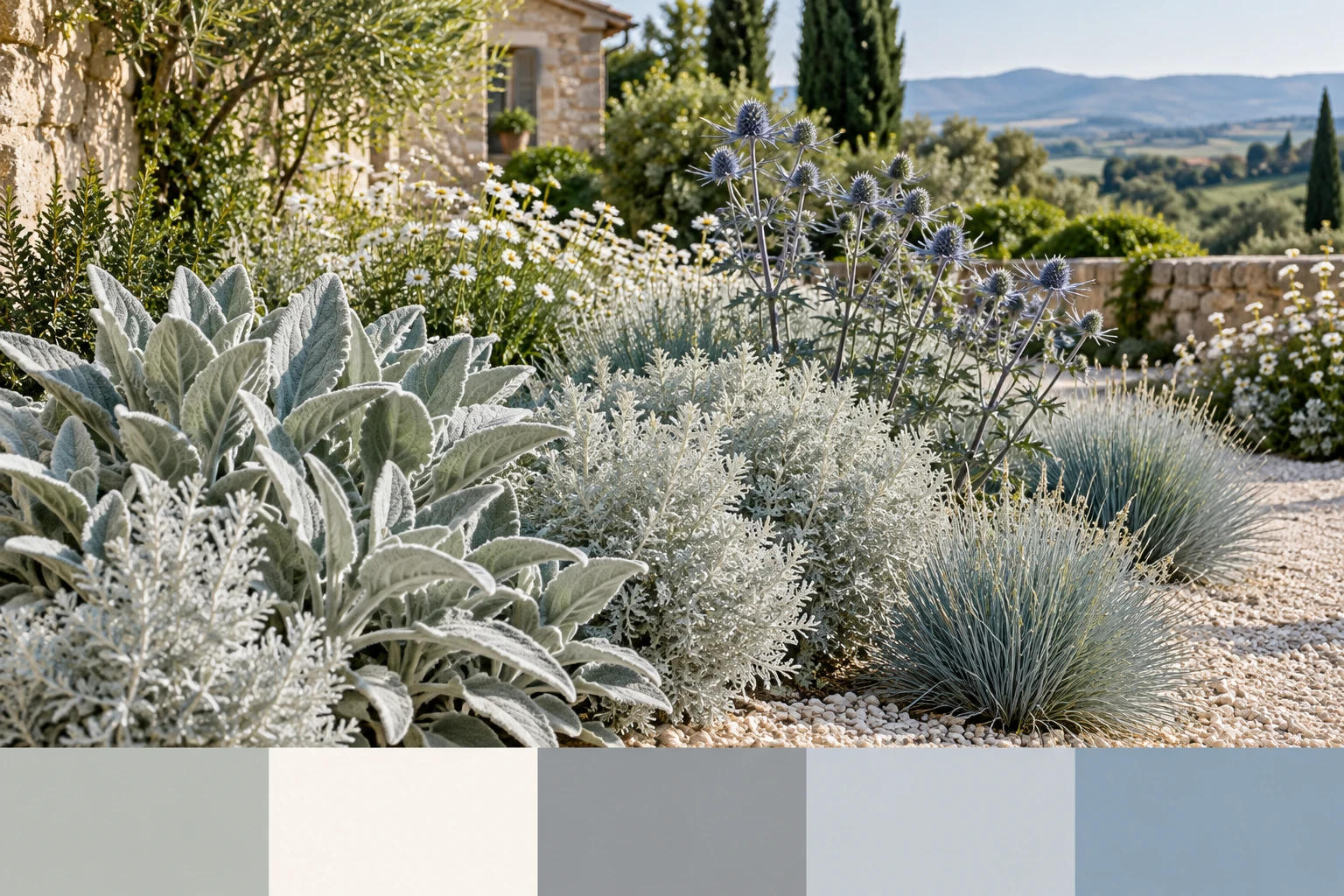
5. Silver Garden: a palette led by foliage
Flowers are not the only way to create a beautiful colour palette.
Silver Garden puts foliage at the centre of the design, using variations in leaf colour, shape and texture to build a quieter kind of interest.
Broad silver leaves can sit beside fine, feathery foliage. Rounded plants can contrast with upright stems. Deeper greens provide weight, while pale stone and gravel extend the silvery feeling beyond the border.
The key is variation. Several plants with almost identical leaves can blend into one indistinct mass, even when their colours are lovely.
Choose contrasting forms and repeat them with enough space between plants to appreciate their shape.
Silver foliage is often associated with sunny, dry planting, but individual plants have different requirements. Check each selection rather than treating leaf colour as a guide to its needs.
Try it in: a sunny gravel garden, a narrow border beside paving, or a restrained entrance planting.
Design note: Let foliage carry most of the composition, with flowers used as occasional accents.
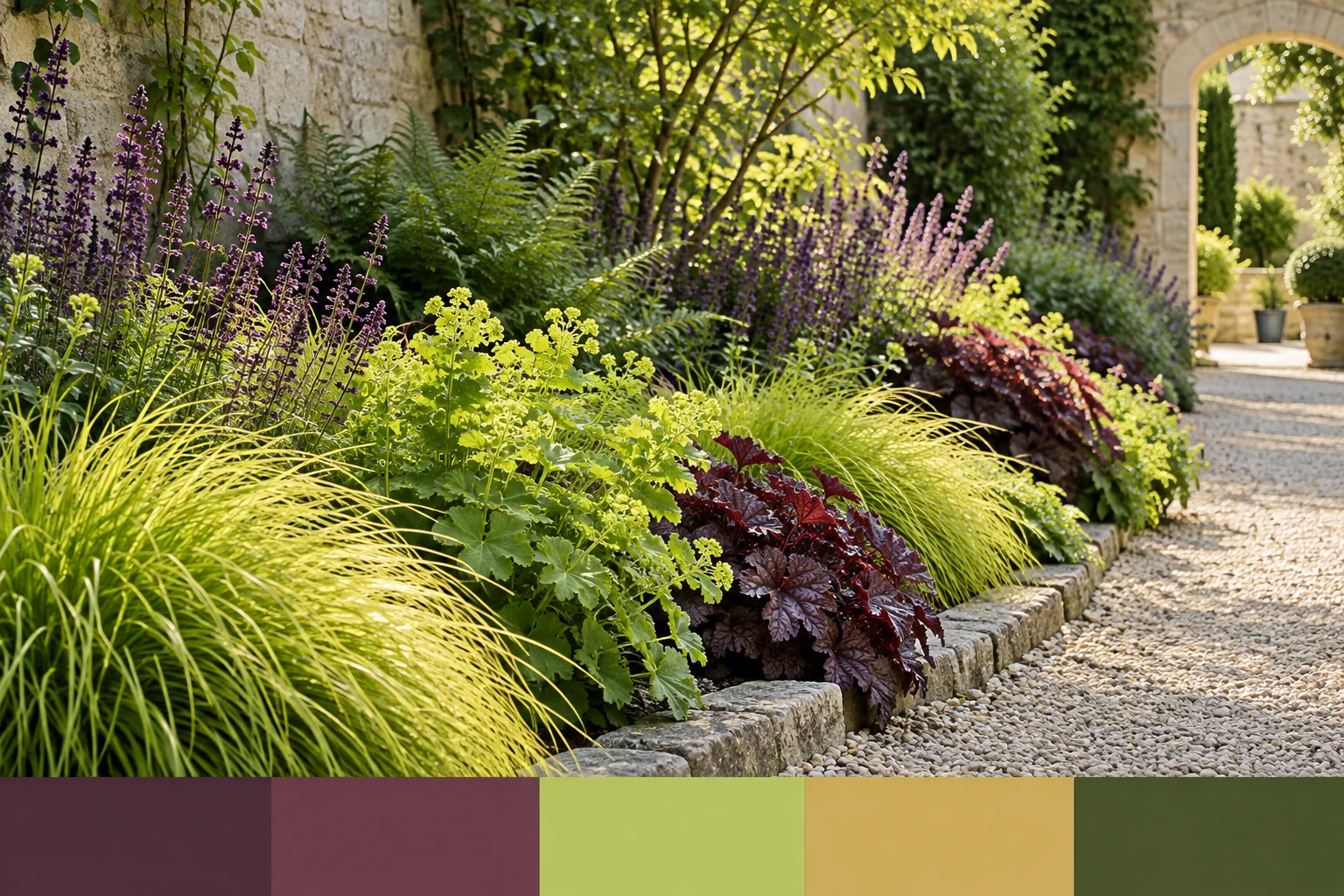
6. Chartreuse & Plum: fresh lime with rich, dark accents
Chartreuse & Plum brings more contrast to the garden.
Fresh yellow-green foliage catches the light, while plum and burgundy tones add depth. Muted flowers and intermediate greens help the two ends of the palette feel connected.
This combination works best when you decide which colour will lead. You might use mostly green planting with a few plum accents, or make darker foliage the main feature and introduce chartreuse in smaller pockets.
There is no need to alternate the colours plant by plant. Groups and repeated accents usually create a more relaxed rhythm.
Look at the foliage in the light where it will grow. A leaf that appears rich purple in one position may look softer or greener elsewhere, depending on the plant and conditions.
Try it in: a foliage-led border, a courtyard planting, or a small area that needs a stronger focal point.
Design note: Repeat the darker accent in a few places so it feels connected to the whole border.
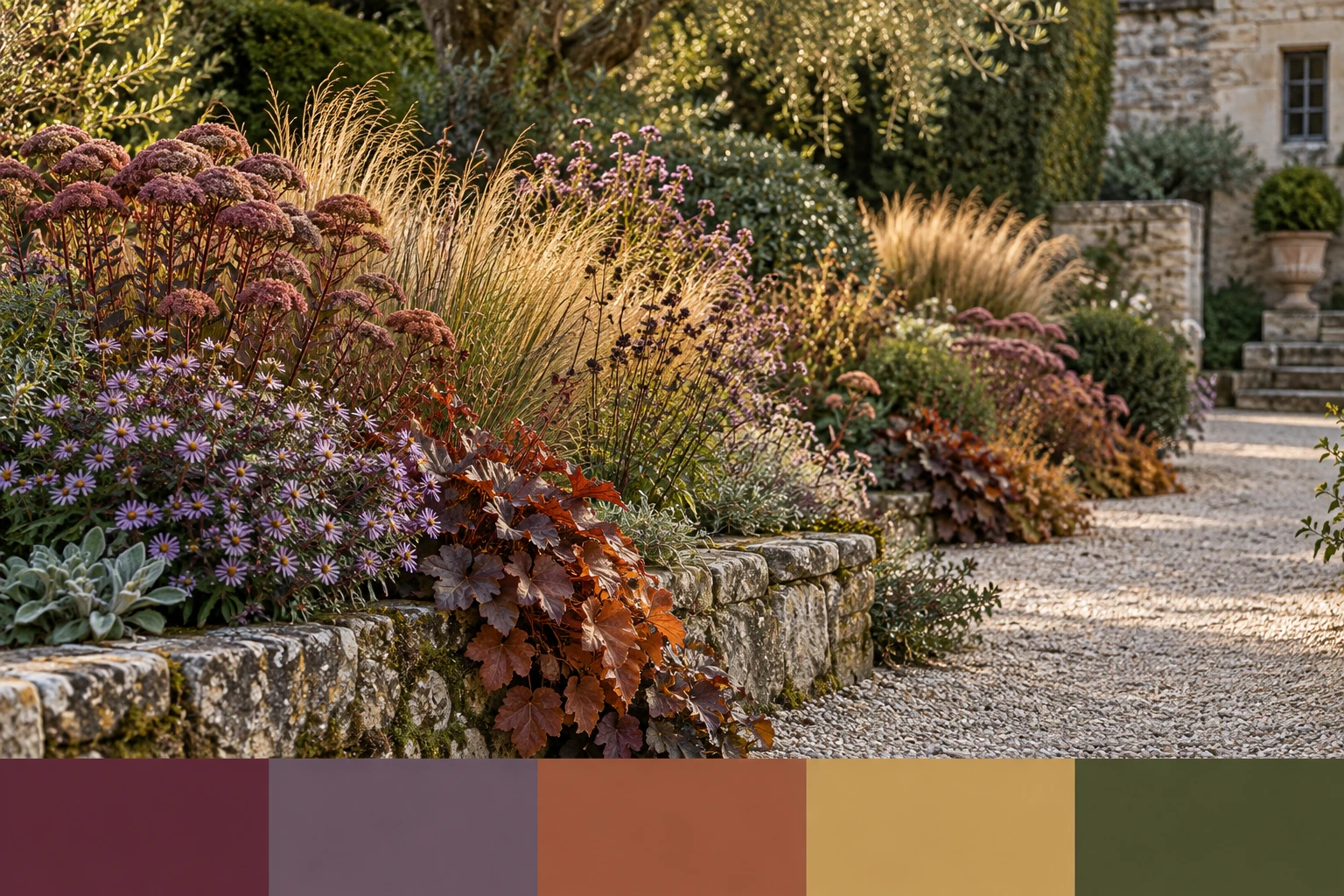
7. Autumn Whisper: muted flowers and copper foliage
Autumn Whisper draws on the softer colours of the changing season: smoky plum, muted rose, russet bronze and warm gold.
Its character comes from the relationship between late flowers, changing leaves, grasses and seedheads.
To create this feeling, think beyond the colour of a flower at its peak. Consider what happens as it fades, whether the foliage changes, and what shape remains later in the season.
Airy grasses can bring movement between more substantial plants. Seedheads can add detail, while evergreen foliage provides a steady background.
Give the planting a little space so that these finer elements remain visible. The effect should feel layered and natural, with each plant contributing to the seasonal change.
Try it in: a mixed border, beside a gravel path, or in a garden you enjoy through late summer and autumn.
Design note: Repeat one warm foliage colour through the border to connect the softer flower tones.
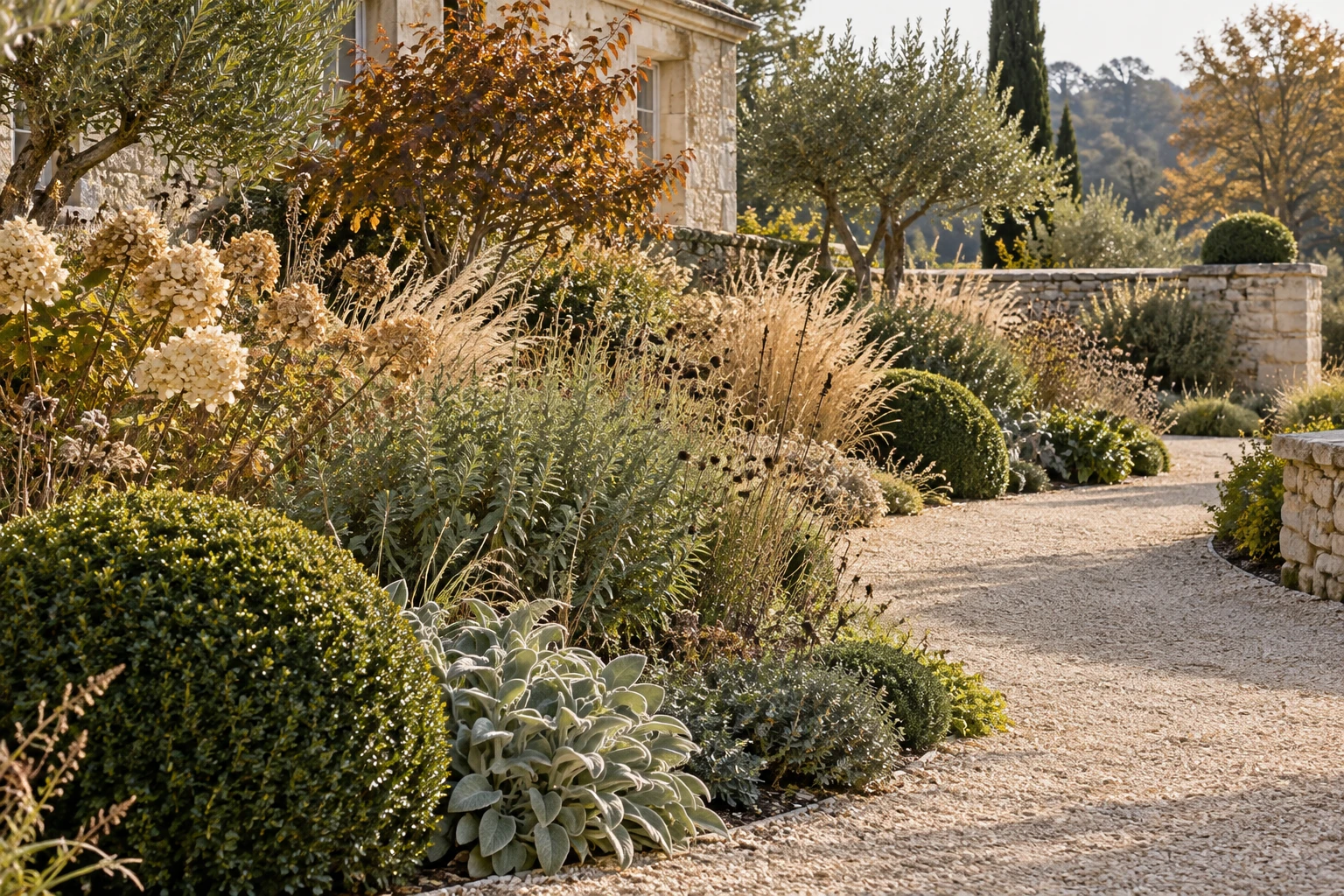
Make your palette work beyond flowering season
A garden colour palette should still have something to offer when the main flowers are over.
Before buying, consider three things: what flowers, what foliage remains, and what gives the border its shape.
Evergreen plants can hold the composition together. Deciduous shrubs may contribute spring leaves and autumn colour. Perennials can bring flowers followed by useful seedheads or changing foliage.
The plants do not all need to bloom at once. A palette can unfold gradually, with one plant handing interest to the next.
When you make your shopping list, note flowering periods alongside mature sizes and growing requirements. This helps you see both the seasonal picture and whether the plants can comfortably share the space.
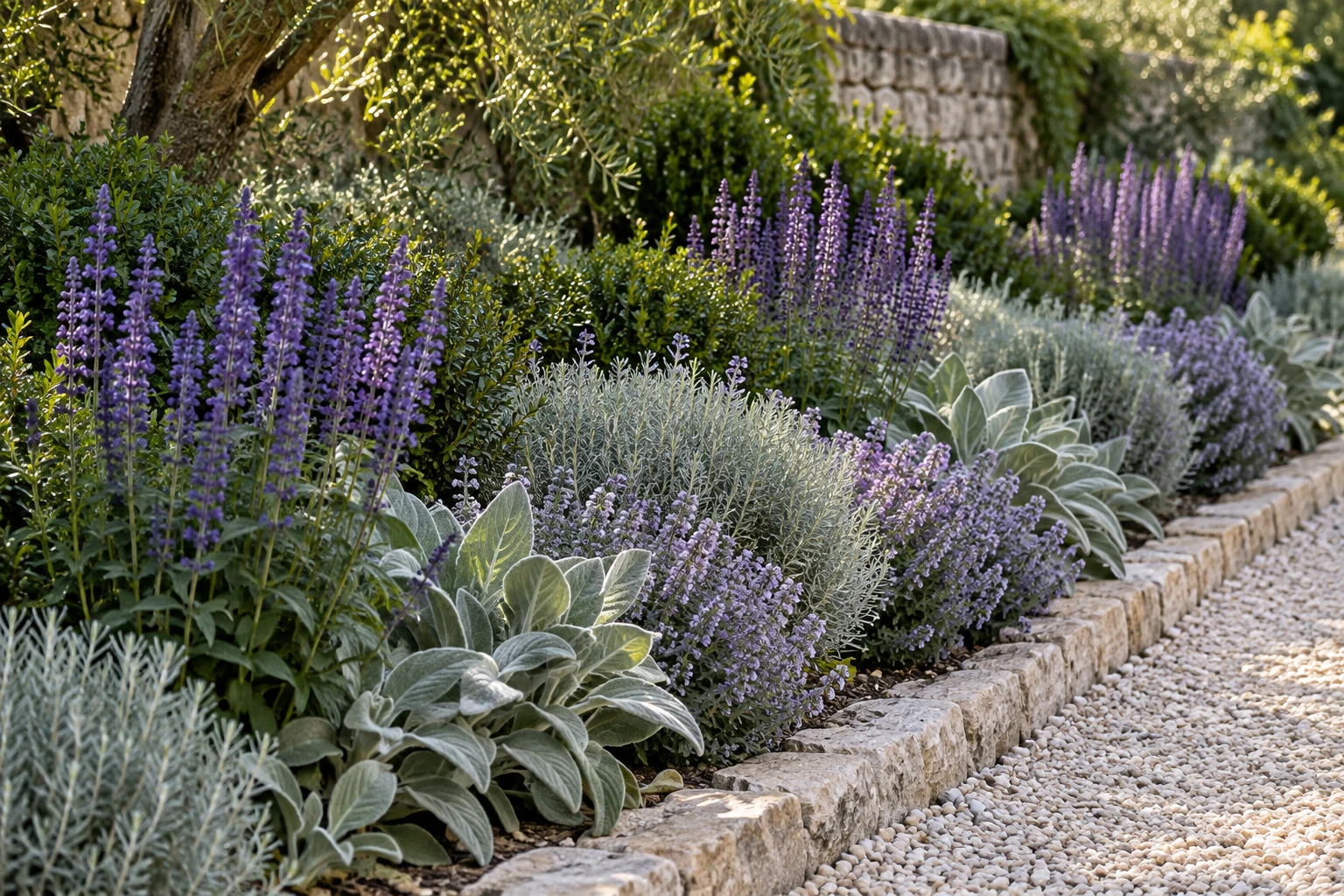
Repeat colours without making everything identical
Repetition helps the eye move through a border.
That might mean repeating one plant in several groups, using related flower colours at different heights, or bringing the same foliage tone into more than one area.
Variation keeps that repetition interesting.
A soft violet flower can appear as an upright spike in one part of the border and a lower, looser cloud elsewhere. Silver leaves might be broad and tactile at the front, then finer and more delicate further back.
Choose a few elements to repeat, then allow the surrounding planting to vary. You are creating a connection between plants while still giving each one room to contribute its own character.
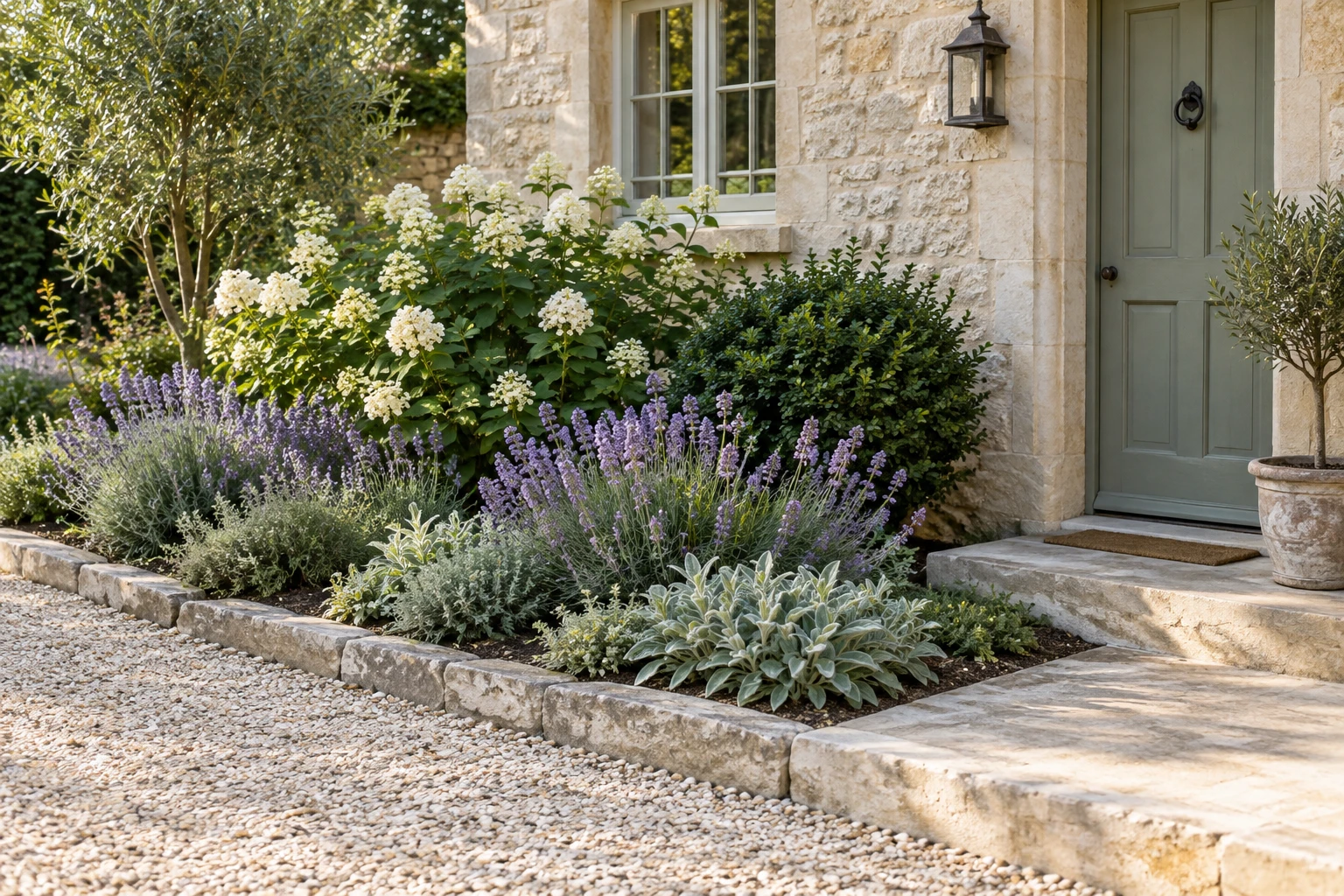
Begin with one small area
You do not need to redesign the entire garden to use a palette.
Start with a border beside the front door, a bed along a path, or a small planting area you see from indoors.
Keep suitable plants that already support the look. Identify what is missing, perhaps evergreen structure, a repeated flower colour, or a lower layer to connect the planting to the path.
Then add gradually.
A focused change in one area can help you understand what you enjoy, how the plants behave and whether you want to extend the palette elsewhere.
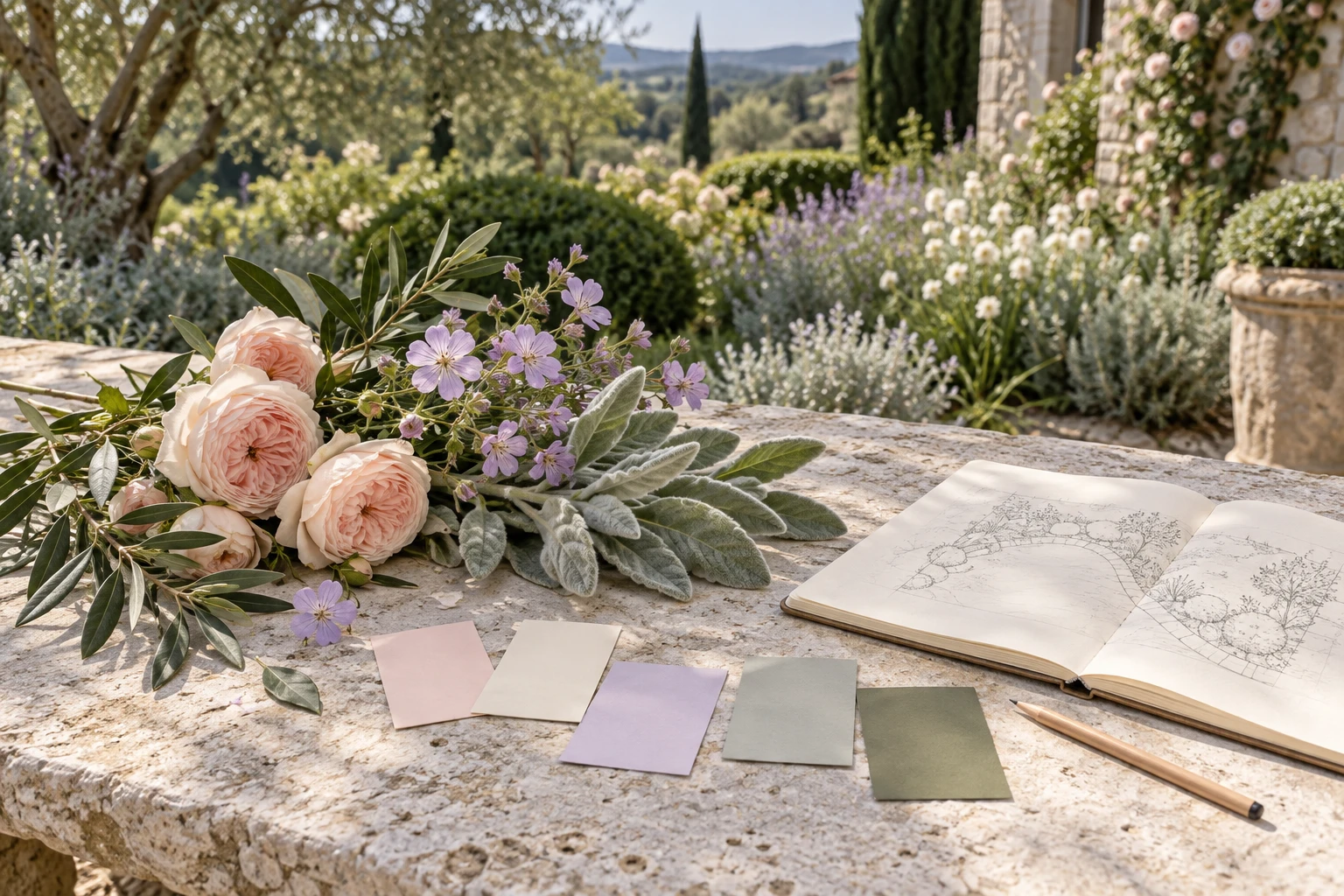
Find your garden’s palette
Something I’ve been working on recently is a visual collection of plant combinations to make these choices a little easier.
My Garden Pairing Palette brings together 29 curated palettes. Each one includes a garden view, five plant profiles and an illustrated planting plan, along with planning sheets for collecting favourites, preparing a shopping list and sketching your own ideas.
I’m sharing it as a complimentary guide for subscribers to The European Garden Edit.
If one of these combinations feels like your kind of garden, you can explore the collection and begin with the palette that catches your eye.
FROM THE JOURNAL
Recent Reads
October 6, 2026
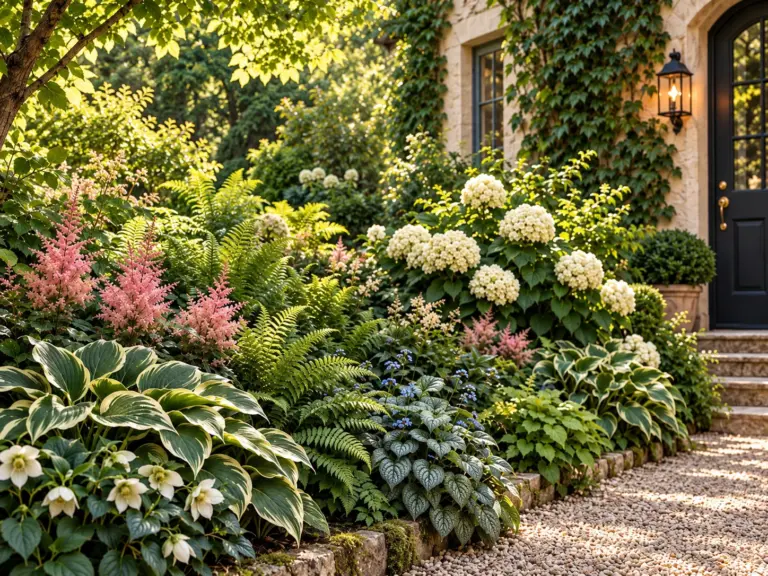
How to Design a Beautiful Shade Garden: A Simple Layering Formula
September 17, 2026
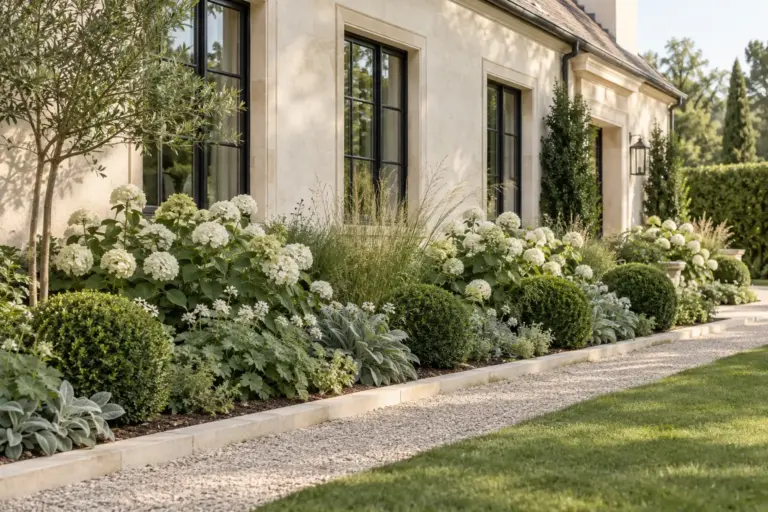
How to Design a White Hydrangea Border
September 16, 2026
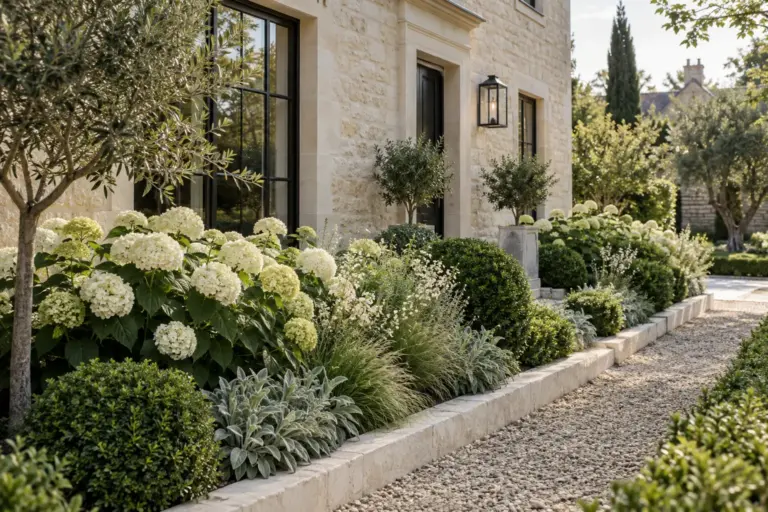
5 Beautiful Ways to Edge a Garden Border
September 12, 2026
How to Choose the Right Hydrangea for Your Garden
September 10, 2026
What to Plant, Prune and Notice This Season
September 10, 2026