
Garden Design
How to Create a Mediterranean Cottage Garden
A thoughtful guide to combining warm limestone, terracotta, aromatic planting and relaxed European character.
August 26, 2026
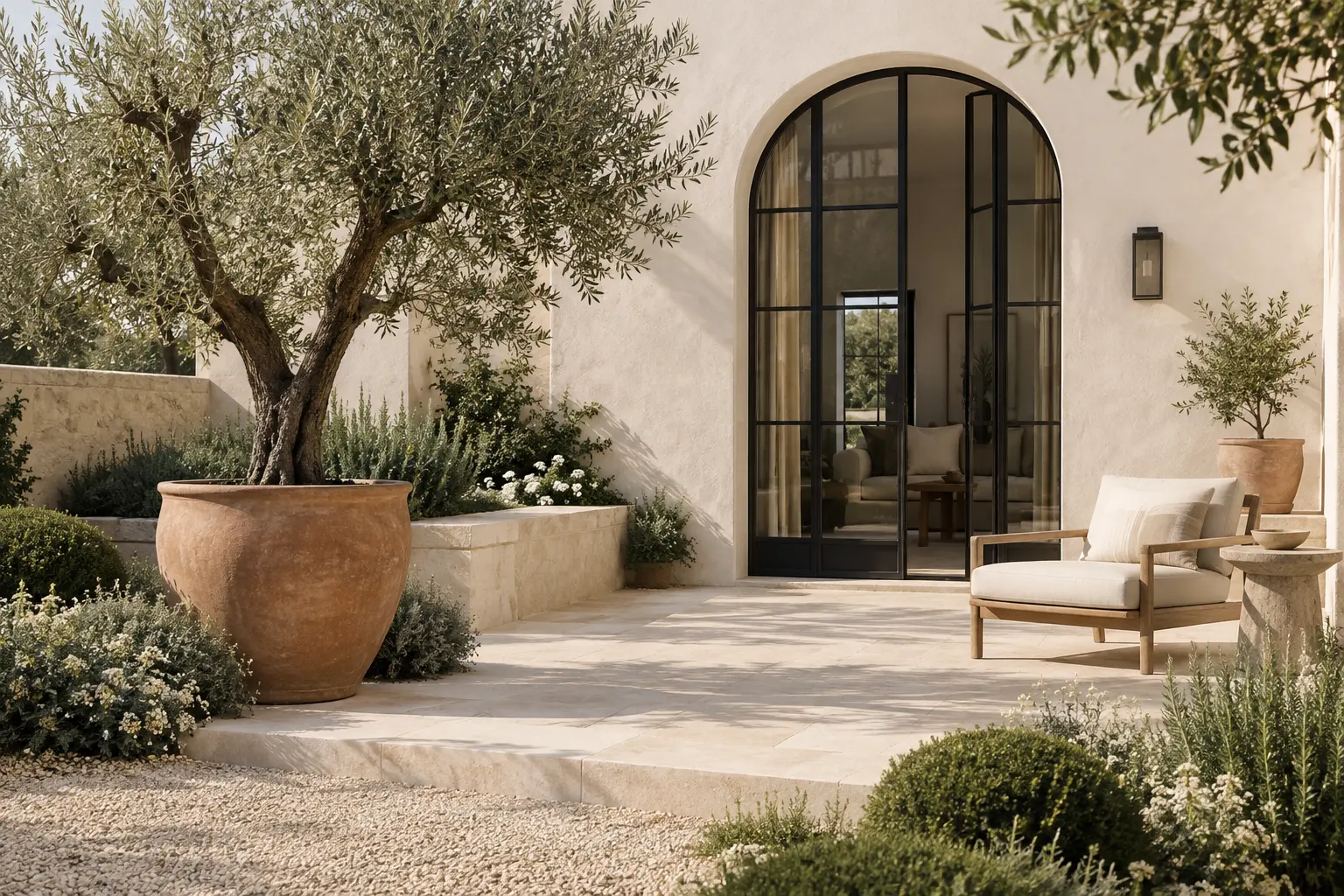
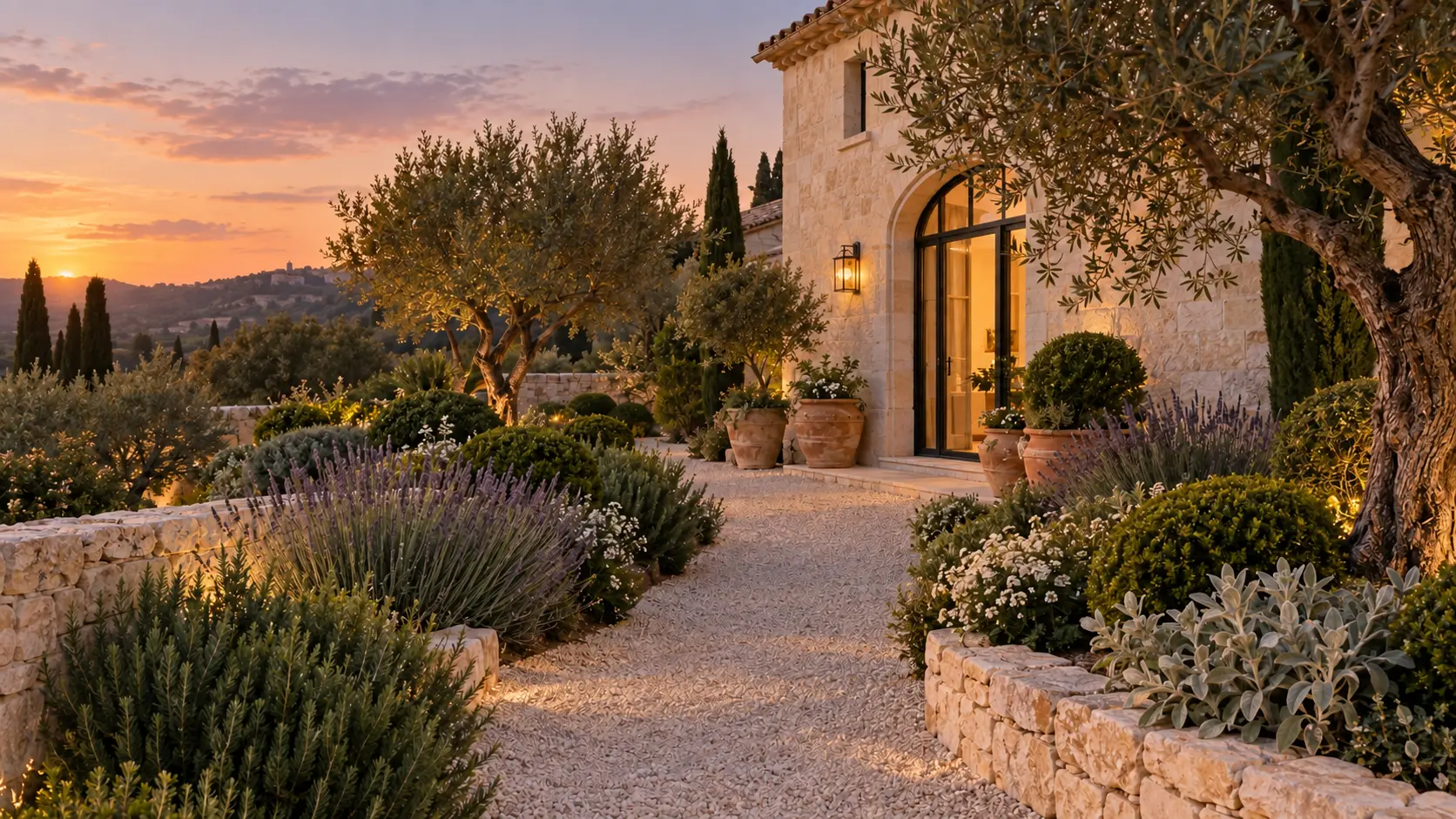
Mediterranean cottage gardens have a particular kind of beauty. They feel warm and established, yet never overly arranged. Silvery foliage catches the light, aromatic plants soften the edges of gravel paths and generous terracotta pots bring earthy warmth to pale stone.
The most convincing gardens are not created by copying every detail of a garden in Provence or Tuscany. They are created by understanding what gives these spaces their atmosphere: natural materials, a limited colour palette, strong evergreen structure and planting that feels relaxed rather than crowded.
Start With a Simple Garden Framework
Before choosing flowers, consider the permanent structure of the garden. Mediterranean gardens are shaped by their relationship with the house. Cream render, limewashed walls, pale limestone and black or sage architectural details create a calm backdrop for planting. Gravel paths and stone terraces connect the different areas without competing for attention.
You do not need an old stone house to create this feeling. A warm cream exterior, a black-framed door or a few beautifully chosen terracotta pots can establish the same visual language. Begin with two or three materials and repeat them throughout the space.
Choose a Warm, Restrained Colour Palette
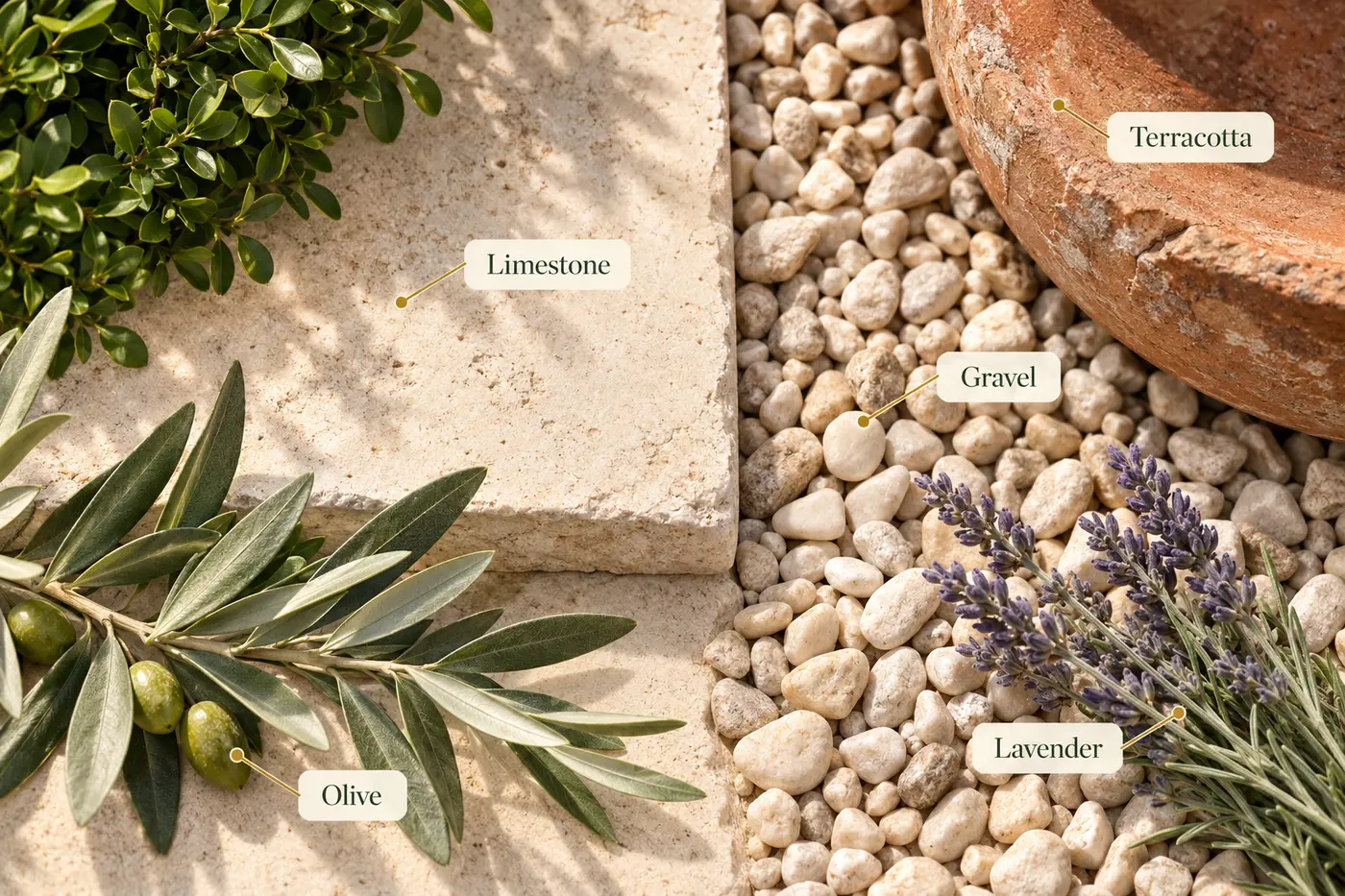
The terracotta, cream and olive palette works because each colour has a clear purpose. Cream brightens the garden and creates a soft background. Terracotta introduces warmth and age. Olive green gives the garden structure and connects it naturally to the surrounding landscape.
Muted lavender, silver-grey foliage and small touches of soft white can be layered into this foundation. These cooler shades prevent the palette from feeling heavy and bring a quiet freshness to the garden. Avoid introducing too many competing flower colours. The strongest interest should come from foliage, texture and form.
Build the Planting in Three Layers
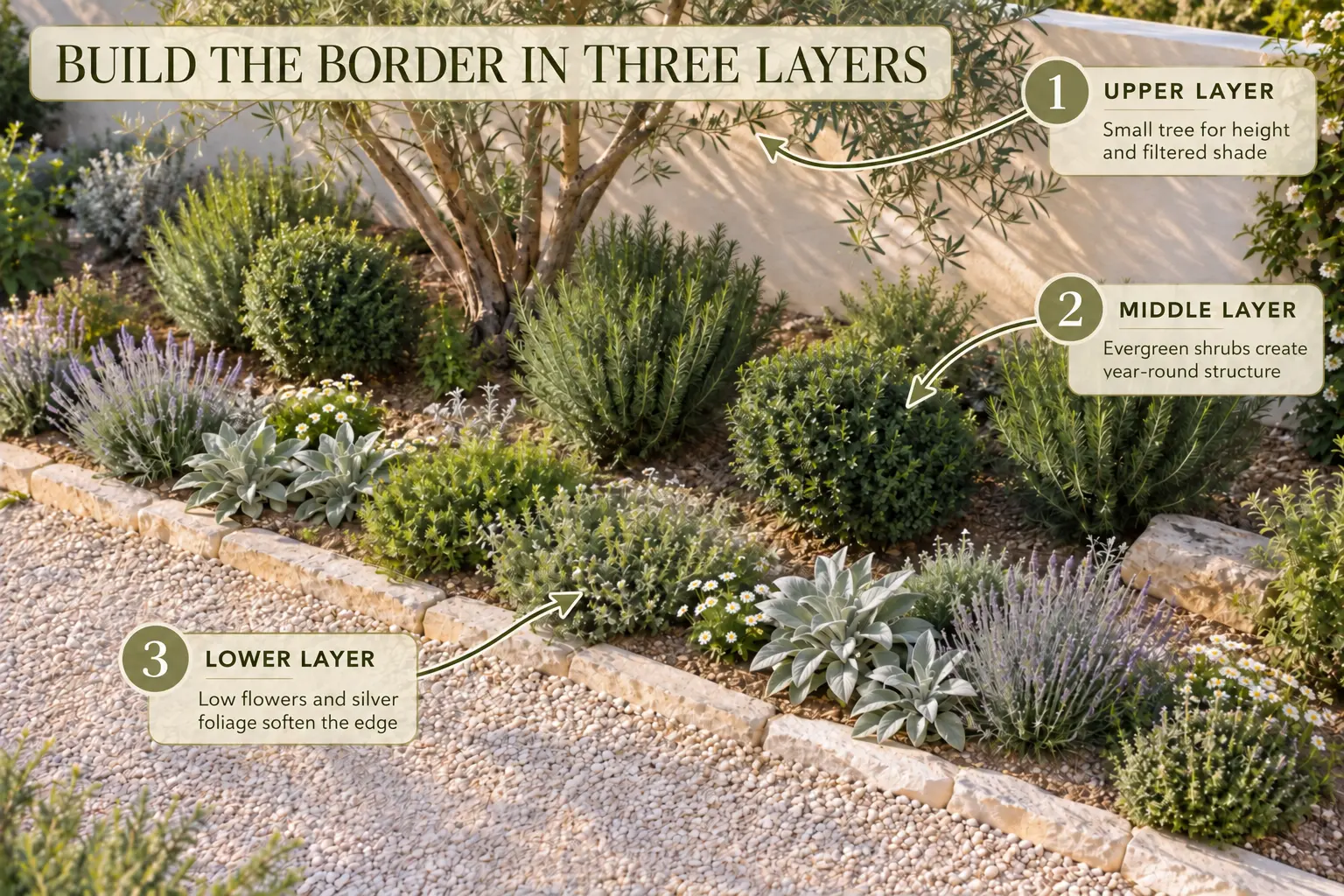
A well-designed Mediterranean border has structure, softness and movement. The easiest way to achieve this is to think of the planting in three distinct layers.
1. The Upper Layer
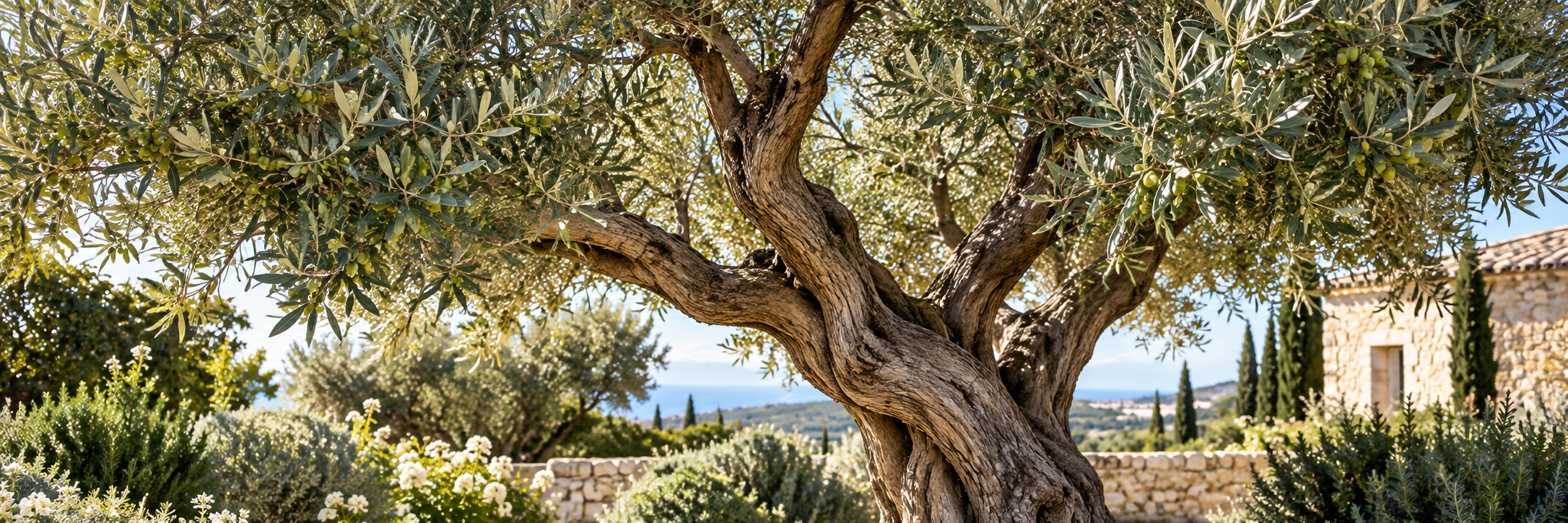
Use one or two small trees to give the garden height and a sense of permanence. Olive trees are the classic choice in warm climates. In colder areas, grow them in generous containers or choose a locally hardy tree with a similarly airy silhouette.
2. The Middle Layer
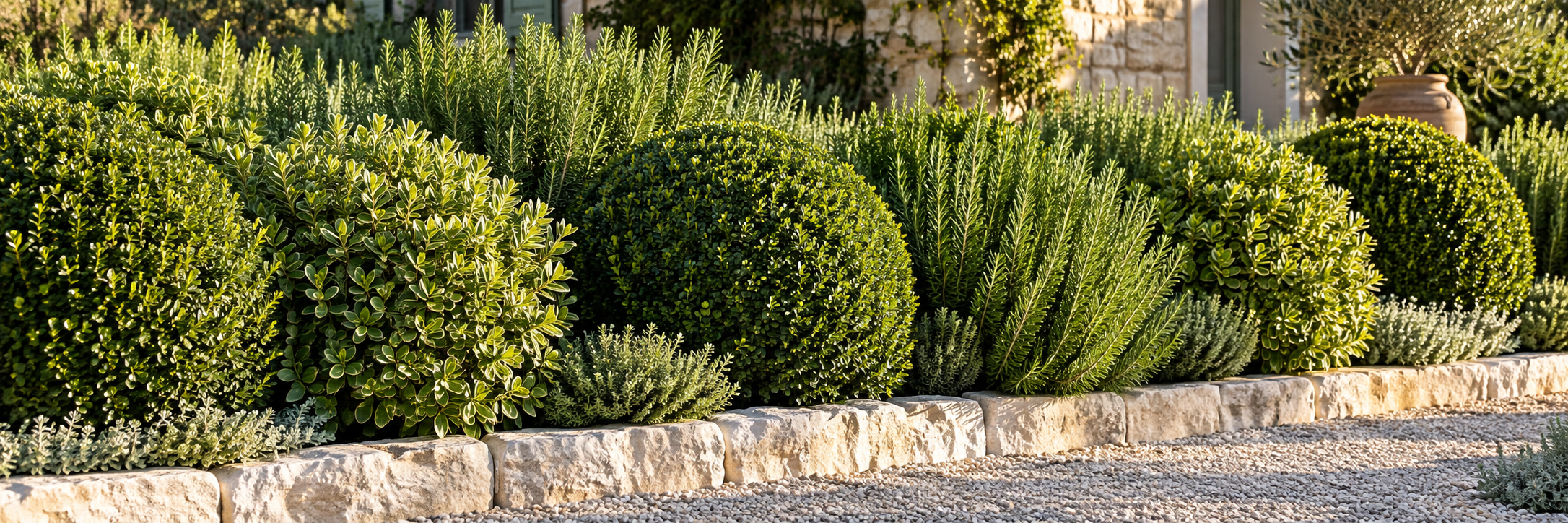
Evergreen shrubs form the backbone of the garden. Rosemary, compact pittosporum, clipped boxwood alternatives and naturally rounded shrubs provide order without making the garden feel formal. Repeat fewer varieties in several places to create rhythm.
3. The Lower Layer
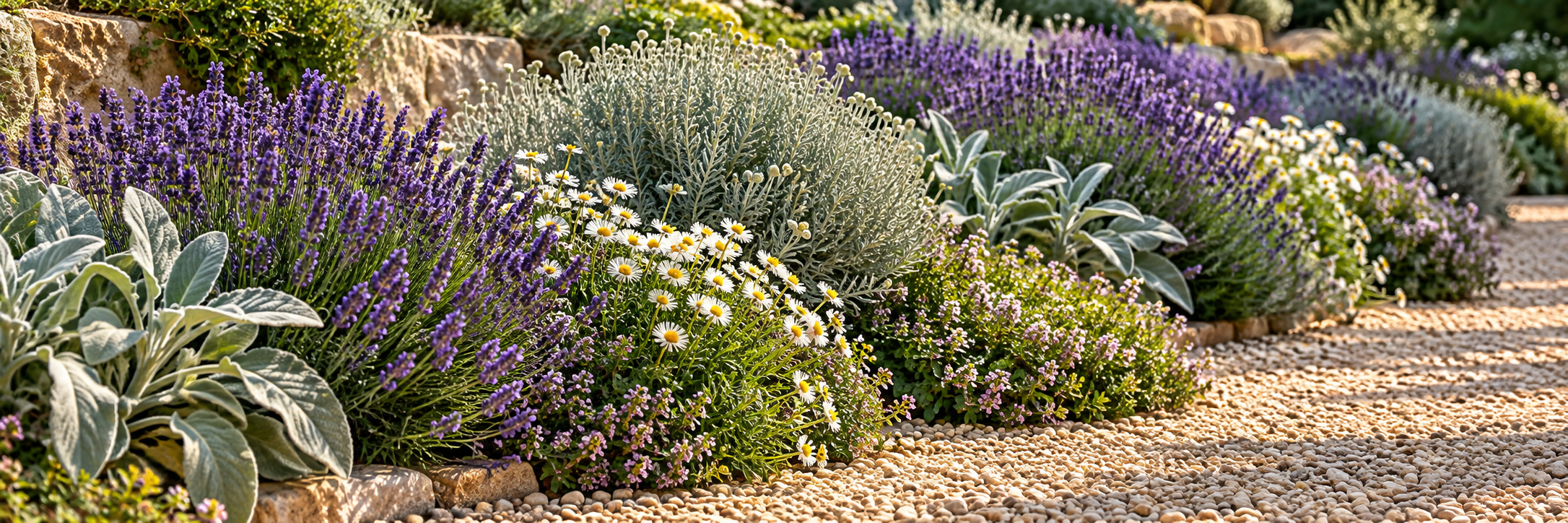
Lavender, erigeron, thyme, santolina and lamb’s ear can soften a path or settle between larger shrubs. Leave some gravel or soil visible between plants. Breathing room allows every variety to develop its natural form.
The garden feels generous not because it contains more, but because every element has room to be noticed.
The Essential Mediterranean Plant Palette
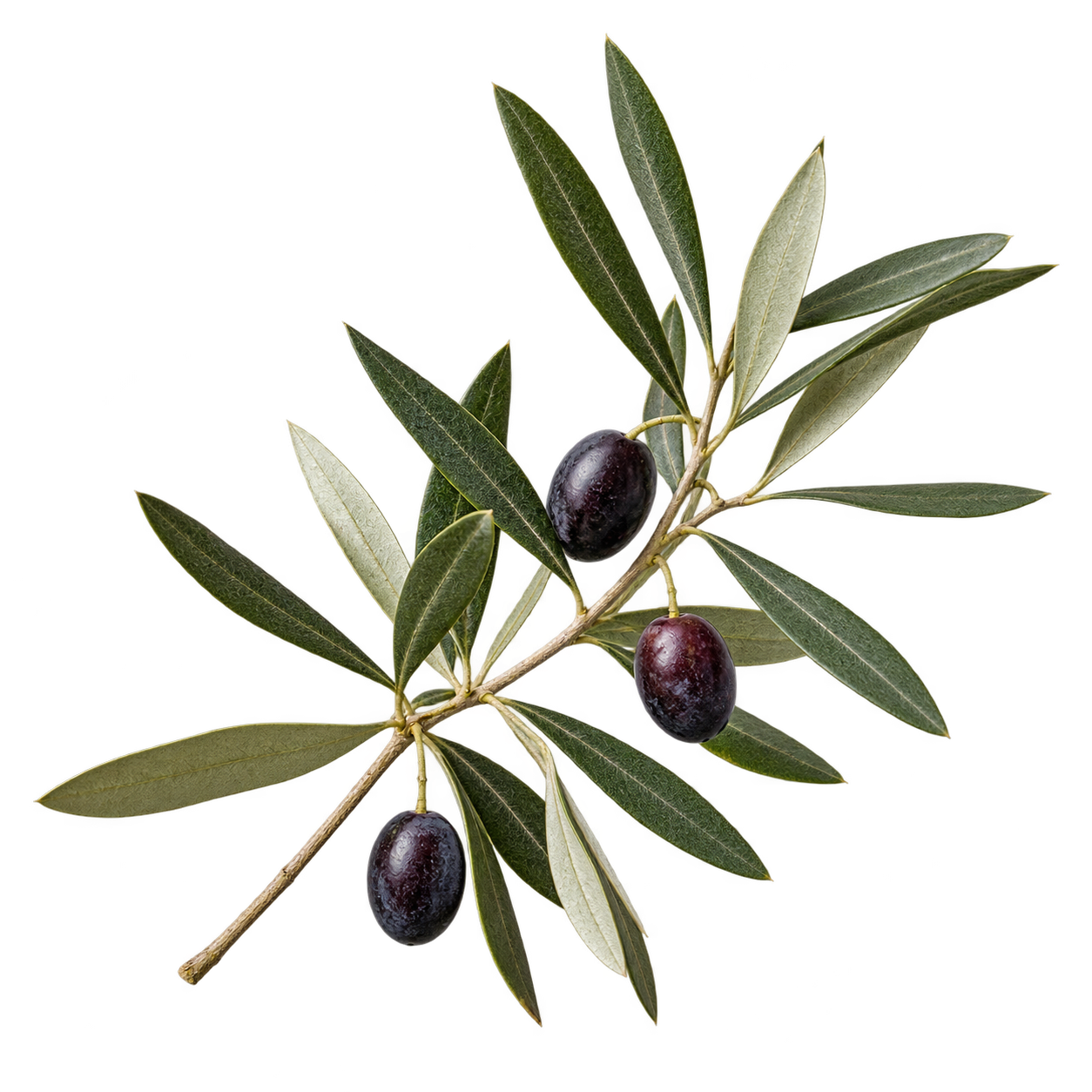
Olive
Sculptural form and silvery foliage. Use as a focal tree in warm gardens or grow in a generous container where protection is required.
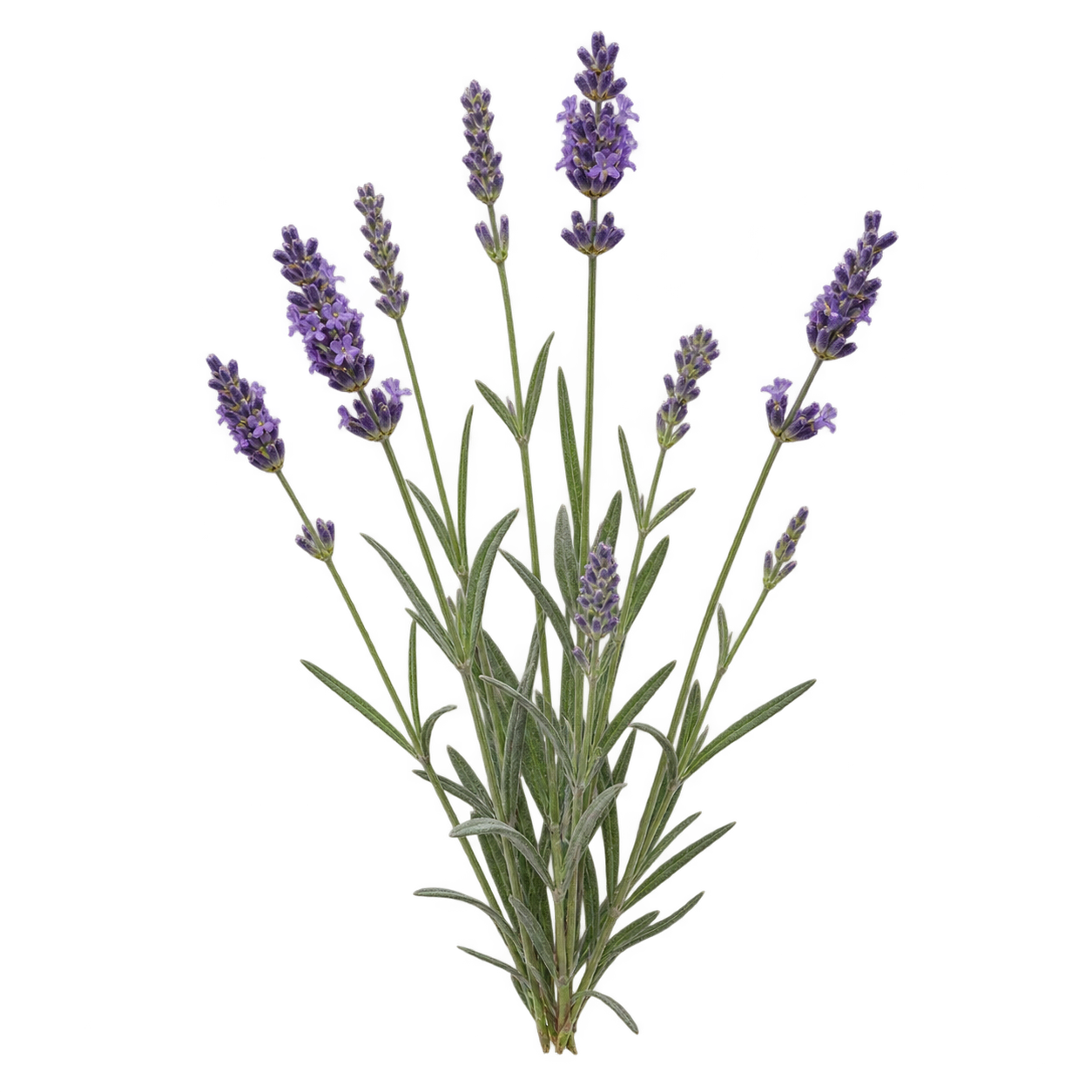
Lavender
Fragrance, soft colour and pollinator activity. Best in full sun with excellent drainage.

Rosemary
Evergreen structure and aromatic foliage for warm, sheltered positions.
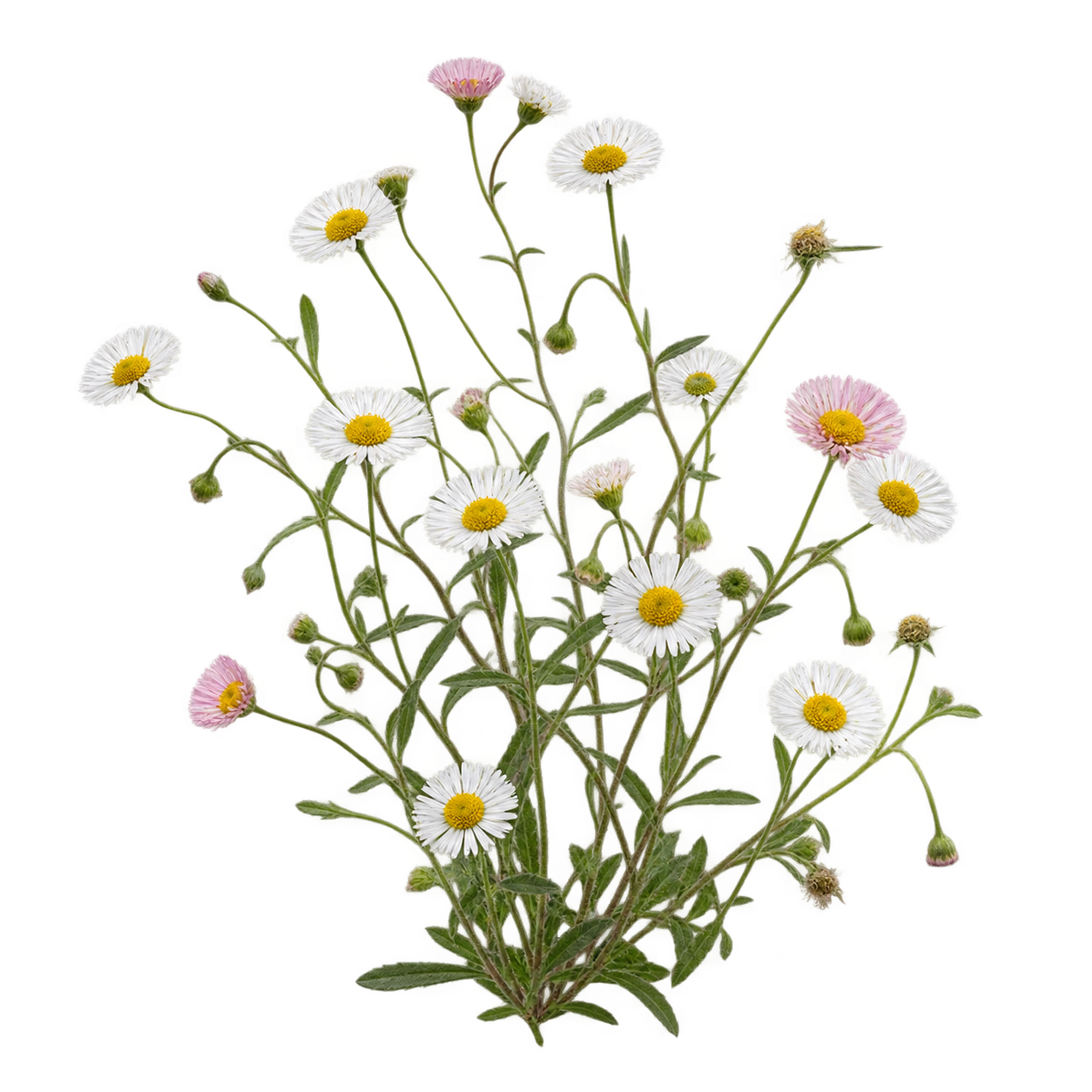
Erigeron
Tiny daisy-like flowers that soften steps, low walls and gravel edges.
Thyme
A fine-textured edging plant for sunny paths and terraces with free-draining soil.
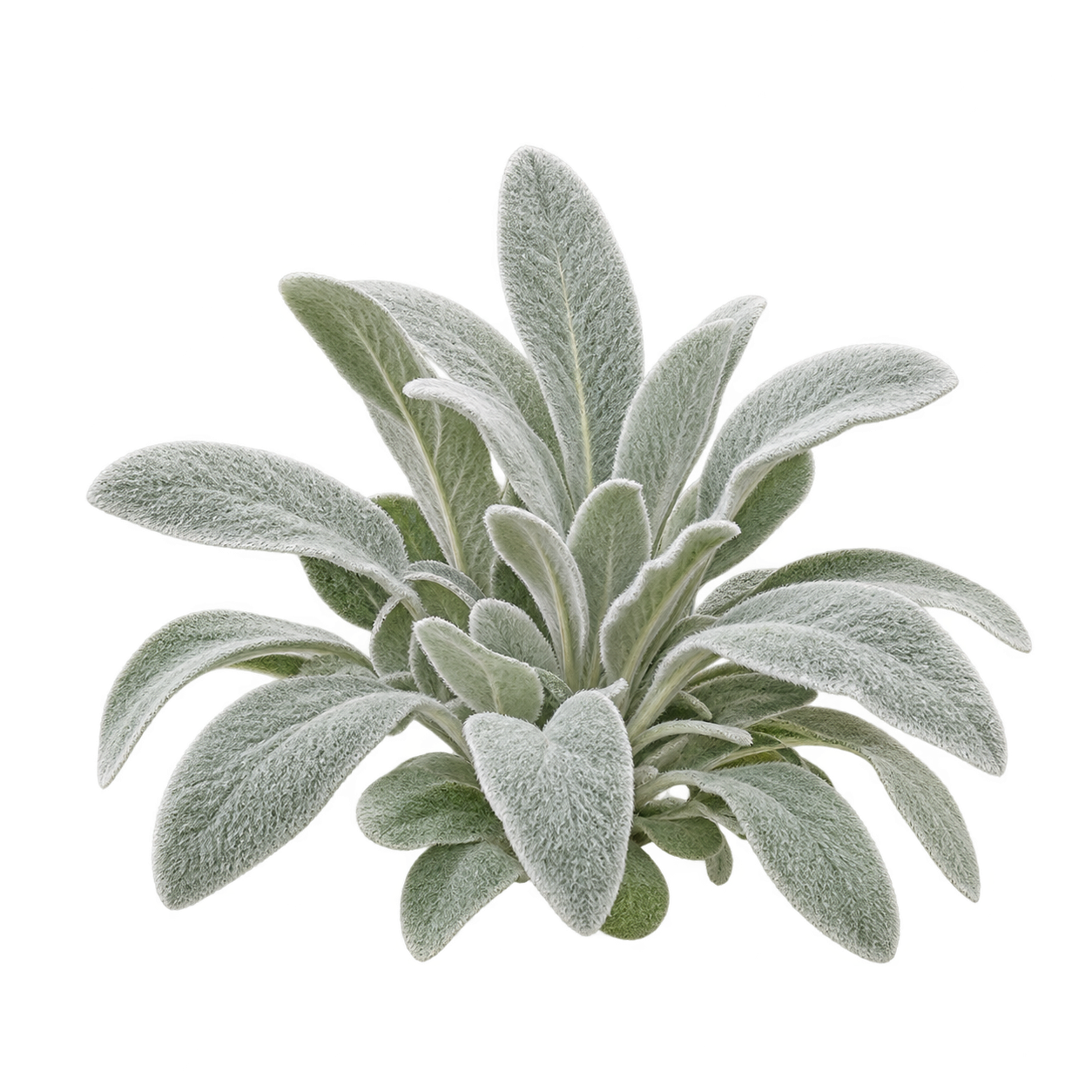
Lamb’s Ear
Soft silver foliage that brings light to the front of the border.
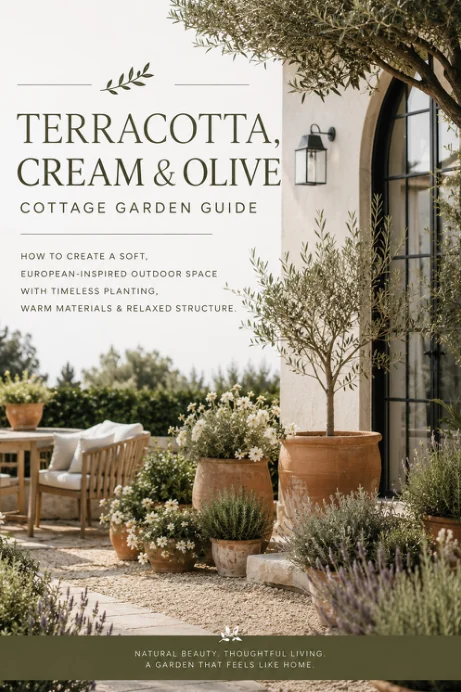
The Complete Garden Plan
Terracotta, Cream & Olive Cottage Garden Guide
Create this look with a coordinated planting plan, colour palette and practical garden guidance.
- Planting layouts and shopping list
- Seasonal flowering calendar
- Printer-friendly garden plan
- Plant substitutions and care notes
Let Gravel Create Breathing Room
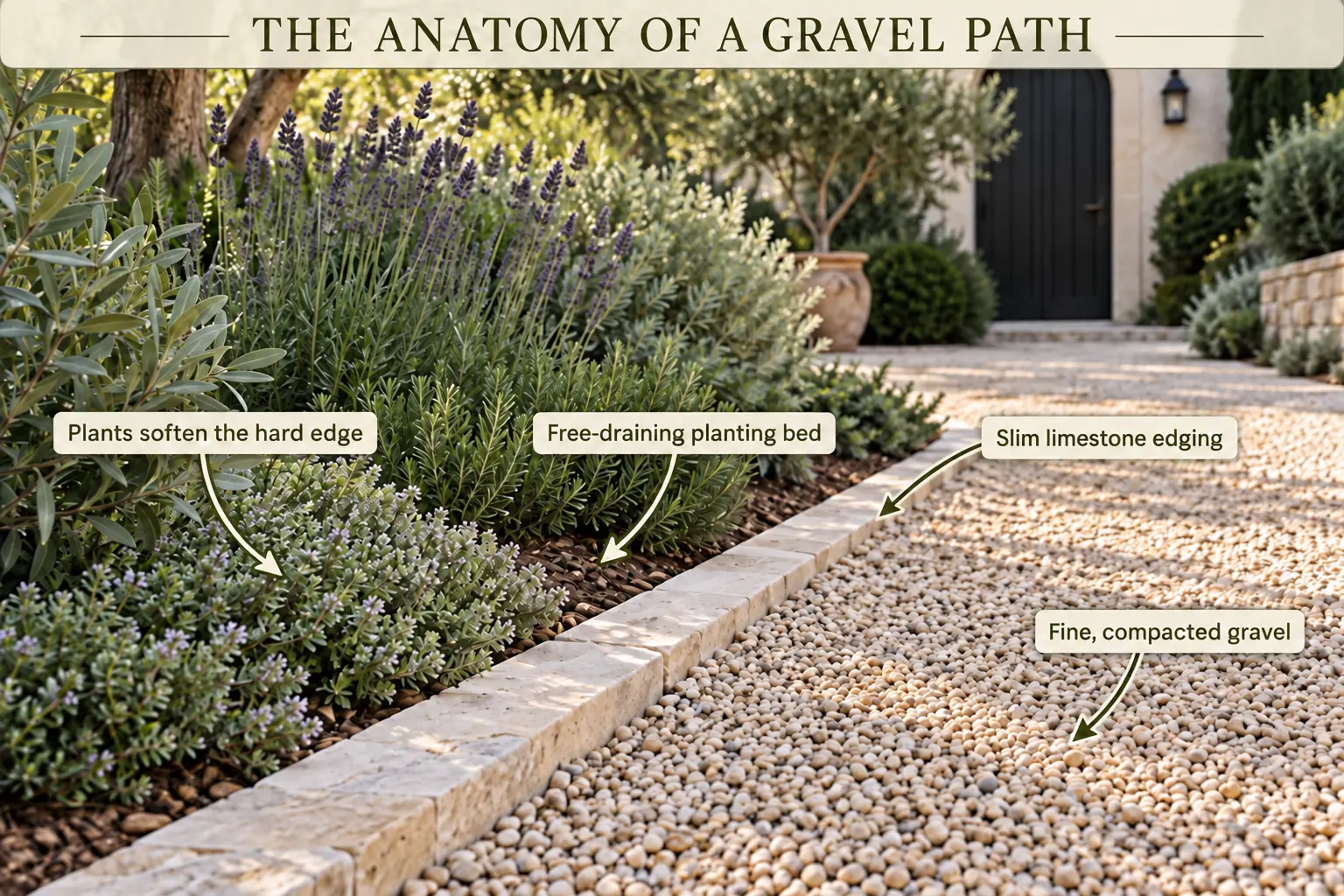
Gravel is more than a practical surface. Pale gravel reflects light, connects planting areas and creates a quiet background for olive foliage and terracotta. Choose a warm, natural-looking gravel that relates to the stone used elsewhere in the garden.
Use a stable, well-prepared base beneath frequently travelled paths and terraces. A slim stone edge keeps the surface tidy, while low plants soften the transition into the border.
Style Terracotta With Intention
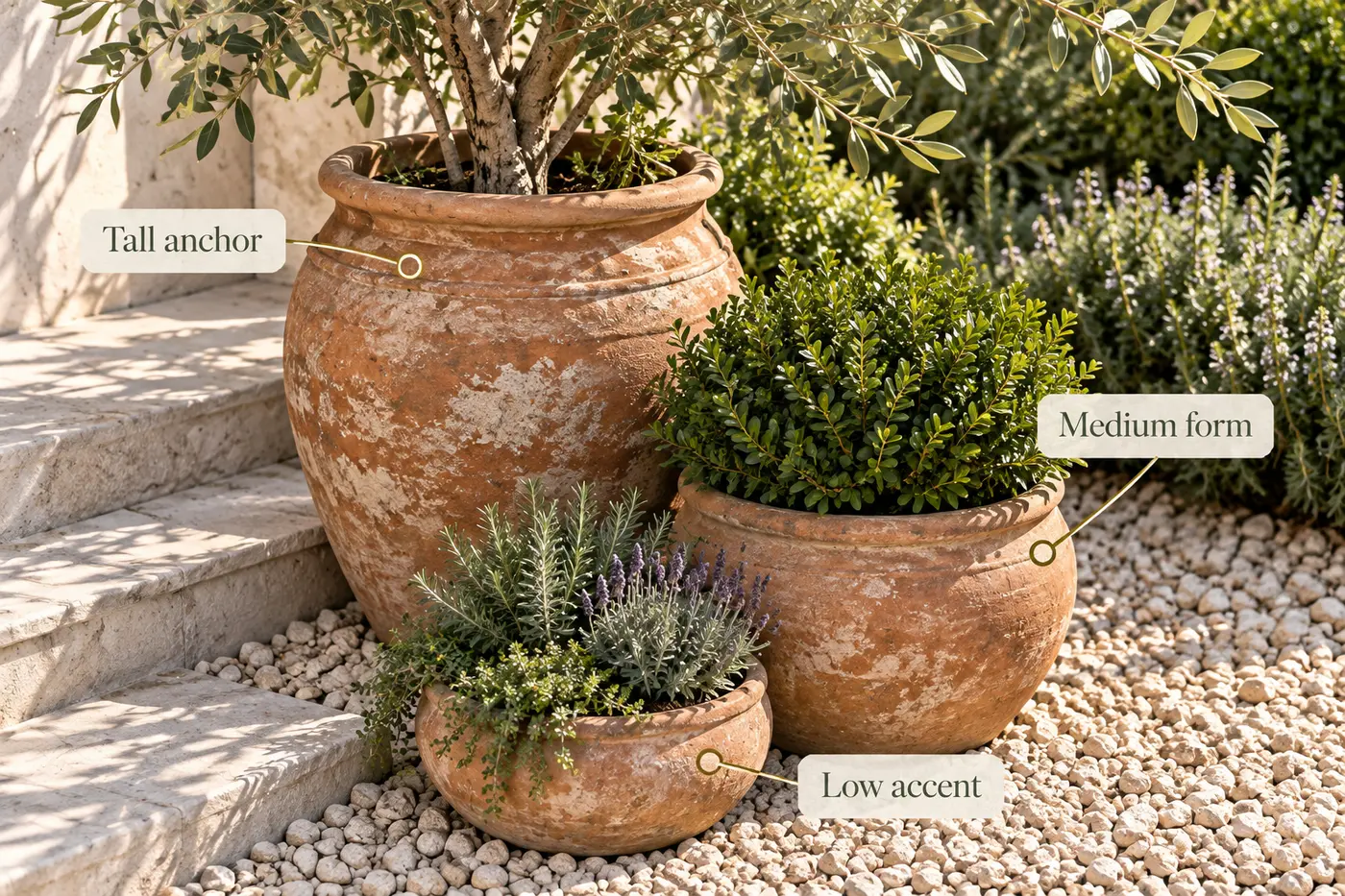
Terracotta brings warmth to the garden throughout the year. A few generous pots usually have more impact than many small containers. Grouping three simple forms at different heights creates an attractive composition beside a doorway or terrace.
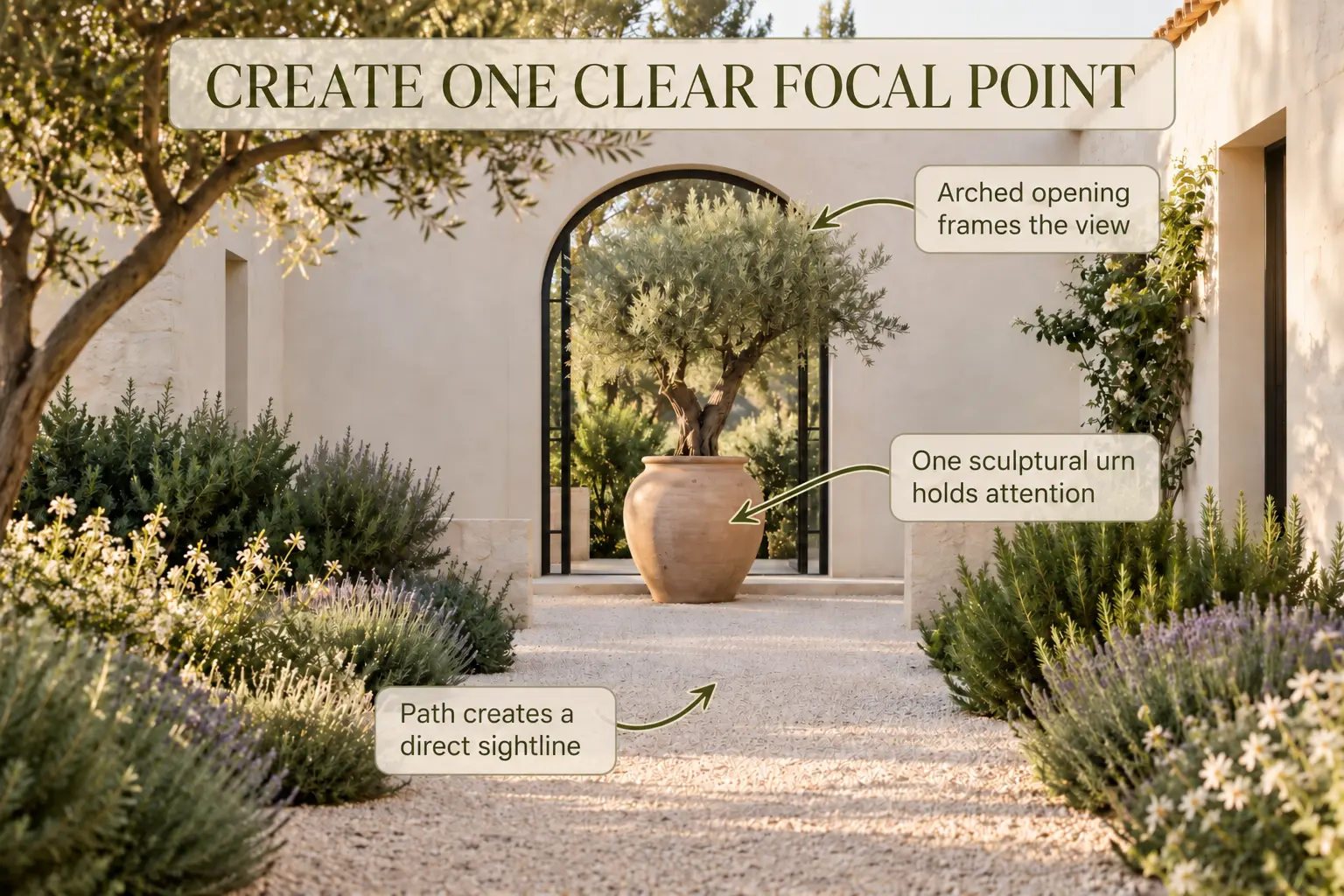
Create One Quiet Focal Point
Every garden benefits from a place where the eye can rest. This might be an olive tree in a large terracotta pot, a black arched doorway, a simple stone bench or a restrained water bowl.
Place the focal point where it can be appreciated from inside the house or at the end of a path. Allow open space around it so it does not disappear into the planting.
Add Comfort Without Adding Clutter
Mediterranean gardens are meant to be lived in. A pale wooden chair, a small table or a quiet seating area can turn a terrace into an inviting place to begin the morning or enjoy the evening light.
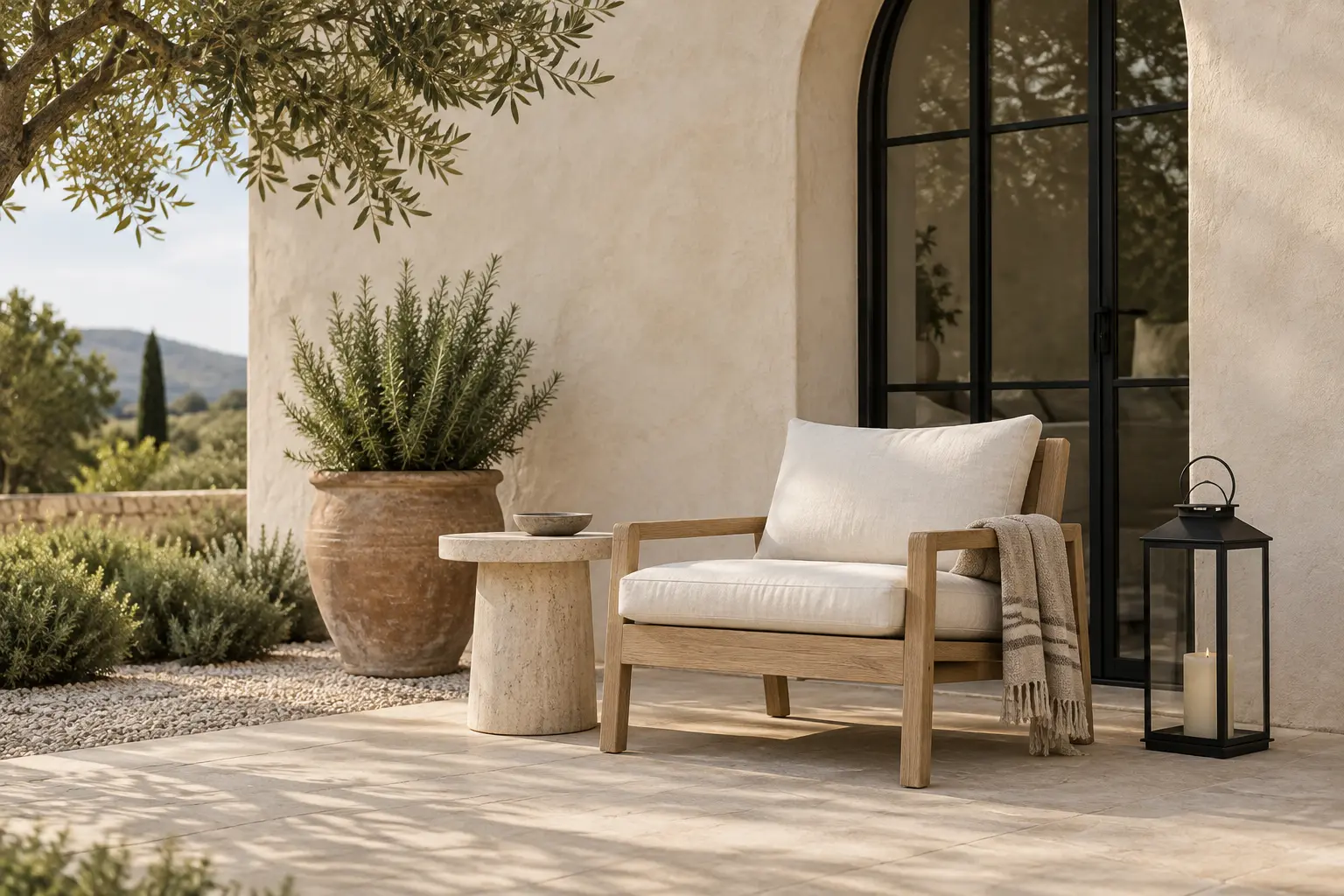
Keep outdoor furniture understated. Natural timber, woven fibres and washable cream textiles work beautifully with limestone and terracotta. Choose a few useful pieces and leave some space around them.
Adapt the Look to Your Climate
The Mediterranean aesthetic can be recreated in many regions, but the planting should always respond to local conditions. Consider the garden’s sunlight, winter moisture, lowest temperatures and the amount of supplemental watering you can realistically provide.
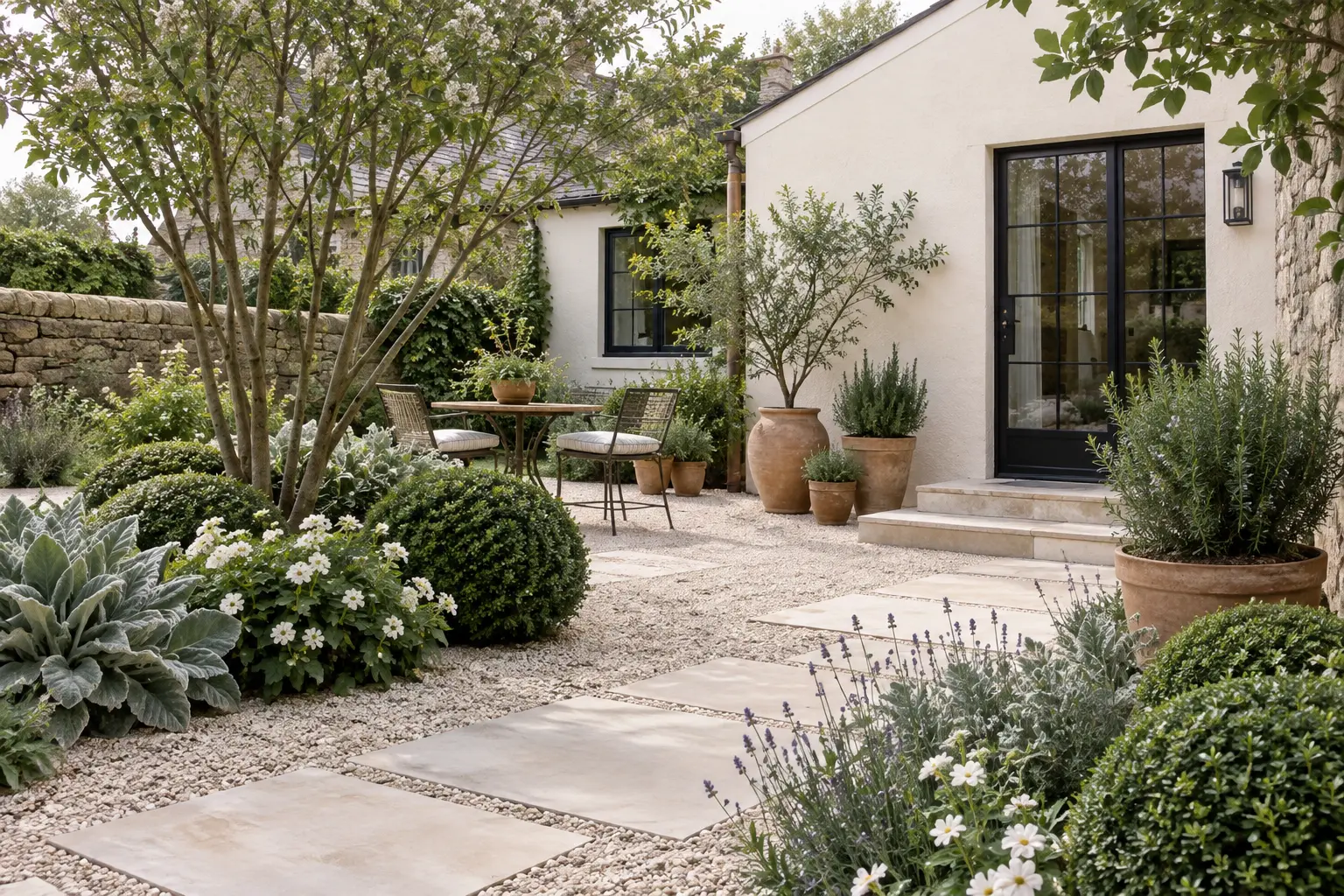
In cooler or wetter climates, focus on the visual qualities of Mediterranean planting rather than insisting on plants that will struggle. Look for locally hardy choices with silvery foliage, aromatic leaves, soft forms or naturally rounded structure.
Allow the Garden to Develop Naturally
A Mediterranean cottage garden should feel as though it has settled gently into its surroundings. Terracotta develops patina, plants soften the edges of paths and trees gradually create the filtered shade that makes these gardens inviting.
Avoid overplanting in an attempt to create an instantly mature effect. Give shrubs and perennials enough room to reach their natural size. Use gravel, stone and containers to provide interest while the planting develops.
Bring the Complete Garden Together
If you would like a ready-made plan for creating this look, the Terracotta, Cream & Olive Cottage Garden Guide brings the complete palette together in one beautifully designed resource. It includes garden inspiration, planting layouts, a seasonal flowering calendar, a shopping list, plant reference pages, a printer-friendly plan and ideas for adapting the design to your own space.
Your Complimentary Garden Guide
The Mediterranean Cottage Garden Starter Guide
Continue your planning with a simple five-step guide for creating a warm, relaxed Mediterranean garden.
Receive the guide immediately, plus occasional garden notes. Unsubscribe anytime.
FROM THE JOURNAL
Recent Reads
October 7, 2026
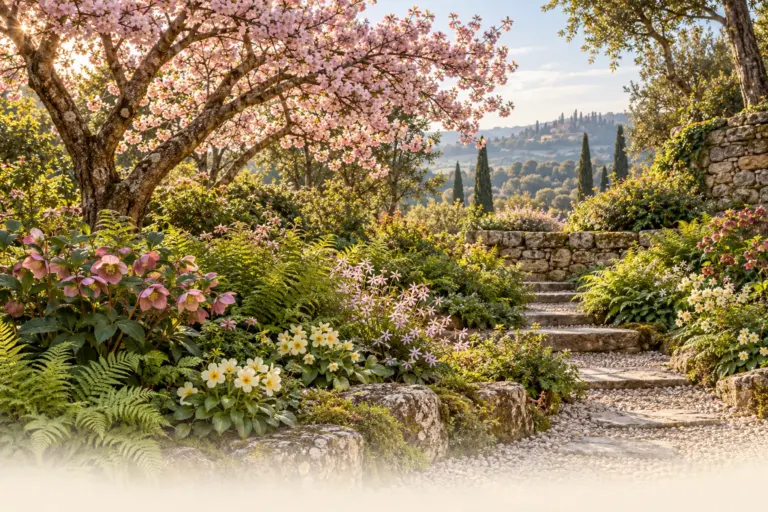
How to Choose a Garden Colour Palette: 7 Beautiful Plant Combinations
October 6, 2026
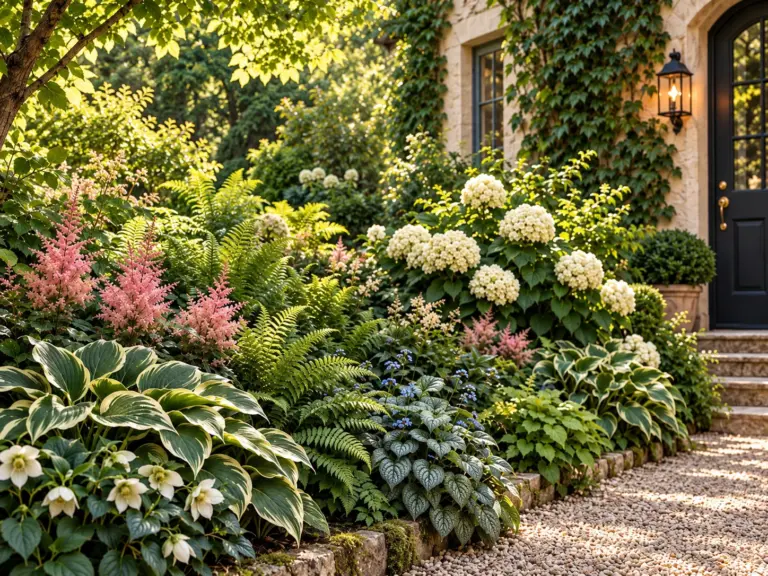
How to Design a Beautiful Shade Garden: A Simple Layering Formula
September 17, 2026
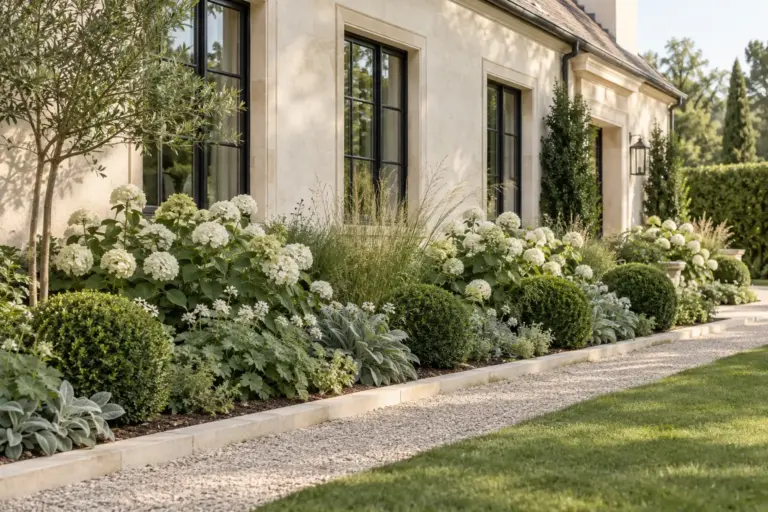
How to Design a White Hydrangea Border
September 16, 2026
5 Beautiful Ways to Edge a Garden Border
September 12, 2026
How to Choose the Right Hydrangea for Your Garden
September 10, 2026