
5 Timeless Plants for a European-Inspired Garden

Garden Design
5 Timeless Plants for a European-Inspired Garden
How to use structure, volume, fragrance, romance and movement to create a garden that feels beautifully considered
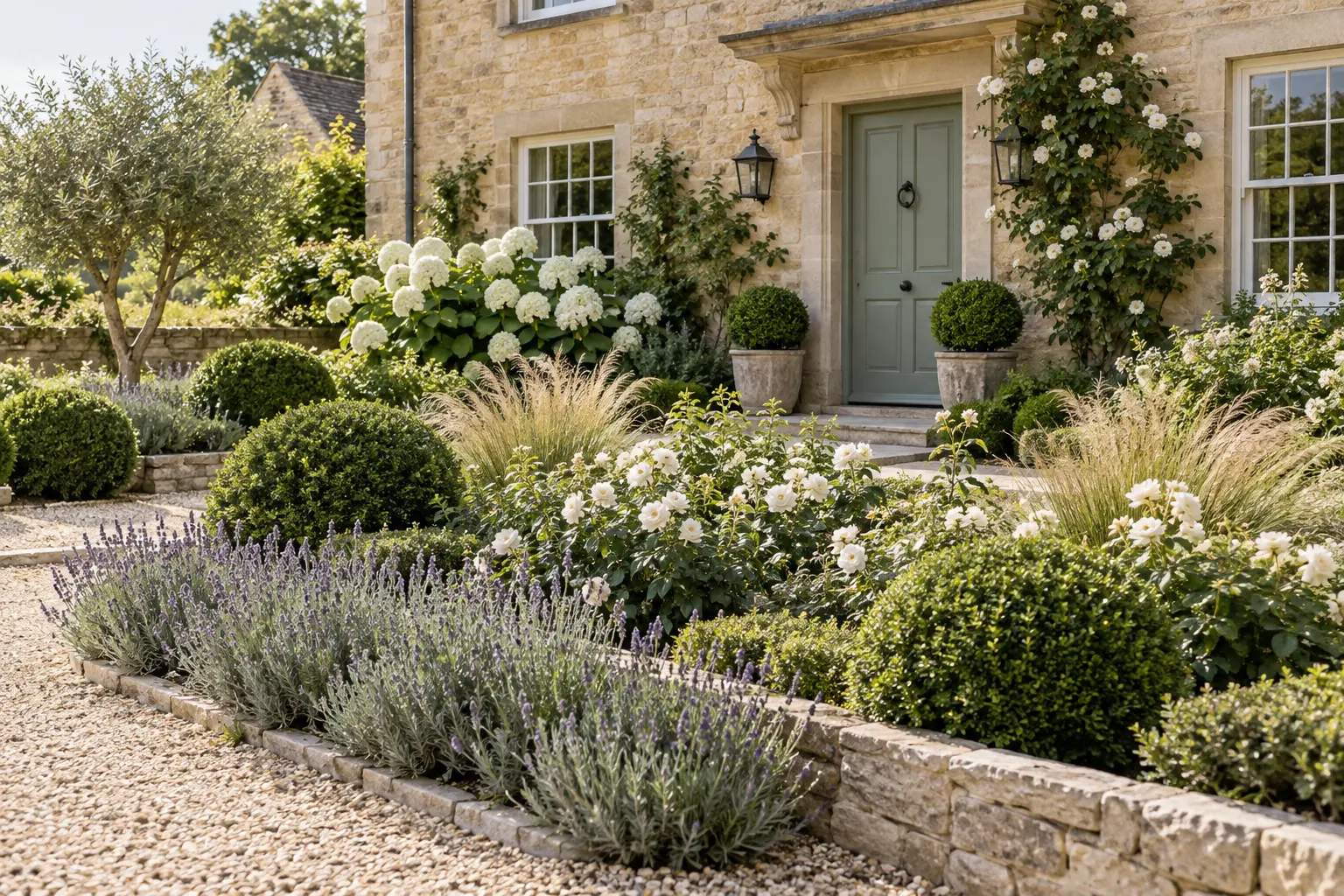
The most memorable European gardens rarely depend on an enormous plant list. Instead, they combine a few carefully chosen plants that each contribute something distinct: structure, volume, fragrance, romance or movement.
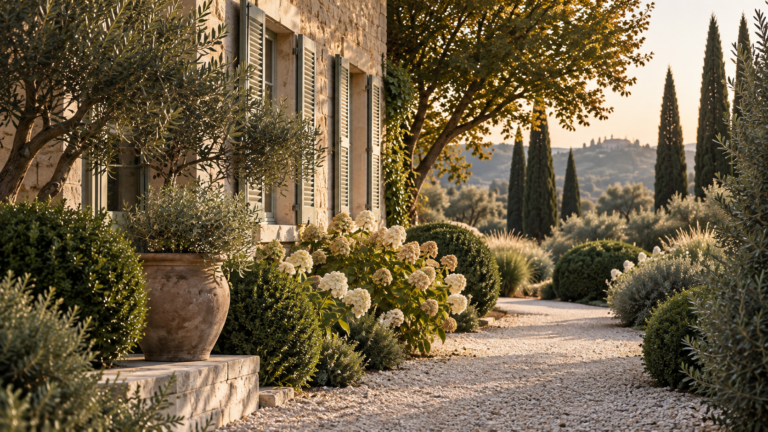
Hydrangeas, lavender, clipped evergreens, white roses and ornamental grasses can create that balance beautifully. They do not all require identical conditions, but when placed thoughtfully throughout a garden, they produce a landscape that feels layered, established and quietly elegant.
The goal is not to fit all five into a single border. It is to understand the design role each plant performs, then choose a suitable plant and location for the light, soil, moisture and climate you actually have.
A Complimentary Garden Planning Resource
Continue reading to receive your complimentary copy of The Elegant Garden Starter Guide, created to help you begin planning a balanced, beautifully considered garden.
Before You Plant
Compare the Growing Conditions
These plants can belong to one cohesive garden while occupying very different parts of the property.
Hydrangea
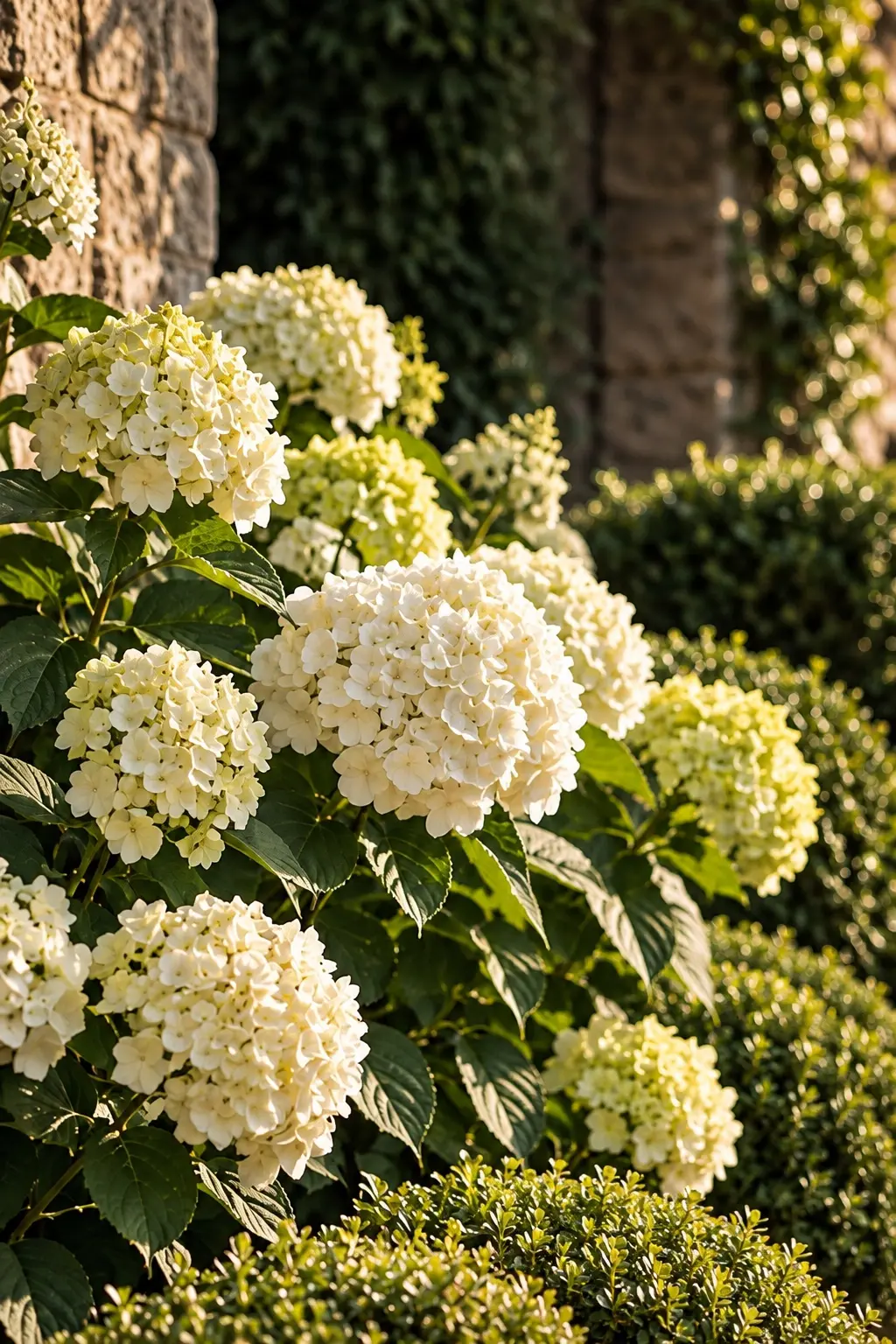
Design role: Volume and softness
Best light: Part shade to sun, depending on the species and climate
Moisture: Consistently moist but well-drained soil
Lavender
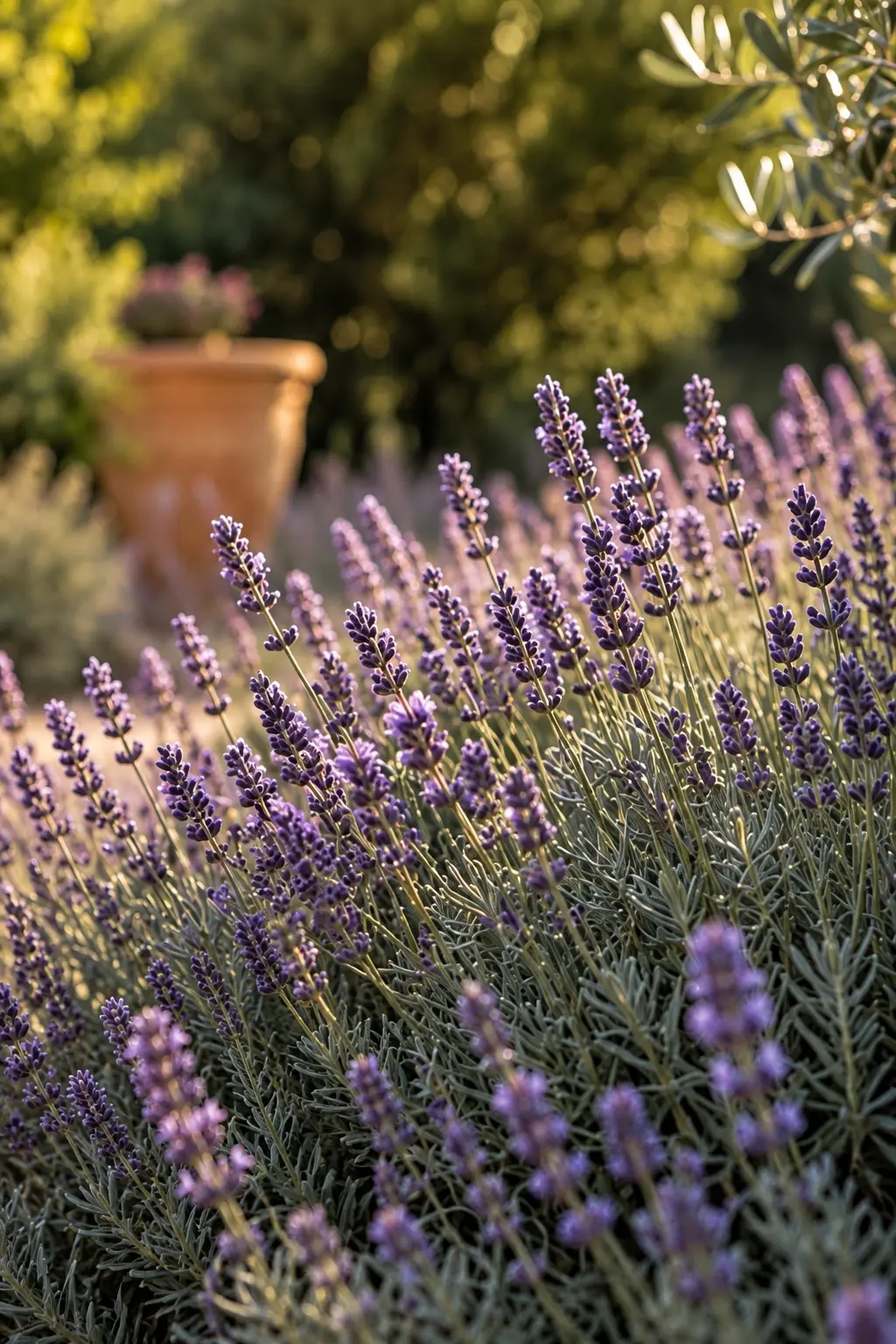
Design role: Fragrance and Mediterranean character
Best light: Full sun
Moisture: Dry, sharply drained soil
Boxwood or Alternative Evergreen
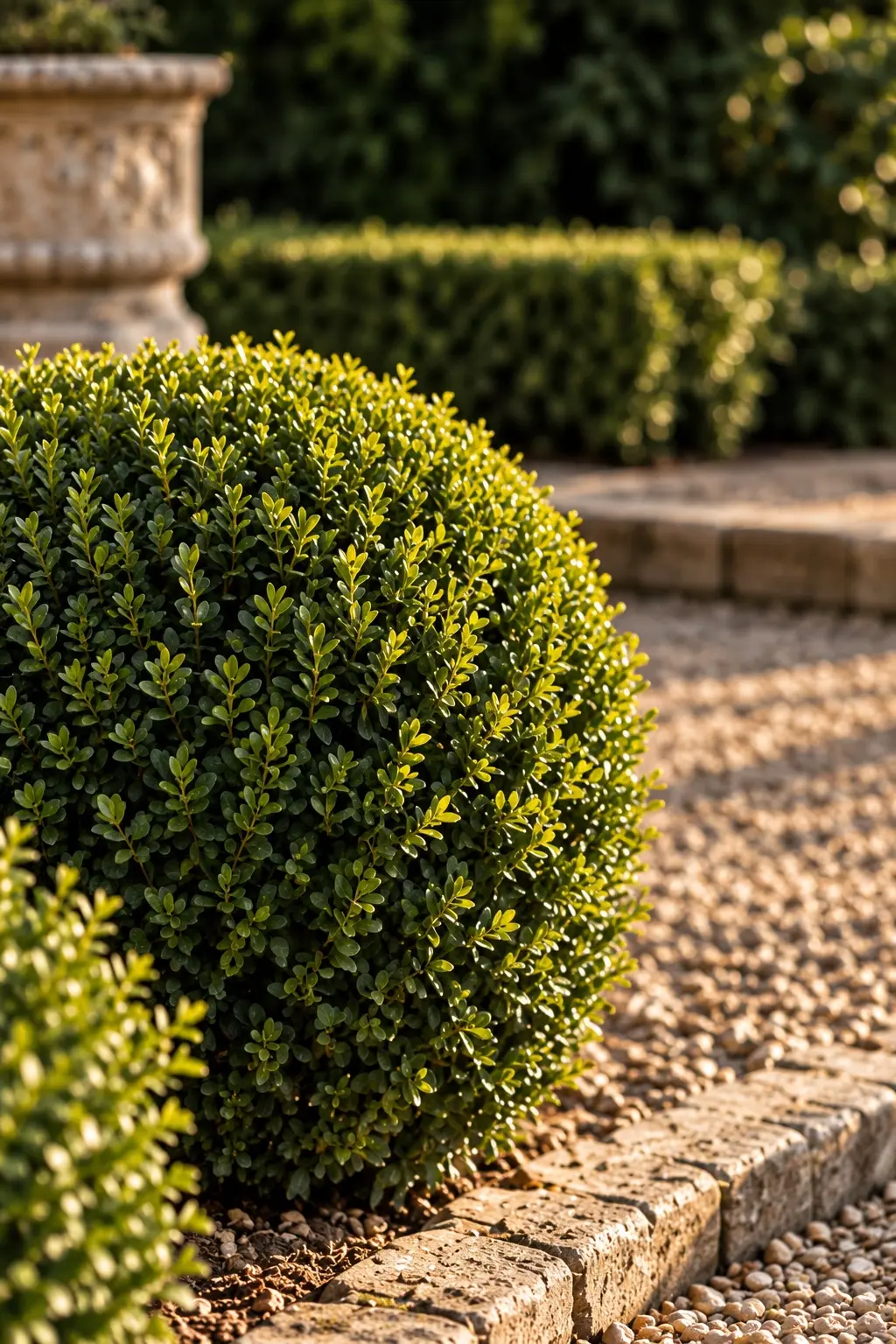
Design role: Year-round structure
Best light: Sun to part shade
Moisture: Moderate, well-drained soil
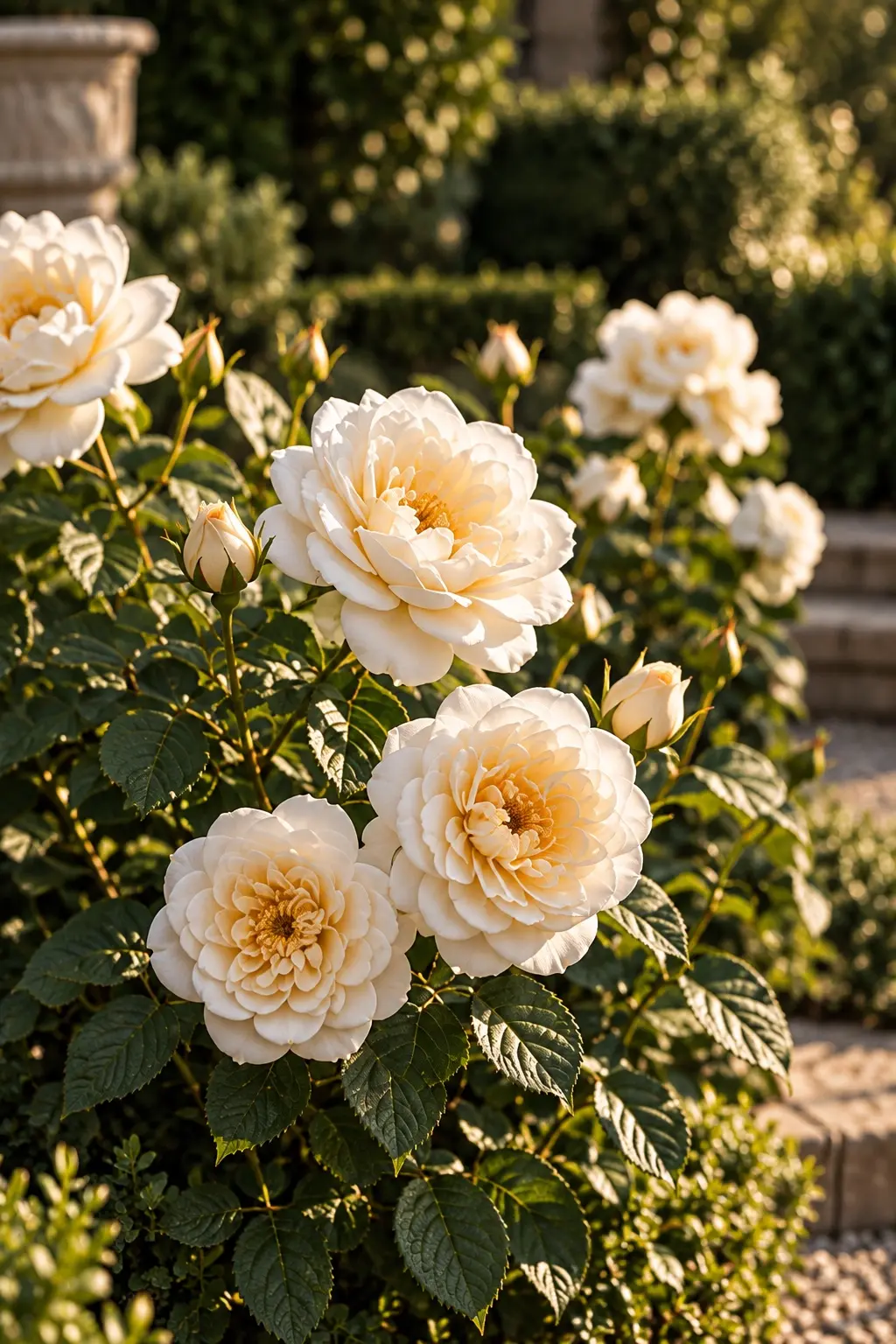
White Shrub Rose
Design role: Romance and seasonal flowers
Best light: Full sun
Moisture: Moderate, well-drained soil
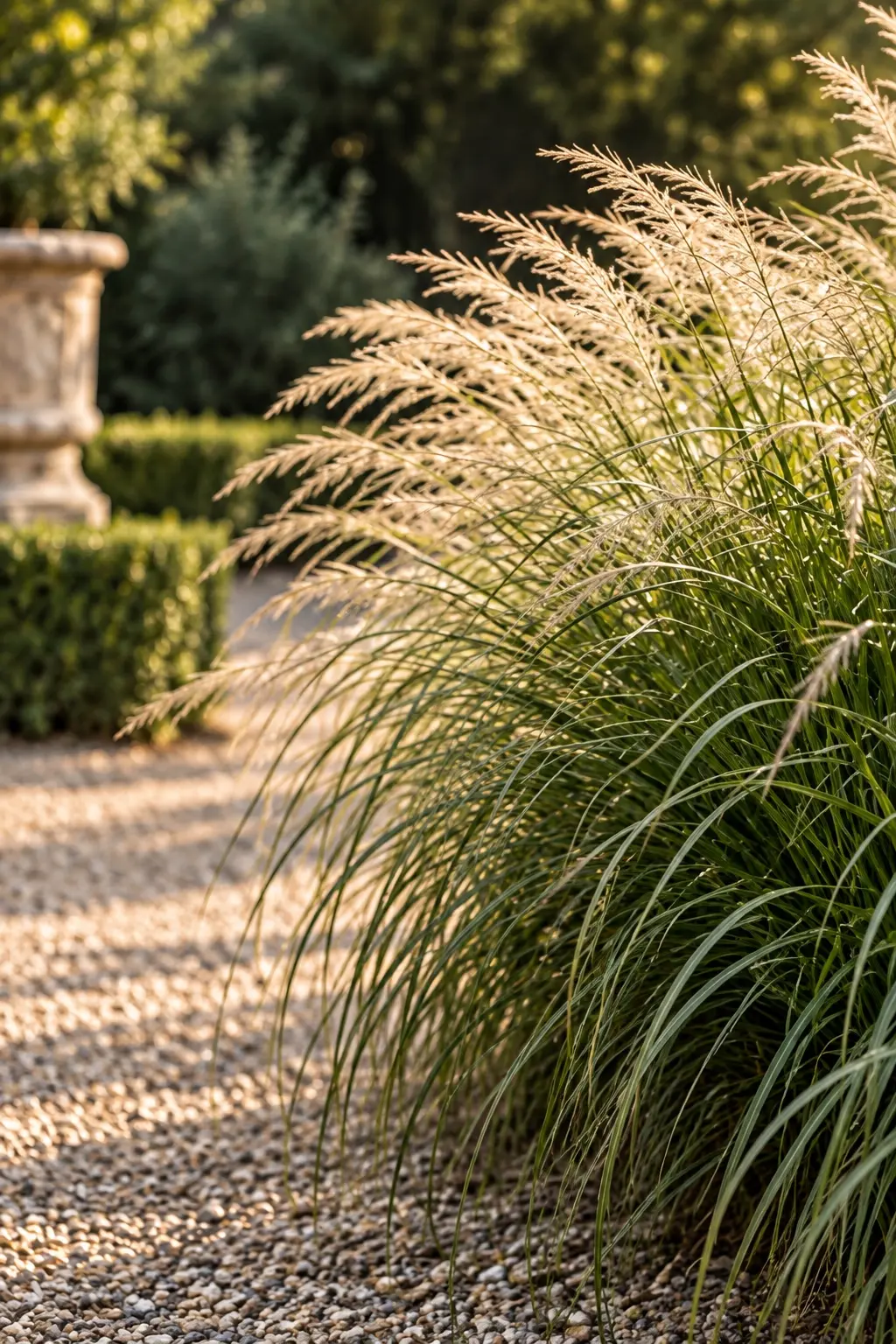
Ornamental Grass
Design role: Movement and seasonal texture
Best light: Usually full sun, although this varies by variety
Moisture: Varies by variety
Growing requirements vary by species, cultivar, climate and local conditions. Confirm the needs and mature size of each selection before planting.
Design Role One · Volume and Softness
Hydrangeas
Hydrangeas give a border visual generosity. Their broad foliage and rounded or conical flower heads create volume quickly, while their soft outlines temper the harder lines of foundations, stone walls, steps and entrances. A well-positioned shrub can make a young garden feel more established without requiring a crowded planting scheme.
The right species depends on the site. Smooth hydrangeas, Hydrangea arborescens, are often useful in part-shade locations, particularly where they receive morning light and protection from intense afternoon heat. Panicle hydrangeas, Hydrangea paniculata, generally tolerate more sun and can suit brighter borders when adequate moisture is available. In hot climates, even sun-tolerant hydrangeas may benefit from afternoon protection.
Always design with mature width in mind. Compact cultivars can sit comfortably near a foundation or along a modest walkway. Larger cultivars need the depth of a corner, background layer or broader bed where their branching structure can develop naturally. Planting several shrubs too closely may look full at first, but it often creates congestion, poor air movement and difficult maintenance later.
Placement idea: Use one hydrangea variety repeatedly to soften a long foundation, or allow a larger specimen to anchor the corner where the house meets the garden.
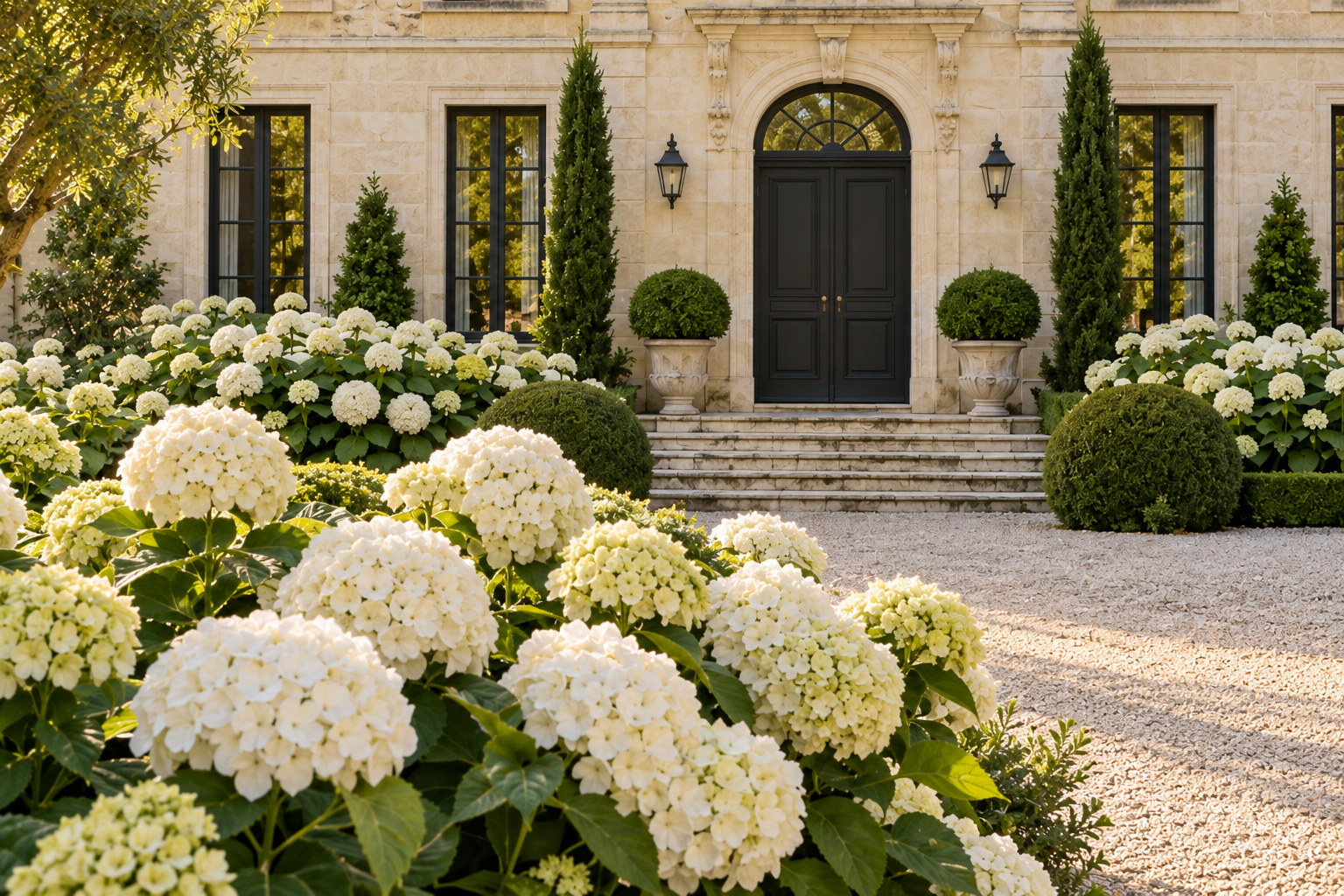
Choose the species and mature scale before deciding where the hydrangea belongs.
For a closer comparison of species, flower forms and site requirements, read How to Choose the Right Hydrangea for Your Garden.
Design Role Two · Fragrance and Character
Lavender
Lavender contributes fragrance, restrained violet colour and an unmistakable Mediterranean note. Its silver foliage also remains useful outside the main flowering season, especially when repeated beside pale gravel, warm limestone or terracotta.
Successful lavender begins with the site. It needs full sun, excellent drainage and enough air circulation for the foliage and crown to dry readily. Use it in the sunniest and driest portion of the property, such as a gravel-edge border, raised bed, south-facing terrace or freely draining slope. Avoid improving the soil with moisture-retentive organic matter immediately around the crown.
Lavender should not automatically be planted beside moisture-loving hydrangeas. A garden may use hydrangeas in a cooler, consistently moist area and repeat lavender near a bright entrance or sunny path. The palette remains connected through colour and materials even when the plants occupy separate beds.
Cold winters, high humidity and heavy soil can shorten lavender’s life. Choose a species and cultivar proven for local conditions, provide sharp drainage, or use a different silver-leaved plant whose requirements better match the site. The substitute should repeat the colour and texture rather than imitate lavender exactly.
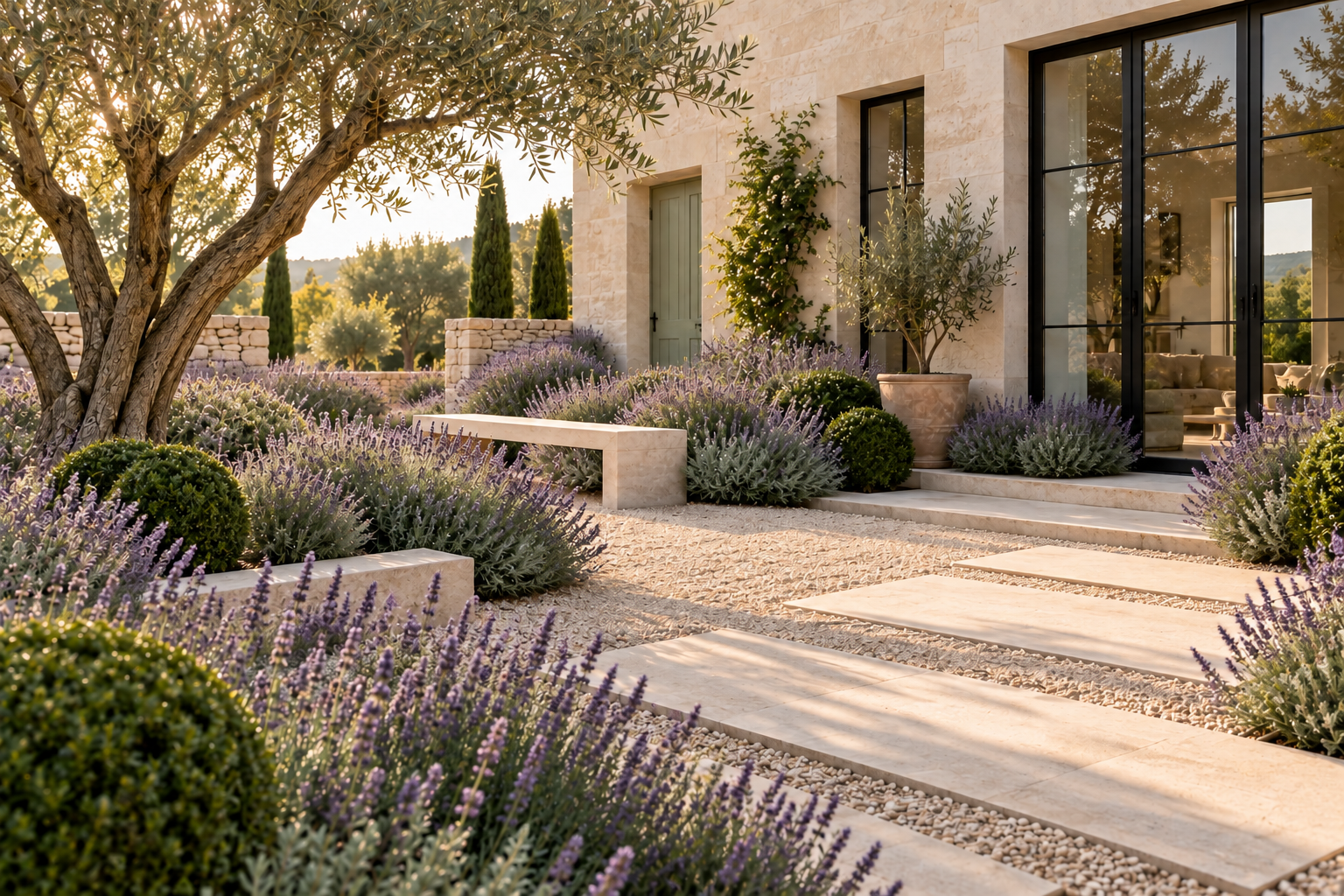
A restrained ribbon creates more rhythm than filling every open space with lavender.
For more ideas about combining sun-loving plants with gravel, terracotta and evergreen structure, see How to Design a Mediterranean Front Entrance.
Design Role Three · Evergreen Structure
Boxwood and Thoughtful Alternatives
Clipped evergreens provide the quiet framework that allows looser flowers to feel intentional. Used as a low hedge, a repeated series of rounded forms, a pair of entrance accents or a winter anchor, they establish rhythm and carry the composition after deciduous plants lose their leaves.
Restraint matters. A few repeated shapes usually feel more convincing than a collection of unrelated topiary forms. Allow each plant enough space to reach its intended size without constant correction, and keep the scale appropriate to the house, path and bed depth.
Boxwood is not the automatic answer for every property. Boxwood blight, other health issues and box tree moth pressure vary by region. Local guidance should inform both plant selection and management. Depending on the site and climate, yew, inkberry holly or Japanese holly may provide a similar evergreen role, although their growth habits, moisture preferences, hardiness and eventual sizes are not identical.
Choose the plant for the conditions first, then decide whether it should remain naturally mounded, be lightly shaped or form a formal edge. Good structure should simplify the garden rather than create a demanding maintenance regime.
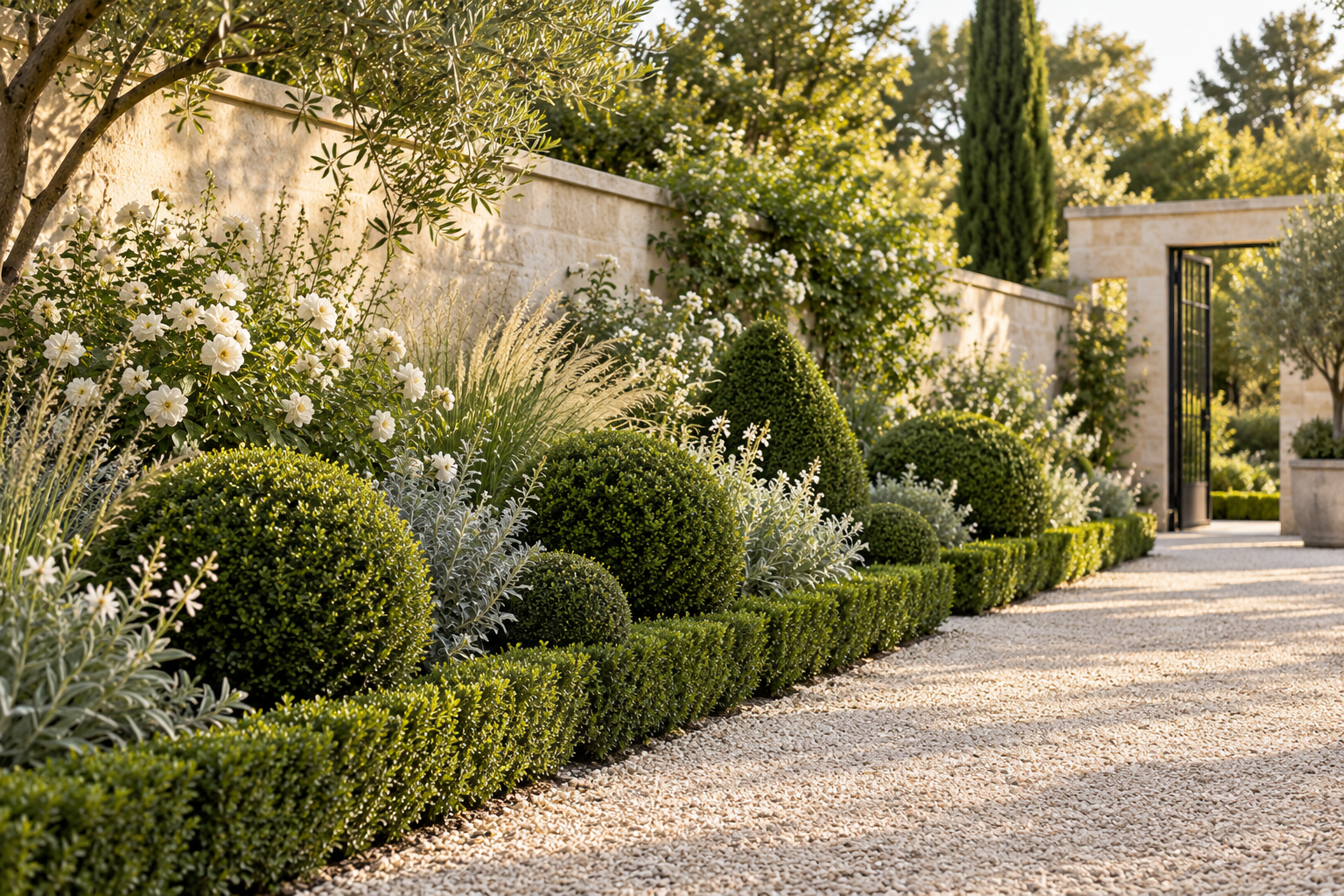
Repeated evergreen forms establish order without requiring rigid symmetry.
Design Role Four · Romance
White Shrub Roses
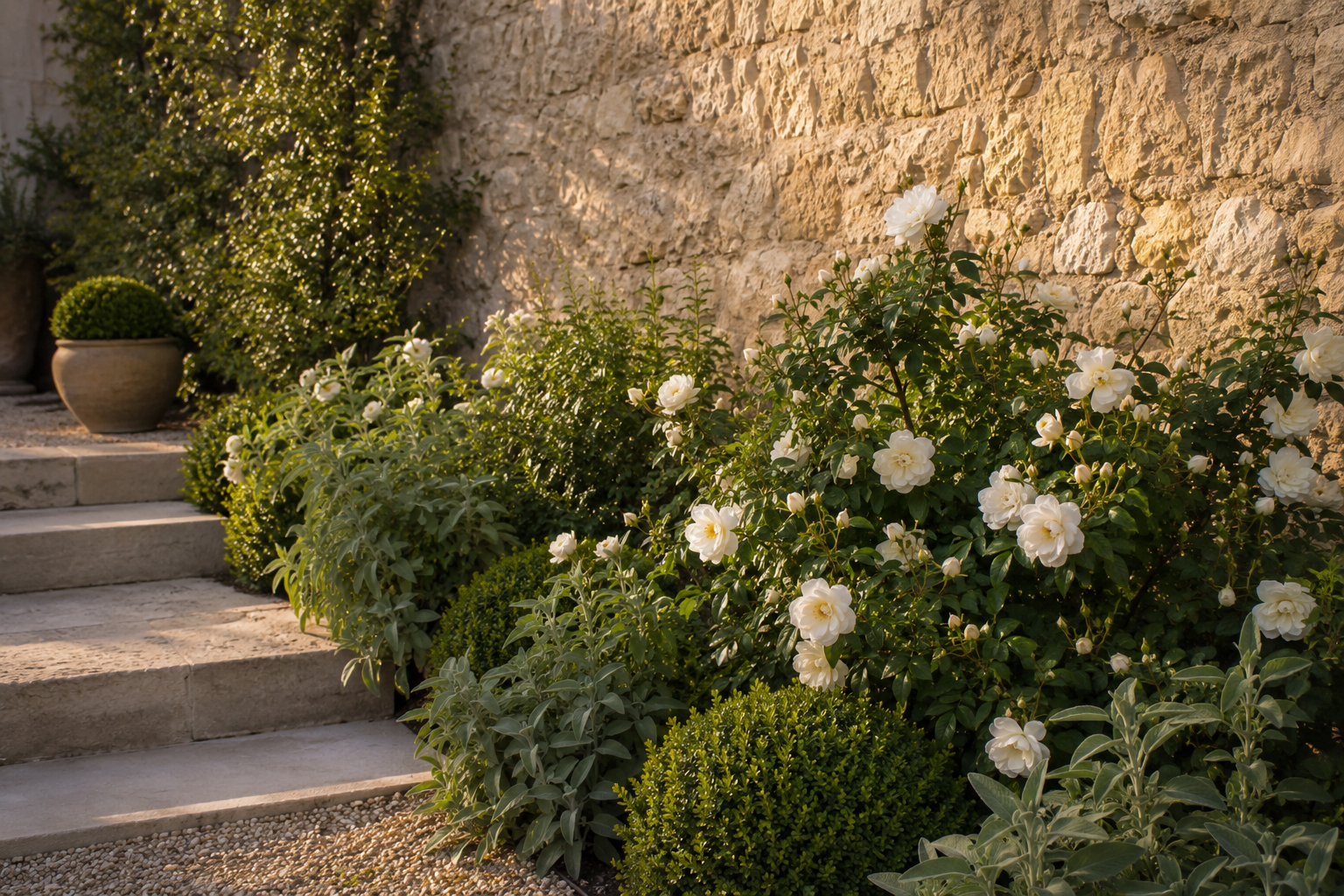
A repeat-flowering white shrub rose introduces romance while keeping the colour palette calm. Its branching habit and naturally varied flowers soften clipped evergreens, stone edges and architectural lines without making the garden feel overly colourful.
Most roses flower best with approximately six or more hours of direct sunlight. They also benefit from good air circulation, well-drained soil and enough room for foliage to dry after rain. Select disease-resistant cultivars with proven performance in your region rather than choosing by flower alone.
Repeating one carefully chosen variety often creates a more cohesive result than mixing many unrelated roses. It also simplifies decisions about mature size, pruning and care. Allow the shrub to show its natural branching form, and place it where neighboring plants will not press tightly against the foliage.
Placement idea: Repeat the same white shrub rose at two or three points through a sunny border, then use evergreen forms between them to hold the rhythm through winter.
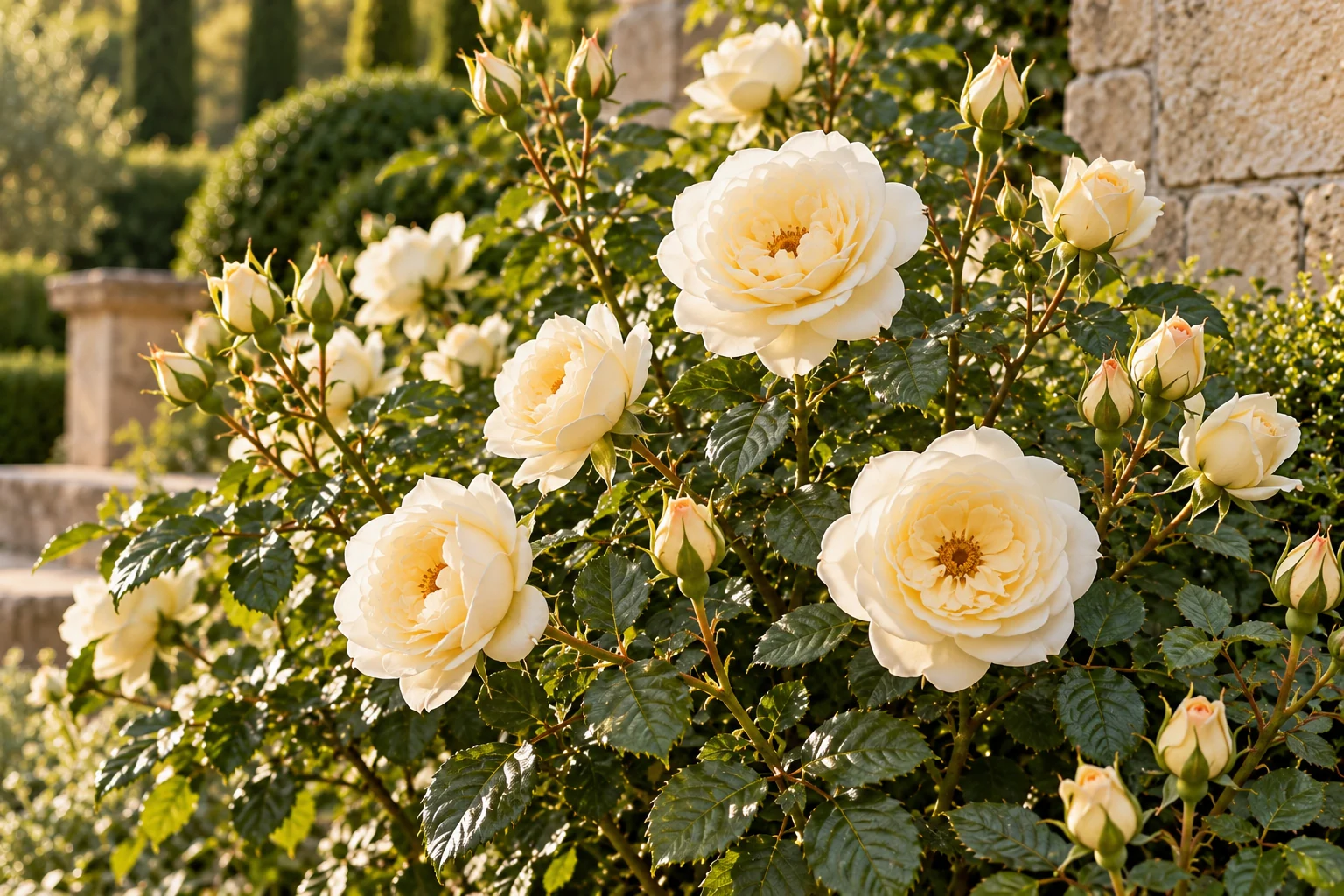
Healthy foliage and a well-matched growth habit are as important as flower colour.
Design Role Five · Movement and Texture
Ornamental Grasses
Ornamental grasses loosen the composition. Their fine leaves and seed heads move in the wind, catch low light and provide seasonal texture after many flowering plants have faded. Repeating small groups creates rhythm and prevents a border from feeling static.
The selected grass must match the available light, soil moisture and space. Calamagrostis × acutiflora ‘Karl Foerster’ forms a narrow, upright clump and flowers best in sun, although it can tolerate some light shade. It generally performs in moist but well-drained soil and should be given enough room for its mature clump.
Deschampsia cespitosa brings a finer, airier effect and often suits cooler gardens with sun to part shade and evenly moist soil. It is less comfortable in persistently hot, dry conditions. Sesleria species can provide compact, understated texture, but their preferred light, soil and moisture vary by species.
Before choosing any ornamental grass, check regional invasive-species guidance. A plant that behaves well in one climate may spread too readily in another. Where a named grass is unsuitable, select a locally appropriate clump-forming alternative that performs the same design role.
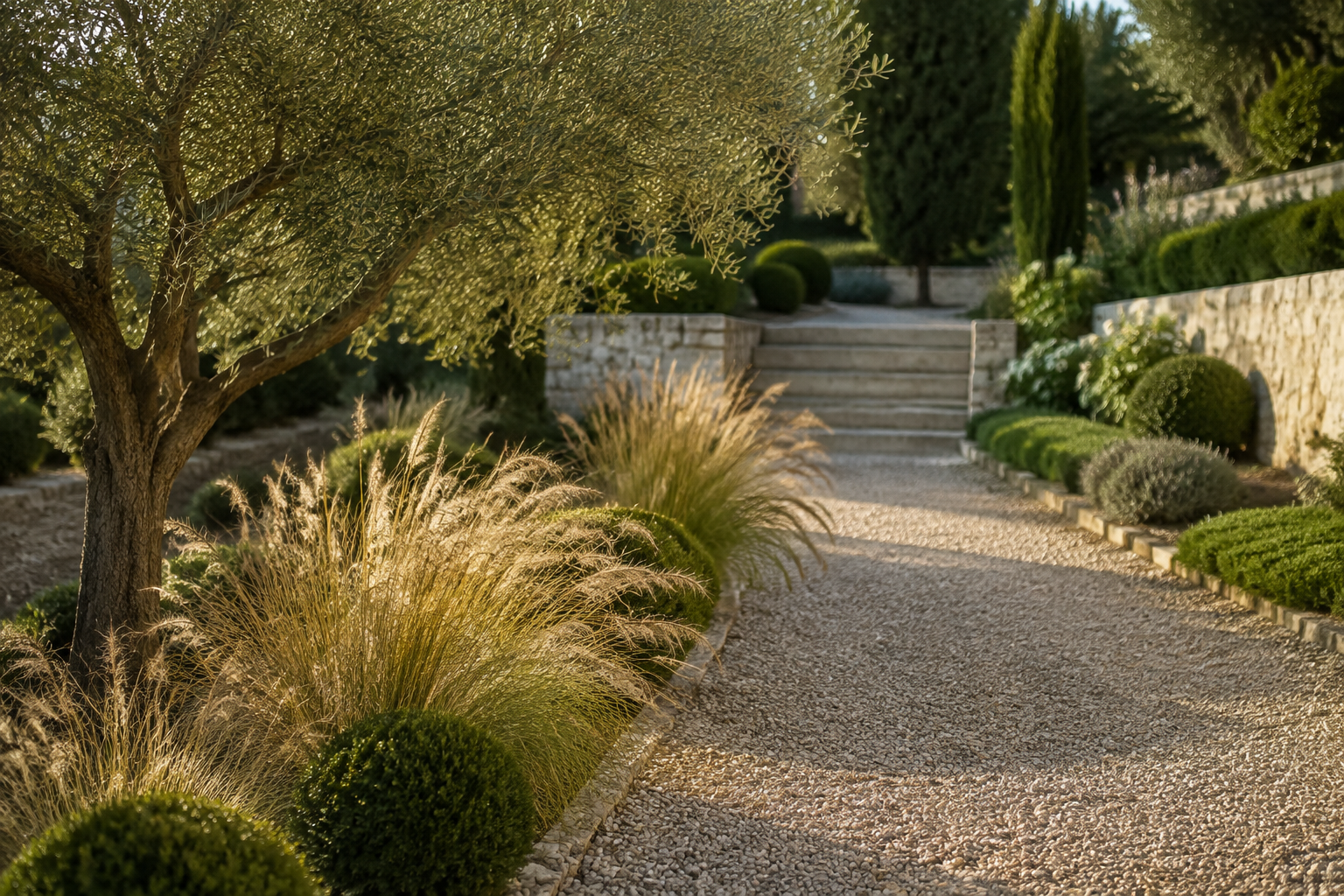
Small repeated groups create movement while allowing gravel, stone and surrounding plants to remain visible.
The Design Framework
How to Combine the Five Roles
Think in layers rather than treating the list as a shopping checklist. Begin with the permanent shapes, decide where volume is needed, and then introduce fragrance, flowers and movement where the growing conditions support them.
Background Layer
Use larger hydrangeas in suitable moisture and light, or upright ornamental grasses where a lighter, sun-loving screen is needed.
Middle Layer
Place white shrub roses in sunny positions and repeat evergreen forms to connect the planting through every season.
Front Edge
Use lavender only in sunny, freely draining areas where its crown will not sit in wet soil.
Repeated Throughout
Let boxwood or a suitable evergreen alternative create rhythm, pauses and winter structure.
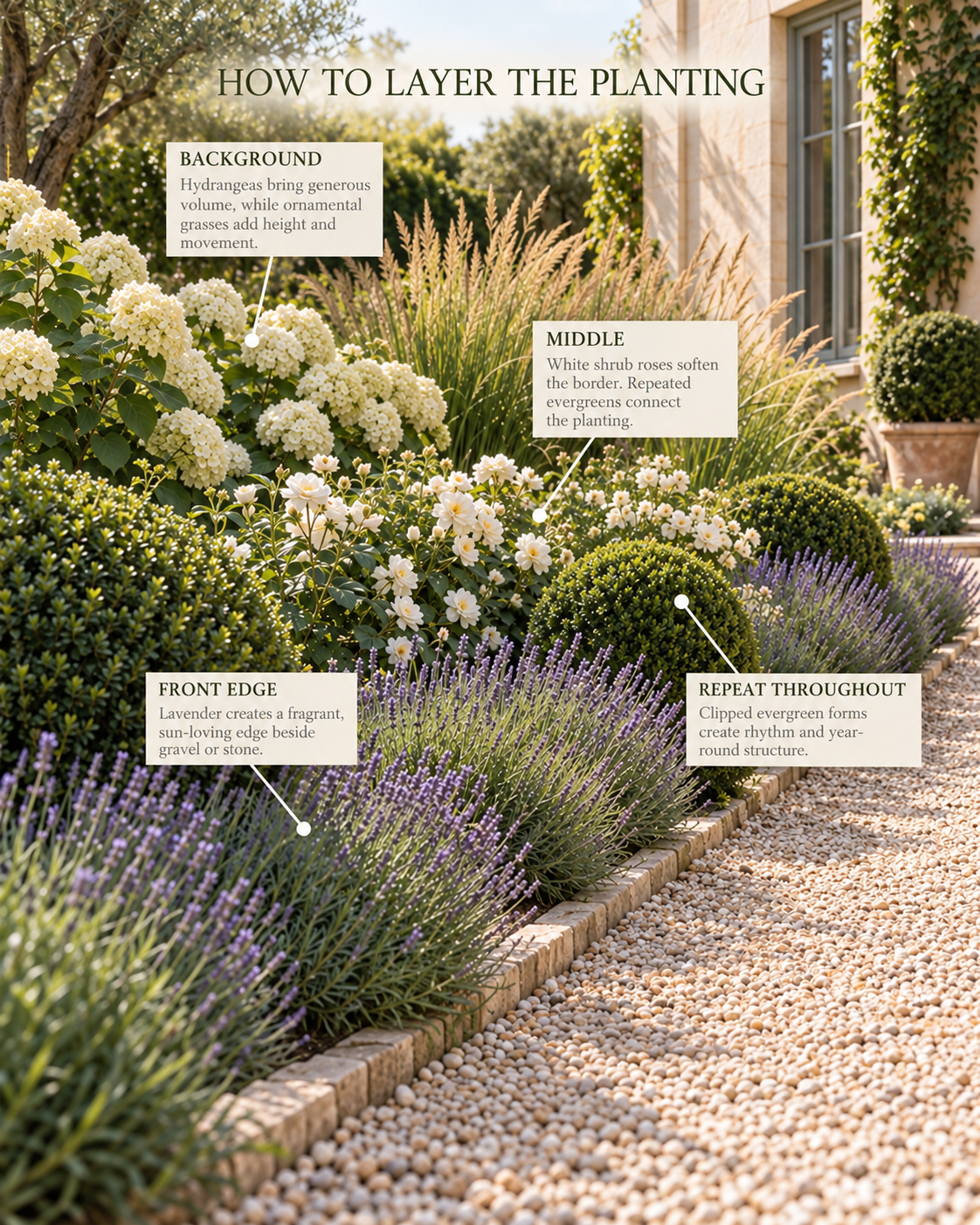
This is a design framework, not a recommendation to place every plant in the same bed. A hydrangea border may occupy the cooler side of the house while lavender repeats beside the sunny front path. The garden still feels connected when the same limestone, gravel, cream flowers and clipped green forms appear from one area to the next.
- Repeat a few plants with confidence instead of planting one of everything.
- Leave breathing room based on mature width, not the size of the nursery pot.
- Match each plant to the site’s light, moisture, drainage and climate.
- Keep the flowering palette restrained so foliage and structure remain visible.
- Allow architecture, gravel and weathered stone to form part of the composition.
- Create visual balance without forcing perfect or unrealistic symmetry.
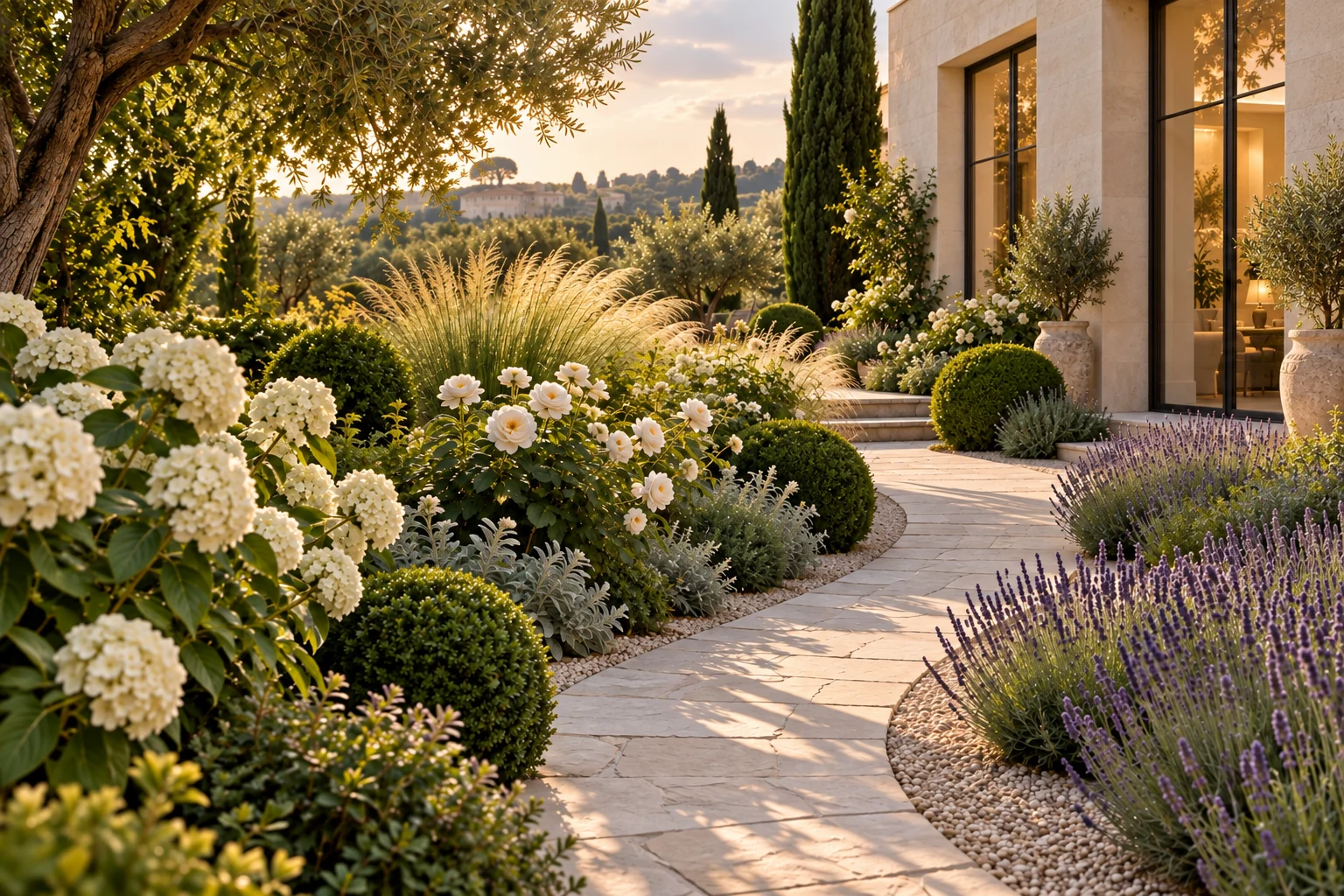
The strongest compositions repeat design roles while giving each plant the conditions and space it needs.
Make the Formula Your Own
Adapt the Roles to Your Growing Conditions
A convincing garden does not depend on owning these exact five plants. It depends on choosing plants that perform the same jobs while thriving in your garden.
- For a shadier garden: use a shade-suited hydrangea for volume, a locally appropriate evergreen for structure and a shade-tolerant grass or grass-like perennial for movement. Lavender and roses may need a sunnier area elsewhere.
- For a hot, dry garden: emphasize lavender and other drought-tolerant silver foliage. Replace moisture-dependent volume with shrubs suited to heat and limited irrigation.
- For a cold garden: select cultivars with proven local hardiness and protect exposed evergreen structure from winter wind where necessary.
- For a small garden: choose compact cultivars and repeat fewer elements. One beautifully shaped shrub can have more presence than several crowded plants.
The visual language can remain European-inspired even when the exact species change. Repetition, proportion, restrained colour and natural materials are what hold the design together.
Thank You for Being Here
Choose the Role Before the Plant
I hope this article has helped you see that a timeless garden is not created by owning five particular plants. It comes from choosing plants that bring structure, volume, fragrance, romance and movement while genuinely suiting your garden.
Begin with the conditions you have, repeat what works and allow every plant enough room to mature. With time, the garden will feel layered, personal and quietly connected to the architecture around it.
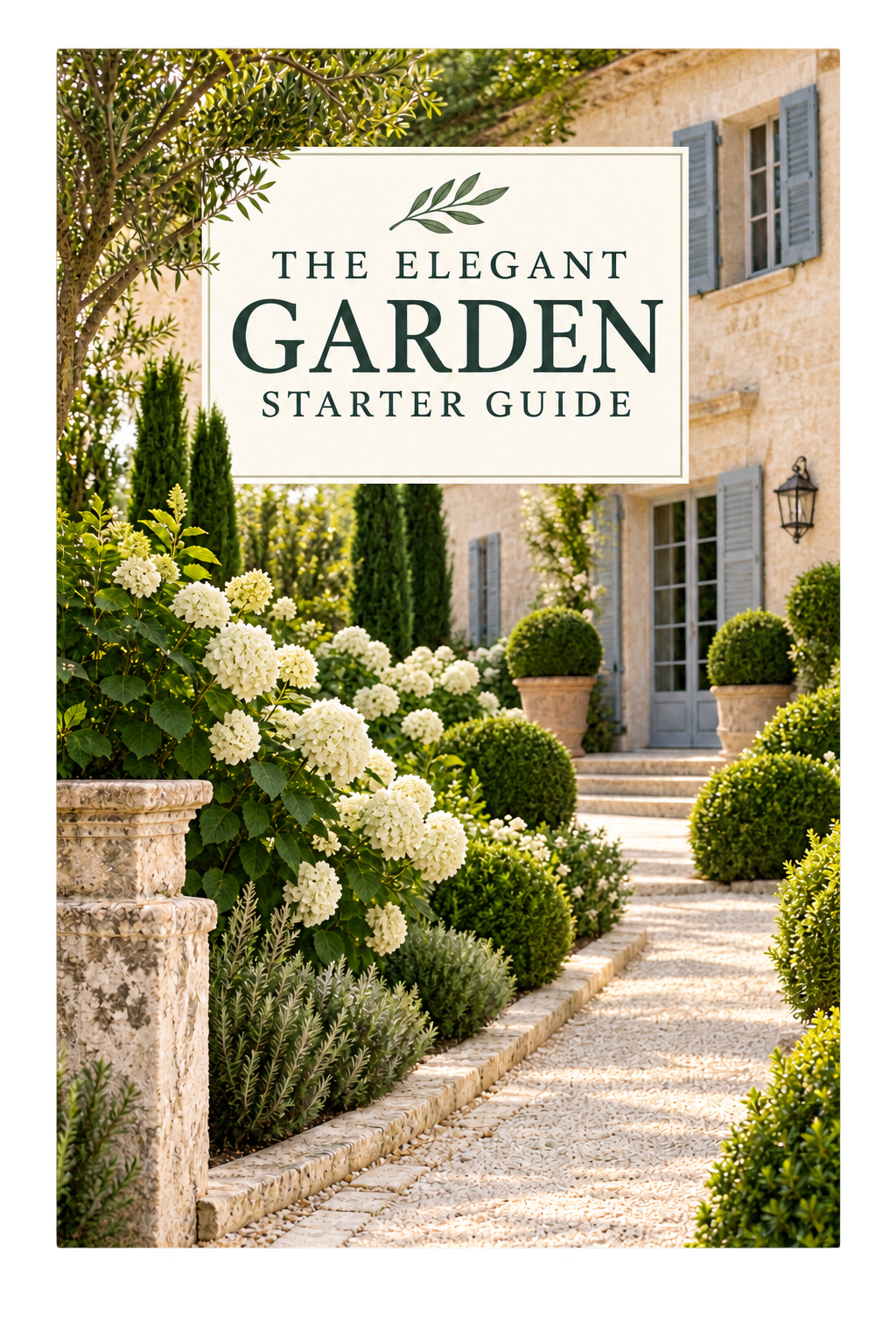
Your Complimentary 8-Page Guide
Begin Your Garden with a Beautiful Plan
Use this thoughtful starter guide to assess your garden’s sunlight and drainage, clarify your design direction and begin creating a balanced, beautifully layered garden plan.
FROM THE JOURNAL
Recent Reads
October 7, 2026
How to Choose a Garden Colour Palette: 7 Beautiful Plant Combinations
October 6, 2026
How to Design a Beautiful Shade Garden: A Simple Layering Formula
September 17, 2026
How to Design a White Hydrangea Border
September 16, 2026
5 Beautiful Ways to Edge a Garden Border
September 12, 2026
How to Choose the Right Hydrangea for Your Garden
September 10, 2026