
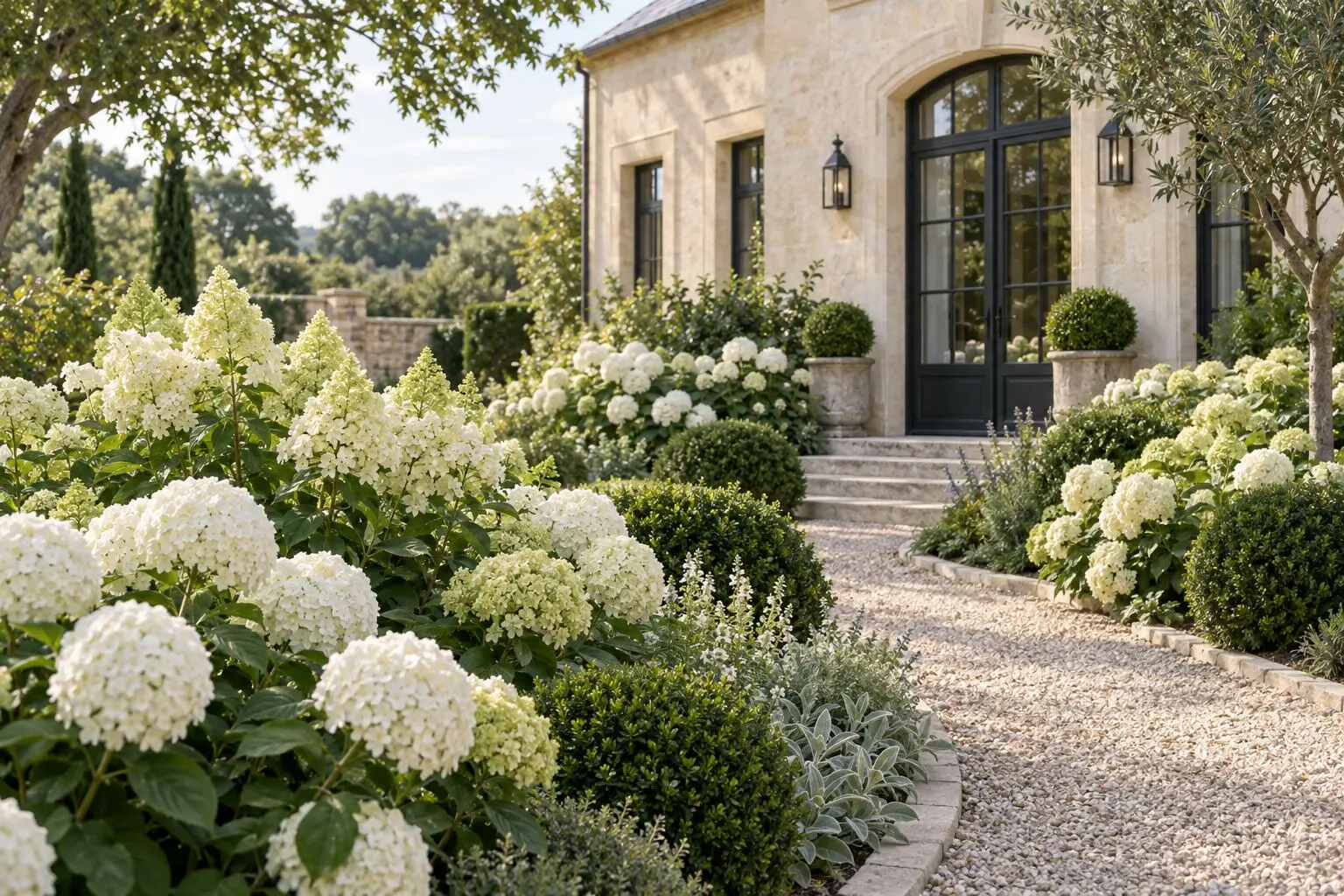
Plant Guides
White Hydrangeas Explained
How to choose Annabelle, Incrediball and Limelight for a timeless garden.
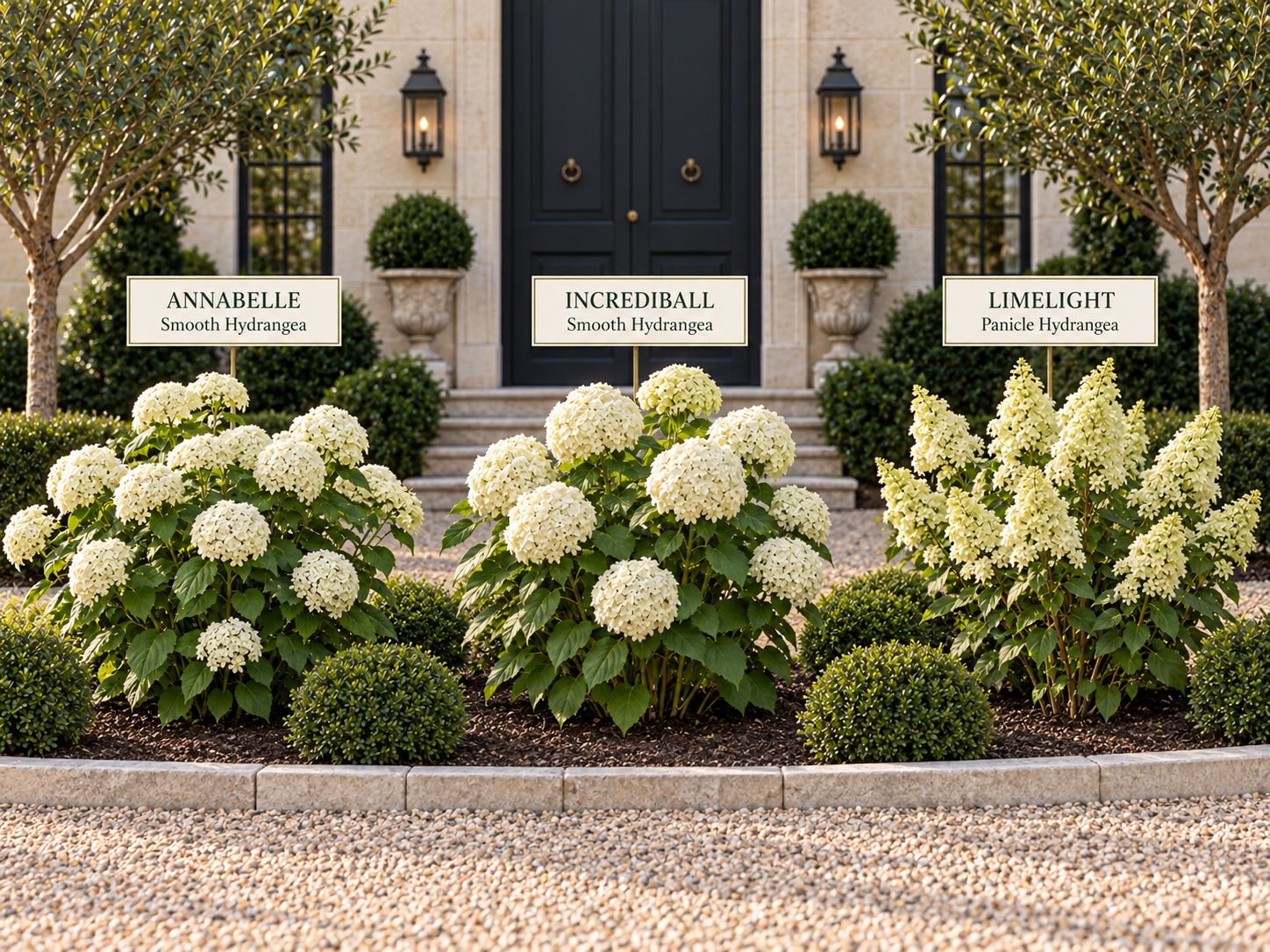
White hydrangeas bring softness, structure and light to the garden. Whether you are creating a romantic border or a more architectural scheme, these three varieties offer beauty with slightly different strengths. Here is how to choose the right one for your space.
Before planting, consider mature size, sun exposure, moisture and the view through every season. Smooth hydrangeas generally welcome morning sun or dappled light, while panicle hydrangeas are often more comfortable in brighter positions. In every case, moisture-retentive, well-drained soil and a generous mulch will help sustain the best display.
How to choose
Annabelle: Soft and Romantic
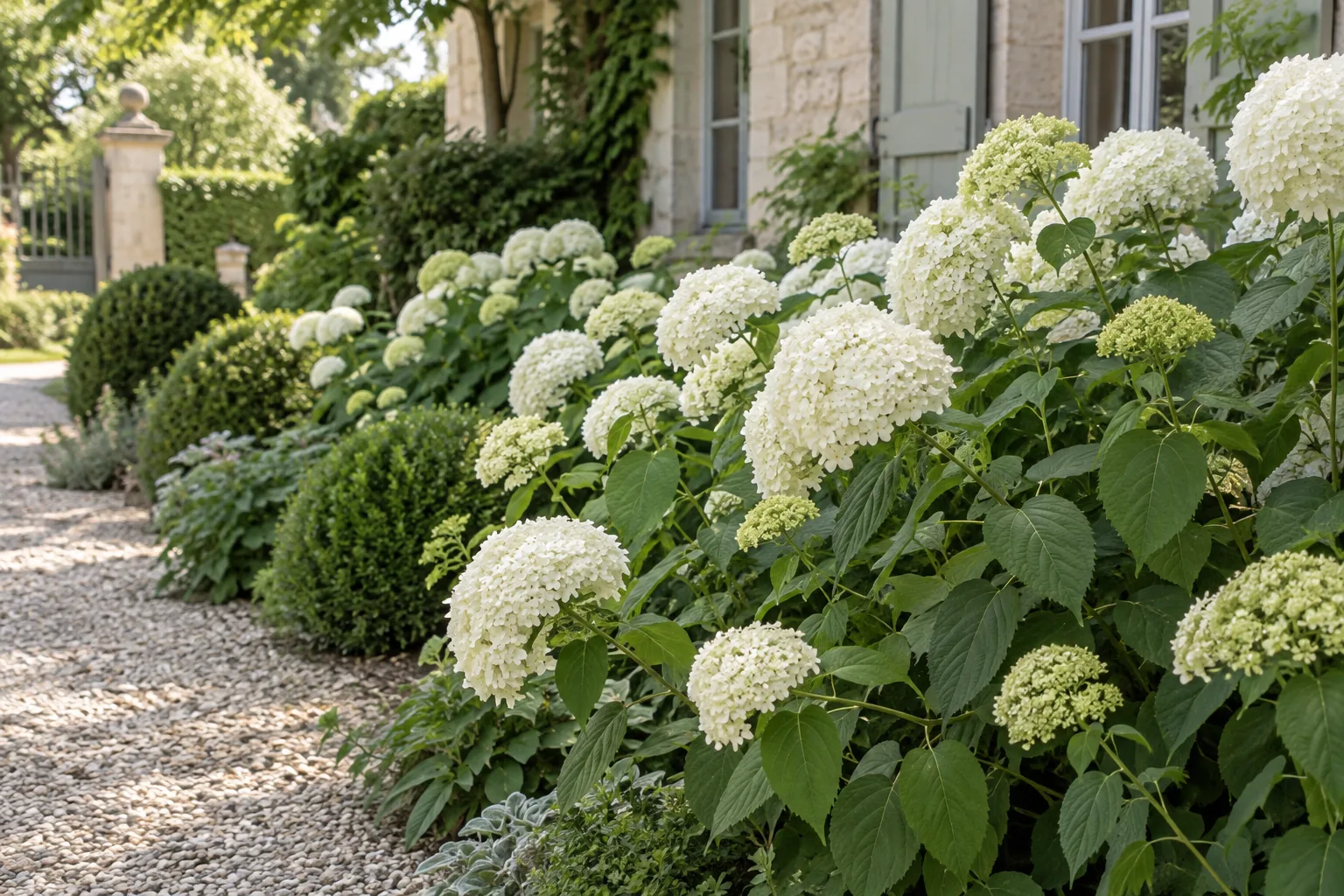
Annabelle (Hydrangea arborescens ‘Annabelle’) is beloved for its rounded white flower heads and relaxed, billowing habit. The blooms open with a hint of green, mature to luminous white and soften again as the season advances.
It is especially beautiful in generous drifts and informal borders. Because the stems can arch after heavy rain, place it where neighbouring shrubs or discreet supports can help hold its shape.
Incrediball: Classic Form, Stronger Stems
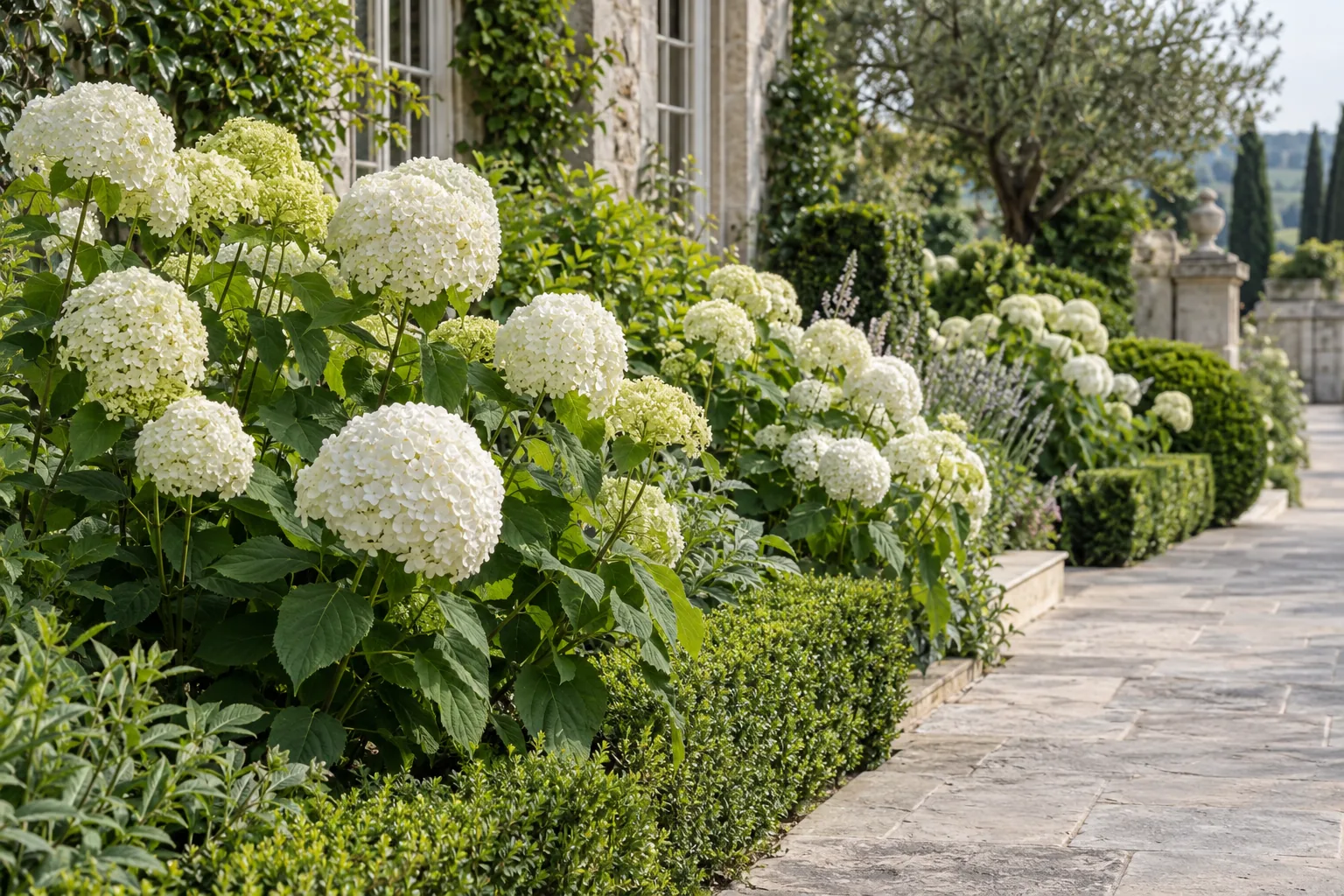
Incrediball offers the rounded silhouette of a smooth hydrangea with sturdier stems and exceptionally full flower heads. It creates the same soft, abundant impression as Annabelle, but with a slightly more composed presence.
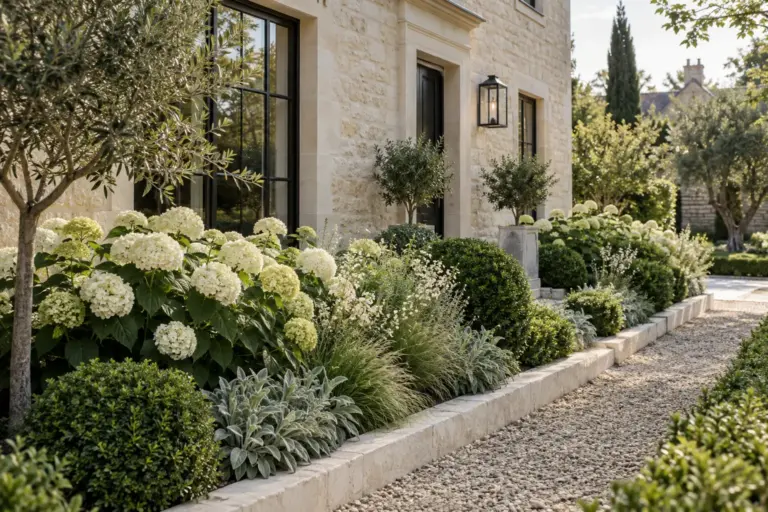
Choose it for repeated planting along a path or a pale green-and-white border. Its stronger framework makes it a practical choice in rain-prone gardens, although the largest blooms still appreciate shelter from strong wind.
Limelight: Architectural and Refined
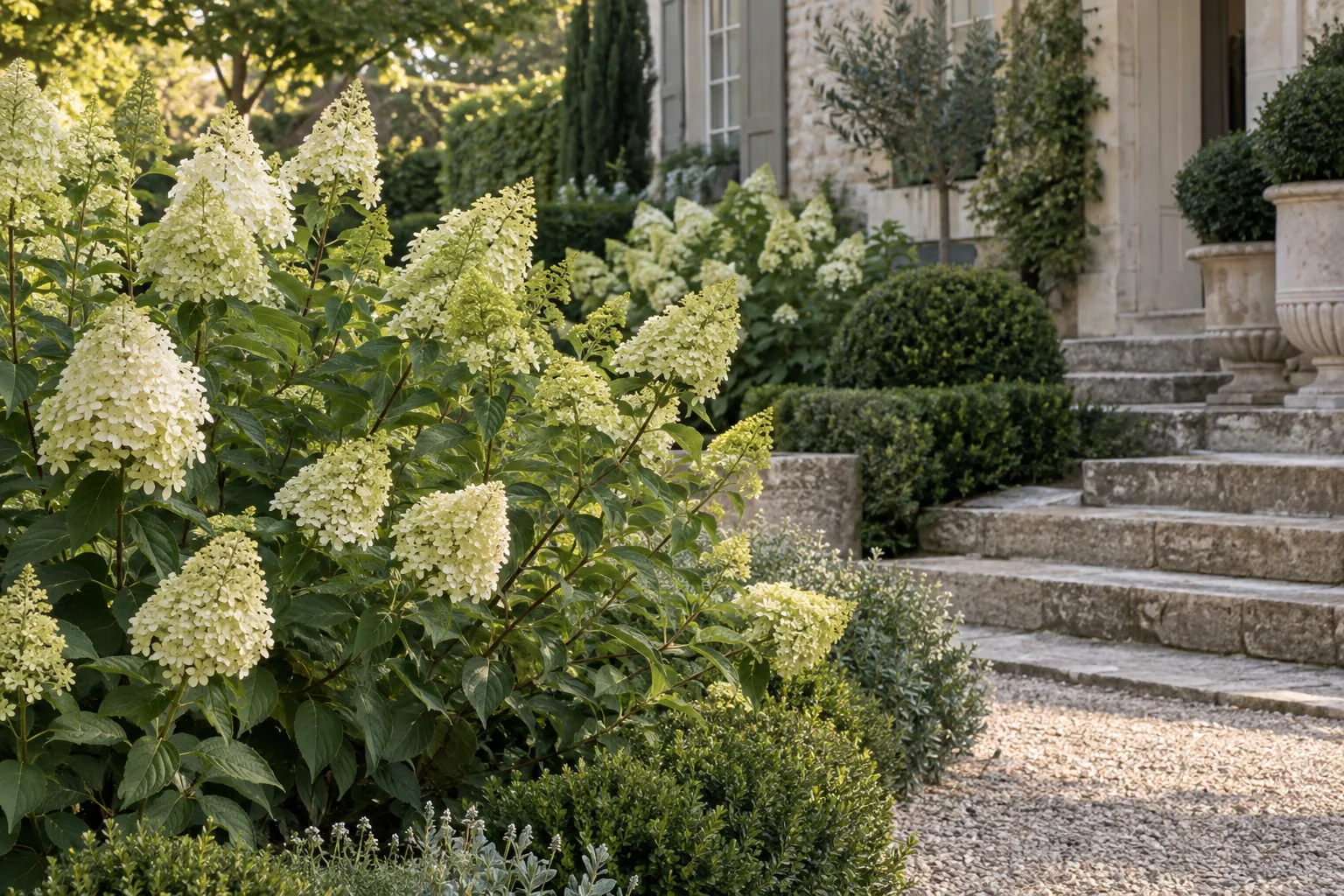
Limelight brings height, clean lines and a more architectural quality. Its conical flowers begin fresh green, turn creamy white and often take on soft blush tones as summer moves towards autumn.
Its upright habit suits front gardens, formal borders and layered schemes. Limelight also tolerates more sun than smooth hydrangeas when given consistent moisture, but it needs room to become a deliberate feature.
Designing With White Hydrangeas
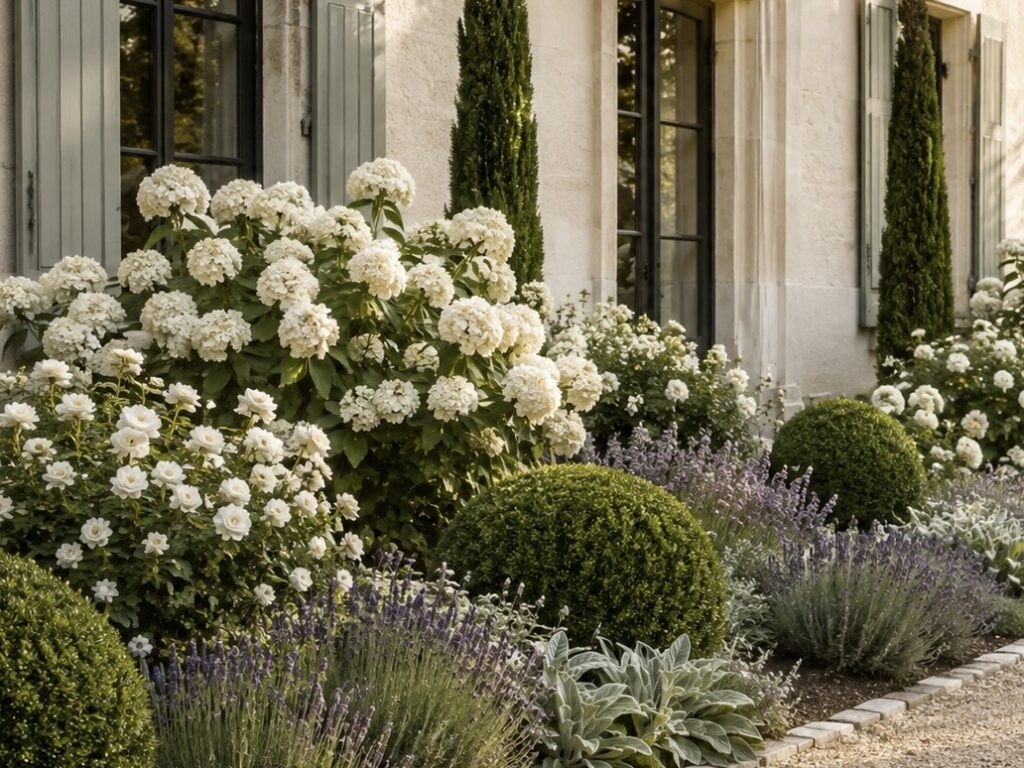
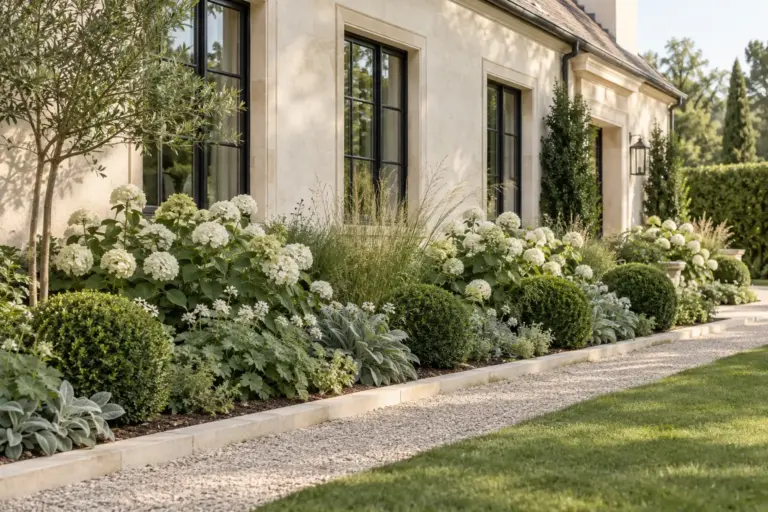
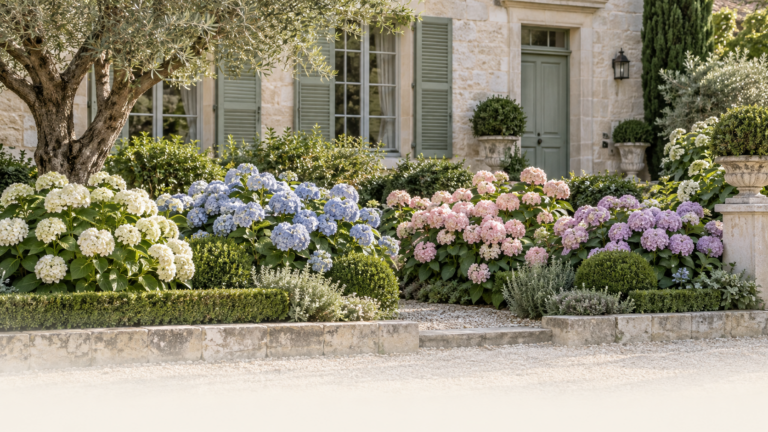
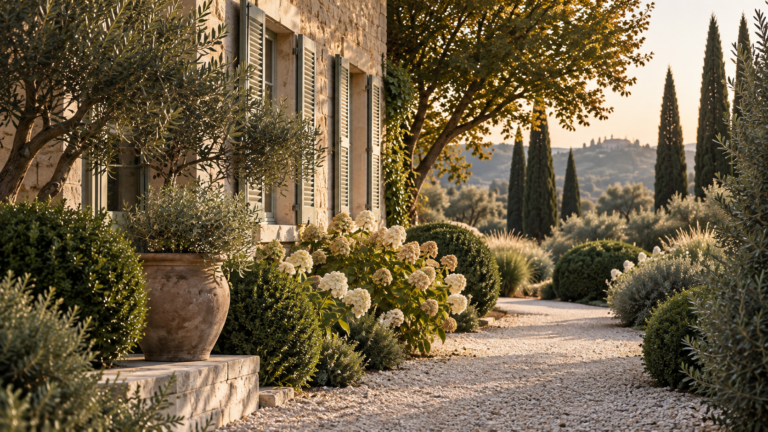
White hydrangeas are at their most elegant when they belong to a larger composition. Pair their loose flowers with clipped boxwood, yew or other evergreen anchors.
Gravel and limestone paths introduce structure, while restrained repetition keeps the garden calm and cohesive.
Leave breathing room around each shrub and allow the evergreen framework to remain visible. Space lets the flowers read as intentional and gives every hydrangea the freedom to mature gracefully.
The Companion Palette
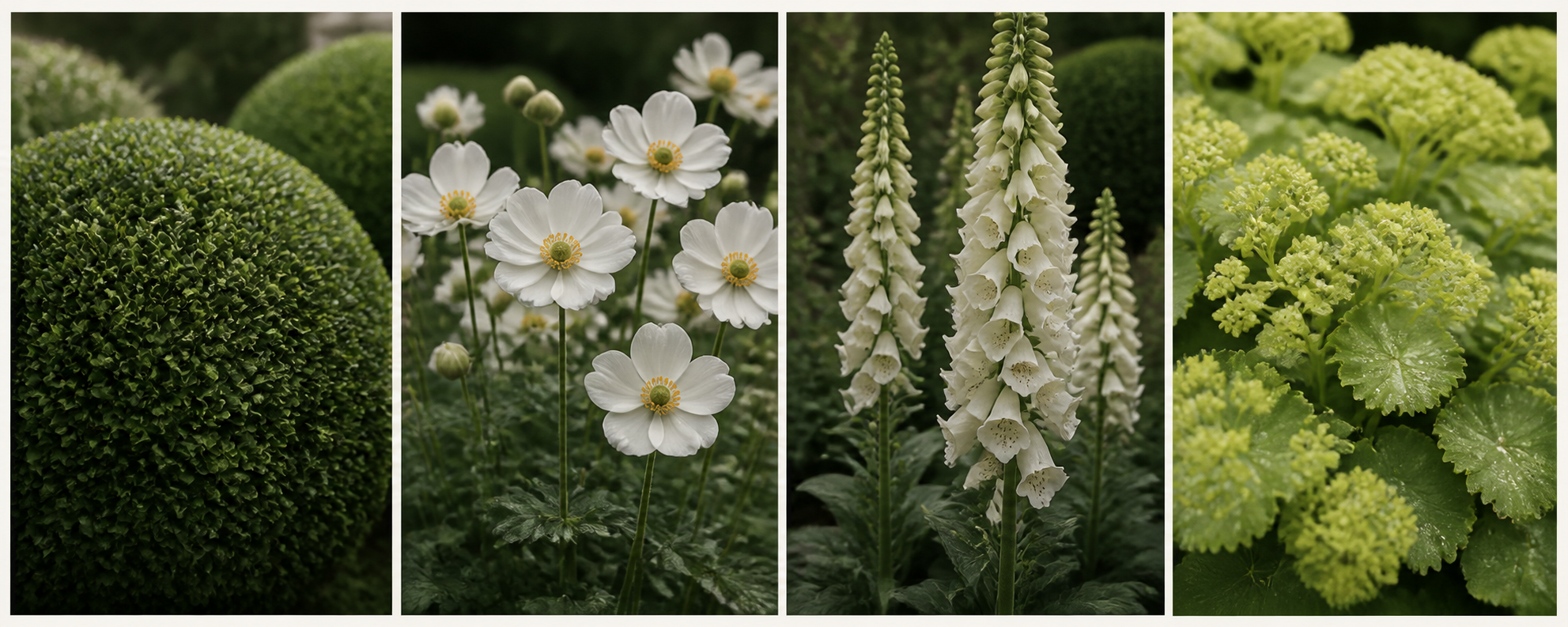
The supporting palette establishes the mood of the border, but placement determines how each hydrangea contributes to the composition. Consider the role each variety will play before deciding where it belongs.
Use evergreen shapes to hold the composition together, then repeat pale flowers and fresh foliage in measured intervals. The contrast between clipped form and loose planting is what gives a white garden its quiet depth.
Planning the border
Where Each Hydrangea Works Best
The right variety depends not only on flower shape, but on the role the shrub needs to play within the garden.
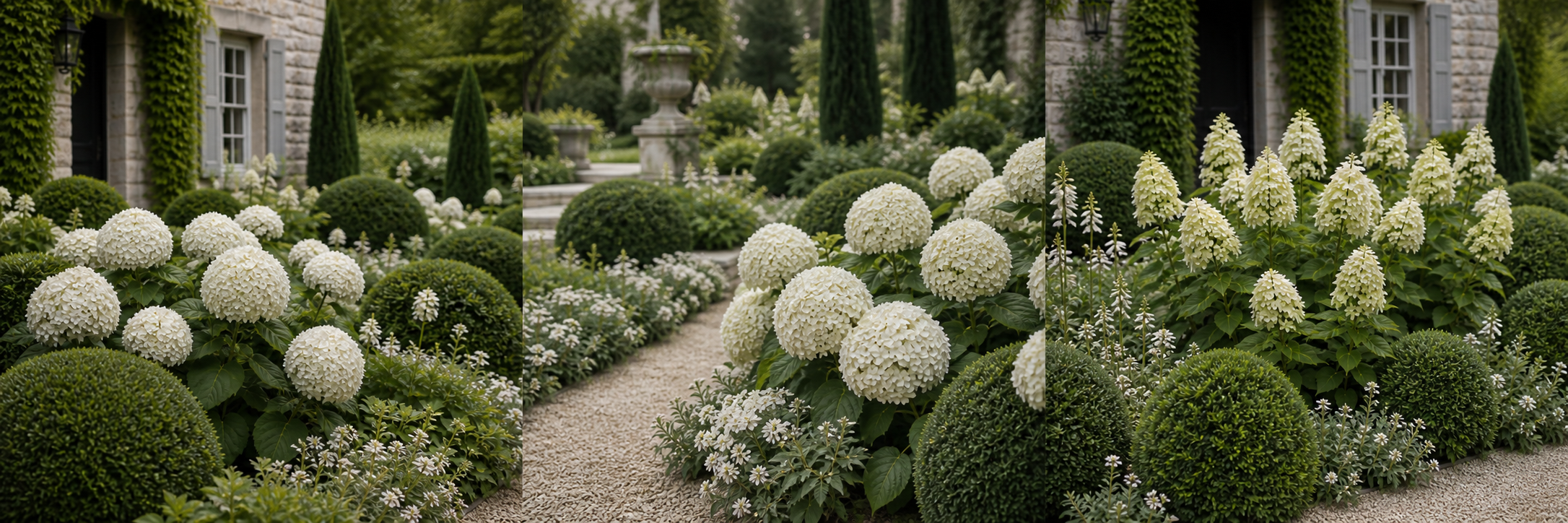
ANNABELLE — Informal borders
Best where its relaxed habit can mingle naturally with perennials and neighbouring shrubs.
INCREDIBALL — Paths and repeated planting
A stronger choice when a rounded, consistent silhouette is needed along a walkway.
LIMELIGHT — Back of the border
Use its height and conical flowers to create structure behind lower shrubs.
Creating a Layered Composition
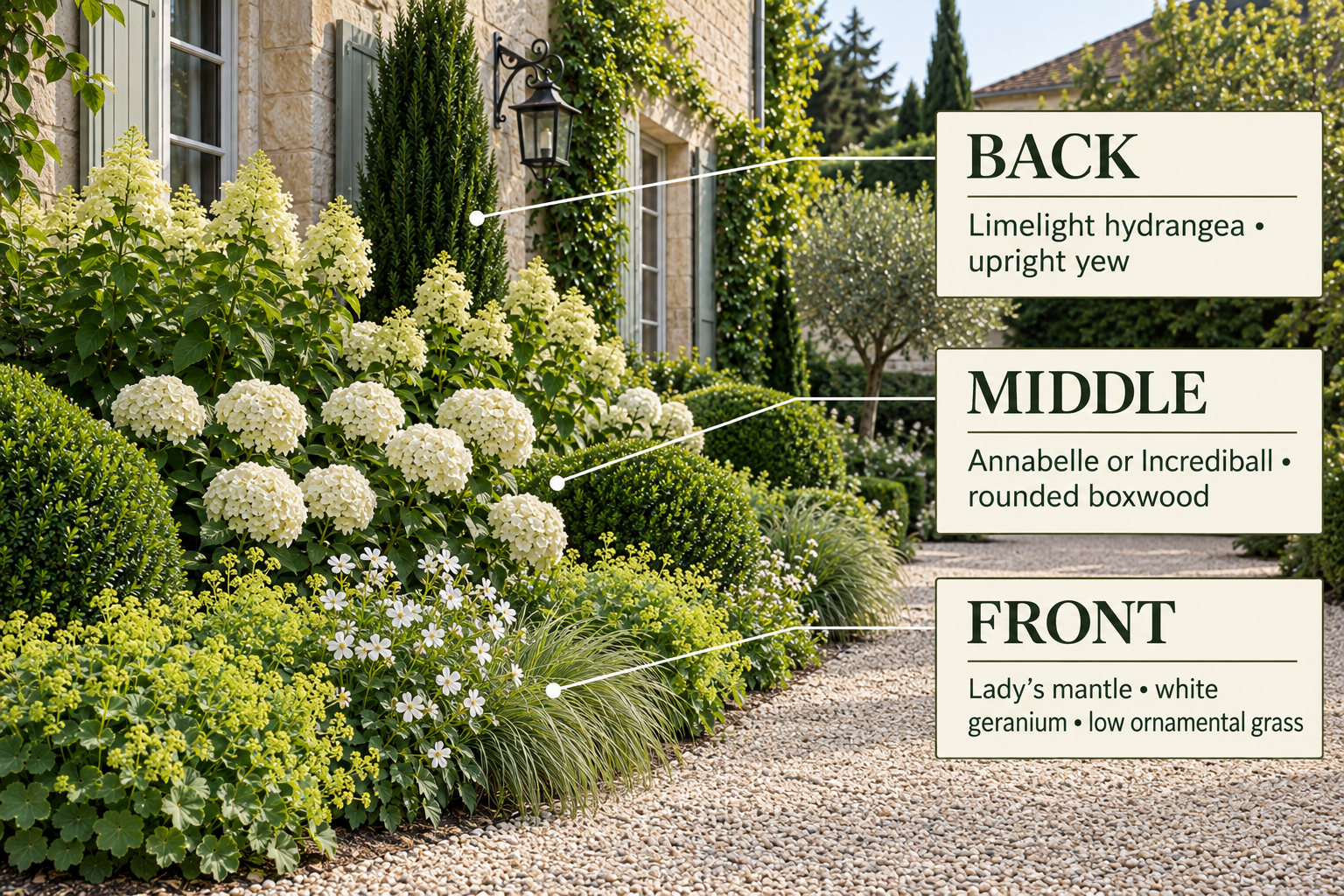
A simple layering formula
Begin with evergreen structure, then position hydrangeas as the flowering middle layer. Finish with lower perennials and ground-covering plants that soften the border edge.
Allow every shrub enough room to reach its mature size. Generous spacing produces a calmer garden and reduces the need for constant pruning.
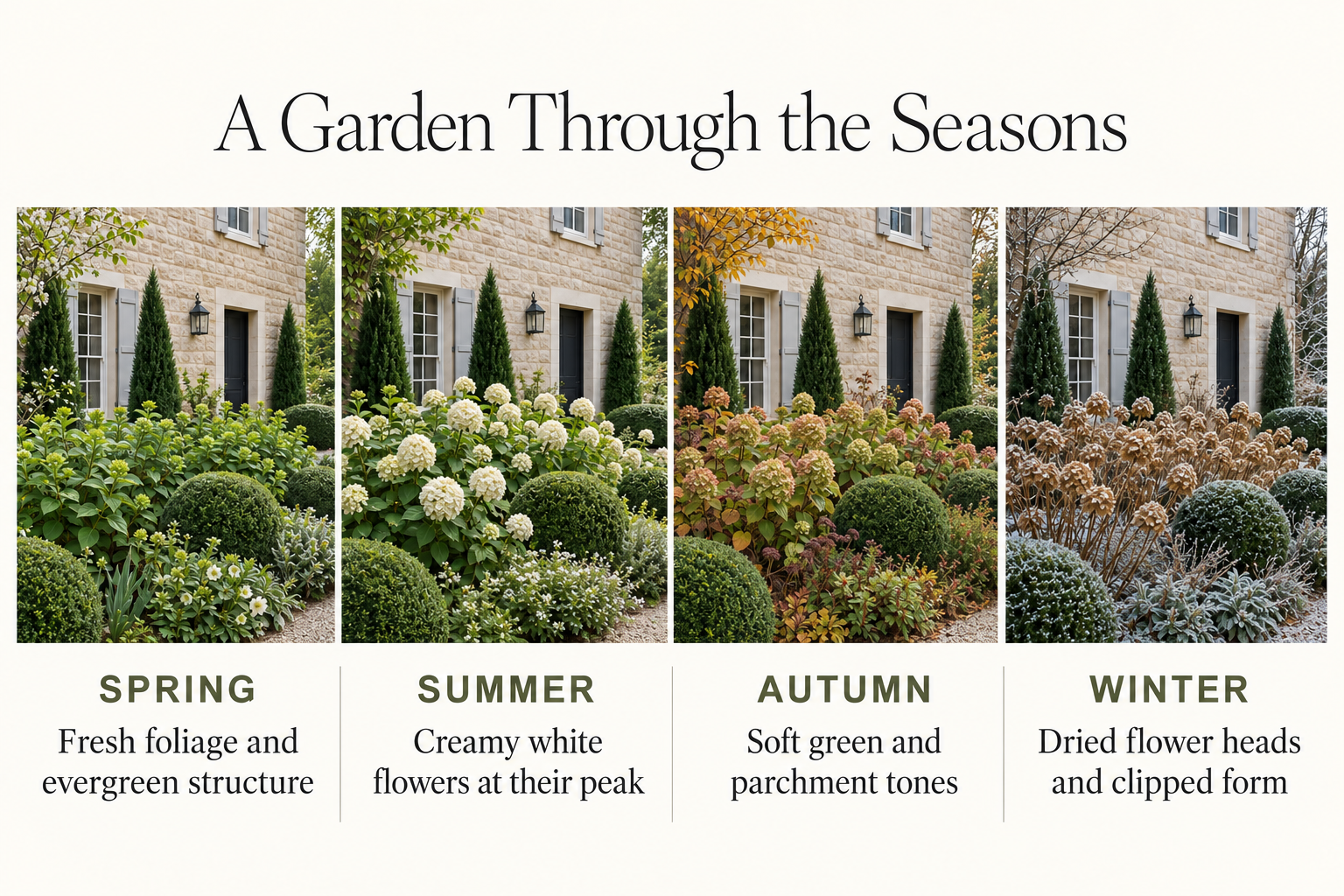
Care for an Elegant Display
- Water deeply — Support even growth during dry periods.
- Mulch generously — Conserve moisture while keeping mulch clear of the stems.
- Prune by type — Smooth and panicle hydrangeas flower on new wood, but avoid unnecessarily severe pruning.
- Observe the light — Morning sun and afternoon protection suit many gardens, while panicle types tolerate brighter positions.
Common Design Mistakes
Planting too closely — Crowded shrubs quickly lose their natural shape.
Mixing too many varieties — Repetition usually creates a calmer, more intentional result.
Relying on flowers alone — Evergreen structure keeps the border composed beyond the blooming season.
“A beautiful white garden is shaped as much by structure, spacing and repetition as it is by flowers.”
Choose the hydrangea that suits both your conditions and your garden’s character, then repeat it with confidence. The result will feel timeless, cohesive and quietly generous.
Ready to plan your own white hydrangea garden?
View the White Hydrangea Garden GuideBefore you go
Take the next step with a beautifully considered guide to choosing the right white hydrangea for your garden.
FROM THE JOURNAL
Recent Reads
October 7, 2026
How to Choose a Garden Colour Palette: 7 Beautiful Plant Combinations
October 6, 2026
How to Design a Beautiful Shade Garden: A Simple Layering Formula
September 17, 2026
How to Design a White Hydrangea Border
September 16, 2026
5 Beautiful Ways to Edge a Garden Border
September 12, 2026
How to Choose the Right Hydrangea for Your Garden
September 10, 2026